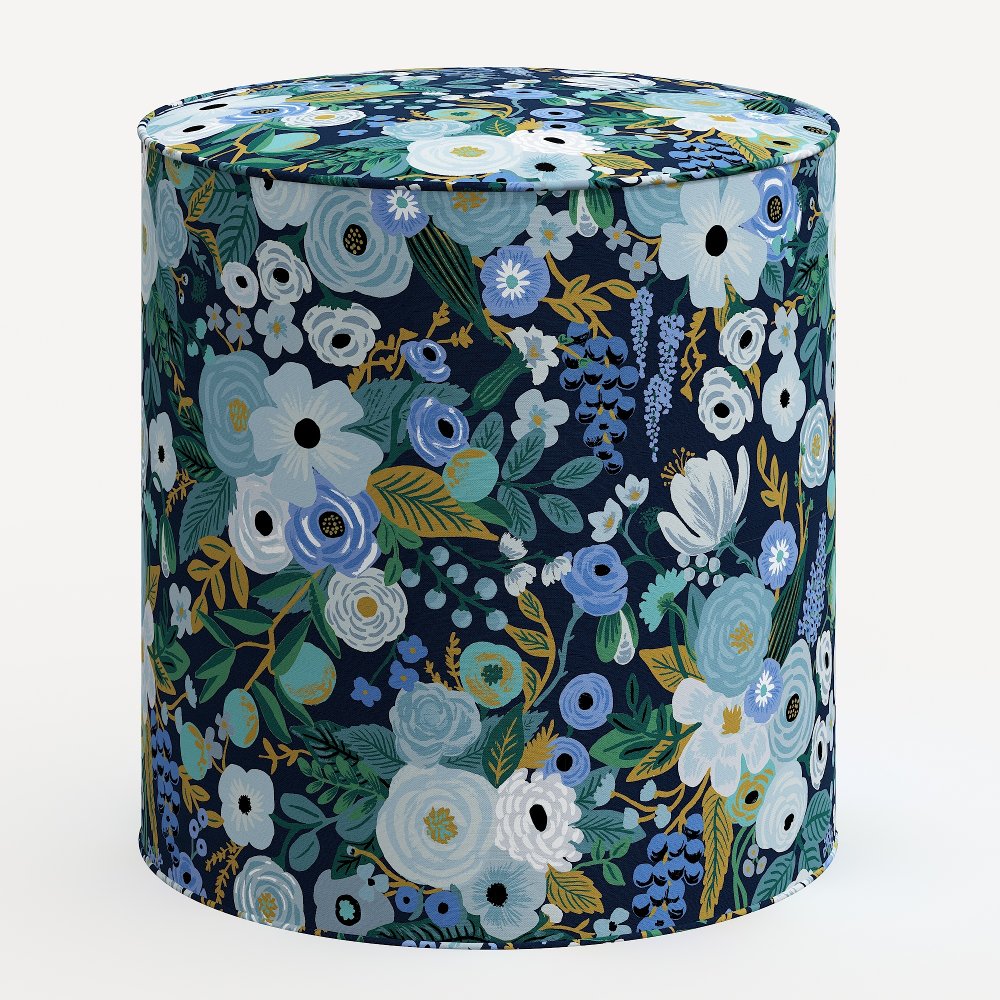
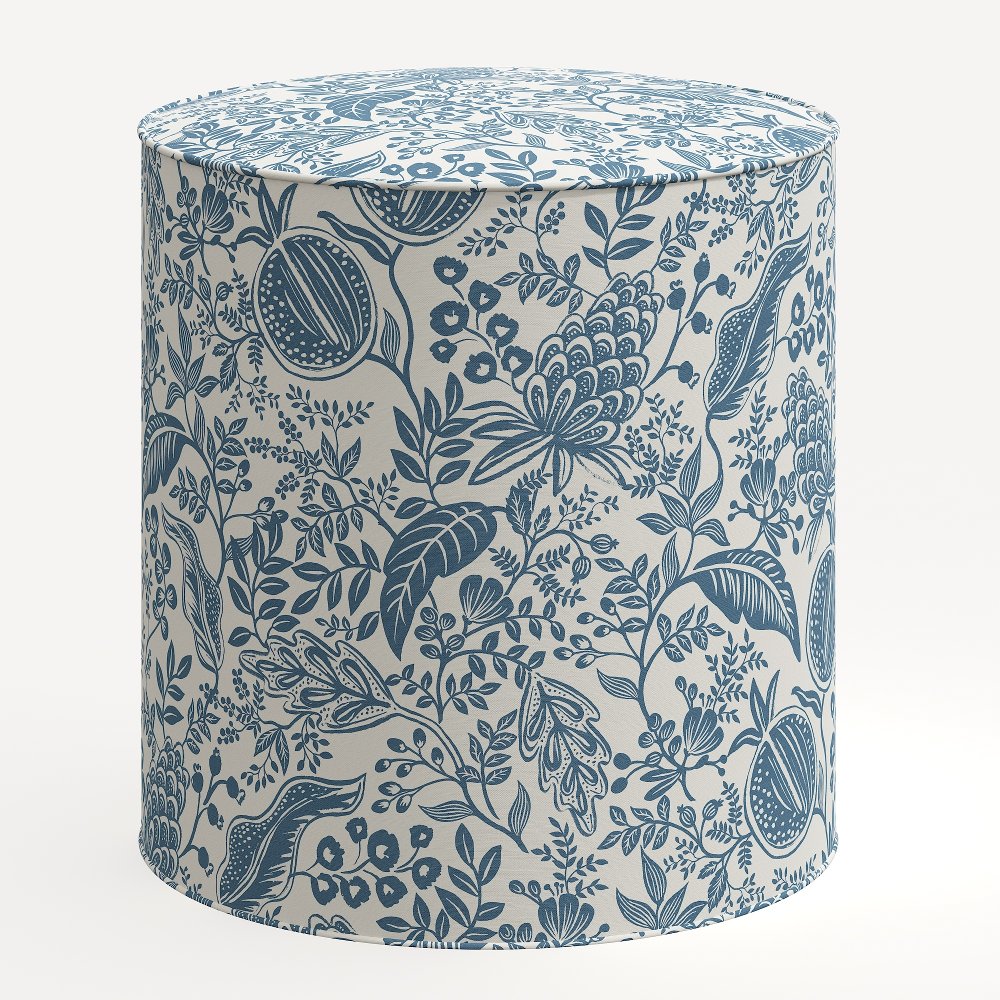
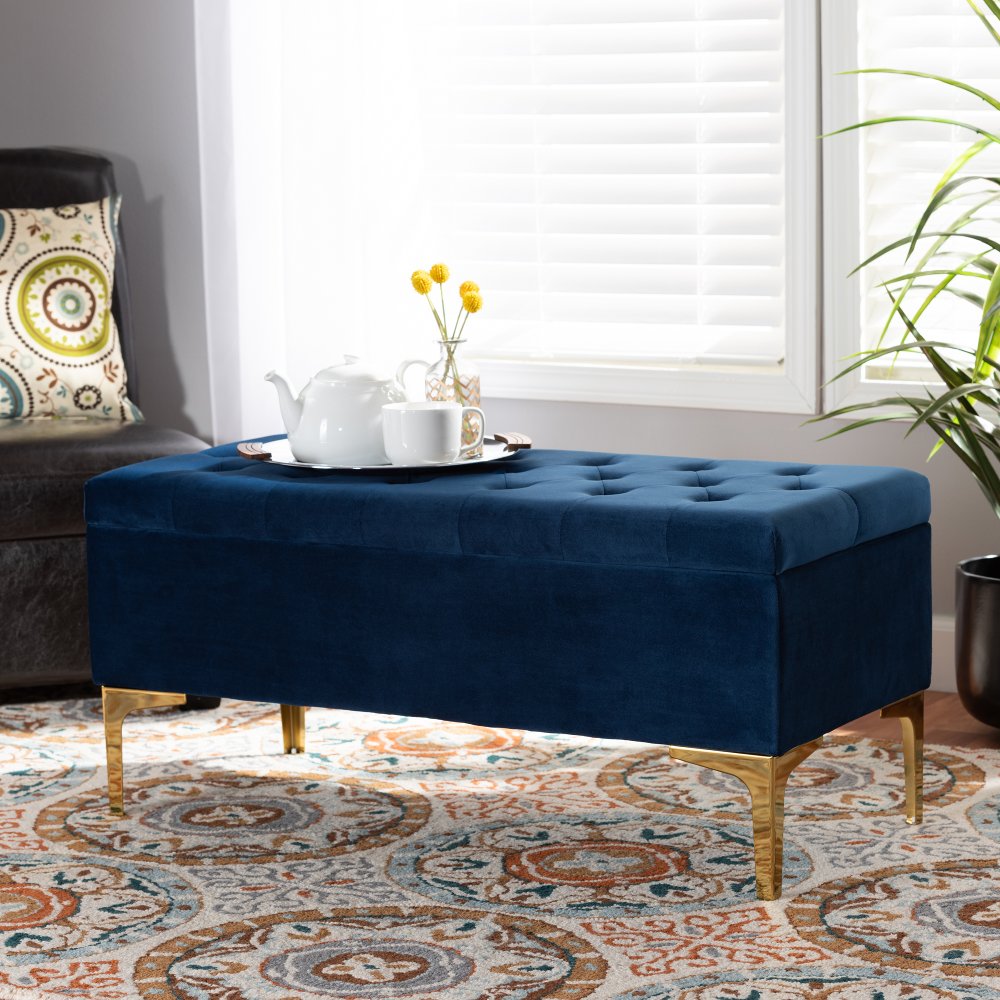
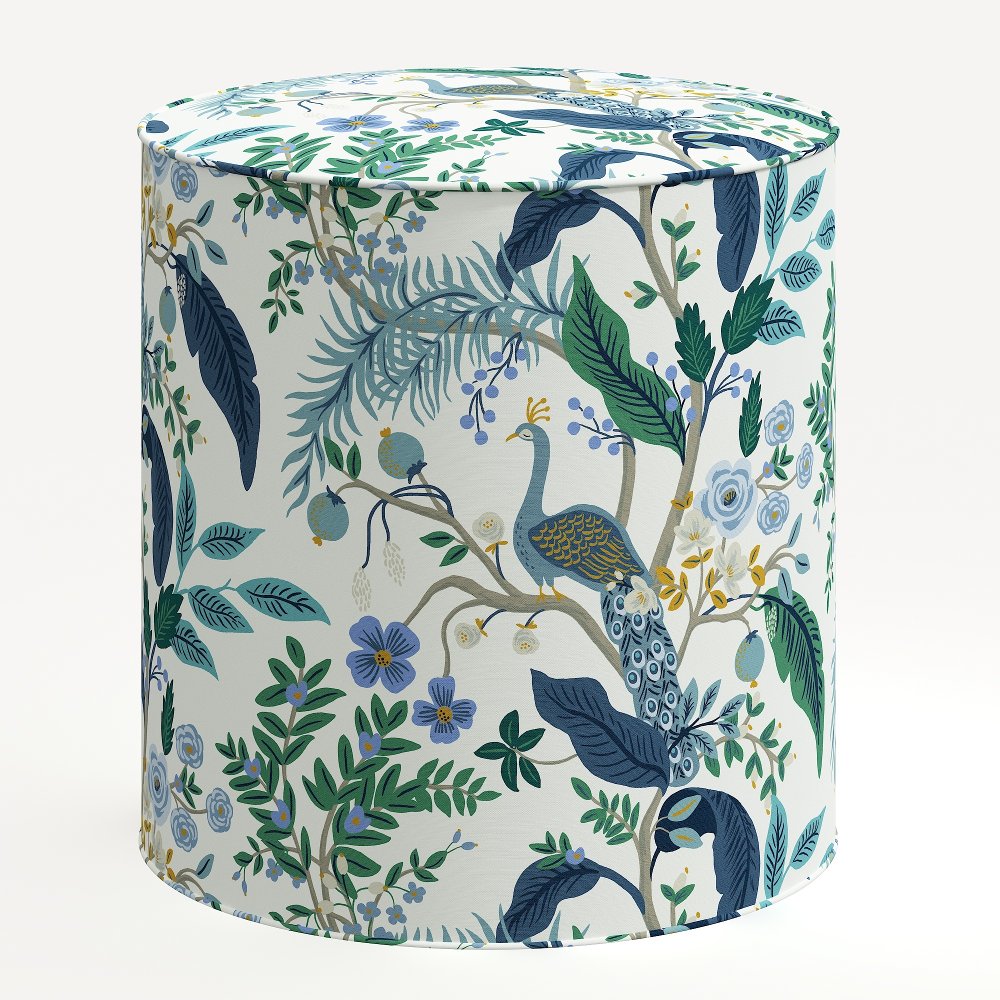
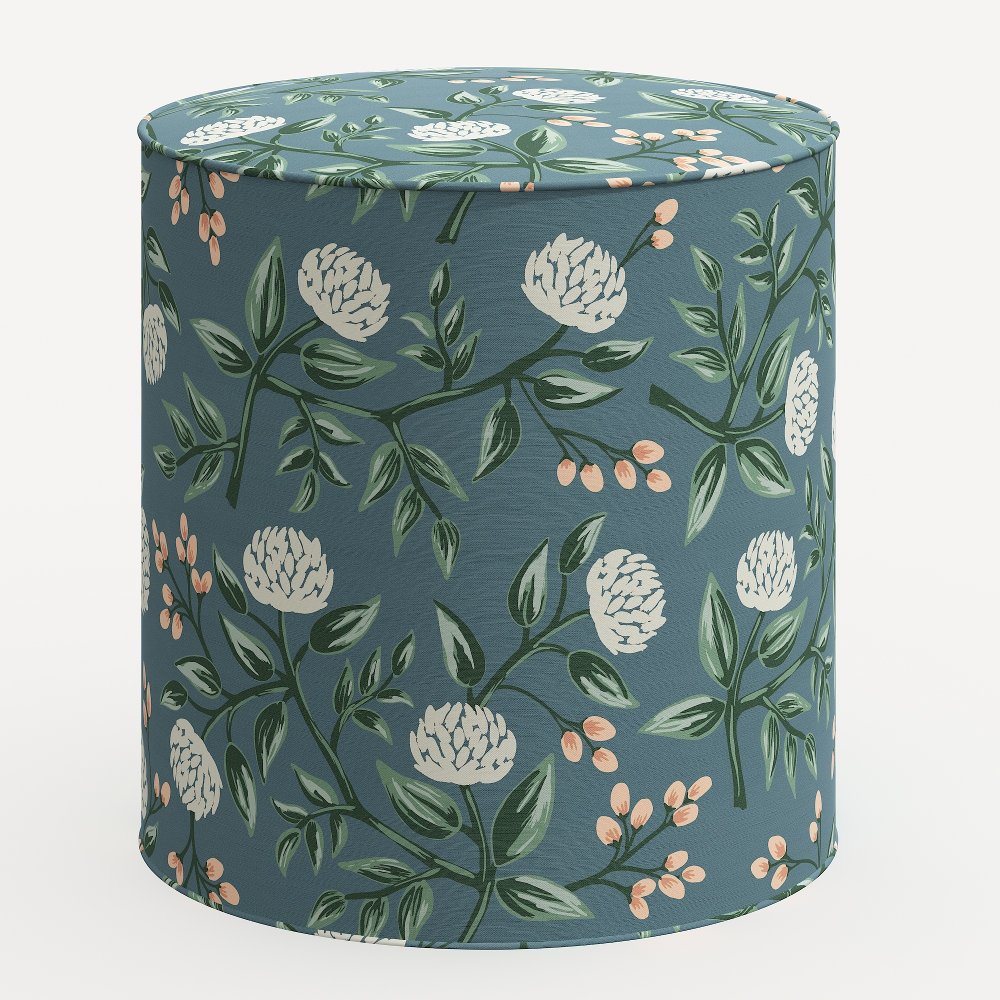
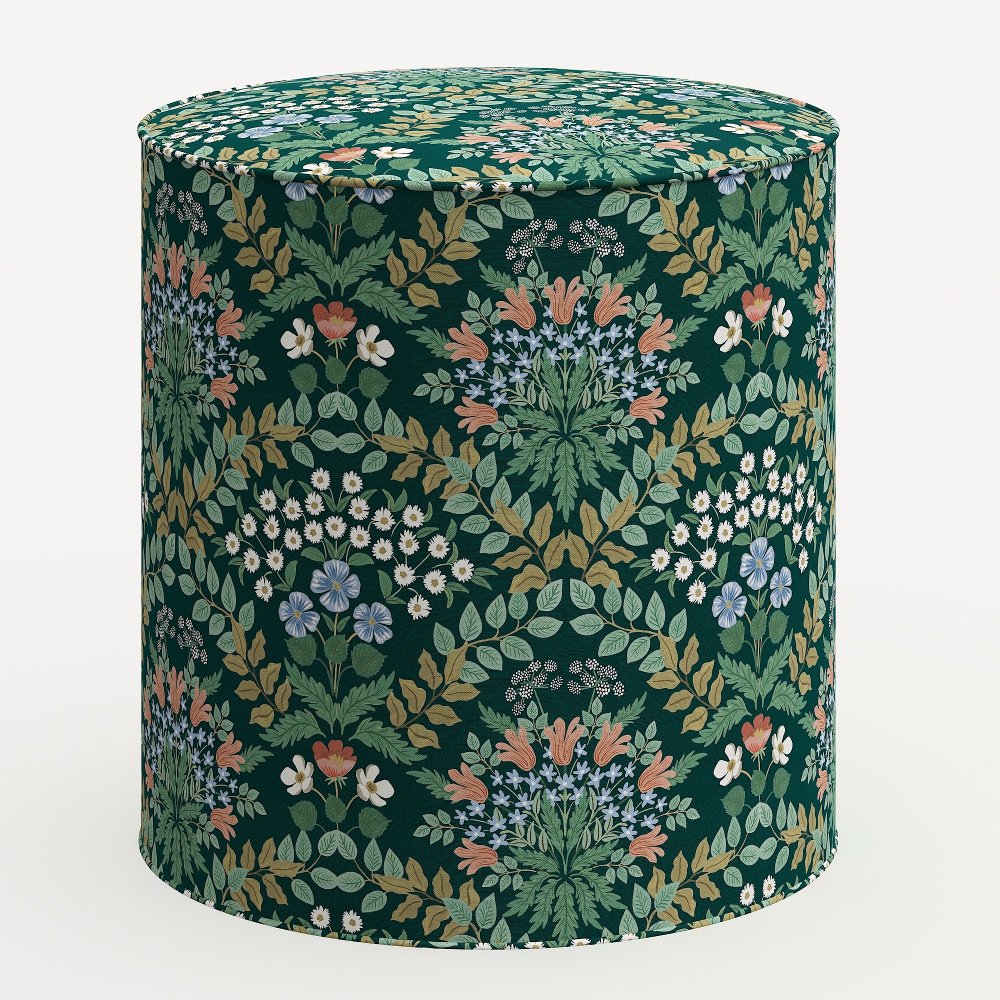
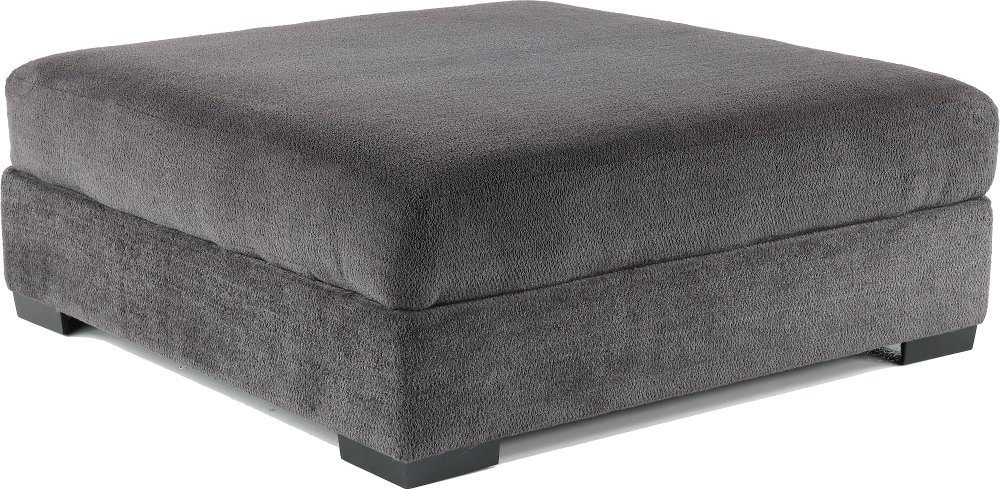
Blue ottomans bring a comfortable finishing touch to a room, giving you a place to put your feet up while adding color at a smaller scale than a sofa or sectional. The shade you choose can make a noticeable difference in how the space feels. Deep navy offers a grounded look alongside ivory upholstery, warm wood, and brass accents, while dusty blue blends easily with soft grays, linen textures, and lighter wood finishes. A brighter blue can give a neutral seating area a clear focal point without requiring a full room makeover. For a collected look, repeat a little of that color in a patterned rug, a framed print, or a pillow rather than matching every accessory exactly. Blue also works well with natural materials: a woven basket, an oak side table, or a leather chair can balance its cooler undertones with warmth and texture. Shape matters just as much as color. A round blue ottoman can soften a seating arrangement filled with straight lines, while a rectangular silhouette often fits comfortably in front of a sofa. Square shapes feel balanced beside a generously sized armchair or within an L-shaped sectional arrangement. Details help set the mood, too. Tufting adds depth and a more tailored appearance; a smooth upholstered top keeps the look simple; and exposed wood legs introduce another finish to coordinate with nearby furniture. A skirted base creates a softer outline, while an open base leaves more of the floor visible. If your room already has several strong colors, a muted blue may feel easier to work in than a saturated shade. For a more neutral alternative, gray ottomans offer another way to complement the same seating and accent pieces. The best fit is a color and silhouette that feel connected to your room without making everything look like a matching set.
How you plan to use a blue ottoman should shape your choice of size, height, and construction. For a favorite reading chair, a smaller footrest can provide everyday comfort without taking over the floor space. An ottoman that's close to the chair's seat height, or slightly lower, generally creates a comfortable resting position, though your preferred posture and the seat cushion's softness also matter. In a living room where everyone stretches out to watch movies, a wider upholstered ottoman can give more than one person room to relax. Measure the area in front of your seating, then mark the footprint on the floor with painter's tape. That simple step makes it easier to see whether a rectangular piece will crowd a walkway or whether a round shape will leave enough room to move between chairs. Allow space to stand up comfortably, reach nearby tables, and open any drawers or doors around the seating area. If the ottoman will double as a coffee table, look for a broad, reasonably firm surface and use a stable tray to hold everyday essentials. A soft, deeply tufted top is inviting for tired feet, but it isn't a dependable surface for an uncovered drink. Storage ottomans serve a different purpose, keeping throws, board games, or extra pillows close without leaving them spread across the sofa. Check the interior dimensions rather than assuming the outside measurements reflect the usable storage space, and allow clearance for a hinged lid to open fully. In homes with children, the lid mechanism deserves attention; follow the manufacturer's safety instructions and keep fingers clear when closing it. If occasional extra seating is part of the plan, choose an ottoman specifically designed to support seated use and check its stated weight capacity. A footrest isn't automatically a seat, and a cushioned top doesn't make an ottoman suitable as a step stool. Apartment dwellers, frequent hosts, and anyone furnishing a multipurpose room can benefit from that kind of thoughtful flexibility.
Upholstery gives blue ottomans much of their character, but it also influences how they handle daily life. Velvet brings rich color and a soft sheen, with the blue appearing lighter or darker as the pile changes direction. That variation is part of its appeal, though pressure marks and handprints may be more noticeable than on some flatter fabrics. Woven upholstery offers a different texture, from a tight, smooth finish to a more pronounced weave that adds visual interest. In a busy family room, consider how a fabric might respond to shoes, snack spills, pet hair, and repeated contact rather than choosing by appearance alone. Loose weaves can catch on claws or jewelry, while raised seams and decorative buttons may need extra attention during cleaning. Performance fabrics can be useful for heavily used spaces, but the term covers different treatments and constructions, so read the care information and any stated stain-resistance details carefully. Leather and leather-look upholstery each have their own care needs; neither should be treated as interchangeable with fabric or with each other. For any material, follow the manufacturer's cleaning instructions, blot spills promptly, and test an approved cleaner in an inconspicuous area before treating a visible spot. Regular vacuuming with an appropriate upholstery attachment helps remove dust from seams and tufting, and keeping upholstery out of prolonged direct sunlight can help limit fading. Durability also depends on what sits beneath the covering. A stable frame, secure legs, supportive cushioning, and neatly finished seams matter when the ottoman will be used every day. If you expect to move it frequently, consider its weight and whether it can be lifted easily; dragging furniture can strain the base and damage flooring. Floor protectors suited to the surface can help protect hardwood or tile. For a housewarming gift, a compact blue ottoman can be a thoughtful addition when you know the recipient's room dimensions, preferred colors, and intended use. Whether it belongs beside a reading chair or at the center of a shared living space, a well-chosen ottoman adds comfort that fits naturally into everyday routines.
Read More