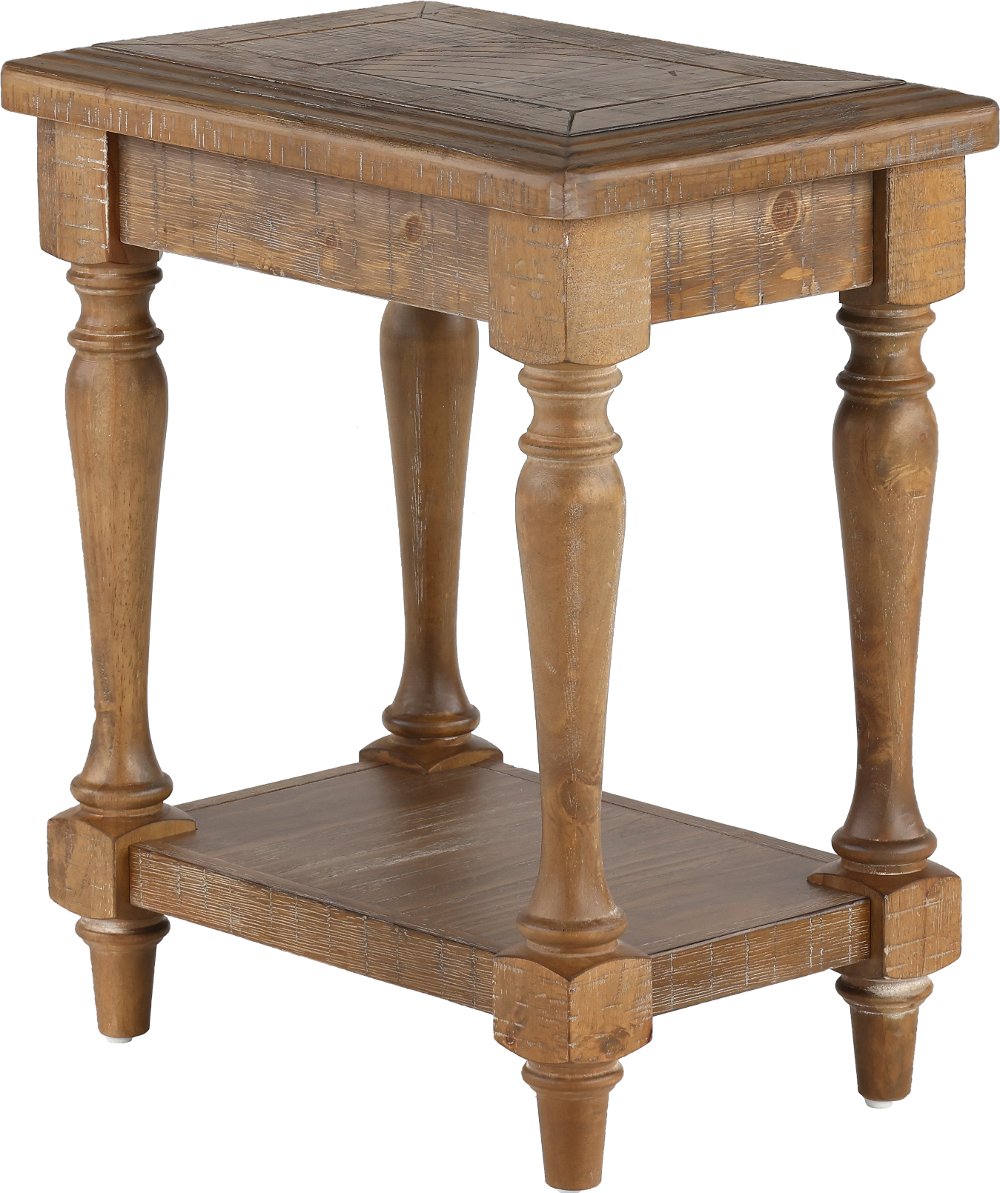
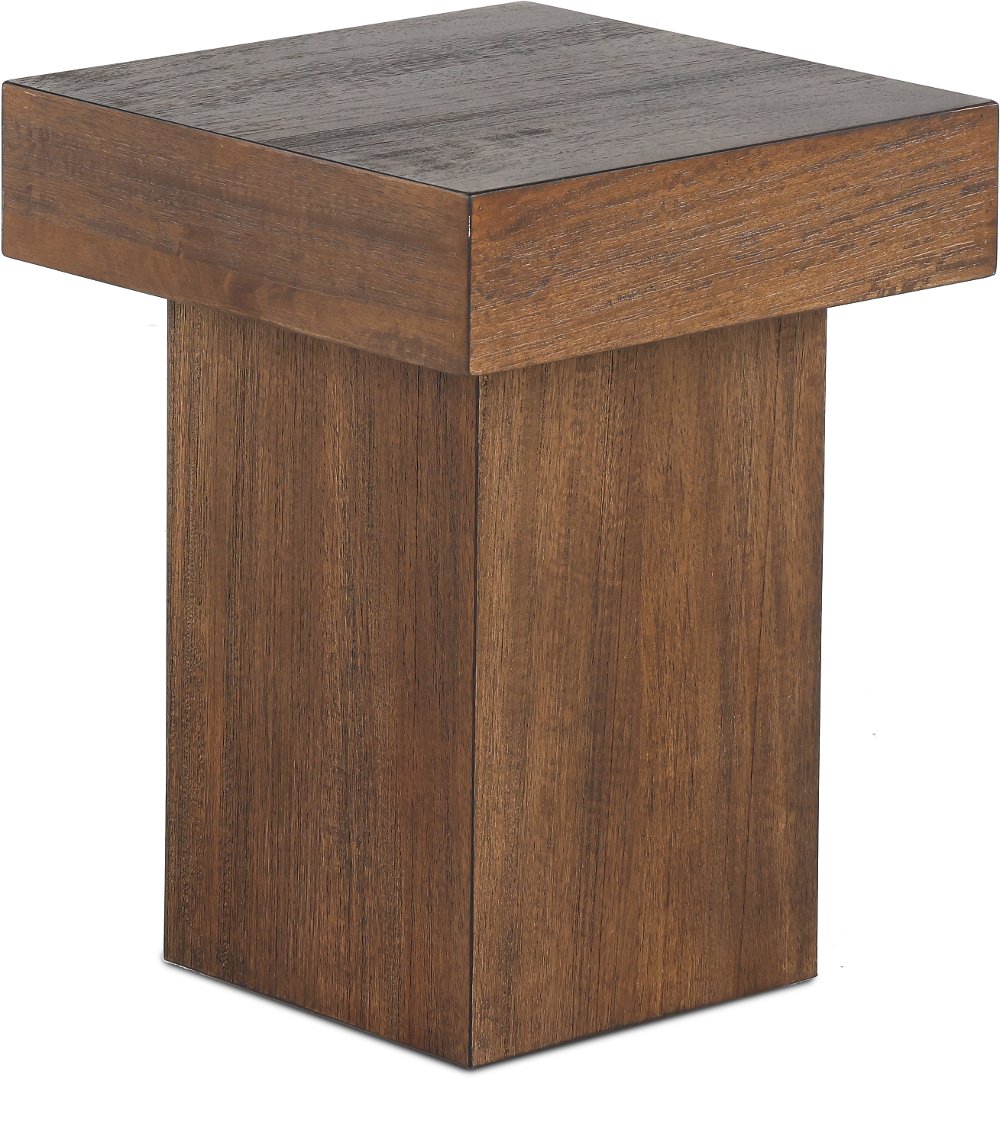
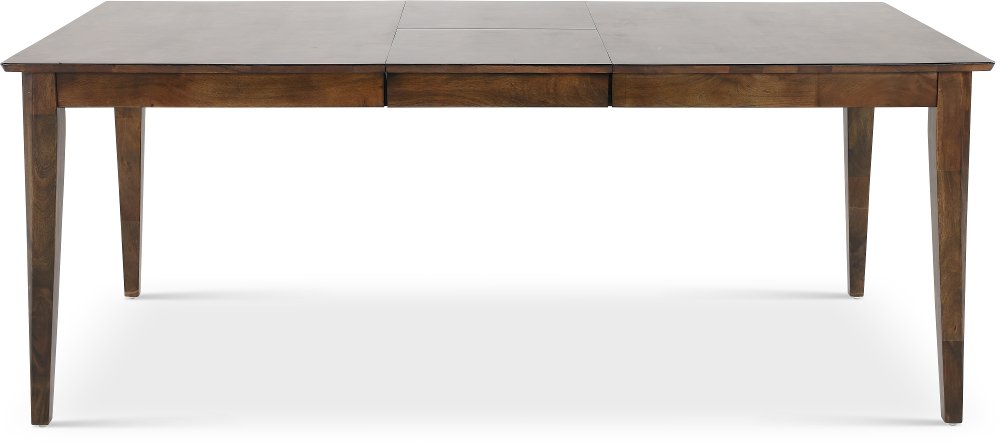
Brown end tables bring warmth and useful surface space to the places where you settle in, whether that’s beside a living room sofa, next to a reading chair, or at the end of a loveseat. A place for your coffee, reading glasses, and lamp can make a seating area feel more comfortable without taking over the room. Brown covers a wide range of looks, from light honey and caramel tones to rich walnut shades and deep espresso finishes. Lighter browns can soften a room with dark upholstery, while deeper shades create contrast beside a cream sofa or pale rug. Medium brown finishes often work well with several wood tones, making them a practical choice when your furniture has come together over time rather than as a matching set. Your end tables don’t have to match your coffee table exactly. A shared undertone, similar leg shape, or repeated hardware finish can help different pieces feel connected. Notice whether the brown leans golden, reddish, or cool and muted, especially when it will sit near wood flooring or a large entertainment center. Shape and detail matter just as much as color. Straight legs and simple edges suit an understated room, while turned legs, framed drawers, and decorative hardware lend a more traditional feel. A brown top paired with a dark metal base can add an industrial touch; rounded edges and tapered legs give the same color a softer, more relaxed character. If visible grain is part of the look you love, Brown Wooden End Tables are a natural place to explore that texture. A brown finish also gives colorful accessories room to stand out. A ceramic lamp, a small stack of books, or a favorite framed photo can feel right at home against its earthy backdrop, without making the table compete for attention.
The best fit depends on how you use your seating area, not just how much empty space appears beside the sofa. An end table close to the height of the sofa arm generally keeps drinks and lamp switches within comfortable reach. Beside an armless chair, consider your seated reach instead, so you’re not stretching upward or bending far down to pick up your phone. Measure the table’s full width and depth, including any projecting top or hardware, and leave enough room for people to move comfortably through nearby walkways. A narrow rectangular table can make good use of the space between a sofa and a wall, while a round table can soften a seating arrangement and ease movement around an exposed corner. Rounded edges may also be worth considering in a busy family room, though any table still needs a stable base and thoughtful placement. If a drawer faces your chair, check that it can open without hitting the upholstery; if the table sits near a recliner, account for the chair’s movement and extended footrest. Materials influence both appearance and everyday performance. Solid wood can show distinctive grain and may develop small signs of wear over time. Wood veneer brings a real wood surface to an underlying core, while engineered wood with a decorative finish can provide a consistent appearance. Construction quality, edge treatment, joinery, and finish all matter, so material names alone don’t tell the whole story about durability. Brown end tables may also combine wood or wood-look surfaces with metal, glass, or stone, creating different textures and care needs. An open metal base can keep a compact corner feeling less crowded, while a substantial cabinet-style table adds visual weight. For a table that will hold a large lamp or frequently used stack of books, check its dimensions and stated weight limits. A sturdy, well-proportioned piece should suit the load you plan to place on it, with enough clear surface left for the things you reach for throughout the day.
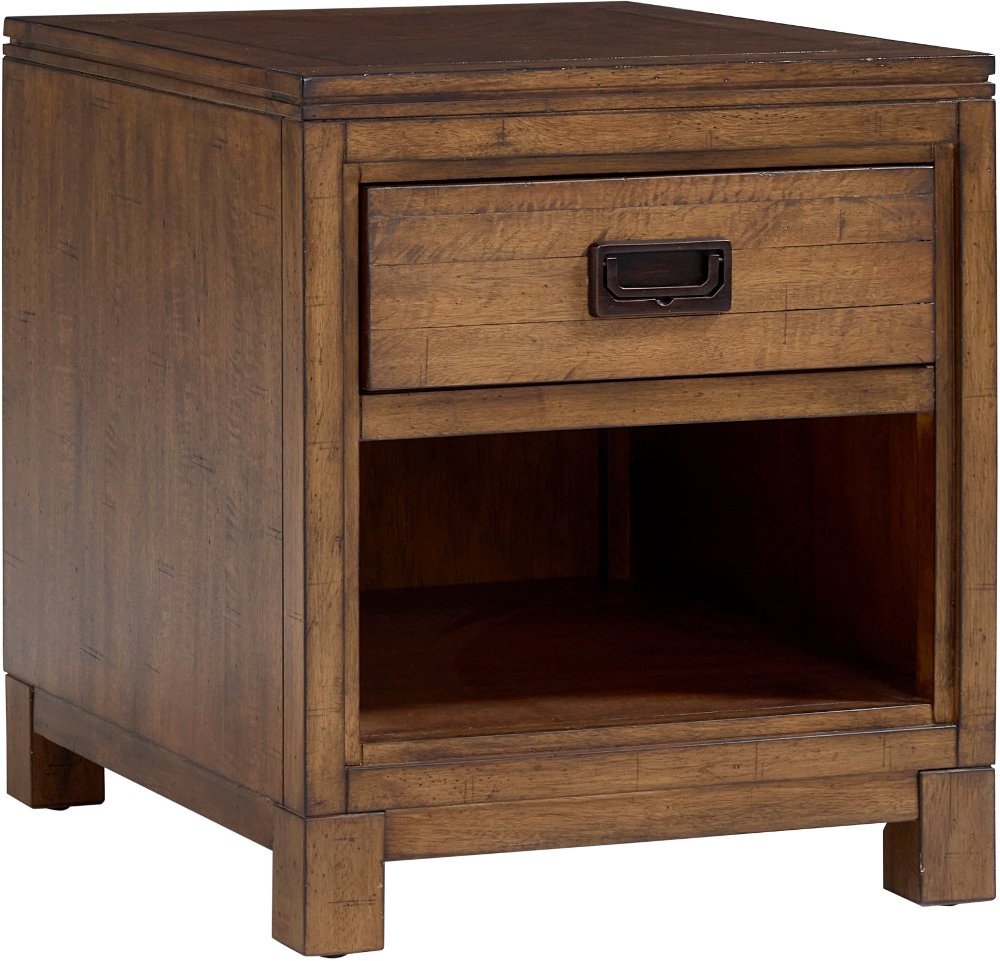
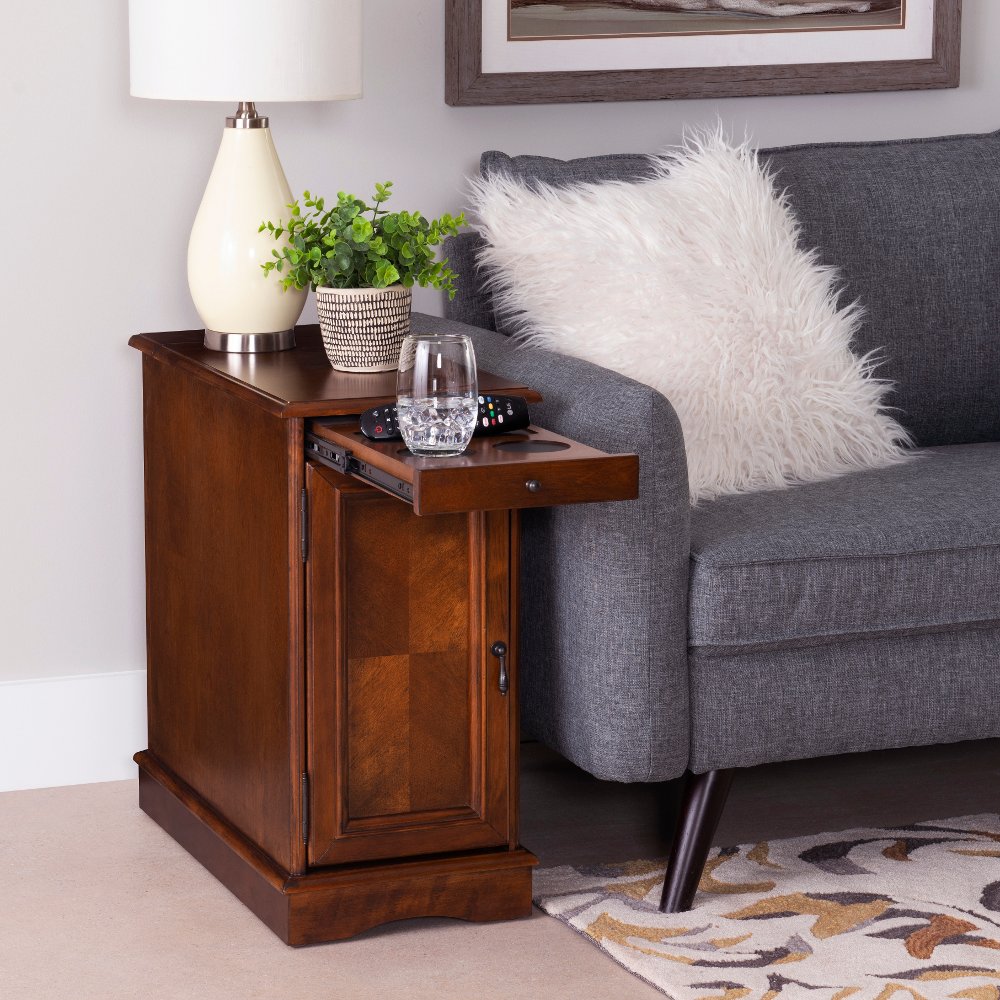
Storage makes a difference when the living room doubles as a place to read, watch movies, work on a laptop, or catch up with family. A drawer can give remotes, charging cables, and reading glasses a home instead of leaving them scattered across the tabletop. A lower shelf keeps books or a small basket nearby, while an enclosed cabinet can hide bulkier belongings for a calmer look. Open shelving works especially well when you want to see and reach what you’ve stored, but it also leaves those belongings visible. Think about the habits that tend to gather around your favorite seat. If you regularly set down a mug and a book, a usable stretch of tabletop may matter more than decorative details. If a lamp will stay on the table, leave room around its base and plan a safe path for the cord that won’t cross a walkway. Designs with built-in power features can be convenient where an outlet is hard to reach, provided their placement and use follow the manufacturer’s directions. Brown end tables can also serve beside a guest bed or in a small apartment where one piece needs to handle several jobs. As a housewarming gift, an end table is most useful when its size, finish, and storage suit the recipient’s space and preferences. To keep the surface looking its best, follow the care instructions for its particular material and finish. A soft cloth handles routine dusting, while coasters and protective pads help limit moisture rings and scratches. Blot spills promptly rather than letting liquid sit, and use only recommended cleaners; abrasive products or excess water can damage some surfaces. Direct sunlight may change the color of certain finishes over time. With sensible care and a size that fits your daily routine, a brown end table can remain a dependable part of your room through furniture rearrangements and changing decorating tastes.
Read More