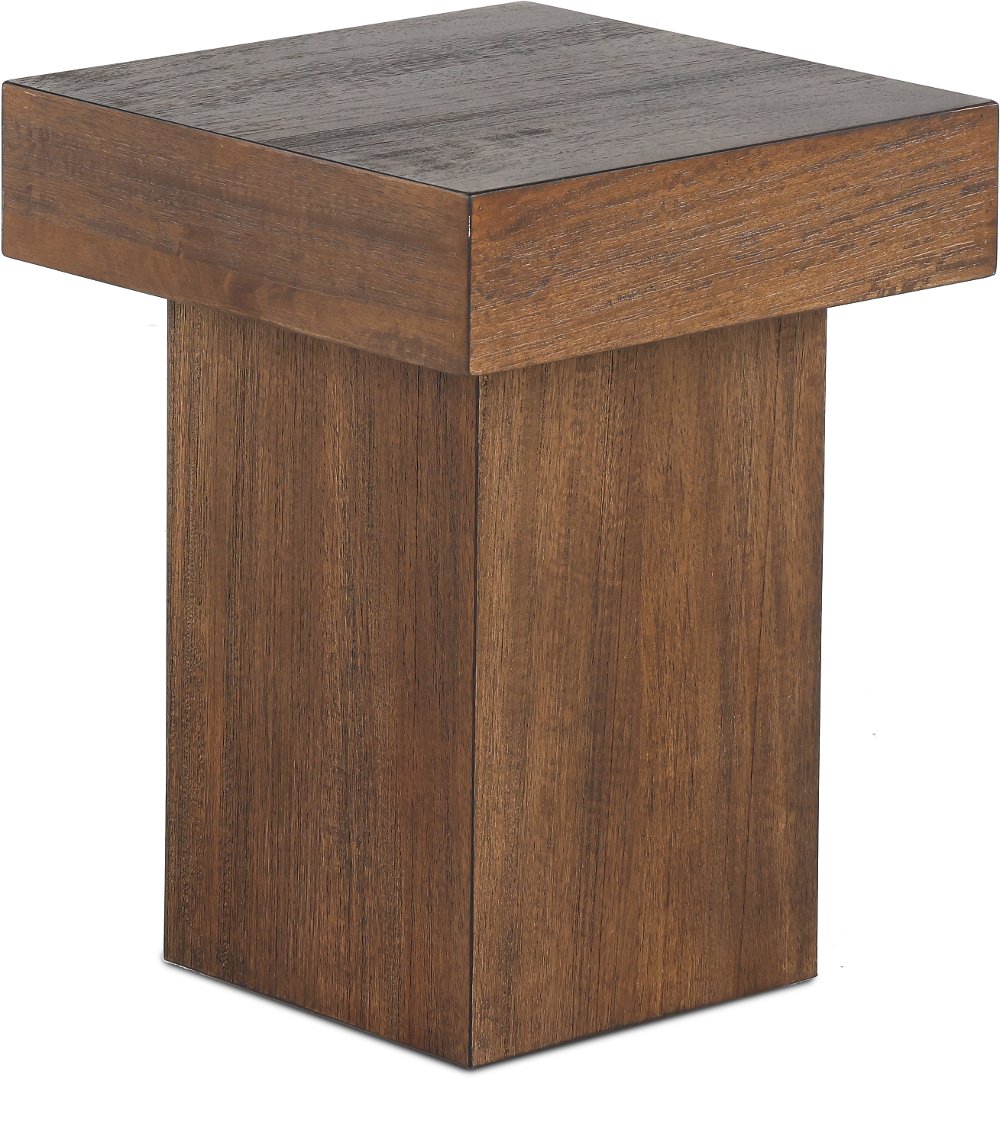
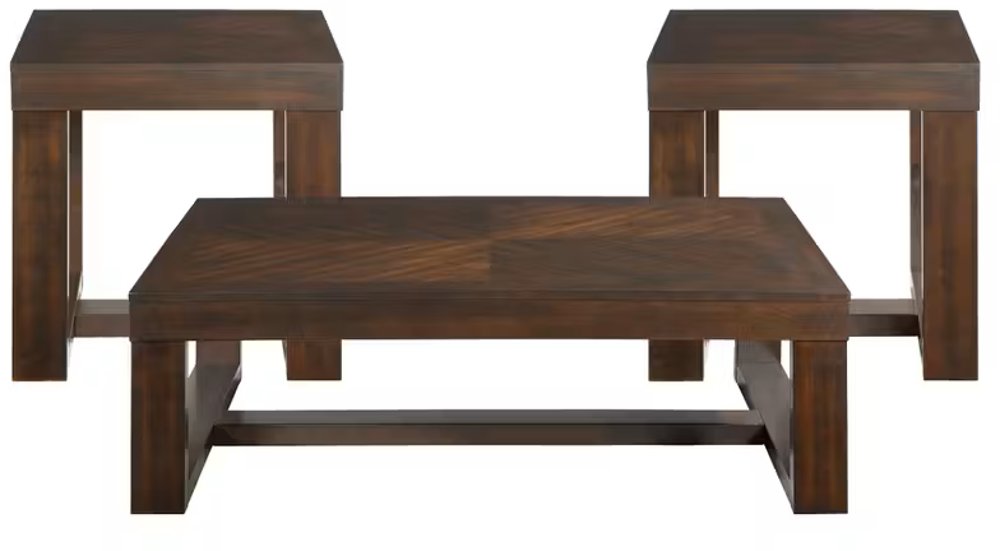
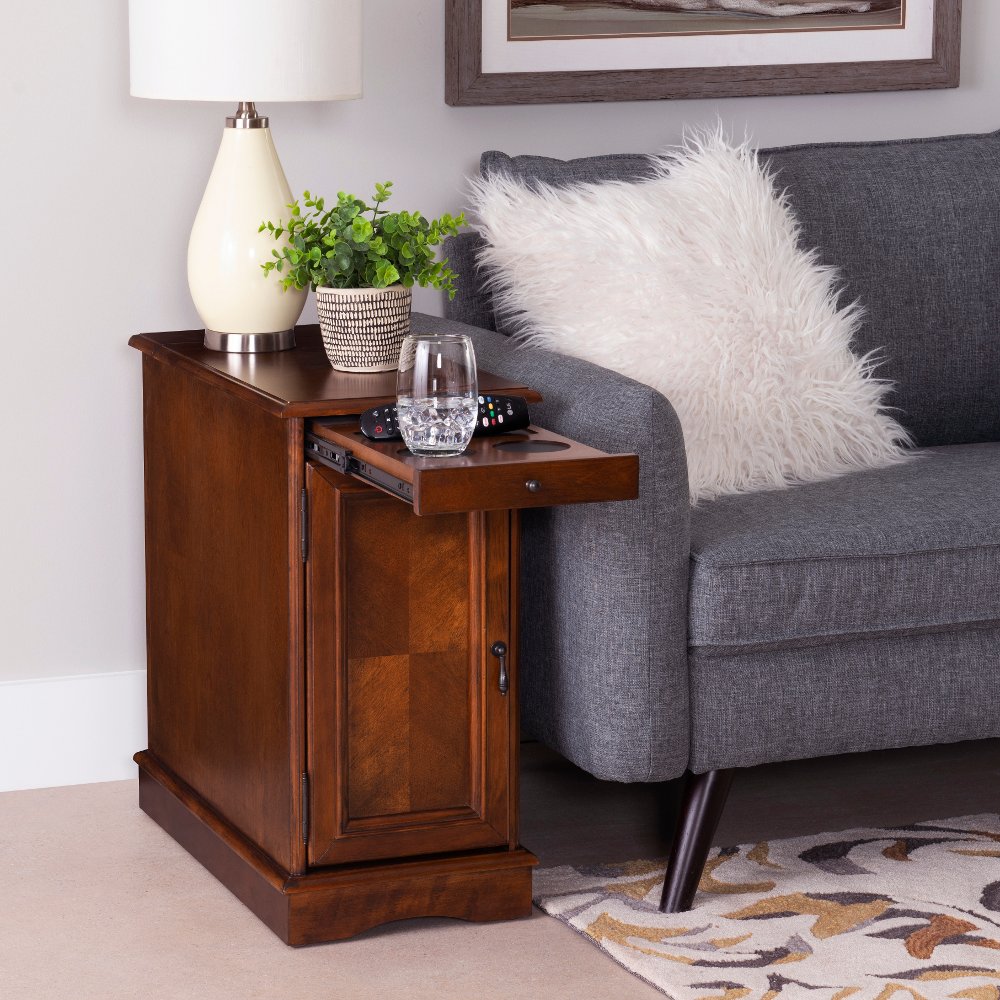
Brown square end tables bring a warm, grounded look to a living room while giving everyday essentials a place to land. Beside a sofa, a square tabletop offers room for a reading lamp, a drink, and the book you’re working through without stretching far along the wall. Next to an accent chair, it can turn an otherwise empty corner into a comfortable spot to settle in. The shape feels especially at home alongside straight sofa arms and rectangular rugs, but it also provides a pleasing contrast to curved upholstery. Brown finishes range from golden and caramel tones to walnut-inspired shades and deep espresso, so the overall effect can feel relaxed, traditional, or distinctly modern. A lighter brown with visible grain adds texture without drawing too much attention; a deeper finish gives pale upholstery a stronger visual anchor. If your room calls for that richer contrast, dark brown end tables offer another way to explore the look. Matching every wood tone in the room isn’t necessary. A brown side table can sit comfortably near an oak-toned floor or a painted media cabinet when the pieces share a warm undertone or a similar level of formality. Repeating the table’s color in a picture frame or another small accent helps the room feel connected. Details make a difference, too: tapered legs keep a square table looking light, substantial block legs give it more presence, and turned legs lend a familiar, traditional character. For a more relaxed setting, a textured finish can complement woven baskets and linen upholstery. In a cleaner-lined space, a smooth surface and simple hardware let the shape do the work. Whether you’re furnishing a first apartment, refreshing a family room, or adding a useful surface to a guest bedroom, this combination of color and shape fits easily into a room that’s meant to be lived in.
The best fit starts with the seat beside the table and the space around it. A tabletop close to the height of the sofa or chair arm usually makes setting down a mug feel natural; one that sits much higher or lower can be awkward to reach. Measure the arm height as well as the floor area, and check the table’s listed width and depth rather than judging its size from a photo. A square footprint extends equally in both directions, which matters when you’re fitting a table between a sofa and a nearby walkway. Painter’s tape on the floor can help you picture where the corners will sit and whether there’s enough room to walk past comfortably. Leave enough separation from the upholstery to avoid rubbing while keeping the surface within easy reach. If the table will stand beside a recliner, allow for the chair’s full movement, including its footrest. Think about what needs to live on top: a lamp with a broad base takes more space than a slim reading light, and a favorite oversized mug deserves a secure spot away from the edge. Storage changes how the table works day to day. A drawer can tuck away remotes, charging cables, and reading glasses, while an open shelf keeps books or a small basket easy to reach. A lower shelf also gives you somewhere to move those essentials when company arrives and the tabletop needs to hold drinks. Check drawer clearance near chair arms and neighboring furniture, and consider whether you can reach a wall outlet without running a cord across a walking path. For a shared living room, two tables with similar heights can give both ends of the sofa a balanced feel without requiring identical designs. In a smaller room, an open base may feel less visually crowded, while an enclosed design can be useful when hidden storage matters more. Rounded or softened corners are worth considering in busy spaces where people frequently pass close to the furniture.
Materials and construction help determine how a brown square end table will look, feel, and hold up to daily use. Solid wood brings natural grain variation and character, though it can still dent, scratch, or react to moisture. Wood veneer places a thin layer of real wood over a supporting core, offering genuine grain with a different construction method; its care needs depend on the finish and underlying material. Engineered wood with a laminate surface can provide a consistent brown appearance and straightforward upkeep, but standing water may damage exposed edges or seams. Metal bases paired with brown tops introduce contrast and can suit industrial or contemporary rooms. Whatever the material, look for a stable base, secure connections, and drawers that move smoothly. Follow any stated weight limits, especially if you plan to use a substantial lamp or stack books on a lower shelf. A sturdy feel matters more than a heavy appearance, and any required assembly deserves attention: properly tightened hardware helps prevent wobbling, while overtightening can damage components. For routine care, use a soft cloth and follow the manufacturer’s cleaning directions. Coasters help protect the top from drink rings, and a protective pad beneath a planter can keep moisture and grit away from the finish. Blot spills promptly rather than letting liquid collect around seams or hardware. Avoid assuming that a wood polish or household spray suits every brown surface; a product intended for one finish may leave residue or affect another. Felt pads beneath decorative objects can reduce scratches when you rearrange the top, and floor protectors should suit both the table legs and the flooring. These small habits are particularly helpful in a room where the table serves several purposes throughout the day. It might hold coffee during a quiet morning, support a laptop briefly while you check a message, and keep a lamp and remote close during an evening on the sofa. With the right proportions, storage, and finish, a brown square end table becomes a dependable part of that routine, adding warmth while making the room easier to use.
Read More