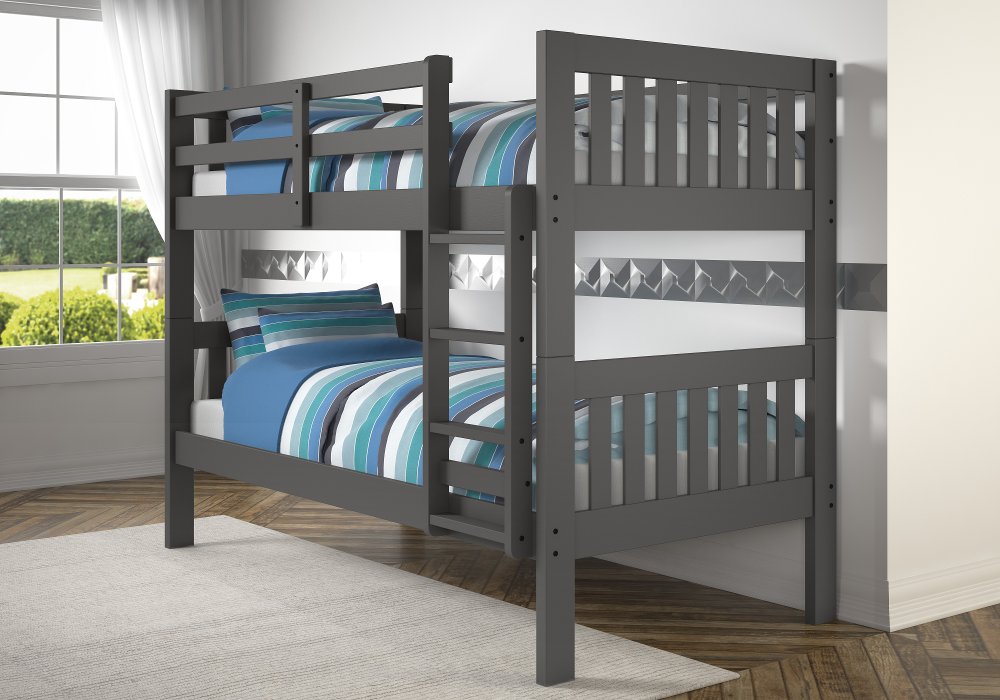
Bunk bed frames stack two sleeping surfaces vertically, making room for more than one sleeper without taking up the floor space of two separate beds. They’re a practical choice for siblings sharing a bedroom, children who enjoy sleepovers, and guest rooms that need to accommodate visiting family. In a smaller bedroom, that vertical layout can leave space for a dresser, a reading chair, or a clear stretch of floor where kids can build and play. Common configurations include twin over twin, twin over full, and full over full. Twin-over-twin bunk beds keep the footprint compact, while a twin-over-full frame provides a wider lower sleeping surface. Full-over-full bunk beds offer more mattress width on both levels, though they require a larger footprint and careful attention to each bunk’s weight limit. Mattress size alone doesn’t determine whether a frame is suitable for a teenager or an adult; the manufacturer’s intended use and weight capacity matter, too. The frame’s overall dimensions also extend beyond the mattress dimensions, especially when it includes stairs, shelving, or substantial headboards. A bunk bed with a ladder may leave more floor space open, while a staircase design can offer broader steps and sometimes incorporates storage. Either layout needs a clear approach so getting into bed doesn’t mean squeezing past a dresser or stepping over toys. Some frames are designed to separate into two individual beds, a useful option when siblings eventually move into separate rooms or sleeping arrangements change. Others remain a single stacked structure, so it’s worth confirming that feature rather than assuming every bunk bed converts. Loft beds serve a related but different purpose: They raise one sleeping surface above open space for a desk, seating, or storage instead of placing a second bed underneath. For more sleeping arrangements in this category, explore Beds for Bunk Beds with the room’s layout and each sleeper’s needs in mind.
Materials give bunk bed frames much of their character, but construction details are just as important to everyday performance. Wood bunk bed frames can bring warmth and visual weight to a room, with finishes that range from light natural tones to deep stains and painted surfaces. A simple wood frame can sit comfortably alongside a colorful quilt and a well-loved dresser, while paneled ends create a more substantial furniture look. Depending on the design, wood frames may combine solid wood, veneers, and engineered wood components; each part should be evaluated by its role and the frame’s stated specifications rather than appearance alone. Metal bunk bed frames often have slimmer profiles and open lines that keep a shared room from feeling visually crowded. Their finishes can complement everything from playful bedding to a more understated teen bedroom. Metal doesn’t automatically mean lightweight, just as a thick wood post doesn’t establish a bed’s load capacity. Secure connections, properly supported slats, and assembly that follows the manufacturer’s directions contribute to a stable frame. When comparing dimensions, measure the room’s length and width, then account for the bed’s full footprint, including any angled ladder or projecting steps. Leave space for doors and drawers to open, and check that a trundle or underbed storage drawer can extend without hitting nearby furniture. Ceiling height deserves equal attention. Measure the clearance above the upper mattress, not just above the empty frame, so the sleeper has comfortable room to sit up while meeting the manufacturer’s clearance requirements. The space between the lower mattress and the upper bunk also affects comfort during bedtime reading or a quiet afternoon on the lower bed. Keep the entire structure away from ceiling fans, hanging fixtures, and window blind cords, and position it so it doesn’t block an exit. In a room with a sloped ceiling, the tallest point of the room won’t tell the whole story; the clearance needs to work across the upper sleeping area.
A well-suited bunk bed frame balances useful features with safe, comfortable daily routines. Upper bunks aren’t intended for children younger than 6, and older children need to be able to use the ladder or stairs safely and follow the bed’s instructions. Look for upper-bunk guardrails on both sides, including the side nearest the wall, and follow the manufacturer’s directions for their installation and use. The correct mattress thickness is essential because an overly thick mattress reduces the effective height of the guardrails. Match both mattress size and maximum thickness to the frame’s specifications, and use only the foundation or support system the manufacturer permits. Many bunk bed frames support mattresses on slats without a box spring, but that detail varies by design. Weight limits also vary between upper and lower bunks; check whether the stated capacity includes the mattress and bedding before deciding who will sleep where. Built-in drawers can give pajamas and spare sheets a home, while shelves can keep a bedtime book close without adding a separate nightstand. Those conveniences work best when they leave climbing access and guardrails unobstructed. Keep ropes, belts, and similar hanging accessories off the frame, and reserve the upper bunk for sleeping rather than jumping or rough play. For day-to-day care, dust the frame with a soft cloth, clean spills promptly, and use cleaning products appropriate for the finish. Avoid soaking wood surfaces or using abrasive cleaners that can damage painted or coated parts. Check fasteners, slats, ladder attachments, and guardrails regularly, tightening hardware as directed and addressing loose or damaged components before further use. After a move or reassembly, repeat those checks before anyone sleeps in the bed. With the right dimensions, a dependable support system, and features that suit the household, a bunk bed frame can make a shared bedroom feel more organized while giving each sleeper a place of their own.
Read More