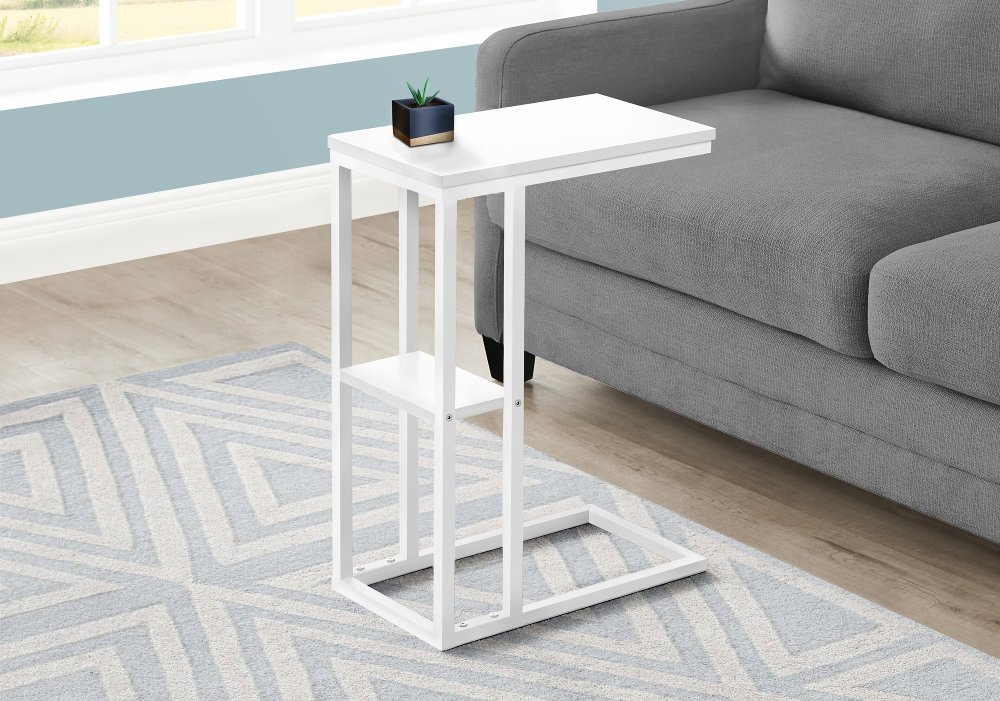
C-shaped tables bring a useful surface closer to where you sit without taking over the room. Their distinctive profile usually pairs a tabletop with a support along one side and a low base that can slide beneath compatible seating. That design lets the top reach over the edge of a sofa or chair, keeping a drink, book, or remote within easy reach. In a living room where a traditional end table feels too far away, a C-shaped side table can make a favorite seat more comfortable and convenient. It’s also a practical choice for apartments, reading corners, and multipurpose rooms where every piece of furniture needs to earn its space. Picture a compact surface beside an armchair, with enough room for a mug and the novel you’re halfway through, or a table pulled toward the sofa for a snack while you watch a movie. A larger top may accommodate a laptop for occasional use, provided its dimensions and weight capacity suit your equipment. The right fit depends as much on your seating as it does on the table itself. A base needs enough clearance to pass under the sofa or chair, and its reach determines how far the tabletop can extend toward you. Low upholstery, floor-level frames, and thick rugs can affect that fit. Recliners need extra consideration because footrests and moving mechanisms require unobstructed space. Tabletop height matters, too: a surface near the height of the seat’s arm often feels comfortable for drinks, while typing calls for a height that lets your shoulders relax and your wrists rest naturally. A fixed-height design may work beautifully beside one chair but feel awkward beside another. Looking at the complete dimensions, including the base and the space beneath the top, helps you choose a piece that feels like it belongs with your furniture rather than something you have to work around.
Materials and finishes give C-shaped tables much of their character, whether your room calls for warm wood tones, a crisp metal frame, or a lighter-looking glass surface. Solid wood can bring distinctive grain and a substantial feel, with natural variation that adds depth to a simple silhouette. Wood veneer offers the appearance of real wood over a supporting core, while engineered wood with a laminate or other protective finish can provide a consistent look and an easy-to-maintain surface. Durability depends on construction and finish, not just the material name. A securely attached top, sound joints, and a base that sits evenly on the floor all contribute to a dependable piece. Metal frames can look slim and understated, though the shape and dimensions of the base still matter for stability. Glass tops create an open appearance that can complement smaller rooms, but they also show fingerprints and need cleaning suited to the surface. Stone and stone-look tops add visual weight and texture; natural stone may require different care than a manufactured alternative. For everyday use, a smooth, sealed surface is useful when the table regularly holds coffee, snacks, or a water bottle. Coasters and a protective mat help shield finishes from moisture, heat, and scratches, and spills are easiest to manage when wiped promptly. Cleaning directions should match the specific material and finish, since a cleaner that works on glass may damage wood or coated metal. A soft cloth and manufacturer-recommended cleaning products are a better starting point than harsh abrasives. Floor protection matters as well, especially if you expect to move the table between seats. Protective pads, when appropriate for the base and flooring, can help reduce scuffs, but lifting rather than dragging is the gentler approach. A balanced design and an appropriate weight capacity are particularly important with a cantilevered top. These tables are meant to support the everyday essentials described by their specifications, not to serve as seats, steps, or supports for getting up from a chair.
The best C-shaped accent table fits both your room’s style and the small routines that happen there. A narrow rectangular top can sit neatly alongside a sofa, while rounded corners may feel less intrusive near a walkway. A square or round surface can offer a different balance of usable space and visual softness, depending on its size. Rounded edges don’t replace the need for a clear path, especially in a busy household with children or pets. If you prefer a more elongated tabletop with curved edges, oval shape tables offer another shape to consider alongside your seating layout. For a coordinated look, repeat an existing finish from your coffee table, shelving, or chair legs; for a more relaxed mix, choose one shared detail, such as a wood tone or metal color, rather than matching every piece. A slim dark frame can give a soft upholstered sofa a little definition, while a warm wood top can make a reading corner feel inviting. Practical details deserve just as much attention as appearance. A surface intended for a laptop should leave room for comfortable positioning, and nearby charging cords should stay out of walking paths. If the table will move from the living room to a bedroom, its weight and overall size should make that move manageable. Beside a bed, it may provide a handy spot for a book or glasses, although low bed frames and storage drawers can limit where the base fits. For someone furnishing a first apartment, settling into a smaller home, or creating a dedicated reading spot, a C-shaped table can also be a thoughtful housewarming gift when the recipient’s measurements and preferences are known. Its appeal is straightforward: a useful surface exactly where daily life calls for one, with a footprint that leaves more of the room open for living.
Read More