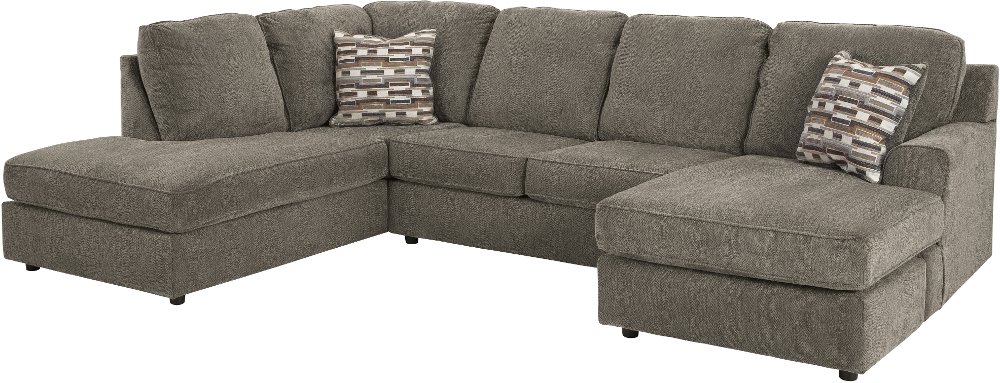
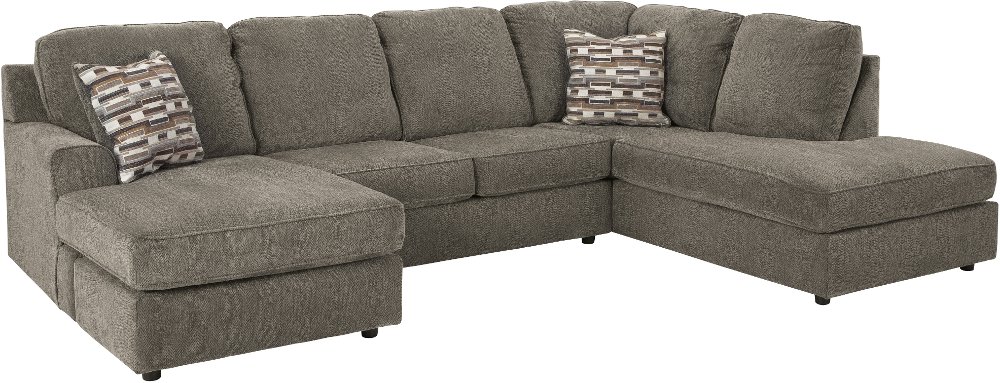
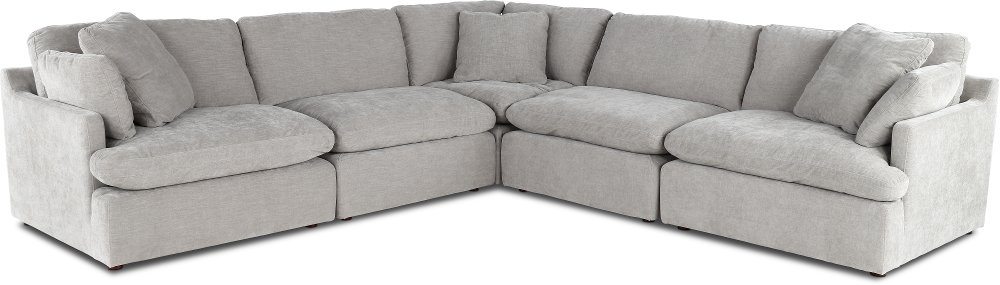
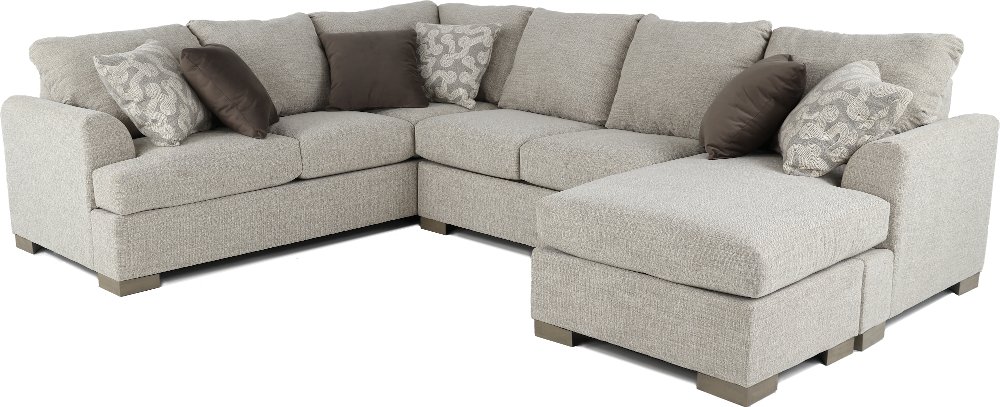
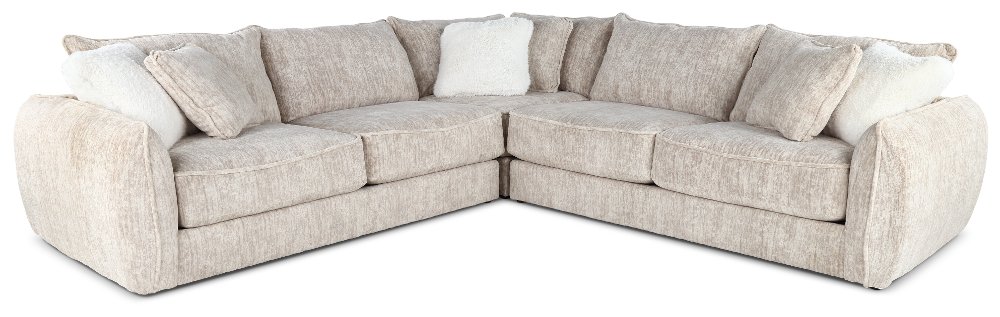
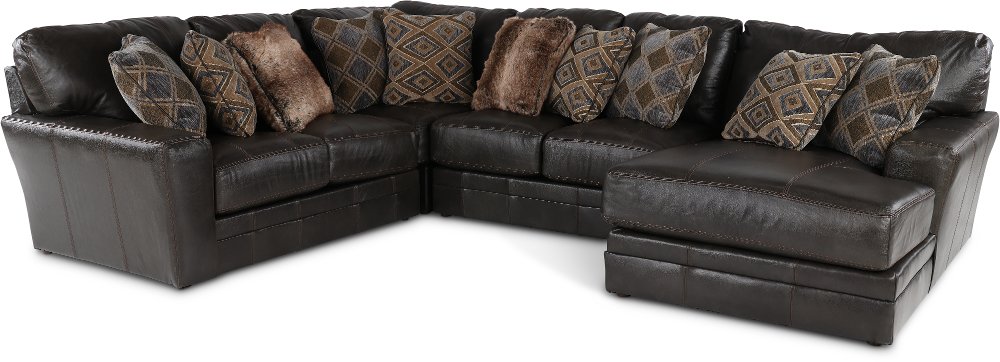
Chenille sectionals are upholstered sofas with connected seating sections and a soft, textured fabric made from chenille yarn. Short fibers project from the yarn’s core, creating the plush surface that gives chenille its familiar velvety feel. That texture adds warmth to a living room without requiring bold patterns or elaborate details, making a chenille sectional a comfortable centerpiece for everyday lounging, conversation, and movie nights. The fabric may contain polyester, cotton, rayon, acrylic, or a blend, so the word “chenille” describes the yarn’s construction rather than one specific fiber. Fiber content, weave, and finishing all affect how the upholstery feels and performs. Some chenille fabrics have a fine, closely woven surface; others have a more pronounced texture that feels especially cozy beneath a throw blanket during the cooler months. The pile can also catch light differently depending on its direction, giving the same cushion subtle variations in shading. Color plays a part in that effect: cream, oatmeal, and warm gray emphasize softness, while deeper brown, blue, or charcoal shades can give a large sectional more visual definition. Upholstery texture is only one part of comfort, though. A chenille sectional isn’t automatically deep, oversized, or sink-in soft. Seat depth, cushion fill, back height, and suspension determine how it supports your body. Foam cushions can offer a more structured sit, while fiber- or feather-blend wraps may add a softer initial feel and require regular fluffing. Higher-density foam isn’t necessarily firmer, so density and firmness shouldn’t be treated as interchangeable. If you like sitting upright with your feet on the floor, look closely at seat height and usable depth. If stretching out with a book is the goal, a deeper seat or chaise may be a better match. For a shared family room, a balance of supportive seating and room to lounge can make the sectional comfortable for different people throughout the day.
The right chenille sectional fits both the room and the way you move through it. An L-shaped sectional can define a seating area along two walls or create a natural boundary in an open floor plan. A U-shaped layout brings more seats around a central space, which can work well for larger households and frequent gatherings when the room has enough width. A sofa-and-chaise configuration gives you a place to put your feet up without extending seating across another full side of the room. Modular chenille sectionals use separate components that can connect in different arrangements, but flexibility varies by design; not every corner, arm, or chaise can move to either side. Likewise, a reversible chaise is a feature to confirm rather than assume. Before settling on a layout, mark the overall footprint with painter’s tape, including the chaise projection and any space needed for reclining mechanisms. Walk the route from the doorway to the kitchen, open nearby cabinet doors, and check that the sectional won’t crowd a floor vent. About 30 to 36 inches for a main walkway is a useful starting point where space allows, while roughly 14 to 18 inches between the seating edge and a coffee table often keeps essentials within reach. Adjust those distances for your household’s mobility and access needs. Measure doorways, stair turns, elevators, and hallways too, using the dimensions of individual sections rather than relying only on the assembled width. In a smaller living room, slim arms and a less bulky back can preserve usable seating without taking up as much floor space. In a larger room, a substantial sectional can anchor the space, with an area rug helping connect the seating pieces visually. If you’d like a separate reading spot or a seat angled toward conversation, chenille fabric chairs can complement the sectional’s texture without requiring every piece to match exactly. Leave enough breathing room around each seat so the arrangement feels welcoming rather than packed.
Everyday durability depends on more than the softness you notice when you first sit down. With chenille sectional sofas, consider the fabric’s fiber blend and weave alongside the frame, cushion construction, and seat support. A tightly woven upholstery fabric may be less prone to catching than a looser construction, but chenille’s raised fibers can still snag on pet claws, jewelry, or rough clothing hardware. Households with pets or young children may benefit from upholstery with documented performance features, although “chenille” alone doesn’t mean stain-resistant, scratch-resistant, or washable. A medium-tone, subtly varied fabric can make everyday lint and small marks less noticeable than a very light or very dark solid, but it won’t prevent wear. Removable cushion covers also aren’t necessarily machine washable; some zippers are included for assembly or servicing. Follow the manufacturer’s care instructions and upholstery cleaning code before treating spills. A W code generally permits water-based upholstery cleaners, S calls for solvent-based products, WS allows either type as directed, and X typically limits routine care to vacuuming or light brushing. Test any approved cleaner in a hidden area first. When a drink spills, blot gently with a clean, absorbent cloth rather than rubbing, which can spread the spill and disturb the pile. Avoid soaking the fabric, and seek professional upholstery cleaning when the instructions or the size of the stain call for it. Routine care can stay simple: vacuum gently with an appropriate upholstery attachment, rotate or flip cushions only when their construction allows, and fluff softer fills to help maintain their shape. Keep the sectional away from prolonged direct sunlight and concentrated heat when possible to reduce uneven fading and unnecessary material stress. For a busy household, these practical details matter as much as the first impression. A well-chosen chenille sectional gives you a comfortable place for quiet evenings, casual visits, and everyone’s favorite corner, with a layout and care routine that suit the way your home actually works.
Read More