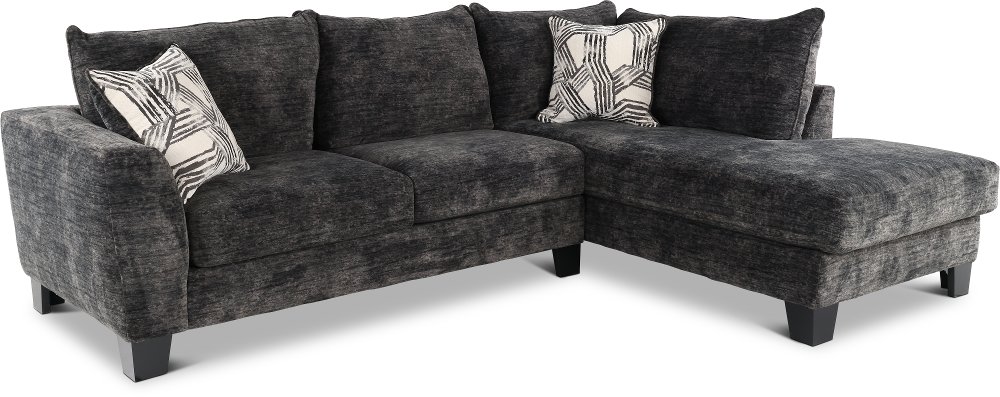
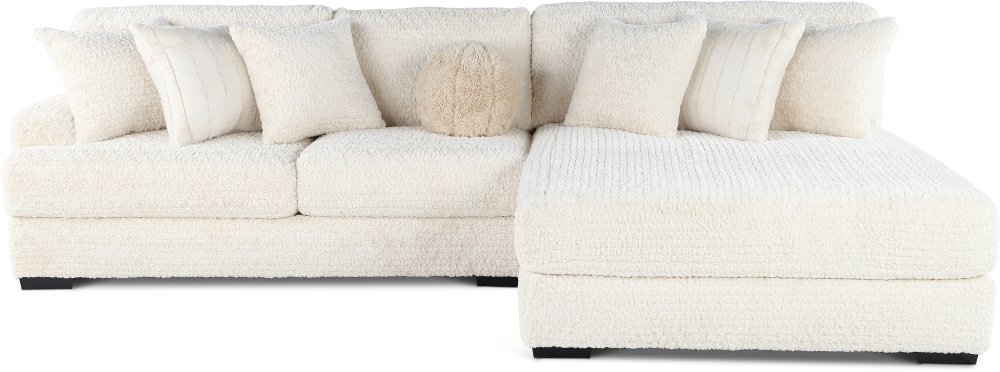
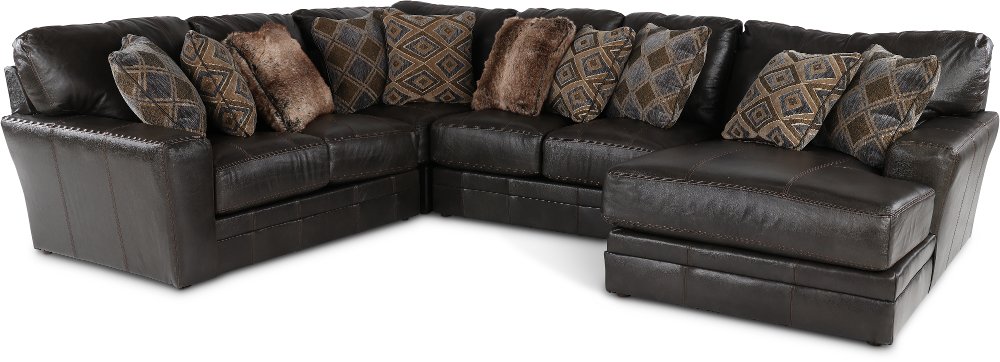
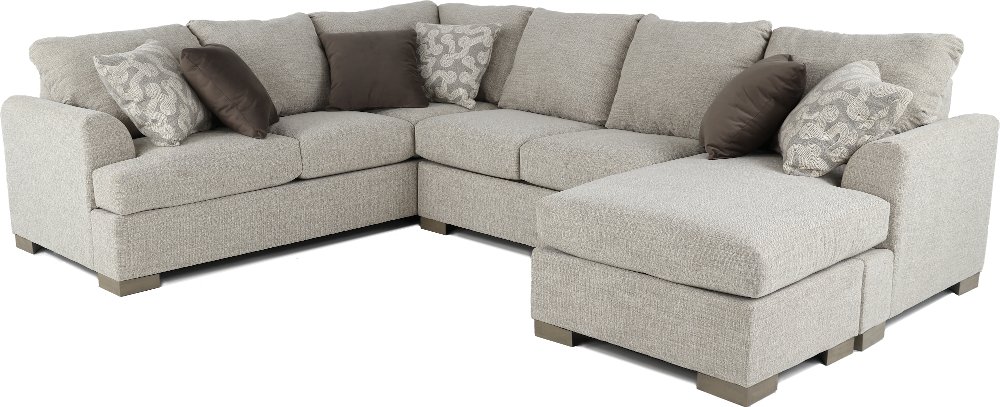
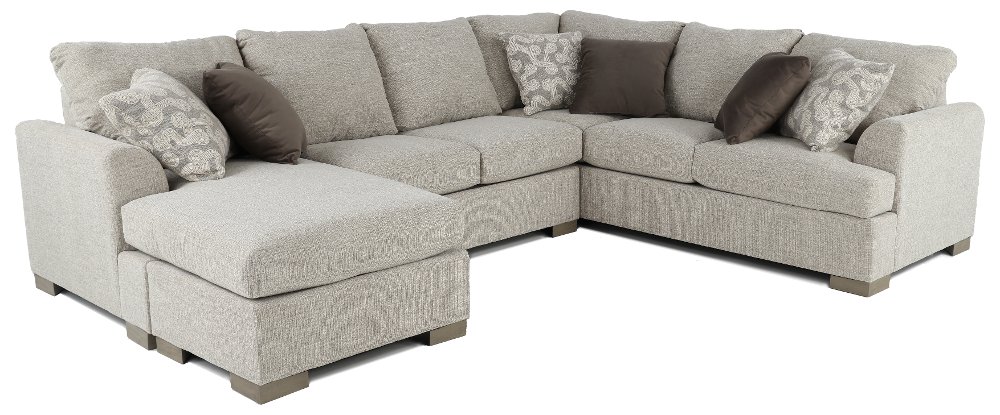
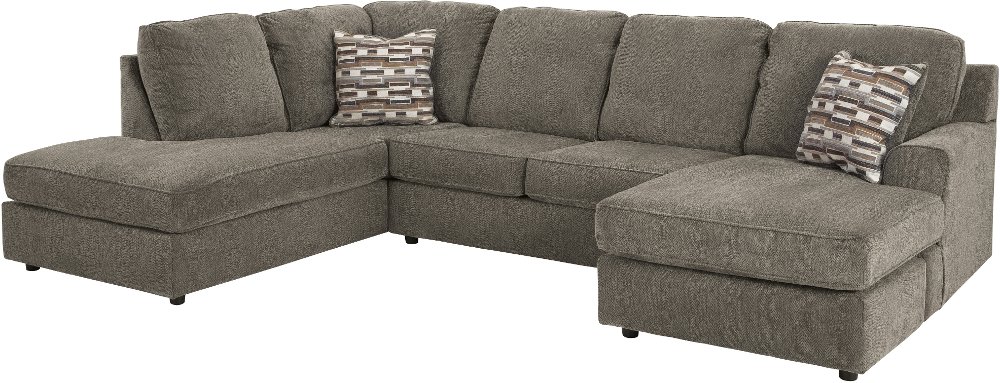
Chaise sectionals combine the seating of a sofa with an extended lounge seat, giving you a comfortable place to stretch out your legs without adding a separate ottoman. That extra length makes a difference in the everyday moments that turn a living room into your favorite room: settling in with a book, sharing a blanket during a movie, or putting your feet up after a day spent standing. Unlike a sectional with standard seats along both sides, a chaise sectional usually pairs a main sofa section with a longer seat that projects into the room, often creating an L-shaped footprint. The result brings together upright seating for conversation and a more relaxed spot for lounging. These sectional sofas work well in family rooms, apartments, open living areas, and multipurpose spaces where one piece of furniture needs to serve several purposes. A compact sofa with chaise can offer a couple room to spread out without filling every available inch, while a larger configuration gives a busy household more seating for shared downtime. During the cooler months, the chaise often becomes the spot for a soft throw, warm socks, and a quiet evening at home. Style matters just as much as that inviting feel. Slim arms and raised legs tend to give a sectional a lighter appearance, while broad arms, deep cushions, and a low profile create a more substantial, lounge-ready look. Tailored upholstery can feel polished enough for a main living room without making the space feel formal. Neutral colors leave room for changing pillows, rugs, and accent pieces, while a richer upholstery color can make the sofa a focal point. Choose a shape and finish that fit how you actually live, whether that means a tidy place to welcome guests or a generous landing spot where everyone gathers at the end of the day.
The most important purchase considerations for a chaise sectional are its overall dimensions, chaise orientation, seat proportions, and delivery requirements. Left-facing and right-facing typically describe the chaise position when you stand in front of the sofa and look at it: a left-facing chaise extends on your left, and a right-facing chaise extends on your right. Because product descriptions may use arm-facing terminology for individual components, confirm the arrangement with the configuration diagram before ordering. A reversible chaise can switch between sides on models designed for that purpose, which is useful if you move frequently or like rearranging your living room. Reversible does not necessarily mean modular; modular sectionals use separate components that can be arranged in configurations supported by their design. Measure the full width of the sofa and the total depth from the back to the end of the chaise, then mark that footprint on the floor with painter’s tape. Leave the tape in place while you move through the room. You’ll quickly notice whether the lounge end crowds the route to the kitchen, overlaps a doorway, or leaves too little space around a coffee table. Aim for about 30 to 36 inches along main walking paths where your layout allows, and roughly 14 to 18 inches between the seating edge and a coffee table. Check nearby drawers, cabinet doors, and floor vents, too. Delivery takes a separate set of measurements, including doorways, halls, stair turns, and elevator openings. Ask whether legs or other components come off for delivery rather than assuming they do. Once the footprint works, pay attention to how the seats fit your body. Deep seats suit people who like curling up, but a shallower seat may feel better for someone who prefers sitting upright with feet on the floor. Seat height, back support, and cushion firmness affect everyday comfort as much as overall size. If you can try a sectional in person, sit in both the regular seats and the chaise long enough to notice the difference.
Upholstery and construction help determine how well your chaise sectional fits your routine over time. In a home with children, pets, or frequent visitors, look for durable upholstery with clear care instructions and stain-resistance details. Performance fabric can be a practical choice, but the term covers different materials and treatments; check what the fabric is designed to resist and how spills should be cleaned. A removable cushion cover is not automatically machine washable, so follow the manufacturer’s instructions before taking one off for cleaning. Tightly woven fabrics may be worth considering around pets, though no upholstery is scratch-proof. Subtle texture and midtone colors can make everyday lint and small marks less noticeable than a very pale or very dark solid. Leather offers a different feel and develops character with use, but its care needs depend on the finish. Some leather surfaces wipe clean more readily than others, while softer, less-protected finishes may show spills, scratches, and sunlight exposure more easily. Request a swatch when available and view it beside your flooring and other furniture in daylight and evening light. Beyond the upholstery, compare frame materials, suspension, cushion fill, and the connectors that hold sectional pieces together. Foam cushions generally offer a more structured feel, while fiber- or feather-blend cushions may feel softer and need more regular fluffing; the exact construction matters more than the label alone. Think about practical details such as whether cushions can be rotated, how much clearance you’ll have for cleaning underneath, and whether replacement components are available. If you’re comparing broader lounging configurations, Lounge Sectionals can offer another way to explore seating that prioritizes room to relax. Set a budget that includes delivery and any services you need, and compare what each option provides rather than judging by size alone. A sectional for a first apartment may call for flexibility and a smaller footprint, while one for a long-term family room may put durability and generous seating first. The right chaise sectional leaves you with enough room to move, comfortable support where you need it, and a welcoming place to settle in.
Read More