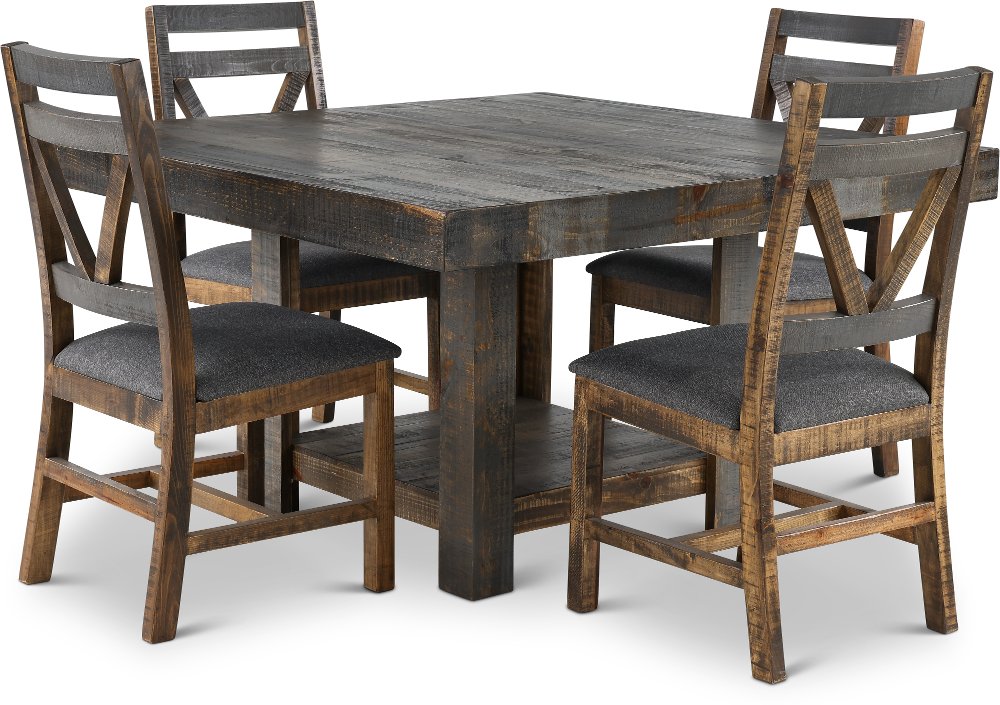
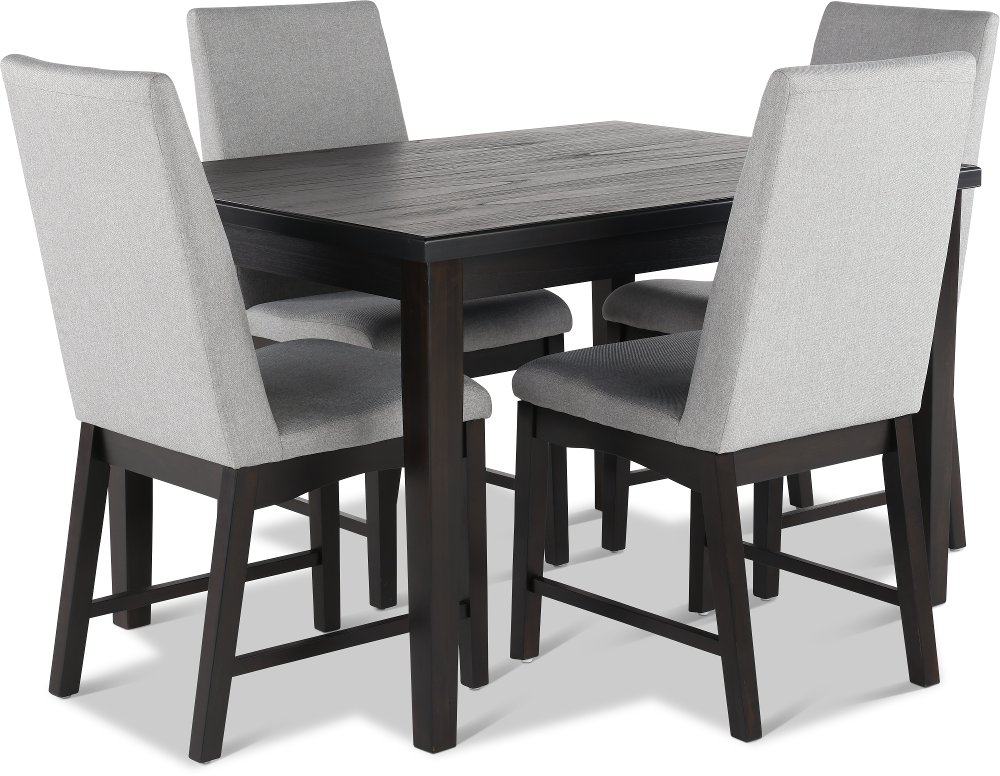
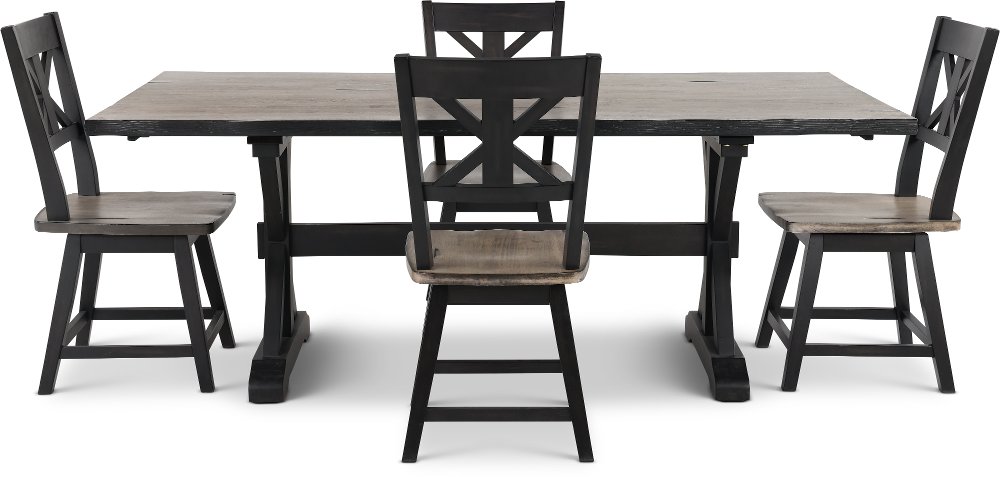
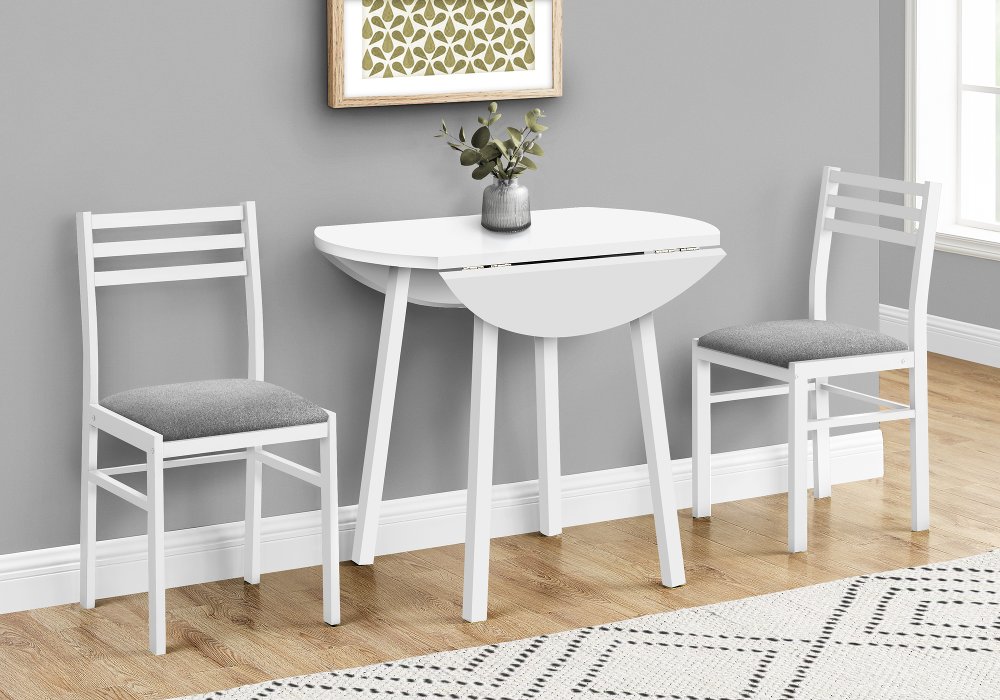
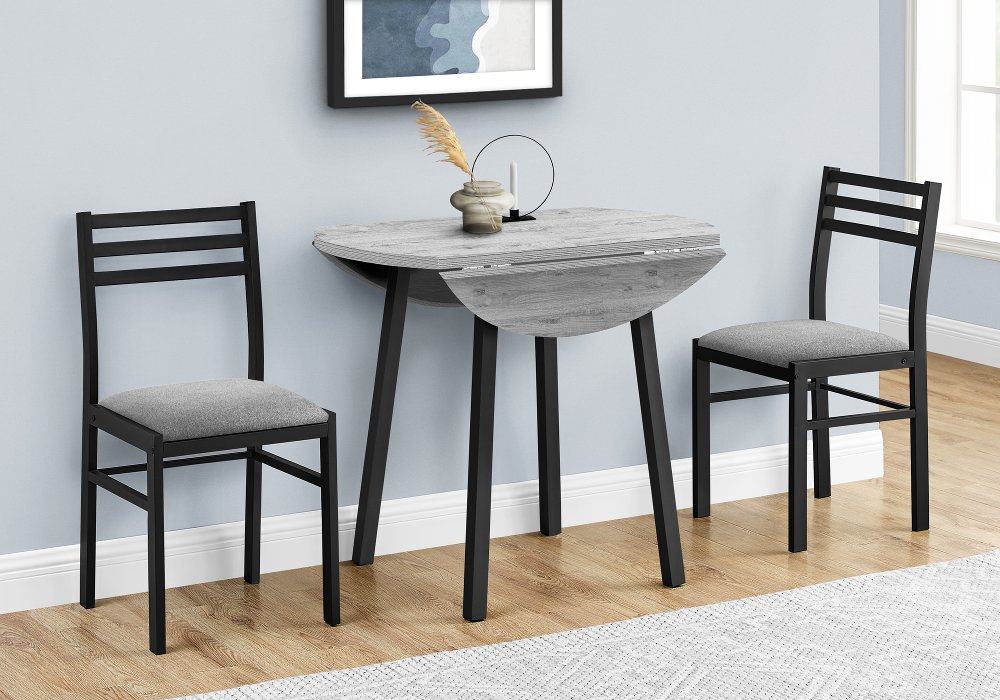
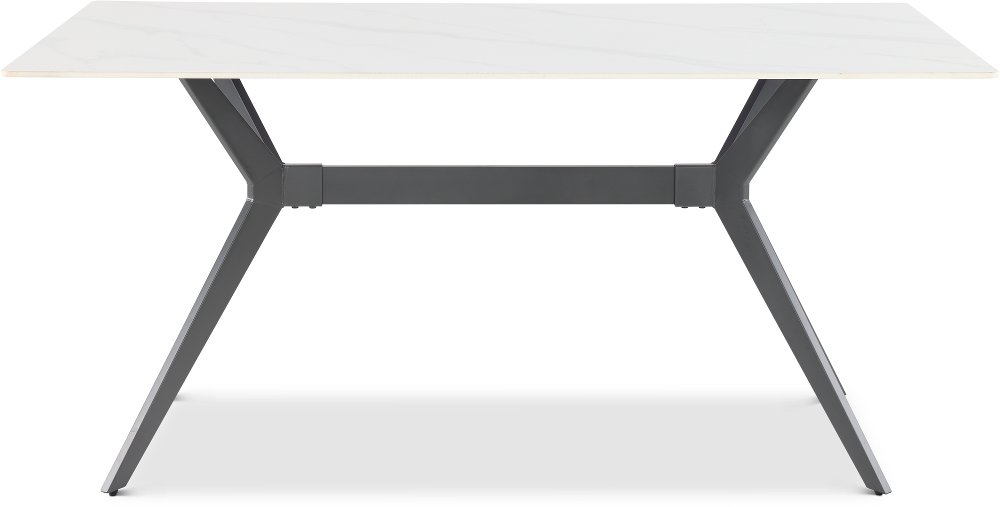
Contemporary square dining sets pair equal-sided tabletops with coordinated seating for a clean, balanced look in kitchens, breakfast nooks, and dining rooms. Their appeal goes beyond straight lines: a square layout gives everyone a similar position around the table, making everyday meals and face-to-face conversation feel comfortable and connected. A compact table can create a dedicated dining spot in an apartment without taking over the living area, while a larger square table can anchor a separate dining room. Common configurations include three-piece dining sets with a table and two chairs and five-piece dining sets with a table and four chairs. The piece count includes the table, so a five-piece set typically seats four people, not five. Actual seating capacity depends on the tabletop dimensions, chair widths, and leg placement rather than the shape alone. Contemporary styling often combines simple silhouettes, restrained details, and contrasting textures, such as a wood-look surface above slim metal legs or upholstered chairs alongside a smooth tabletop. Those combinations offer plenty of room for personal taste. Light finishes and slender frames can help a small dining corner feel less visually crowded; darker finishes and substantial bases create a stronger focal point. A glass tabletop keeps the base visible and can make the arrangement feel more open, while wood brings grain and natural variation into a room with otherwise smooth surfaces. For a couple furnishing a first home, a small square dining set establishes a useful place for dinner, morning coffee, and sorting the mail. For a household of four, a chair on each side gives everyone a defined spot without designating a head of the table. The same arrangement works well for a board game or a casual meal with friends, provided the surface has enough space for dishes and shared essentials. A coordinated set also creates a cohesive foundation, leaving lighting, artwork, and table linens to give the space its personality.
The right fit depends as much on the space around a contemporary square dining table as on the tabletop itself. A table measuring about 36 to 44 inches square often accommodates four people, although wide chairs, thick legs, or a deep apron can reduce usable room. Each diner generally benefits from about 24 inches of table edge, with additional space making larger place settings more comfortable. Allowing approximately 36 inches between the table edge and a wall or nearby furniture usually provides room to pull out a chair; about 42 to 48 inches is more comfortable where people regularly walk behind seated diners. These measurements are starting points, and individual mobility needs may call for more clearance. In a breakfast nook, the nearby refrigerator door, cabinet drawers, and route to the kitchen matter just as much as the empty floor around the table. A compact square top may fit neatly on paper yet feel cramped if a chair blocks a frequently used doorway. Chair dimensions deserve a close look, too. Armchairs need sufficient clearance beneath the tabletop and apron to tuck in, while generously curved backs can extend beyond the table even when the seats are pushed forward. Standard dining tables are commonly about 28 to 30 inches high, with chair seats around 17 to 19 inches high. Counter-height dining sets generally have tables around 34 to 36 inches high and taller seats designed to match. Standard-height seating often makes a versatile choice for meals, homework, and longer conversations; counter-height seating creates a more elevated, casual arrangement that can relate visually to a nearby kitchen island. Footrests, back support, and an easy-to-use seat height make a meaningful difference during daily use. A pedestal base may free up space near the corners, but its footprint can still affect where feet rest. Four-leg designs define each seating position more clearly, though the distance between the legs determines how easily chairs slide underneath. Together, these details shape whether the set feels comfortable beyond the first few minutes at the table.
Materials and construction influence both the character of contemporary square dining sets and the attention they need over time. Solid wood offers distinctive grain and can develop marks with use; its response to household humidity makes consistent indoor conditions important. Wood veneer places a thin layer of real wood over a supporting core, providing genuine grain without making the entire tabletop solid wood. Veneer thickness and the underlying construction affect repair options, so it shouldn’t be treated as interchangeable with solid wood. Laminate and other decorative surfaces can deliver a uniform appearance with straightforward cleanup, but resistance to scratches, heat, and moisture varies by product. Glass offers a crisp, reflective look and wipes clean easily, although fingerprints and smudges tend to show. For glass dining tables, tempered glass is a useful safety feature to confirm in the specifications. Stone and stone-look tops also differ considerably: natural stone may need sealing and protection from acidic spills, while engineered or coated surfaces have their own care requirements. Metal bases can provide a slim profile, with joint construction and finish quality contributing to long-term performance. Upholstered dining chairs add softness for lingering over dinner, while unupholstered seats simplify cleanup after crumbs and small spills. In homes with children or pets, fabric cleaning codes and any documented stain-resistance features are worth considering rather than judging practicality by color alone. Everyday care starts with the manufacturer’s directions, prompt spill cleanup, and cleaners suited to each surface. Placemats, coasters, and trivets help protect the tabletop, while felt pads beneath chair legs can help protect compatible flooring. Checking and tightening assembly hardware as directed can also keep frequently used chairs feeling secure. Intended placement matters just as much as care: indoor dining furniture shouldn’t be assumed suitable for an uncovered or exposed outdoor space. For a coordinated look beyond the dining room, Contemporary Patio Dining Sets offer a related category to explore, with outdoor-use specifications deserving the same attention as size and seating comfort. A well-chosen square dining set brings those practical details together in a place that feels ready for everyday life, from a quick breakfast to a dinner that stretches into conversation.
Read More