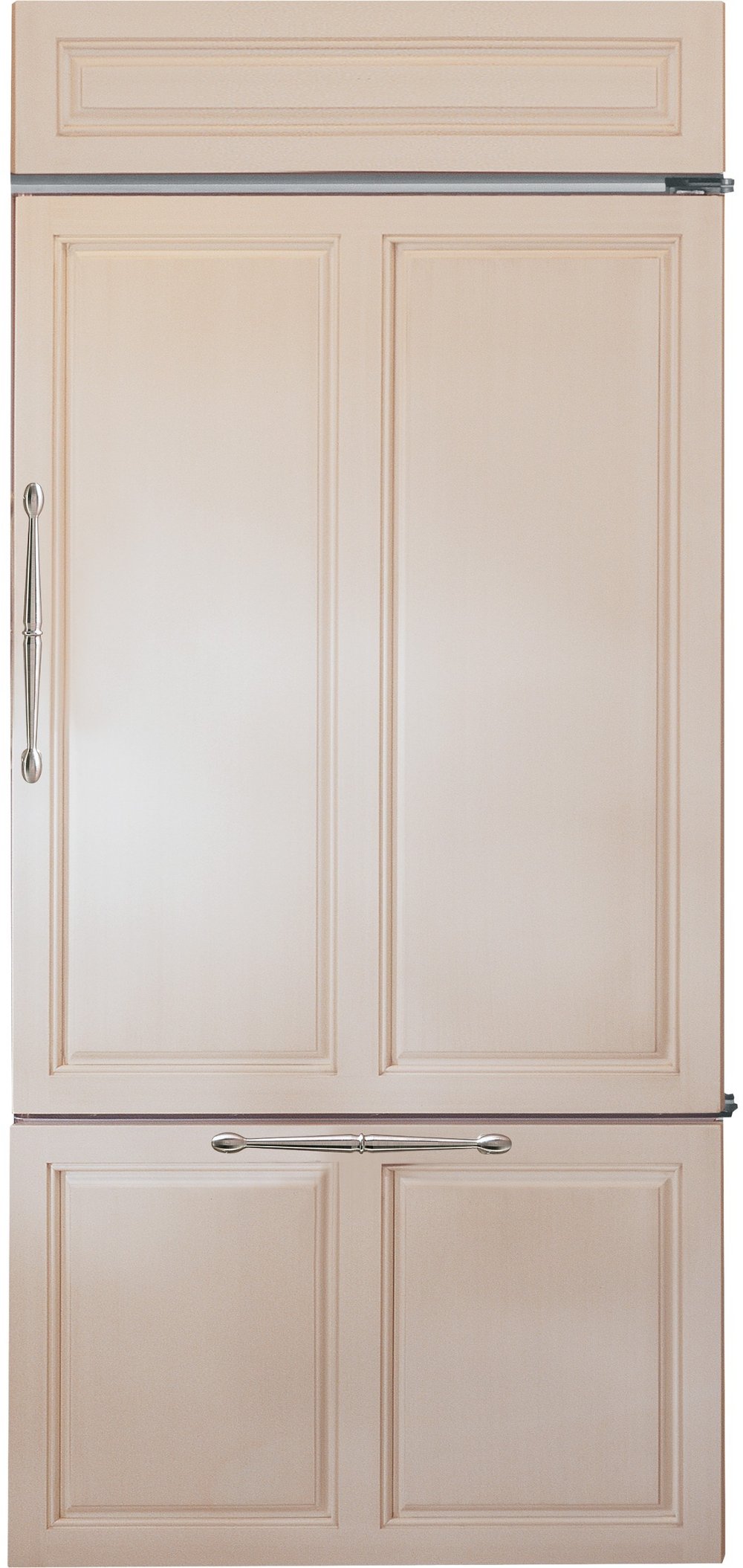
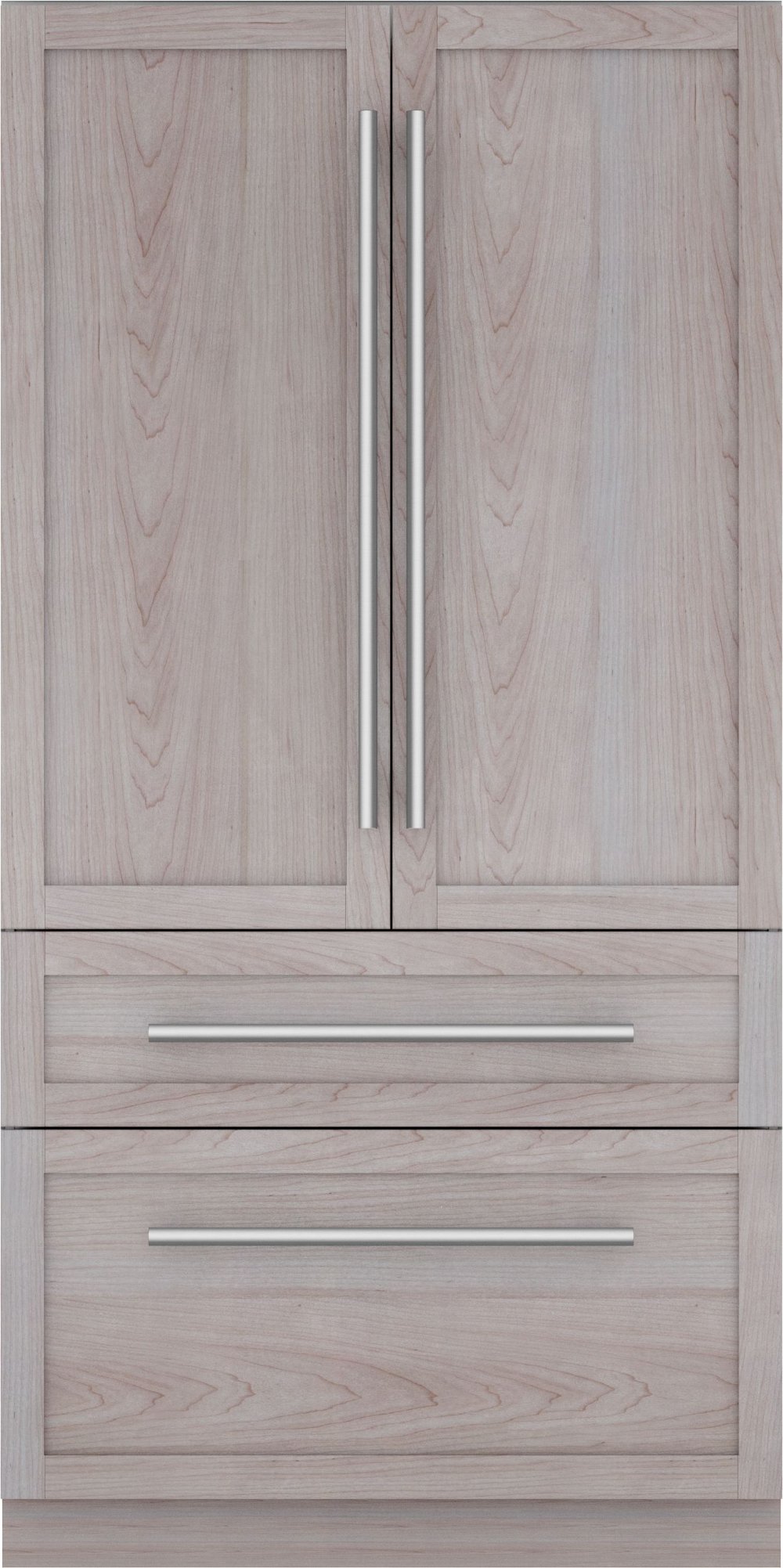
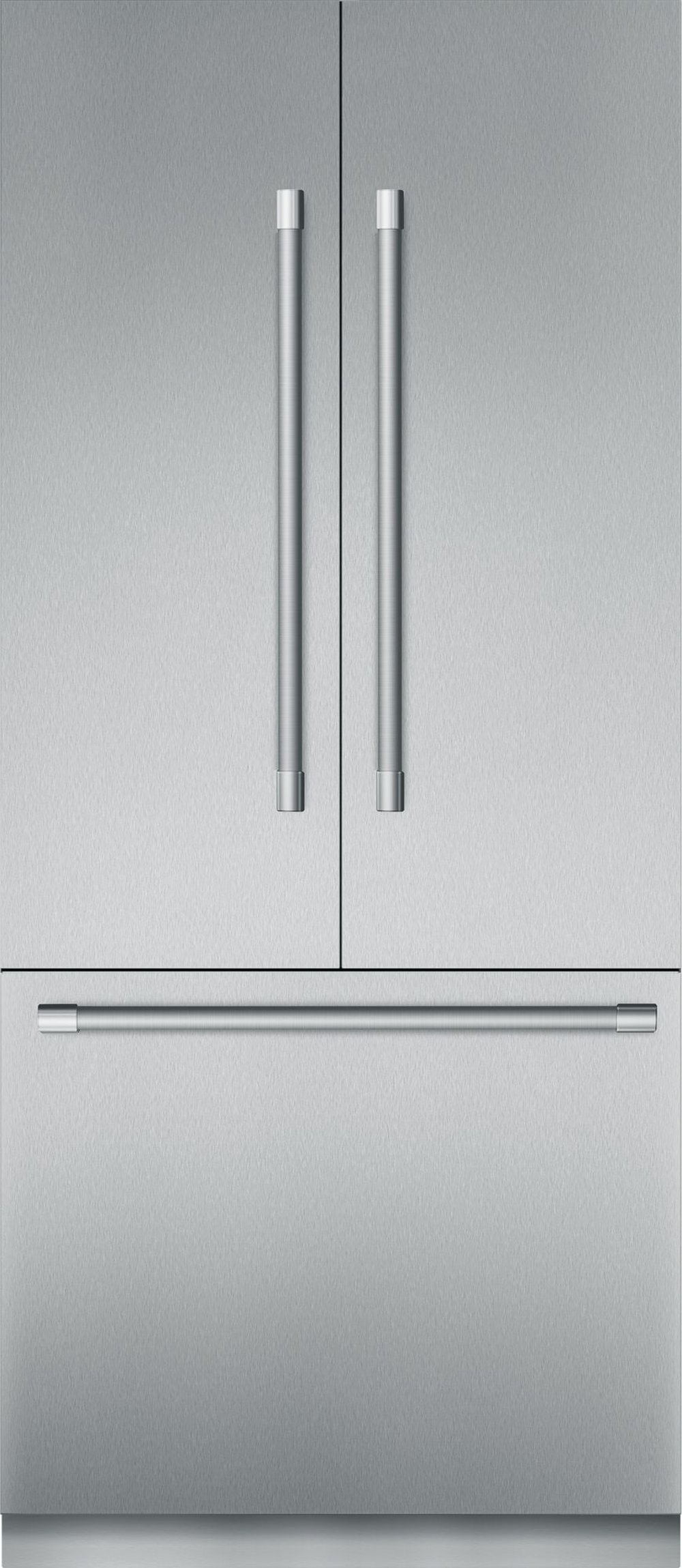
Custom panel refrigerators are refrigerators designed to accept decorative door panels that coordinate with kitchen cabinetry. Also called panel-ready refrigerators, they let cabinet-matched wood, veneer, or laminate fronts take the place of a conventional exposed appliance finish. The result can be a kitchen where the refrigerator blends into a wall of pantry cabinets instead of standing apart from it. Custom panels and decorative handles are typically supplied separately, often through a cabinetmaker, so the appliance and cabinetry need to be planned together. Panel-ready and built-in describe different characteristics: panel-ready refers to the door’s ability to accept a custom front, while built-in refers to the appliance’s installation design. A built-in refrigerator doesn’t necessarily accept custom panels, and a panel-ready designation alone doesn’t guarantee a completely flush installation. That distinction matters when the goal is an uninterrupted line of cabinet doors beside an island or along a narrow kitchen walkway. These refrigerators suit kitchen renovations, new construction, and carefully planned replacements where cabinetry plays a central role in the room’s appearance. Depending on the appliance design, configurations may include French doors, a bottom freezer, or separate refrigerator and freezer columns. Separate columns can provide flexibility in a larger kitchen, while a combined refrigerator-freezer keeps everyday ingredients and frozen foods together in one location. For households that cook frequently, the right arrangement makes room for grocery staples, prepared meals, and the serving dishes that tend to occupy more shelf space than expected. In an open kitchen, cabinetry-matched fronts can also help the appliance area feel connected to nearby dining and living spaces. The appeal goes beyond hiding a refrigerator: it’s about giving a hardworking part of the kitchen the same considered finish as the cabinets around it, without losing sight of everyday storage needs.
A successful fit depends on more than the refrigerator’s listed width. The cabinet opening, appliance height and depth, panel thickness, hinge movement, and required clearances all affect how the finished installation looks and functions. Manufacturer installation drawings establish the details, including ventilation space, electrical placement, and a water connection when the refrigerator has an ice maker or dispenser. Some designs allow a flush inset installation, while others require the doors or panels to project beyond adjacent cabinetry. Even a small difference can matter beside a wall, a deep countertop, or a cabinet pull. Door-swing clearance deserves particular attention: a refrigerator door may open far enough for everyday access yet still need a wider angle to remove a crisper drawer or shelf for cleaning. Handles also need room to pass neighboring surfaces without striking them. For a replacement project, the existing opening may need changes even when the new refrigerator has the same nominal width as the old one. Custom fronts introduce their own requirements. Cabinet-grade plywood, veneered panels, engineered wood, and laminate-faced materials may be suitable when they meet the appliance manufacturer’s specifications for construction, thickness, and weight. A solid wood panel isn’t automatically the best choice; stability and compatibility with the mounting system matter more than weight or thickness alone. Properly finished faces and sealed edges help protect the panel around areas exposed to damp hands, spills, and routine cleaning. Matching the surrounding cabinets involves more than choosing a similar color. Wood grain direction, paint sheen, door profiles, trim details, and handle placement can all influence whether the refrigerator feels integrated or merely covered. Coordinating those elements with a cabinet professional helps keep reveal lines—the narrow gaps around each front—consistent across the installation. The finished panels must also stay within the appliance’s weight limits so the hinges and door-closing system can operate as intended. Good planning leaves required ventilation paths clear rather than concealing them behind decorative trim.
Behind the cabinet fronts, a custom panel refrigerator still needs to work for the way a household shops, cooks, and gathers. Usable interior space can matter more than the capacity figure alone, especially when a weekly grocery trip includes tall beverage containers, wide produce bins, or large meal-prep containers. Adjustable shelves can accommodate a stockpot or a pitcher, while organized door storage keeps frequently used condiments within easy reach. The position of the freezer matters, too: someone who reaches for fresh ingredients throughout the day may prefer a different layout from a household that relies heavily on frozen meals. Features vary, so humidity-controlled drawers, internal water dispensers, ice storage, lighting, and temperature controls are worth considering alongside the exterior design. An external dispenser can interrupt a continuous cabinet-front appearance, making its location a practical as well as a visual consideration. Shoppers exploring other personalized kitchen looks can also consider Bespoke Refrigerators, keeping in mind that customizable appliance finishes and cabinet-panel compatibility aren’t interchangeable features. Long-term care involves both the refrigeration system and the decorative exterior. Painted, stained, veneered, and laminate panels may have different cleaning requirements, so the cabinet finish should determine which surface cleaner is appropriate. A soft cloth and a finish-approved cleaning method help maintain the fronts; abrasive pads and excessive moisture can damage some finishes or panel edges. Inside, wiping spills promptly, keeping door gaskets clean, and leaving air passages unobstructed support everyday performance. Water filters and accessible ventilation areas need attention according to the appliance manufacturer’s directions. Durable results come from a combination of suitable panel materials, careful installation, regular maintenance, and enough access for service. With those details accounted for, a panel-ready refrigerator can bring together dependable food storage and a kitchen design that feels cohesive down to the handles, cabinet lines, and daily reach for the milk.
Read More