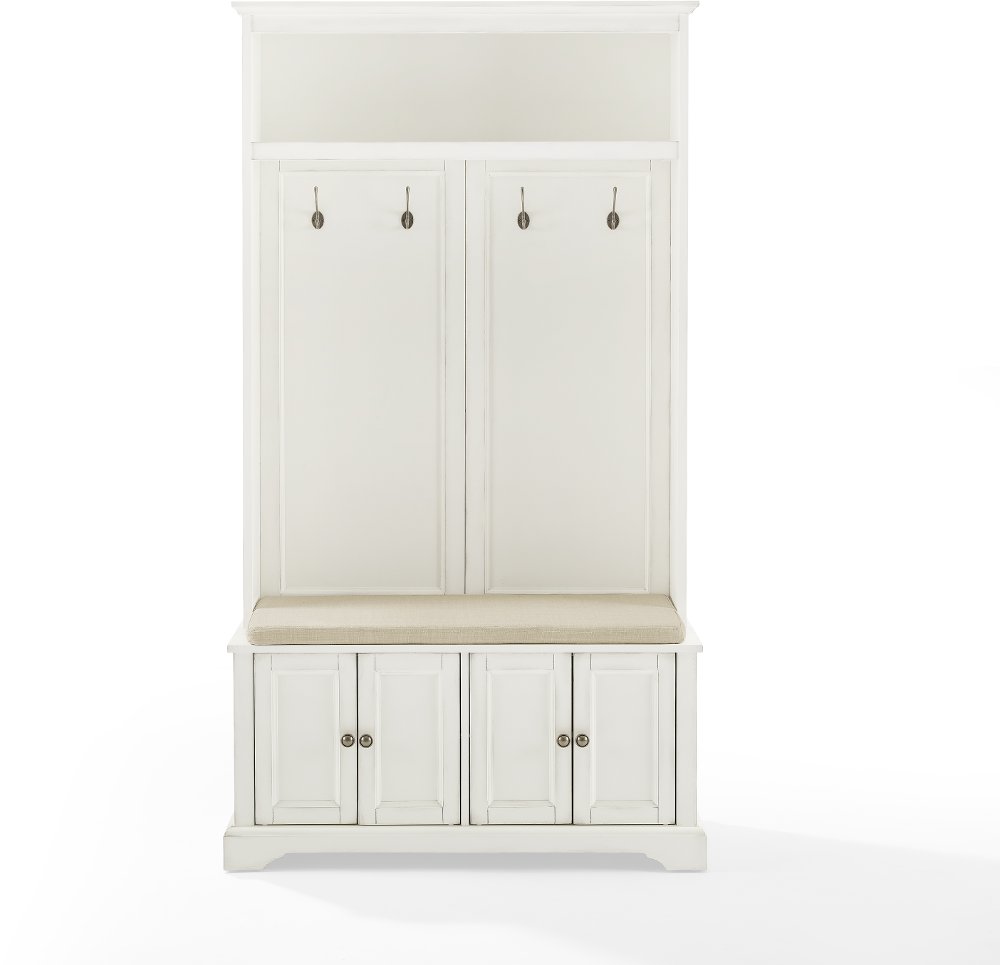
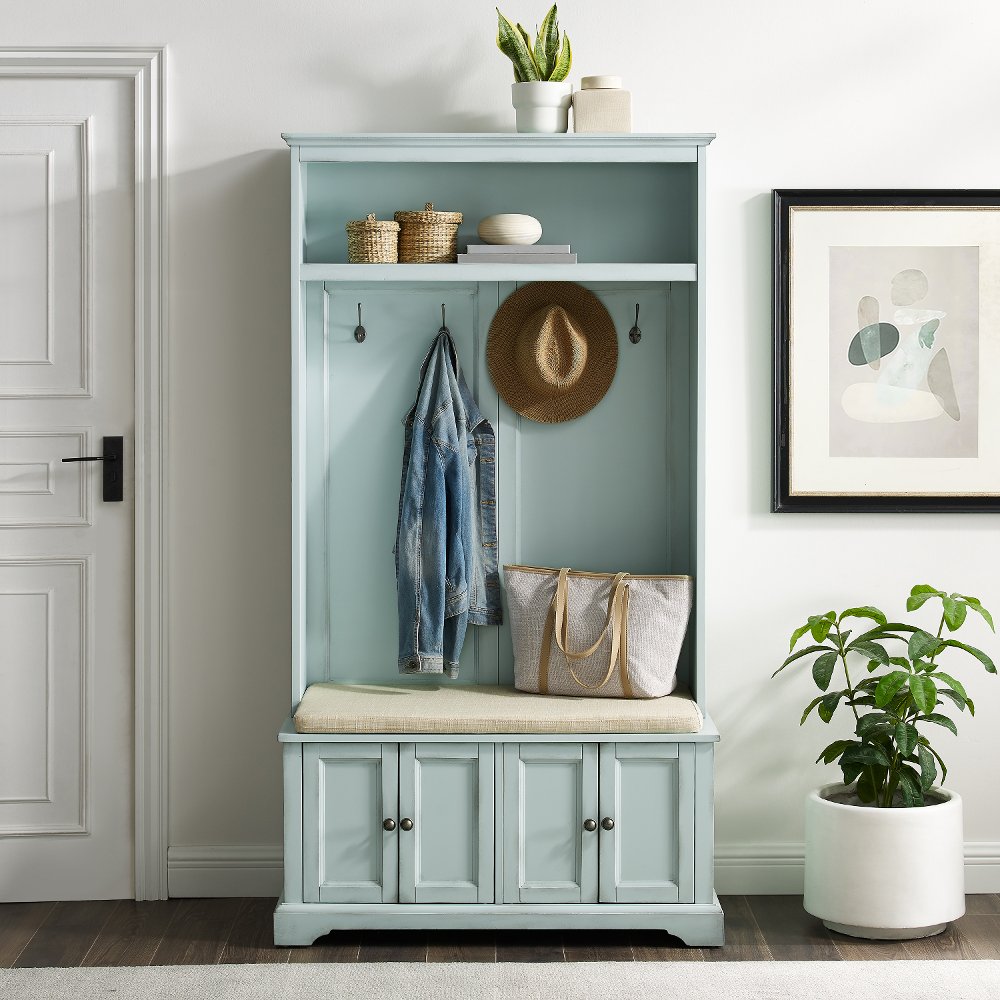
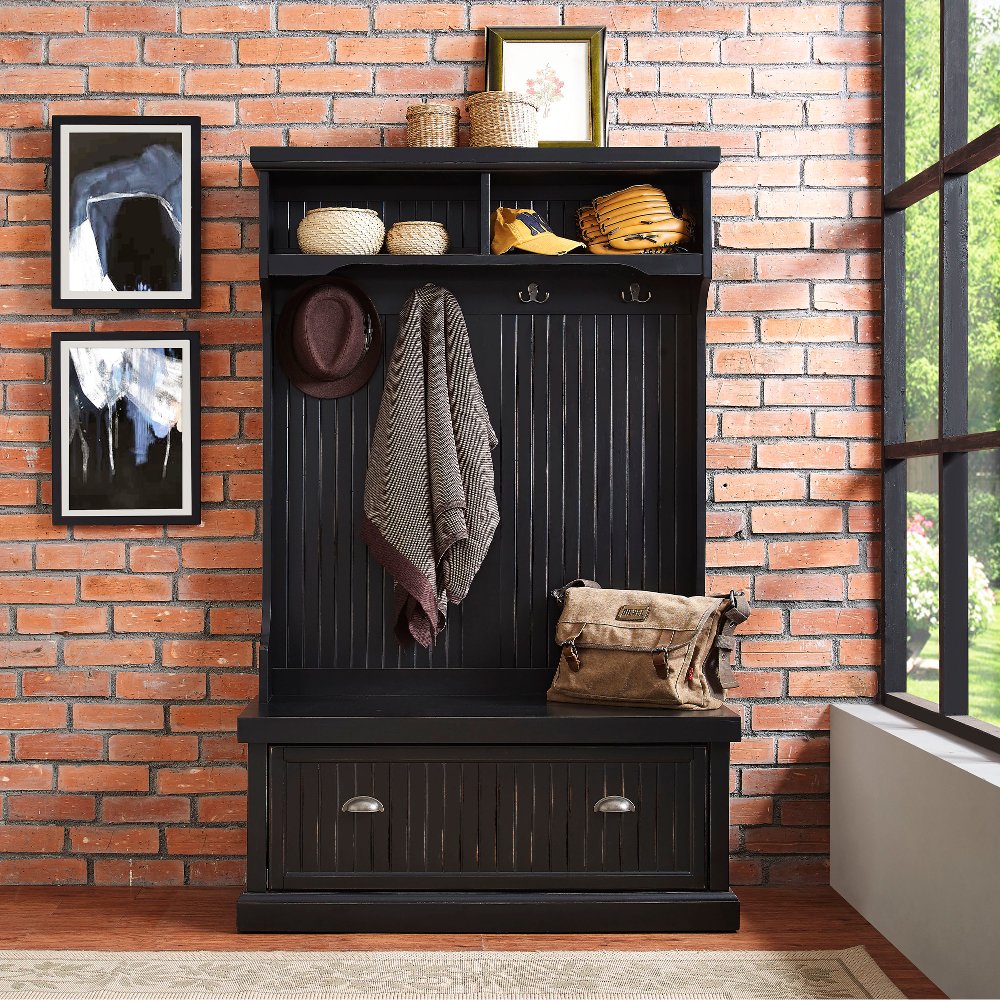
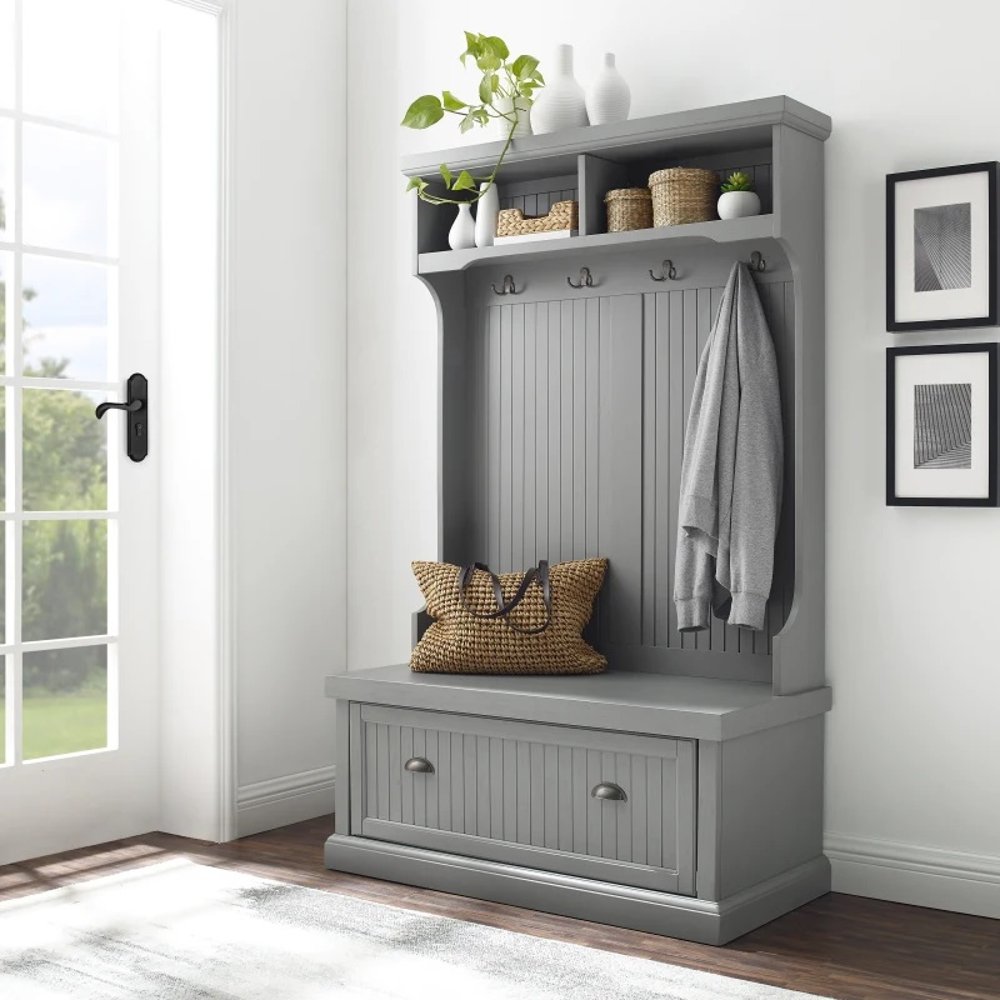
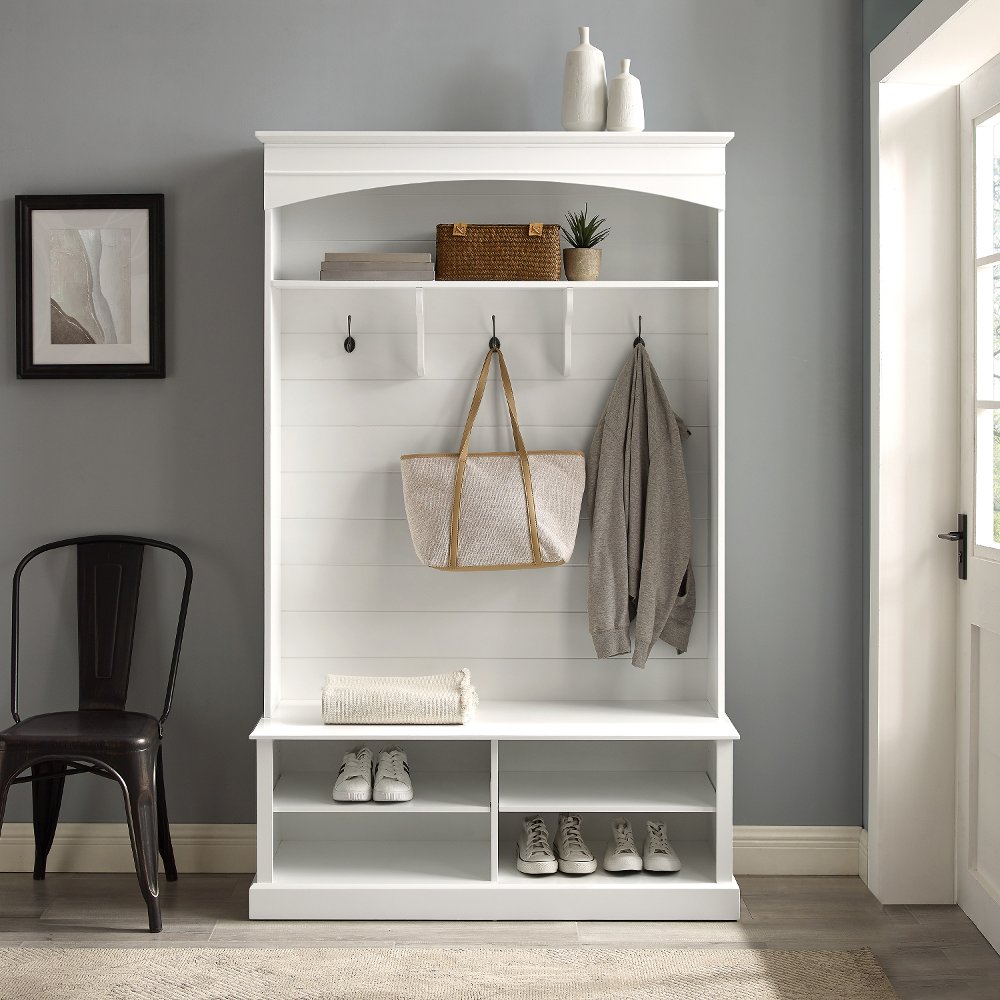
Entryway hooks are wall-mounted hooks or racks that give coats, bags, hats, keys, and leashes a convenient place near the door. They turn an open stretch of wall into useful storage without taking up the floor space of a cabinet or freestanding coat rack. In a narrow apartment entrance, a few individual wall hooks can keep everyday essentials within reach while leaving room to walk comfortably. In a busy household, a longer hook rail gives everyone a familiar spot to hang a jacket or school bag instead of dropping it on the nearest chair. Single hooks offer flexible spacing and work well around door trim, mirrors, and other wall features. Hook racks group several hanging points on one backing, creating a more uniform arrangement, while adjustable hook bars allow spacing changes when the design supports them. Double hooks provide separate upper and lower hanging points, although each hook’s shape determines how comfortably two items fit together. Materials influence both the look and the everyday feel of these pieces. Metal entryway hooks can have slim profiles or substantial curved arms, with finishes ranging from understated black to warm brass tones and polished metallic surfaces. Wood pegs add a softer visual touch, and wood-backed rails combine the warmth of a broad backing with the practicality of metal hardware. Solid wood, engineered wood, and metal backings have different construction and care requirements, so the material description matters as much as the finish. A brushed surface may make fingerprints less noticeable than a highly polished one, while visible wood grain can complement a nearby bench or console. Rounded ends and smooth edges are worth considering for belongings that touch the hook directly, especially delicate straps or loosely woven accessories. The most useful design balances appearance with the things that actually come through the door: a handbag with short handles, a cap, a set of keys, or a jacket with a small hanging loop.
Fit depends on more than the width of the rack. Hook spacing, projection from the wall, mounting height, and clearance around the entry all affect how easy the arrangement feels to use. Closely spaced coat hooks may hold several lightweight accessories neatly, but broad bags and bulky jackets need more room to avoid overlapping. A deeper hook can accommodate a thicker handle, yet it also extends farther into the walkway. That matters beside a door that swings inward or along a hall where people pass carrying groceries. The dimensions of the belongings matter, too: a long shoulder strap may leave a bag resting on the floor even when the hook itself appears high enough. Hooks above a bench need sufficient clearance for hanging items and for someone to sit comfortably beneath them. For families, a separate lower row can give children a reachable place for their own belongings; keeping those hooks out of the walking path helps make the arrangement comfortable for everyone. Installation is another important part of fit and durability. A hook’s usable weight capacity depends on the hook, its mounting hardware, the wall material, and correct installation—not simply on whether it looks sturdy. Manufacturer instructions should specify the mounting method and load limits, including whether a stated capacity applies to each hook or the entire rack. Fastening into wall studs is often appropriate for heavier loads when the design permits it. Where studs don’t align with mounting holes, anchors must suit the wall type and intended load; basic drywall anchors aren’t a universal solution for plaster, masonry, or hollow doors. Adhesive hooks can suit lightweight essentials on compatible surfaces, but their limits and removal instructions deserve close attention, particularly in a rental. Even products described as removable may affect some finishes. A full backpack or laptop bag calls for a mounting system rated for that weight, with enough capacity for the other belongings sharing the rack.
Well-chosen entryway wall hooks support a routine without making the entrance feel like a storage room. A compact row beside a console can hold the few things needed on the way out, while a larger arrangement near a frequently used side door can handle shared household traffic. Someone who walks a dog may appreciate a dedicated leash hook near the exit; a commuter may prefer enough separation to lift a work bag away without pulling down a jacket. For people who find hangers or closet doors awkward to manage, an open hook at a comfortable height can make everyday storage easier to reach. Hooks also work alongside other entryway furniture rather than replacing every kind of storage. A bench provides a place to sit, a tray gathers small loose objects, and Entryway Storage Shelves can give baskets, folded accessories, and other belongings their own space beyond the hanging area. Keeping those functions distinct helps prevent one hook from becoming a tangled stack of straps. Visually, repeating a nearby hardware finish creates a coordinated look, but an exact match isn’t necessary. A simple metal rail can sit comfortably above a wood bench, and individual wood pegs can bring a relaxed feel to a wall beside a painted cabinet. Durability comes from sound construction, secure attachment, an appropriate load, and care suited to the material. Dusting with a soft cloth keeps hook bases and the top edge of a rail clean; when further cleaning is needed, follow the manufacturer’s directions and dry surfaces promptly. Abrasive pads and harsh cleaners can scratch coatings or dull decorative finishes, while excess moisture can affect wood and some metal surfaces. An occasional check for loose screws, movement at the backing, or rough edges helps catch wear before it affects belongings. Pulling a bag gently free rather than tugging sideways also reduces unnecessary strain on the mount. With suitable spacing and sturdy support, entryway hooks give everyday belongings a dependable home and leave the doorway easier to move through.
Read More