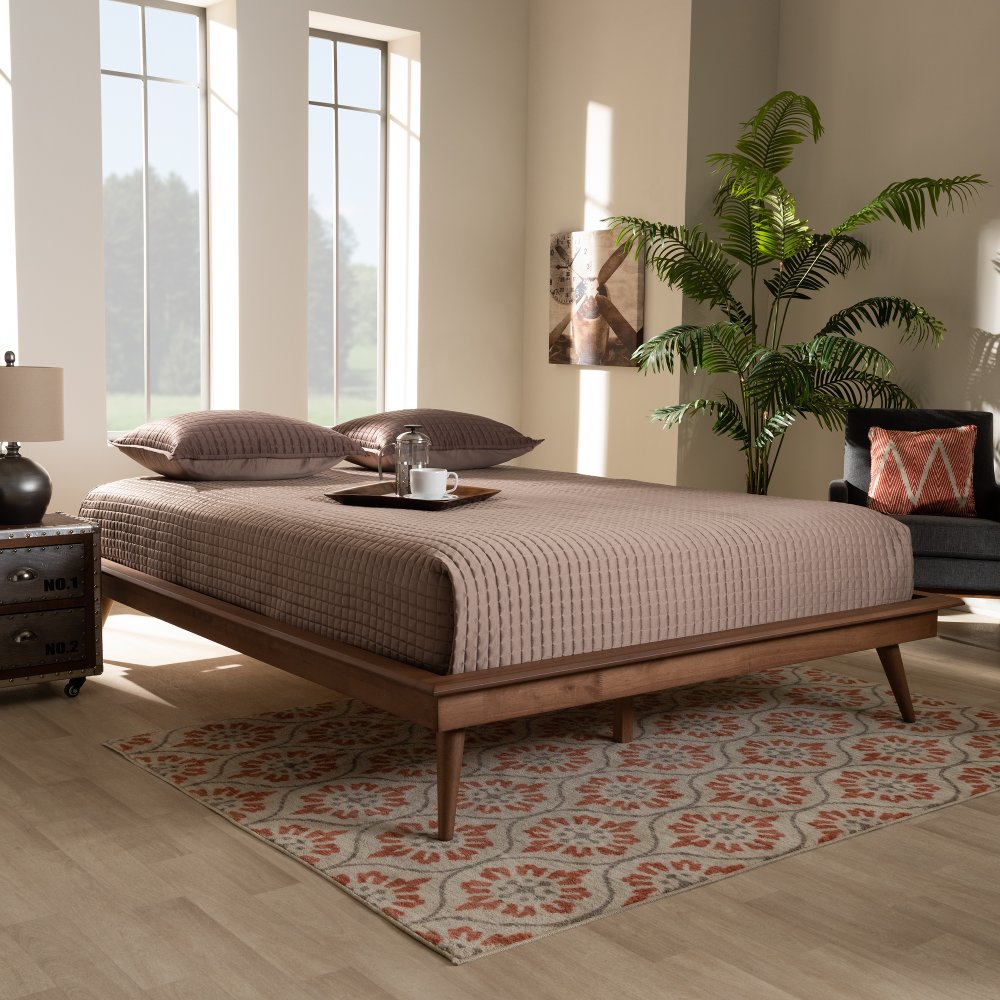
Espresso beds feature a deep, dark brown finish that can look almost black, bringing a warm, grounded feel to a bedroom. Unlike a true black finish, espresso often reveals brown undertones and subtle wood grain, especially in daylight. The name describes the color rather than a particular wood species, bed size, or construction method, so espresso bed frames can suit a range of decorating styles and everyday needs. A clean-lined platform frame feels simple and understated, while a panel bed with a taller headboard creates a more substantial focal point. Curved sleigh-style profiles lean traditional, and designs with upholstered headboard sections offer a softer surface for sitting up with a book. Against cream walls and crisp white bedding, the dark finish creates contrast without requiring much extra decoration. Sage green, dusty blue, warm gray, and rust-colored textiles also pair comfortably with espresso’s brown undertones. In a room with limited natural light, pale bedding and a light-colored rug can keep a larger dark frame from feeling too heavy. In a brighter bedroom, the same finish adds definition beside sunlit windows and lighter floors. Matching every piece of furniture isn’t necessary: an espresso bed can look settled alongside an oak dresser, woven baskets, or a painted nightstand when the room repeats a few coordinating colors. If a coordinated bedroom is the goal, remember that espresso finishes can vary in warmth, sheen, and depth between furniture collections. Comparing finish descriptions and viewing samples when possible helps set expectations. For a broader look at conventional bed-frame designs, Standard Beds offers another place to explore bedroom styles. Whether the room belongs to a teenager ready for a more grown-up look, a couple furnishing a primary bedroom, or guests visiting during the cooler months, an espresso finish provides a versatile foundation that works with both lightweight quilts and layered winter bedding. Its appeal comes from that balance: enough richness to anchor the room, with a neutral color that leaves plenty of room for personal touches.
The best-fitting espresso bed balances mattress size, frame dimensions, and the way the room gets used. Twin and full sizes can work well in children’s rooms, teen bedrooms, or smaller guest spaces, while queen and king sizes provide more sleeping space for adults and shared bedrooms. Standard U.S. mattresses measure approximately 38 by 75 inches for a twin, 54 by 75 inches for a full, 60 by 80 inches for a queen, and 76 by 80 inches for a king; the bed frame’s overall footprint will be larger and varies by design. A thick headboard, curved footboard, or projecting side rails can take up more room than the mattress measurements suggest. Leave comfortable walking space beside the bed, account for closet and bedroom door swings, and check that nearby dresser drawers can open fully. A low footboard can make a compact bedroom feel less enclosed and may be more comfortable for taller sleepers who stretch out. Headboard height matters, too, particularly beneath a window or sloped ceiling. Espresso platform beds generally use slats or a solid support surface and often don’t require a box spring, but the frame specifications and mattress requirements should confirm the correct setup. Some panel beds require a separate foundation; appearance alone won’t tell you which support system is needed. Slat spacing, center supports, and weight limits all deserve attention, especially with heavier mattresses. The combined height of the frame, foundation, and mattress determines how easily someone can sit down, stand up, or reach a bedside lamp. Espresso storage beds add drawers or compartments that can hold spare sheets, sweaters, or extra blankets. Side drawers need clearance beyond the frame, while foot-end drawers need open floor space at the end of the bed. In a guest room that doubles as a home office, built-in storage can help keep bedding tucked away without adding another dresser. For any style, check the delivery path through stairways, narrow halls, and doorways, along with the space needed for assembly.
Materials and construction shape how an espresso bed feels and holds up over time. Solid wood, wood veneer over a core, and engineered wood can all carry an espresso finish, but each has different characteristics. Solid wood may show natural variations in grain and can expand or contract as humidity changes. Wood veneer provides a real-wood surface over another material, while other engineered-wood designs may use a decorative laminate or applied finish for a more uniform appearance. Neither color nor a “wood look” description identifies the underlying construction, so material details are worth checking. Durability depends on more than the material name: secure rail connections, sturdy slats, suitable center support, and correctly tightened hardware all contribute to a stable bed. For a frame that gets used every night, those less-visible parts matter just as much as the headboard. Storage drawers benefit from smooth-running glides and comfortable pulls, particularly when children or guests will use them. Following assembly instructions and periodically checking accessible fasteners can help keep connections secure; persistent movement or squeaking deserves attention rather than simply another turn of a screw. Everyday care is usually straightforward. Dust with a soft cloth, wipe spills promptly, and follow the manufacturer’s cleaning directions before using any furniture polish or cleaner. A lightly dampened cloth may be appropriate for some finishes, followed by a dry cloth, but soaking the surface or using harsh abrasives can cause damage. Espresso’s dark color can make pale dust, pet hair, and light-colored scratches more noticeable, so gentle, regular cleaning helps preserve its appearance. Keep water glasses on a nightstand with a coaster rather than on a wooden headboard shelf, and protect the finish from sharp objects or rough storage baskets. Direct sunlight may change the finish over time, while excessive moisture can affect wood-based components. When rearranging the room, lift the frame with help rather than dragging it, following any disassembly instructions. With a suitable support system and consistent care, an espresso bed can remain a dependable centerpiece as bedding, wall colors, and daily routines change around it.
Read More