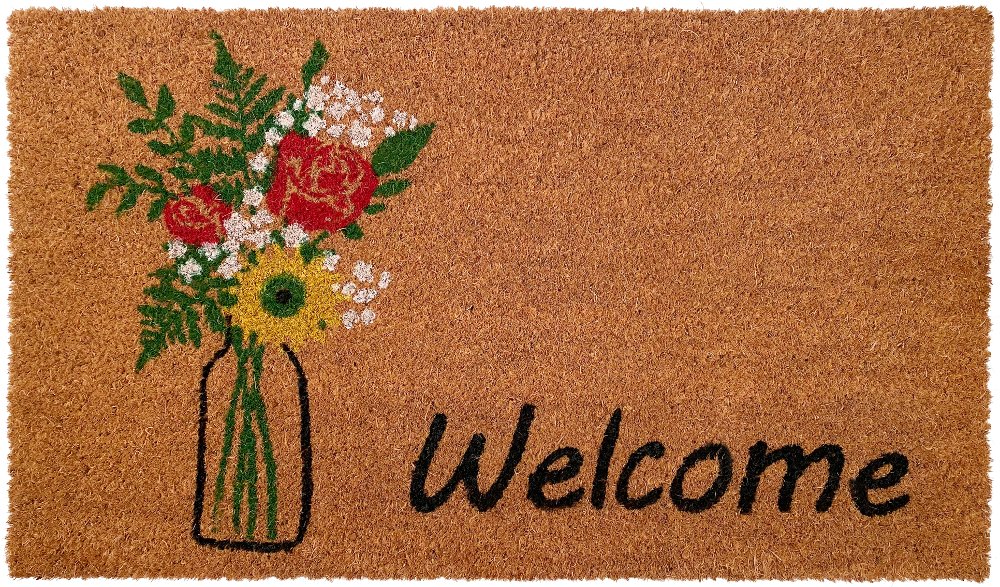
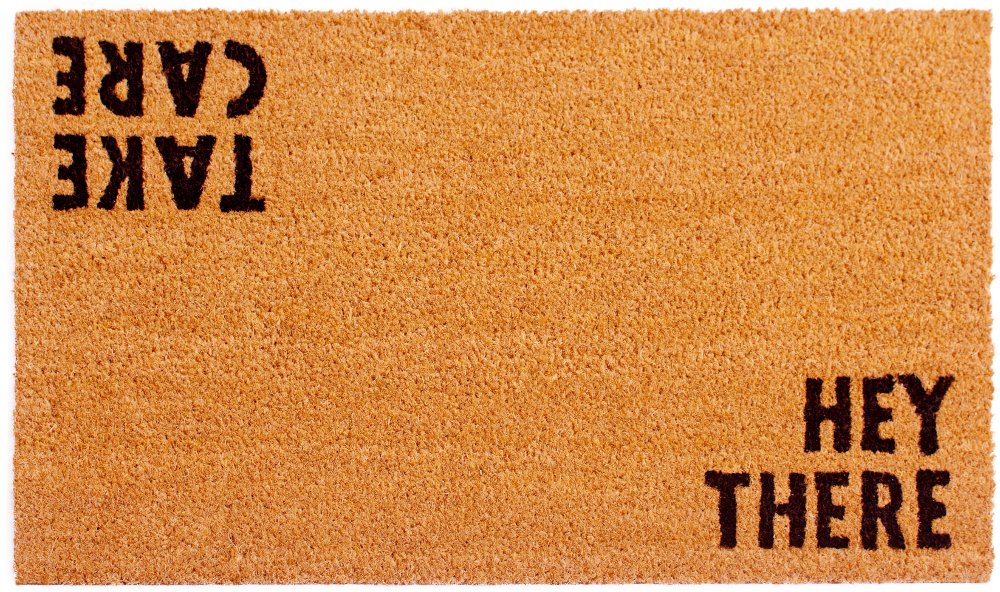
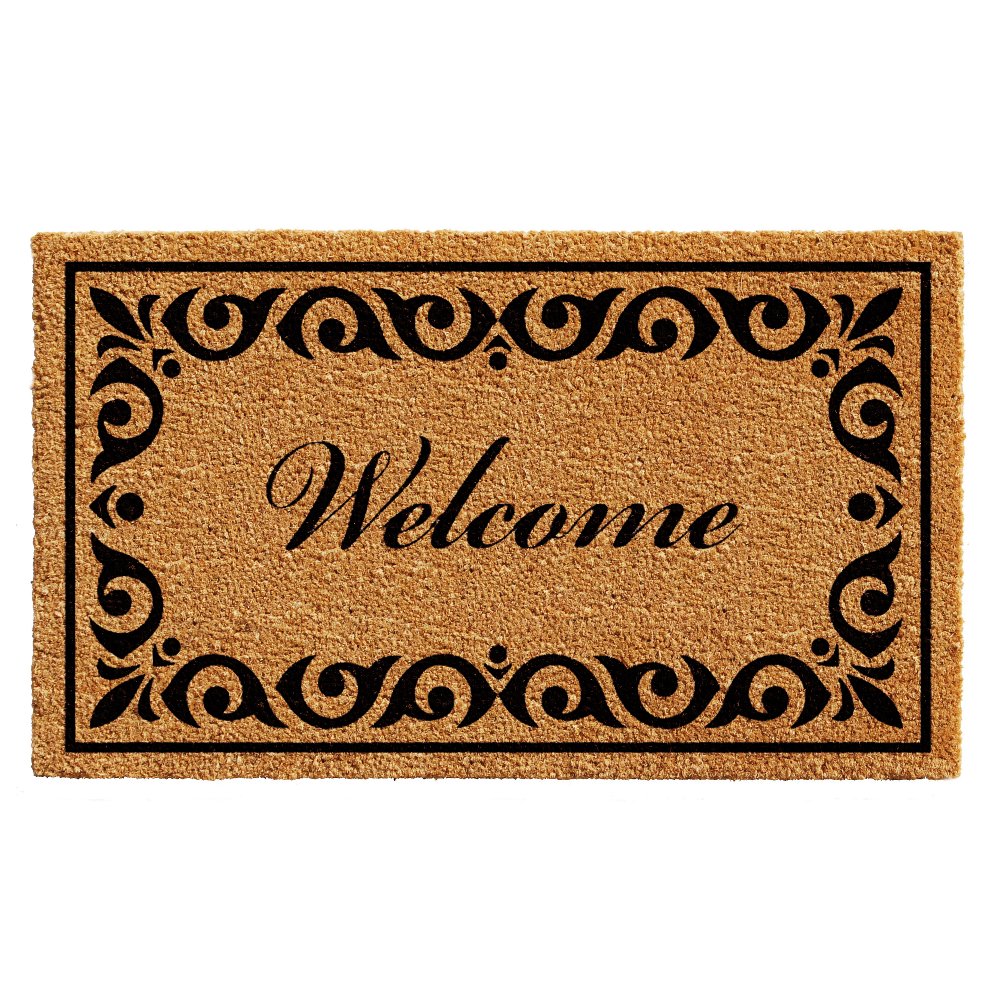
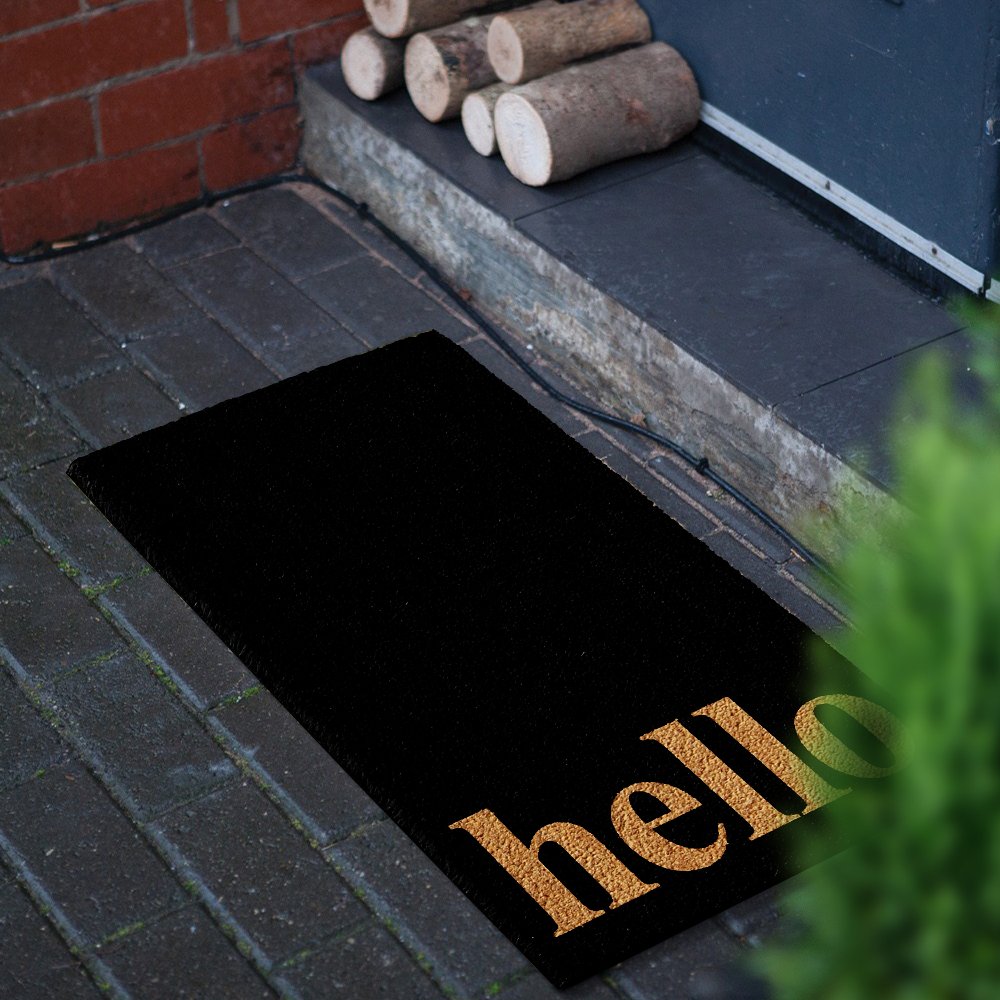
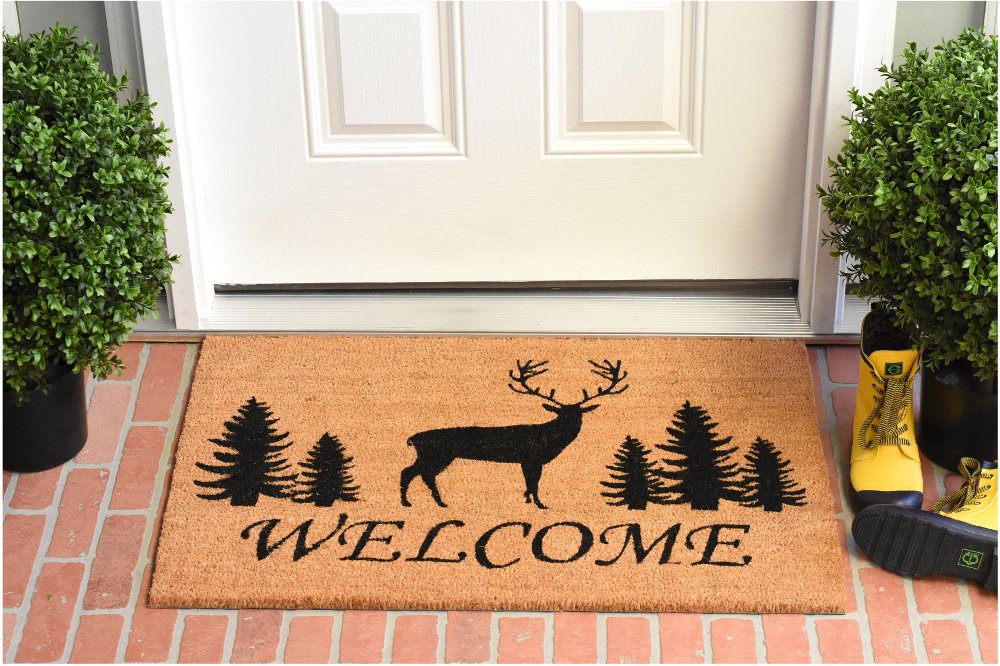
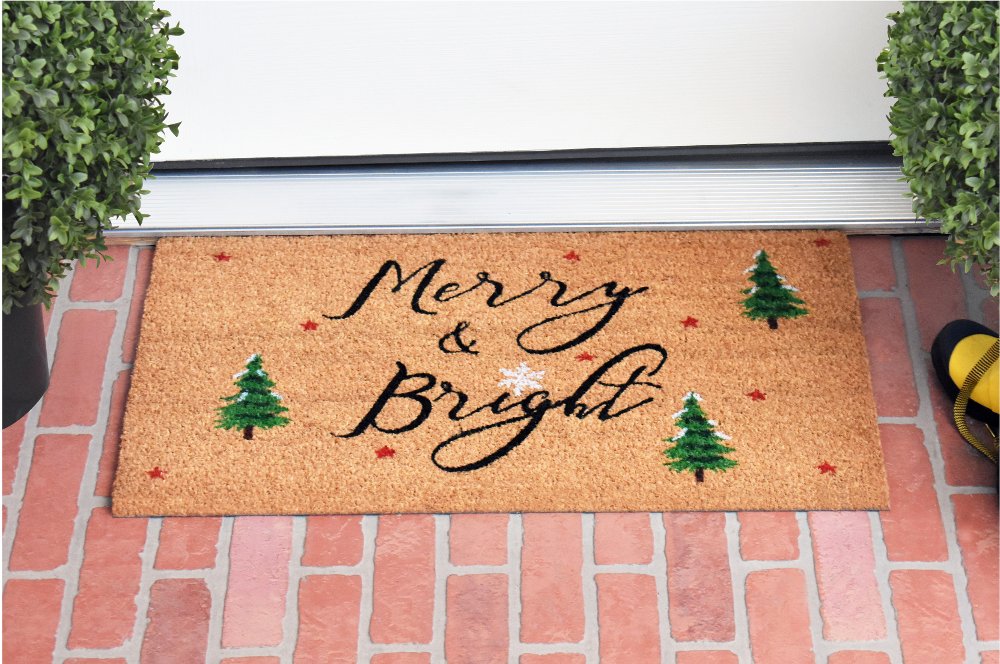
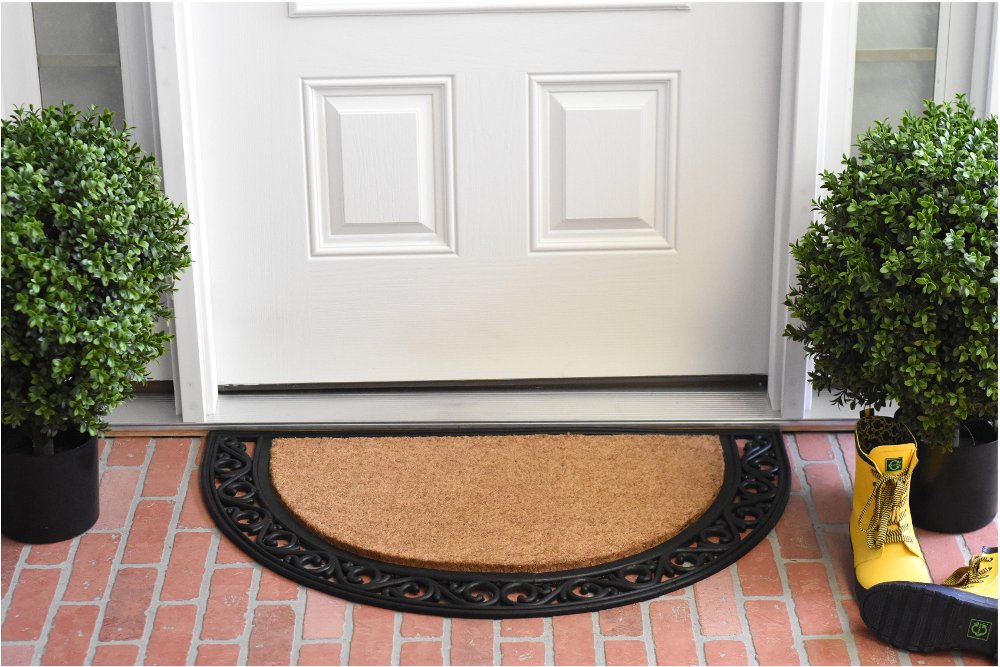
Front door doormats are small floor coverings placed at an entrance to help remove dirt from shoes and create a welcoming first impression. They give everyday foot traffic a designated landing spot, whether that means kids coming home from school, neighbors stopping by, or someone stepping inside with an armful of groceries. Unlike a decorative accent rug, a doormat typically has a textured surface designed to scrape or collect debris before it travels farther into your home. The right choice balances that practical job with a look that suits your doorway. A simple border can frame a painted door without competing with it, while a geometric pattern adds definition to an otherwise plain entry. Lettering, botanical motifs, and understated woven textures offer other ways to make the entrance feel personal. Color makes a difference beyond appearance: mixed tones and patterned surfaces can make tracked-in dust less noticeable between cleanings, while a solid background gives a short greeting a crisp, readable look. Consider how the mat relates to nearby details, including the door hardware, porch light, planters, and threshold. Those elements don’t need to match exactly; repeating one color or shape is often enough to make the space feel connected. For a compact apartment entrance, a straightforward rectangular mat can mark the doorway without overwhelming a shared landing. At a house with a broader entry, a wider format helps the mat feel proportional to the architecture. Half-round shapes can soften the straight lines of a door and steps, provided the available floor space accommodates them. A doormat can also make a thoughtful housewarming gift for a first-time homeowner or someone settling into a new apartment. A versatile pattern is a practical choice when the recipient’s decorating preferences aren’t familiar, and a design that reflects a known interest can add a personal touch without taking over the entry.
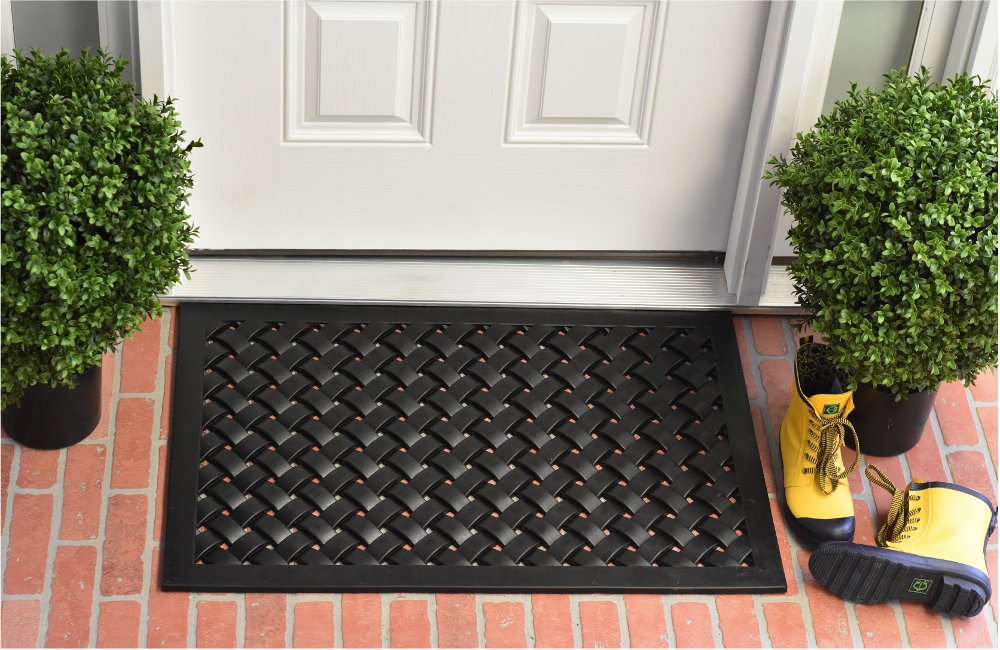
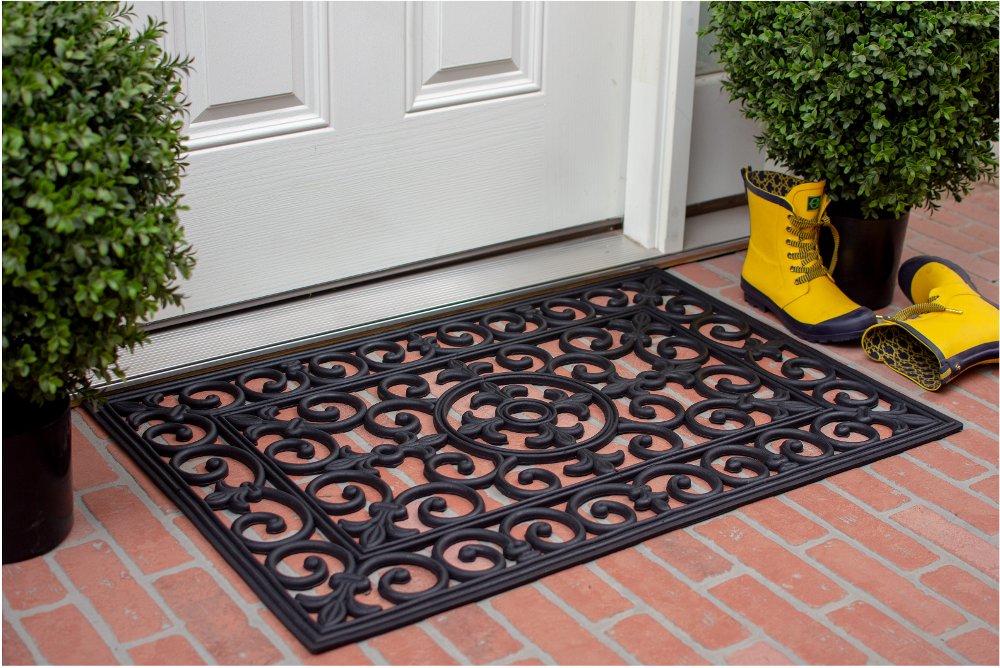
Materials determine much of a front door mat’s feel, cleaning performance, and upkeep. Coir, made from coconut husk fibers, has a coarse texture that helps brush dirt from shoe soles. Its warm, natural appearance works with everything from simple wood doors to more decorative entrances, although some fiber shedding is normal, particularly early in use. Coir is often best suited to a protected entrance, and its placement should follow the manufacturer’s recommendations rather than an assumption that every natural-fiber mat belongs outdoors. Rubber doormats offer a different combination of texture and structure. Raised patterns can help loosen debris, and openwork designs allow particles to fall through for cleanup underneath. Their substantial feel can be useful at a busy doorway, but weight alone doesn’t guarantee that a mat will stay in place on every surface. Synthetic materials such as polypropylene, polyester, and nylon can provide patterned or carpet-like surfaces, with performance depending on the fiber, construction, and backing. Some are designed to collect fine dust, some help absorb moisture carried on shoes, and others emphasize a scraping texture. Check the intended use before choosing between an outdoor entrance mat and an indoor mat for the space just past the threshold. A two-mat arrangement can work well when an exterior mat handles larger debris and an interior mat collects what remains, as long as both fit safely within the walking path. Backing deserves just as much attention as the face material. Rubber, vinyl, and other nonslip backings vary in their compatibility with flooring, so confirm that the underside is appropriate for your tile, wood, concrete, or other entry surface. For homes with pets, a textured entrance mat may help catch loose dirt from paws, though it won’t replace wiping muddy feet. In a household where people frequently enter in work shoes or athletic footwear, prioritize a surface that’s easy to clean and sturdy enough for repeated scraping. Decorative detail matters, but the mat should first handle the way your household actually comes and goes.
Fit starts with the usable space around the door, not simply the mat’s appearance in a photo. Measure the entrance width, the depth of the landing, and the clearance beneath the door wherever it swings over the mat. Include raised borders and thick fibers when comparing overall height; even a small difference can cause a door to catch or push the mat out of position. The surface should give visitors enough room to place both feet comfortably without extending over a step, crowding a narrow walkway, or covering a threshold in a way that creates an uneven transition. For double doors or a generous front landing, Large Welcome Door Mats can provide a more proportionate footprint and a broader area for wiping shoes. Keep edges flat, and take extra care with placement when someone uses a walker, cane, or wheelchair. Layering a smaller doormat over a decorative rug adds visual interest, but it also increases height and introduces another surface that may shift; a single well-fitted mat can be the simpler choice for a frequently used entrance. Routine care helps preserve both appearance and function. Shake out loose debris when the construction allows, sweep or vacuum compatible surfaces, and lift the mat regularly to clean the floor beneath it. Coir generally benefits from dry cleaning methods rather than soaking, while some rubber and synthetic mats can be rinsed or washed according to their care labels. A fabric-like surface doesn’t automatically mean a mat is machine washable. Let any cleaned mat and the floor underneath dry fully before putting it back. Periodically check for curled corners, split backing, worn fibers, and movement underfoot. Those signs matter more than whether the design still looks fresh. A well-chosen front door doormat brings together a comfortable fit, manageable care, and a style that feels at home, giving a hardworking part of your entrance the attention it deserves.
Read More