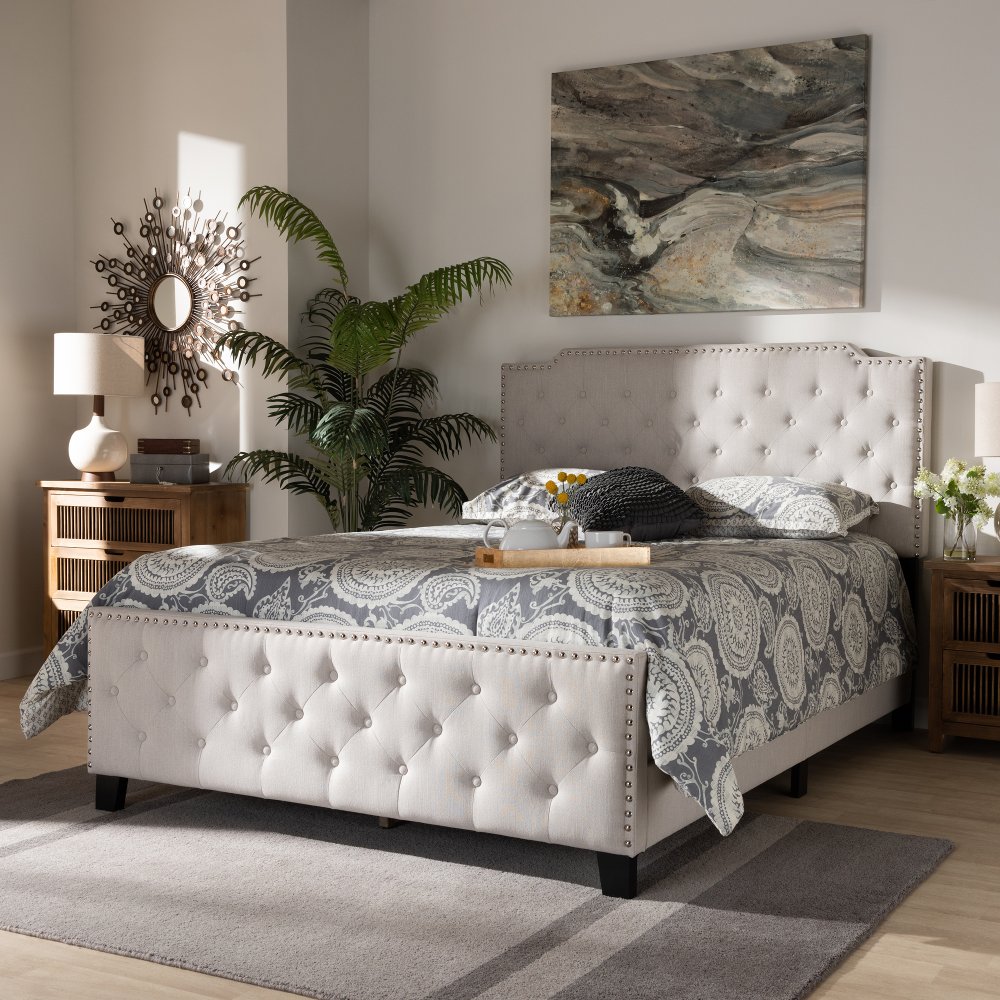
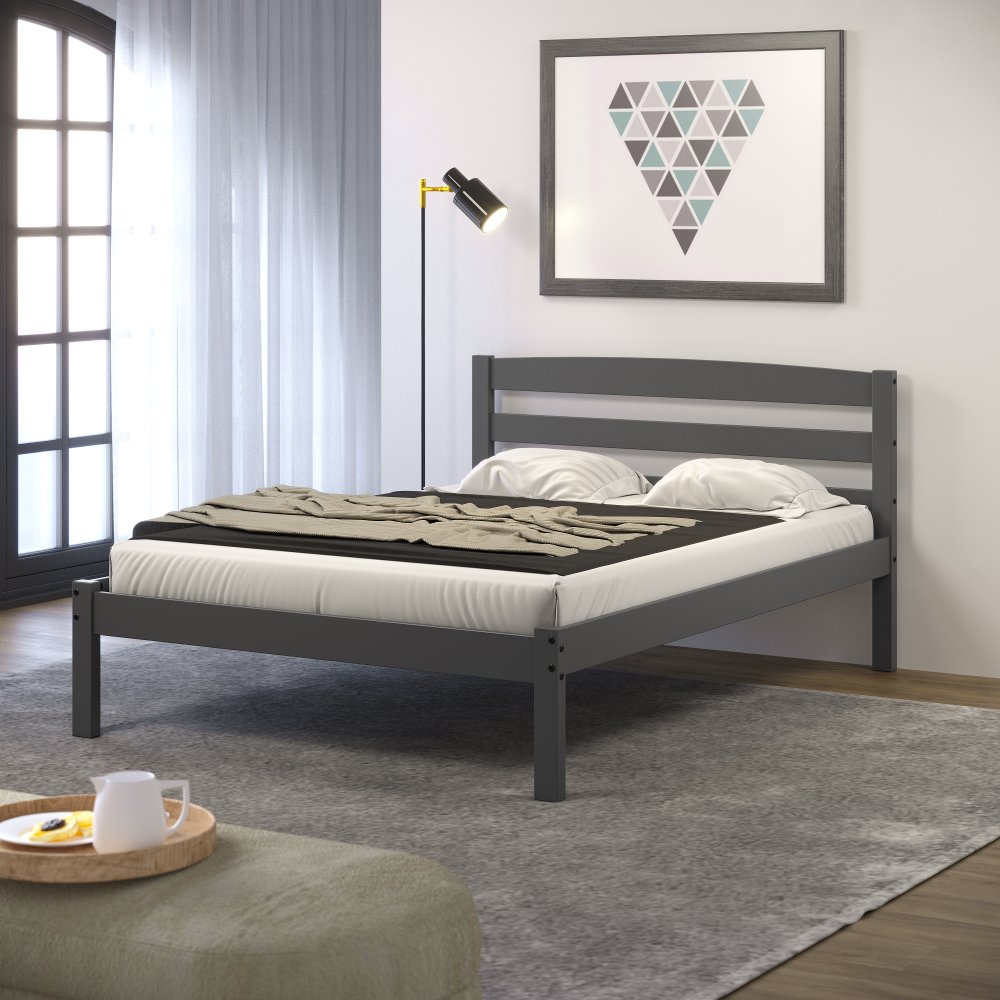
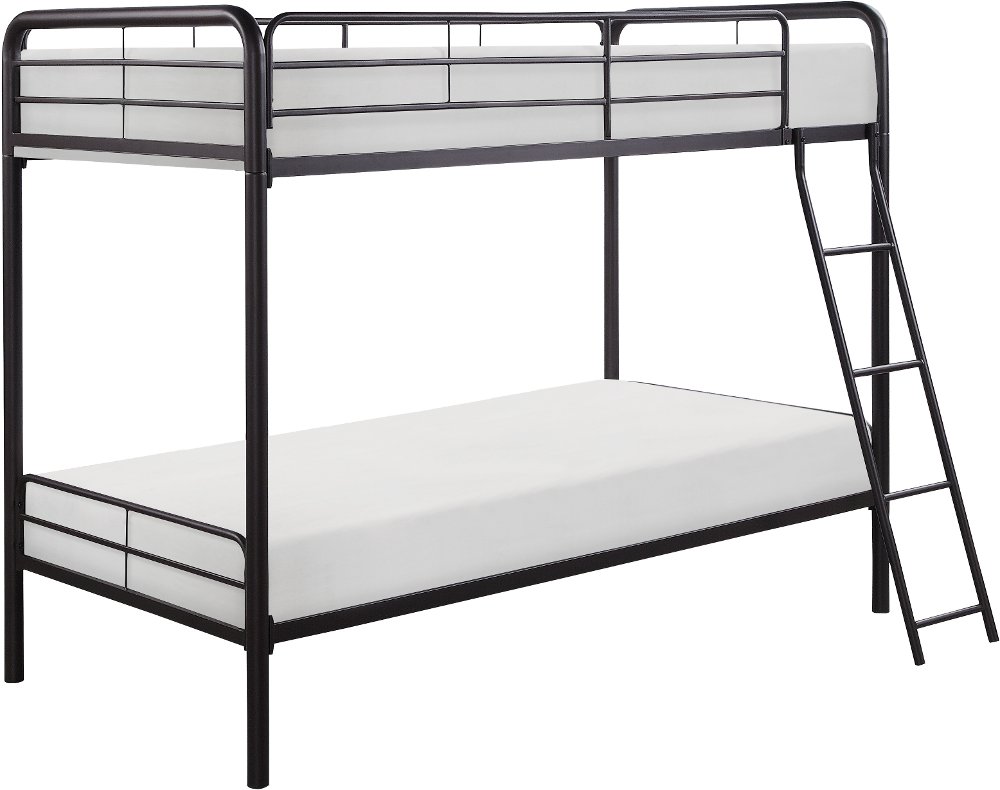
Full size metal bed frames give a bedroom sturdy mattress support and a look that can feel clean and modern, warmly traditional, or somewhere in between. A standard full mattress measures approximately 54 inches wide by 75 inches long, making this size a practical choice for a teen’s room, a single adult’s bedroom, or a guest room that also needs space for a desk. Often called a double, a full offers more width than a twin without taking up as much floor space as a queen. Two adults can share one, although the sleeping space is narrower than many couples prefer, and taller sleepers may want a longer mattress size. The frame’s outside dimensions matter just as much as the mattress dimensions: A curved headboard, decorative footboard, or projecting corner post can add inches to the bed’s footprint. Measure the space with dresser drawers open and leave comfortable walking room between the bed and nearby furniture. In a compact bedroom, an open metal headboard lets more of the wall show through, which can help the room feel less crowded. Straight rails and simple shapes suit a streamlined setting, while rounded posts, arches, and spindle details pair naturally with quilts, layered bedding, and softer furnishings. Dark finishes provide contrast against pale walls; lighter finishes can blend into a bright, relaxed room. A full size metal platform bed can serve as the everyday bed in a first apartment or create a welcoming place for overnight visitors. For a growing teenager, that extra width can make the transition from a childhood bedroom feel more comfortable without overwhelming the room. If the space needs to accommodate two sleepers more generously, comparing king size metal bed frames can help clarify the difference in floor space and sleeping room before settling on a size. The best fit leaves enough room for both restful sleep and the routines that happen around the bed, from getting dressed to changing the sheets.
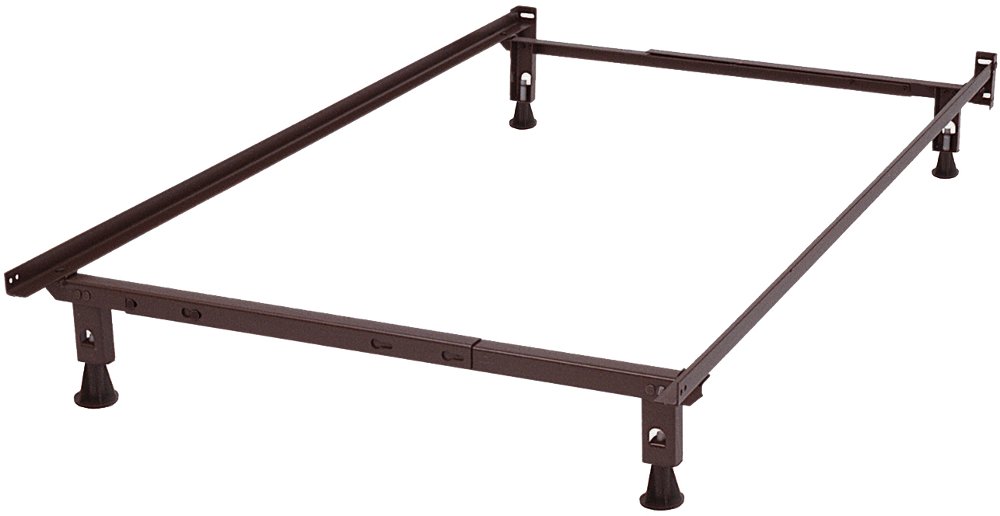
Construction determines how a metal bed frame supports the mattress, how it feels during use, and whether it needs a separate foundation. Steel is a common material because it provides strength in relatively slim rails, legs, and slats. Tubular components can create an airy profile, while other designs use angle steel or broader support surfaces. A substantial appearance alone doesn’t establish durability; secure connections, appropriate center support, and a design suited to the intended load are more useful details to compare. Full size metal platform bed frames generally use slats or a metal grid to support a mattress directly, but that doesn’t mean every metal frame works without a box spring or foundation. A basic perimeter frame with side rails and a center crossbar typically needs the additional support specified by its manufacturer. Foam, latex, and hybrid mattresses may also have particular requirements for slat spacing and foundation construction, so match the frame to the mattress manufacturer’s instructions. Widely spaced supports can allow some mattresses to sag between them, even when the frame itself feels sturdy. Check the stated weight capacity and whether that figure includes the mattress, foundation, and sleepers rather than assuming every full size frame carries the same load. Center legs should rest firmly on the floor when the design calls for them, and all support pieces need to be installed as directed. For a quieter bed, look for secure joints and cushioning at contact points; no single material guarantees silent sleep. Proper assembly and a level setup help reduce movement that can lead to squeaks. If a separate headboard is part of the plan, confirm bracket compatibility, attachment height, and any required hardware. An integrated headboard and footboard creates a coordinated outline, while a simple support frame gives you more freedom to change the surrounding furniture. A low or open foot end can also make changing bedding easier and feel less confining to someone who likes to stretch out.
Everyday convenience often comes down to details that are easy to overlook in a room photo. Under-bed clearance can turn unused floor space into a home for spare blankets, luggage, or containers of out-of-season clothing, especially in a bedroom with a small closet. Measure the actual opening beneath the side rail, not just the frame’s overall height, and account for center legs or braces that may block a wide storage bin. Leave room to slide containers out without moving a nightstand. A taller platform may provide useful storage, but the final sleeping height also includes the mattress and any required foundation. Someone who prefers to sit down on the bed rather than climb into it may feel more comfortable with a lower setup. For a guest room, a manageable bed height and clear pathways help visitors settle in easily. Assembly deserves similar attention: Check the instructions for tool requirements, allow enough floor space to organize the parts, and arrange help when lifting or aligning larger sections. Keep the hardware identified during assembly, and follow the specified tightening sequence so the frame sits square. Once the bed is in use, inspect connections periodically and tighten them as directed, particularly after a move. Metal frames are generally straightforward to care for, but their finishes still benefit from gentle treatment. Dust rails and decorative details with a soft cloth, use a lightly dampened cloth when needed, and dry the surface promptly. Avoid abrasive pads and harsh cleaners unless the care instructions allow them, since scratches can damage a protective coating. Suitable floor protectors can help prevent marks on wood or other hard surfaces, provided they don’t interfere with the frame’s stability. When rearranging the room, lift rather than drag the bed to reduce stress on joints and legs. With the right mattress support, a well-proportioned footprint, and thoughtful upkeep, a full size metal bed frame can provide a dependable foundation for everything from a teen’s evolving bedroom to a comfortable guest retreat.
Read More