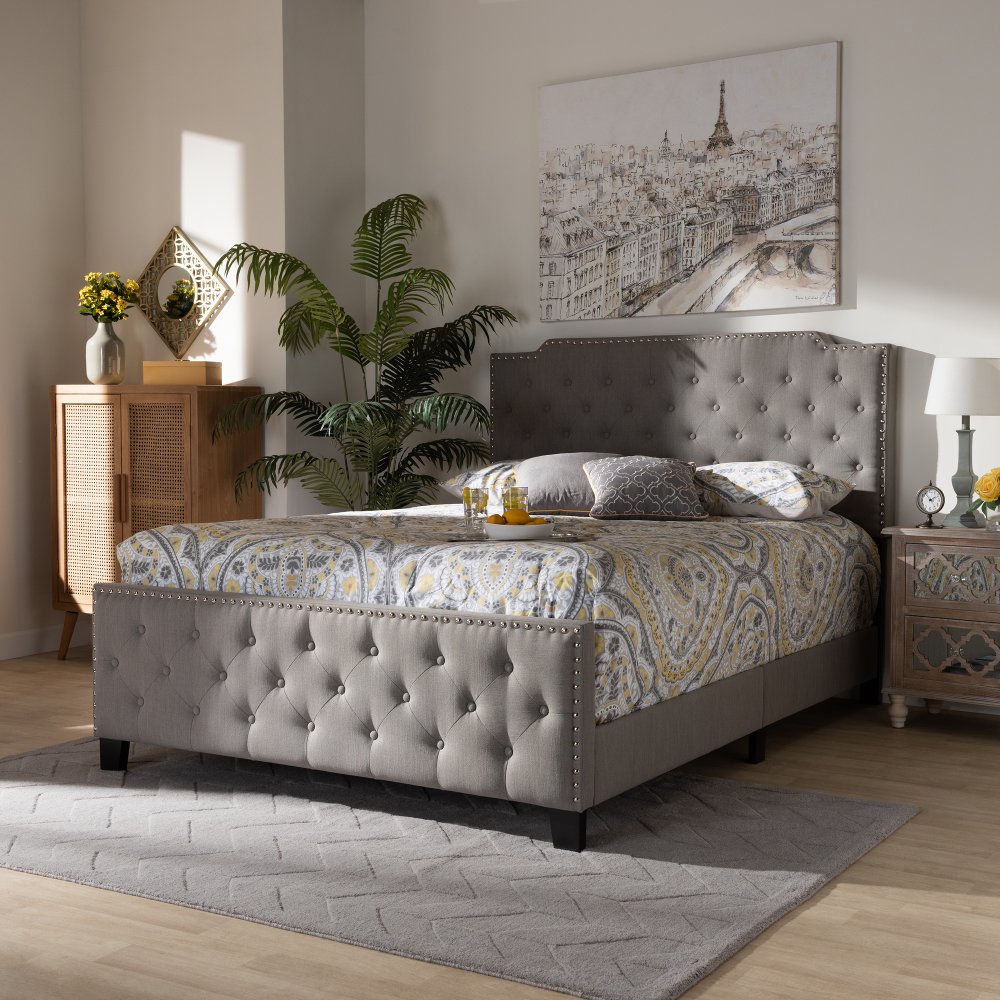
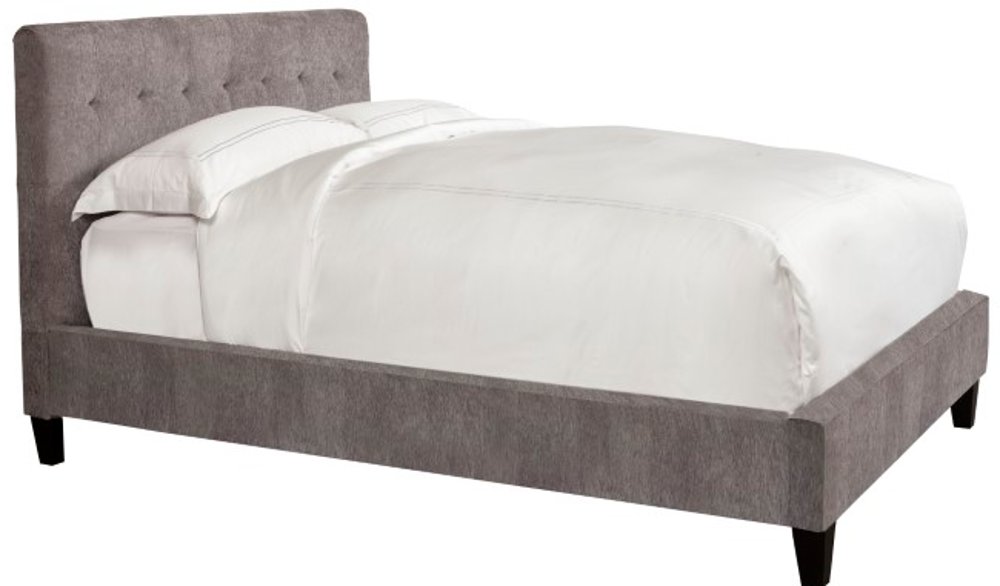
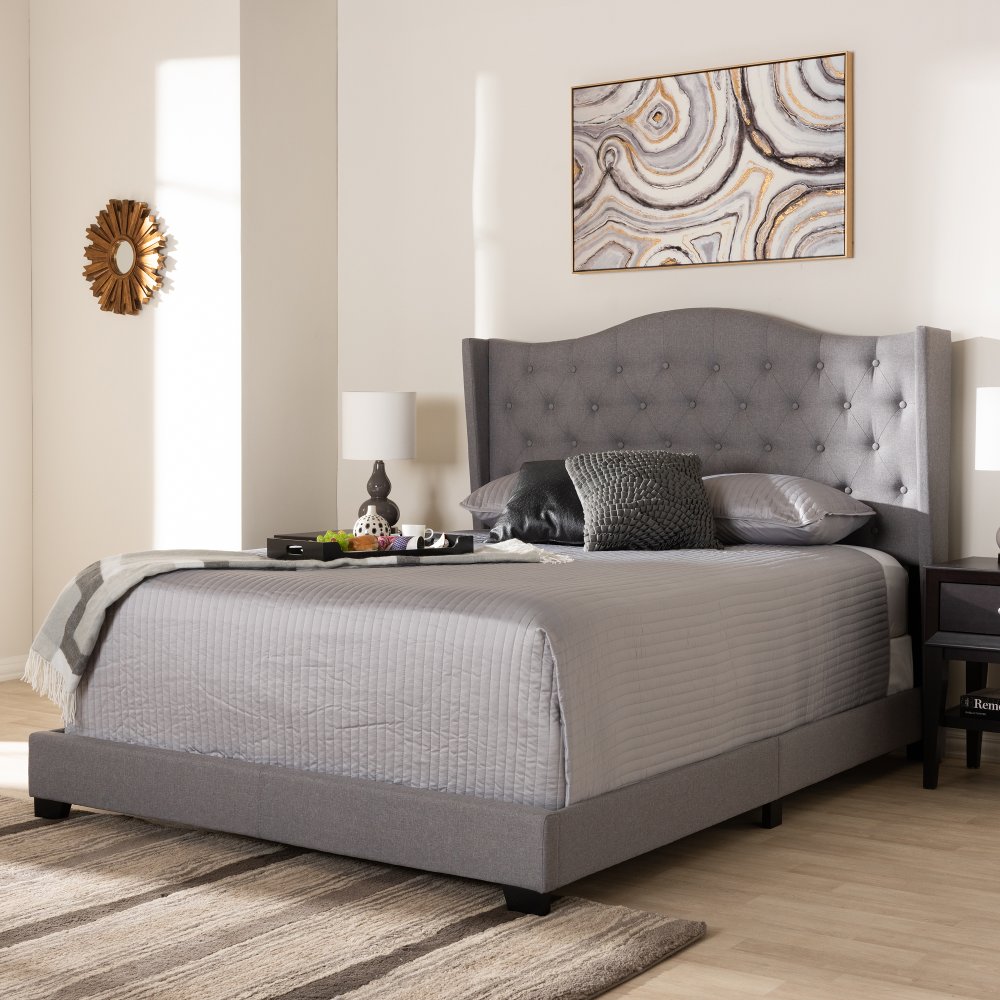
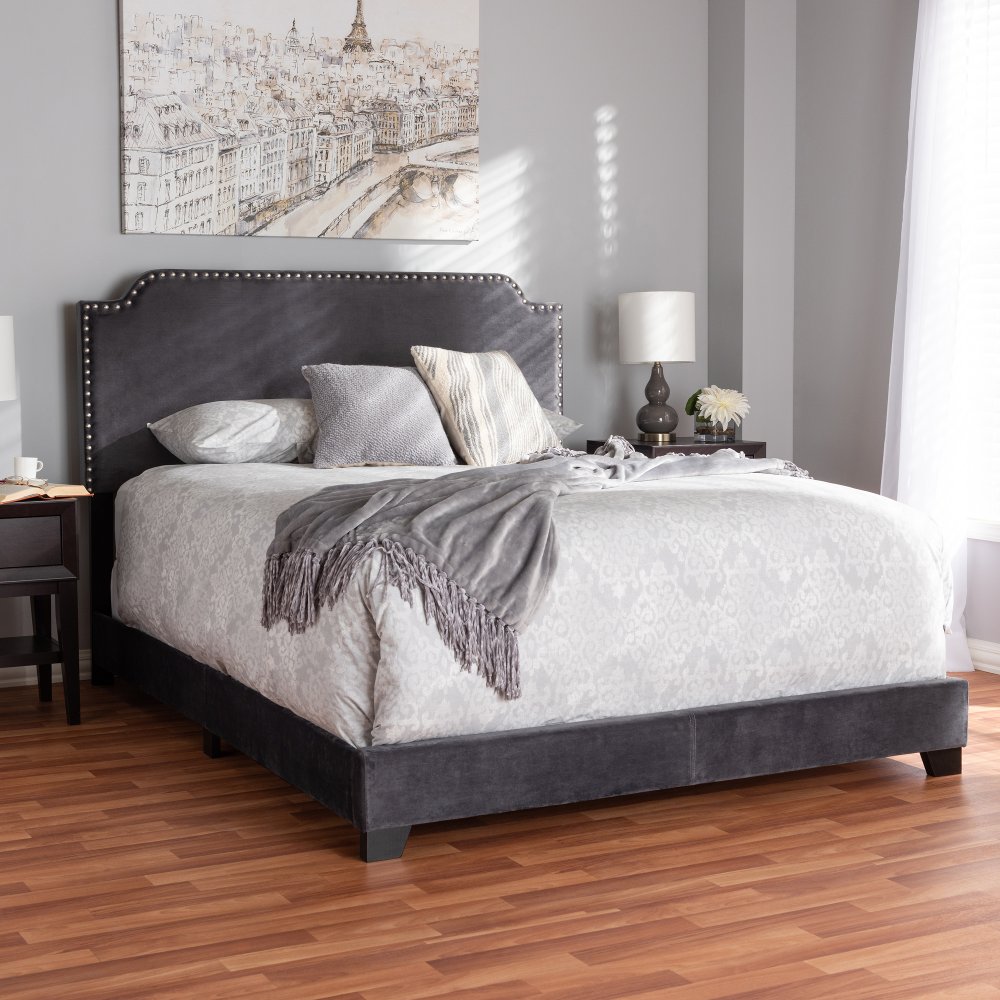
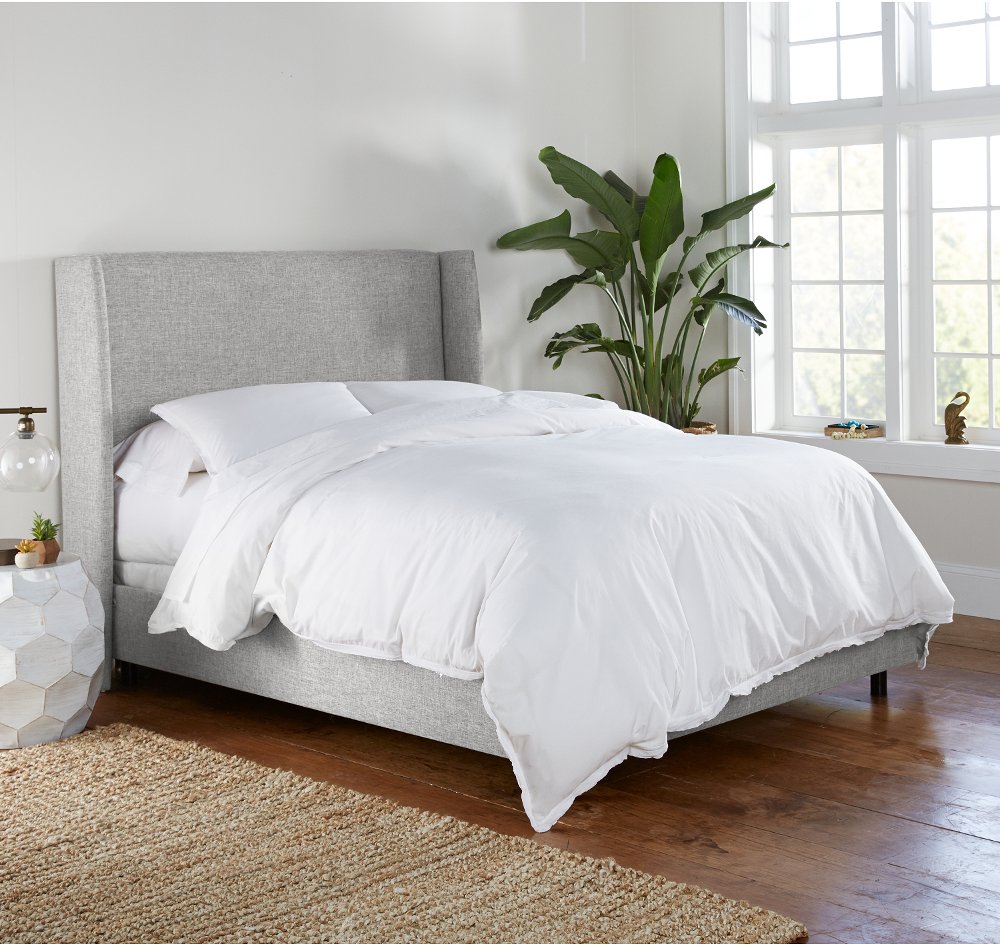
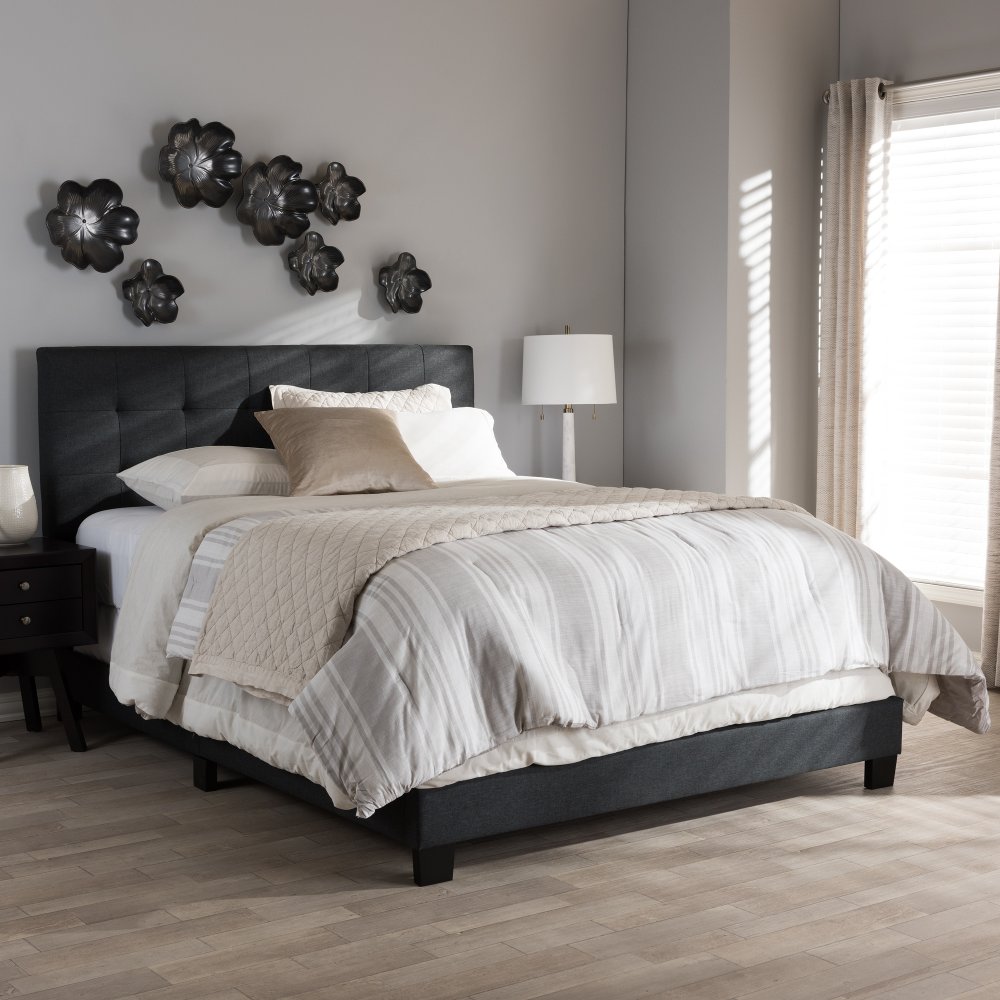
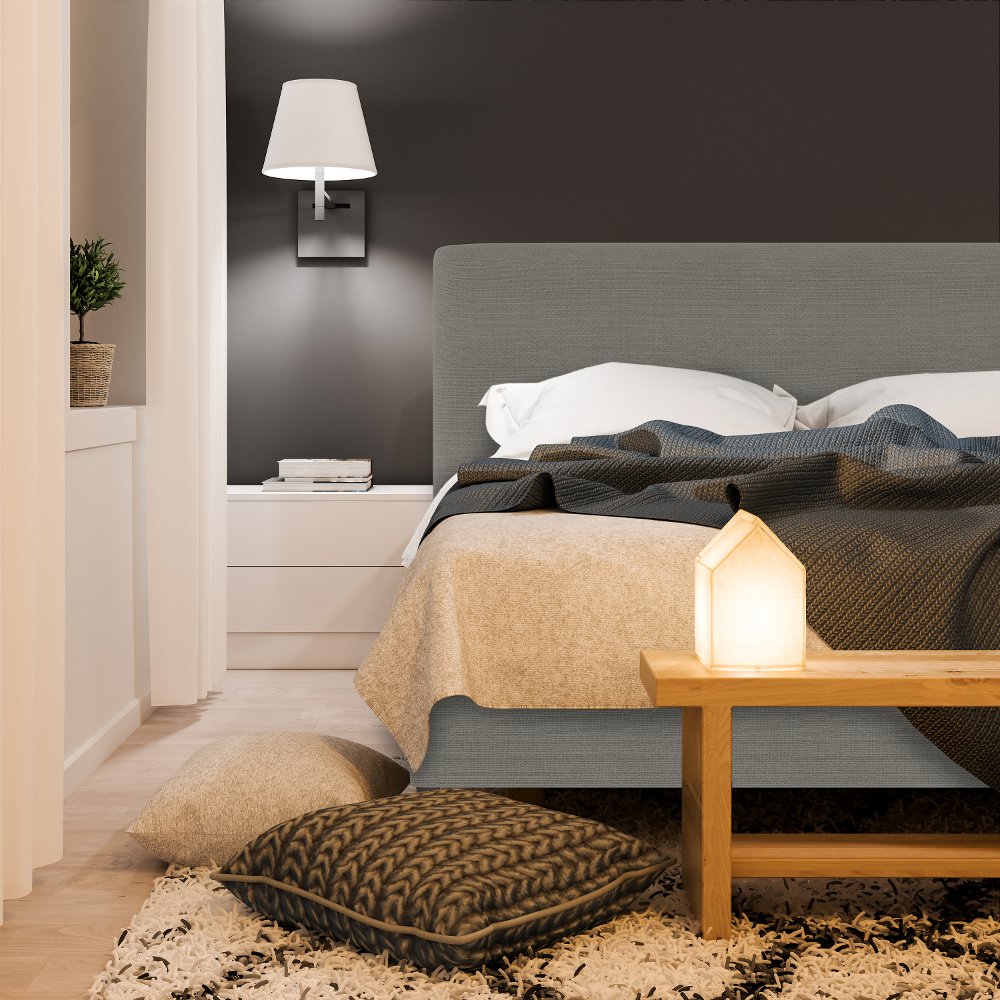
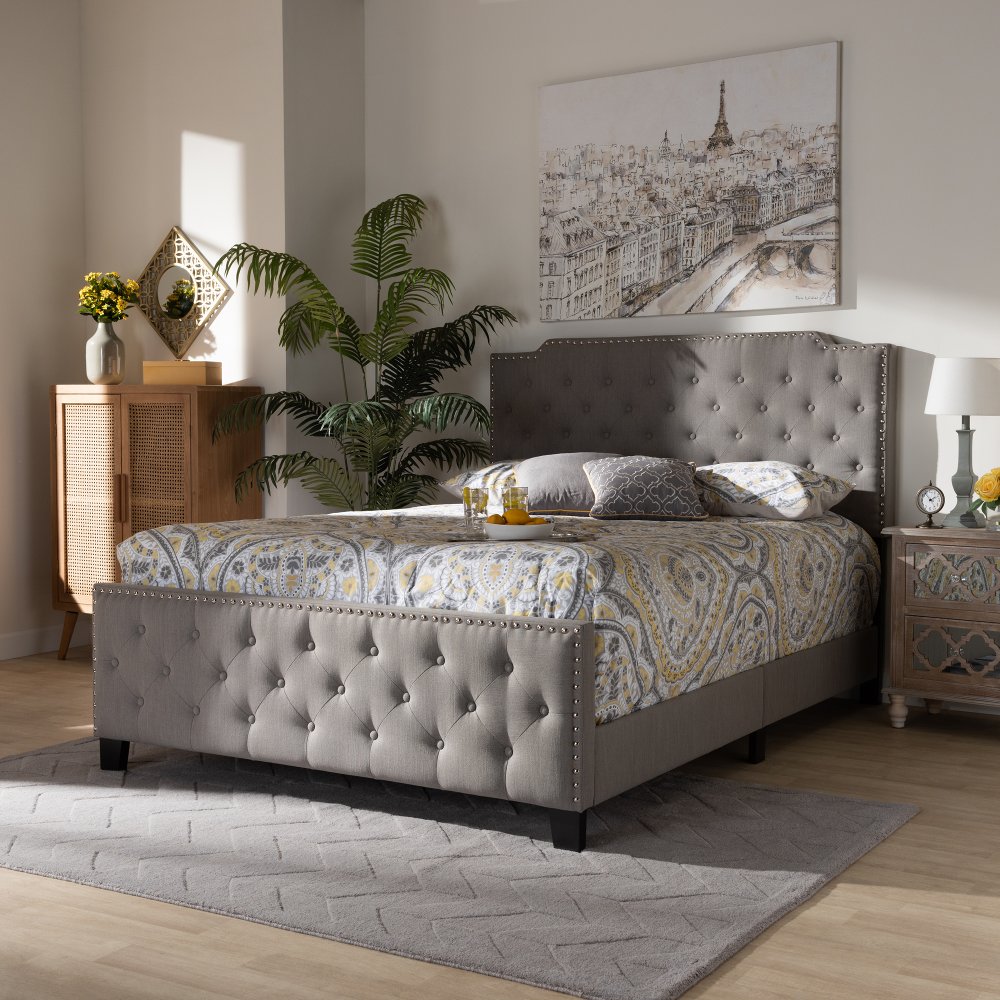
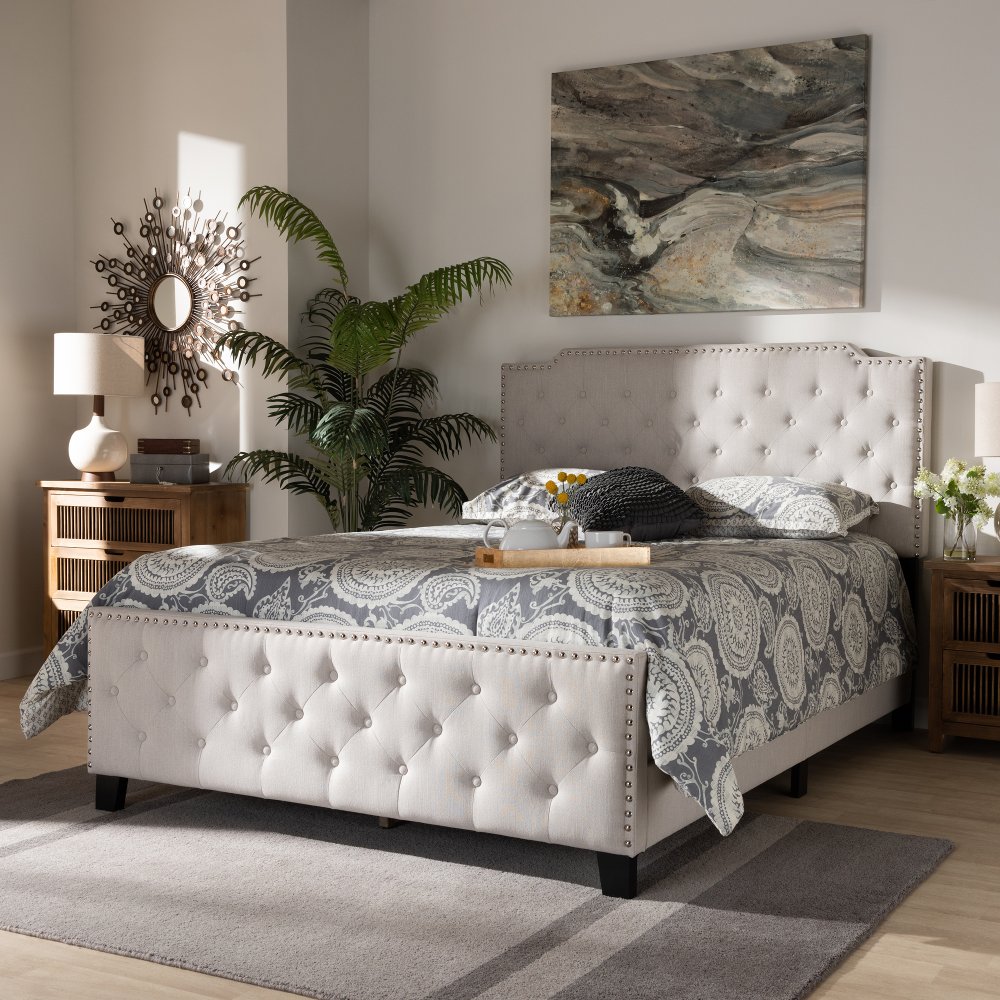
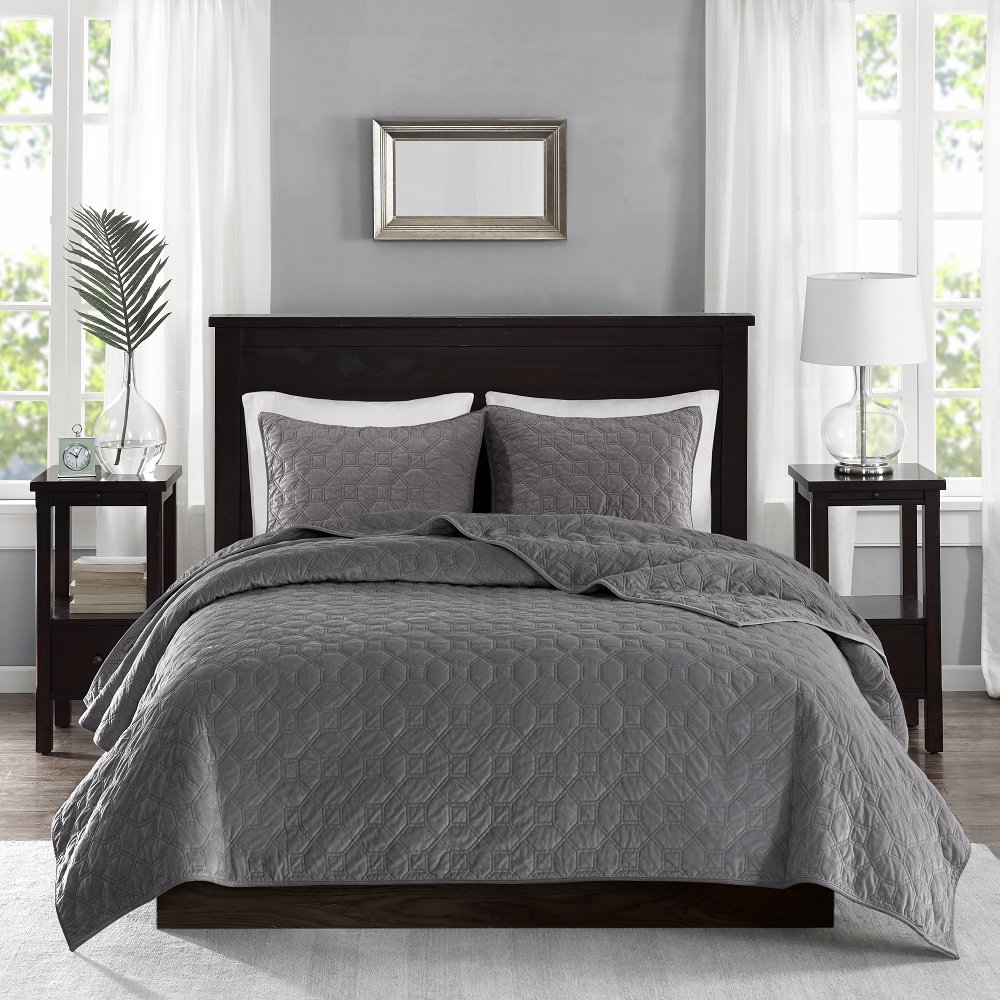
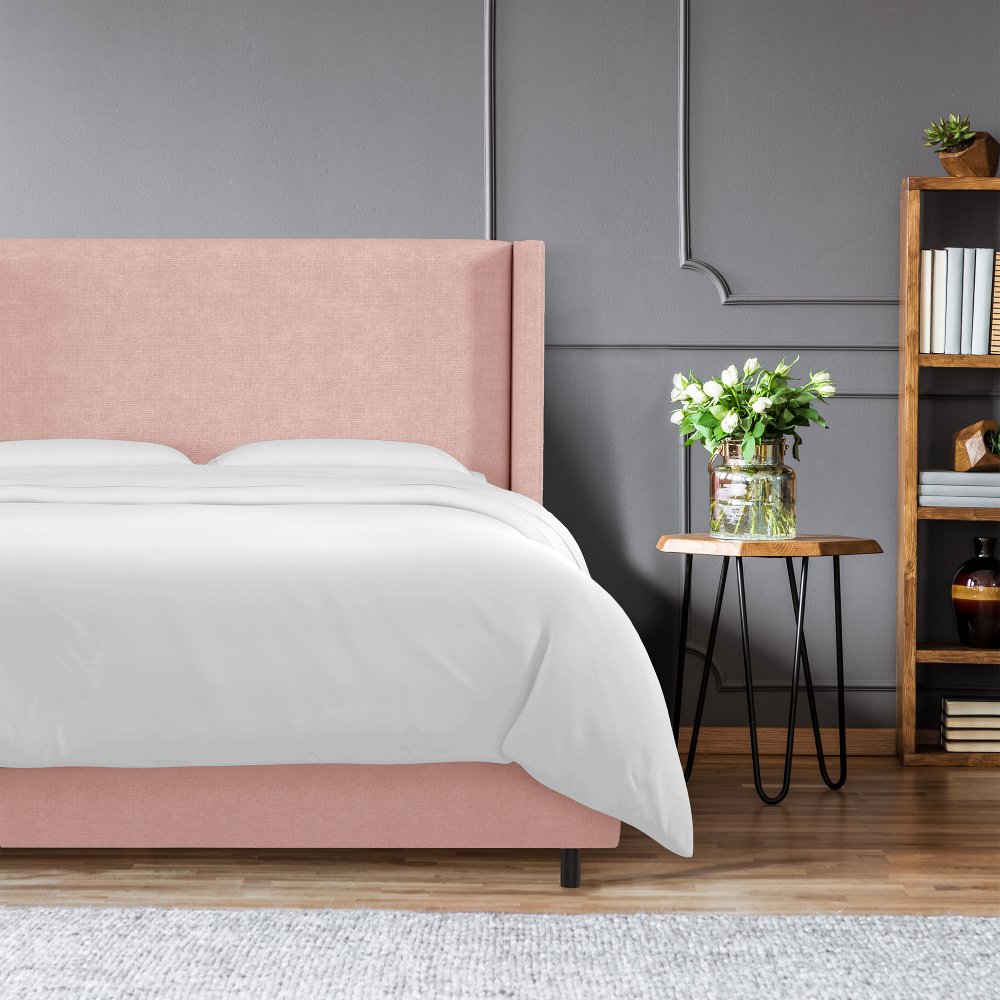
Gray king beds give a bedroom a generous centerpiece with a neutral color that’s easy to make your own. From soft dove gray to deep charcoal, the shade works with a wide range of bedding, flooring, and furniture finishes without making every piece match. The frame’s material and shape do just as much as its color to set the mood. An upholstered king bed brings softness to the room, with woven fabric, textured upholstery, or tufted details adding depth to a broad headboard. A simple upholstered silhouette feels understated, while deep button tufting, wings, or decorative trim creates a more pronounced focal point. Gray wood beds offer a different kind of character: visible grain, paneled headboards, and gently distressed finishes can lend warmth and texture, even within a neutral palette. Smooth painted surfaces and straight lines suit a cleaner, more contemporary space. Metal frames introduce slimmer profiles and more open space around the bed, though their overall appearance depends on the finish and design. When comparing shades, look beyond the word gray. A warm gray with beige or brown undertones sits comfortably beside oak floors and cream linens; a cooler gray may pair more naturally with crisp white bedding, black accents, and blue tones. Fabric texture also changes how a color looks. A brushed or plush surface can appear lighter or darker depending on the direction of the fibers, while a heathered weave blends several tones for a less uniform effect. Headboard proportions deserve attention, too. A tall headboard can hold its own against a large wall, while a low-profile design leaves more room for artwork or windows above the bed. These details help a gray king bed feel connected to the room rather than simply occupying it, whether the goal is a quiet primary bedroom, a polished guest suite, or a shared space with room for two distinct decorating preferences.
A standard king mattress measures approximately 76 inches wide by 80 inches long, but a gray king bed frame will generally extend beyond those dimensions. Upholstered side rails, sleigh-style curves, wide headboards, and substantial footboards can all add to the overall footprint. The listed exterior measurements matter especially in a room where the bed sits between two nightstands or across from a dresser. Space to open drawers, walk around the corners, and change the sheets makes a noticeable difference in everyday comfort. About 24 to 30 inches of walking space around accessible sides is a useful planning target, with more room helpful along busy paths or wherever mobility needs call for it. Painter’s tape on the floor can make the dimensions easier to picture before a large frame becomes part of the room. For a narrower bedroom, gray queen beds provide a similar look around a standard 60-by-80-inch mattress, leaving more floor space beside the bed. A California king is a separate size, typically 72 by 84 inches, so its mattress and frame aren’t interchangeable with a standard king. Construction beneath the mattress matters as much as the exterior measurements. Platform beds use a support system that may eliminate the need for a box spring, while other frames require a foundation; the bed specifications and mattress manufacturer’s support requirements should agree. Slat spacing, center supports, and weight capacity are important details for a king-size sleep setup. The finished height also changes with the frame, foundation, and mattress combination. A lower bed may suit a streamlined room, while a higher sleep surface may feel easier to sit down on or stand up from, depending on the person. Storage beds add another practical consideration. Built-in drawers can hold extra sheets or blankets, but they need enough clearance to open fully without hitting a nightstand. Delivery access counts, too: stair turns, doorways, and narrow halls can affect whether large headboard sections will reach the bedroom.
The right gray king bed should feel comfortable to live with long after the room is decorated. Upholstered frames benefit from regular vacuuming with an upholstery attachment, particularly along seams, tufting, and the edges of the headboard where dust collects. Fabric care codes determine which cleaning methods are appropriate, so spot treatments should follow the manufacturer’s directions rather than a general household cleaning routine. In a home with pets, upholstery texture and the visibility of fur may influence the choice as much as color; tightly woven fabrics and smooth surfaces have different care needs, and no material is automatically scratchproof. Wood and wood-look frames usually call for gentle dusting and manufacturer-approved cleaning, with spills wiped up promptly and excess moisture kept away from joints and seams. Solid wood may show natural grain variation, while veneer can provide a real-wood surface over a different core material. Neither appearance nor weight alone tells the full story of durability. Secure connections, appropriate mattress support, well-fitted components, and correct assembly all contribute to a stable bed. Periodic hardware checks can help maintain that stability as the bed gets used. For styling, gray offers plenty of flexibility without requiring a completely new room. A charcoal frame can anchor pale bedding and light walls, while a light gray headboard creates a softer contrast against walnut furniture or a dark accent wall. Cream, muted green, dusty blue, and earthy rust each bring a different personality to the same neutral foundation. Matching nightstands create a coordinated effect, but complementary wood tones or simple metal pieces can feel equally intentional. Bedding height matters visually as well: a thick mattress and stacked pillows may cover much of a shorter headboard, while a tall footboard can obscure a decorative quilt. With the proportions, support, and materials suited to daily routines, a gray king bed can accommodate shared sleeping space, relaxed reading, and an evolving personal style without dictating every other choice in the bedroom.
Read More