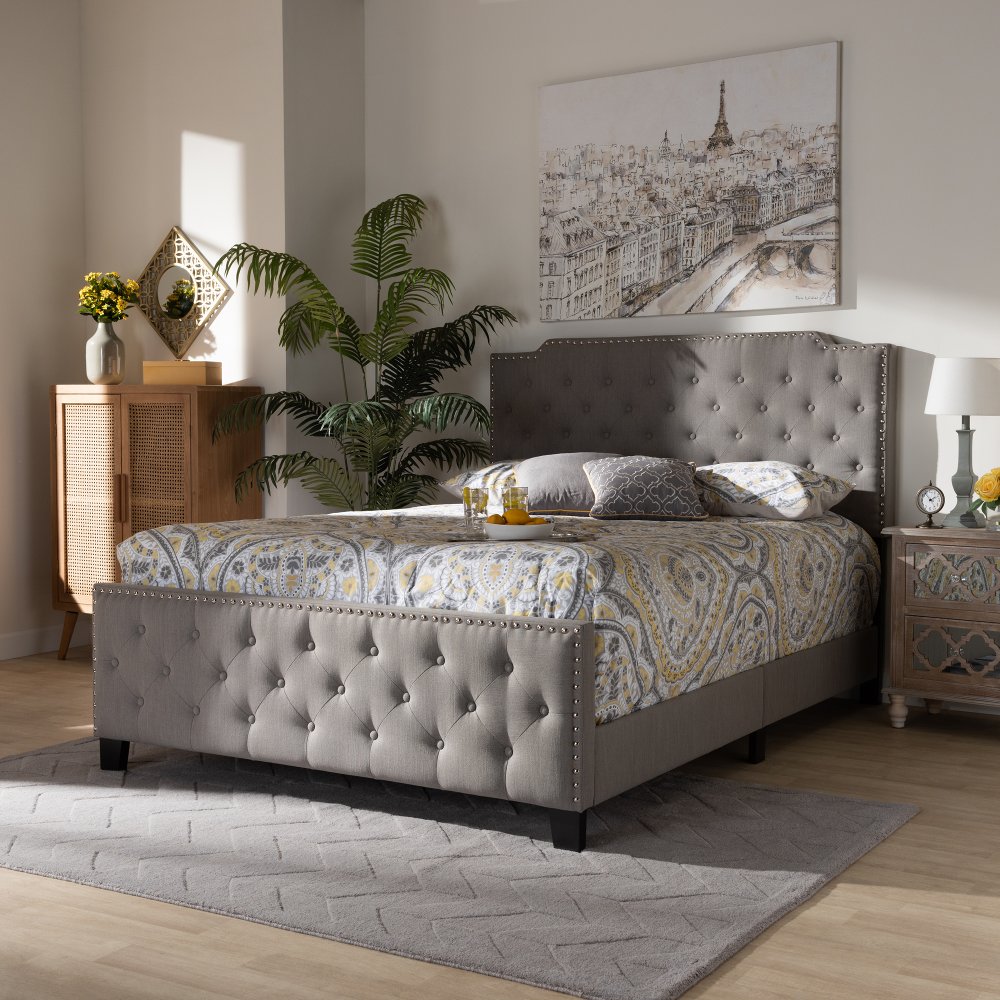
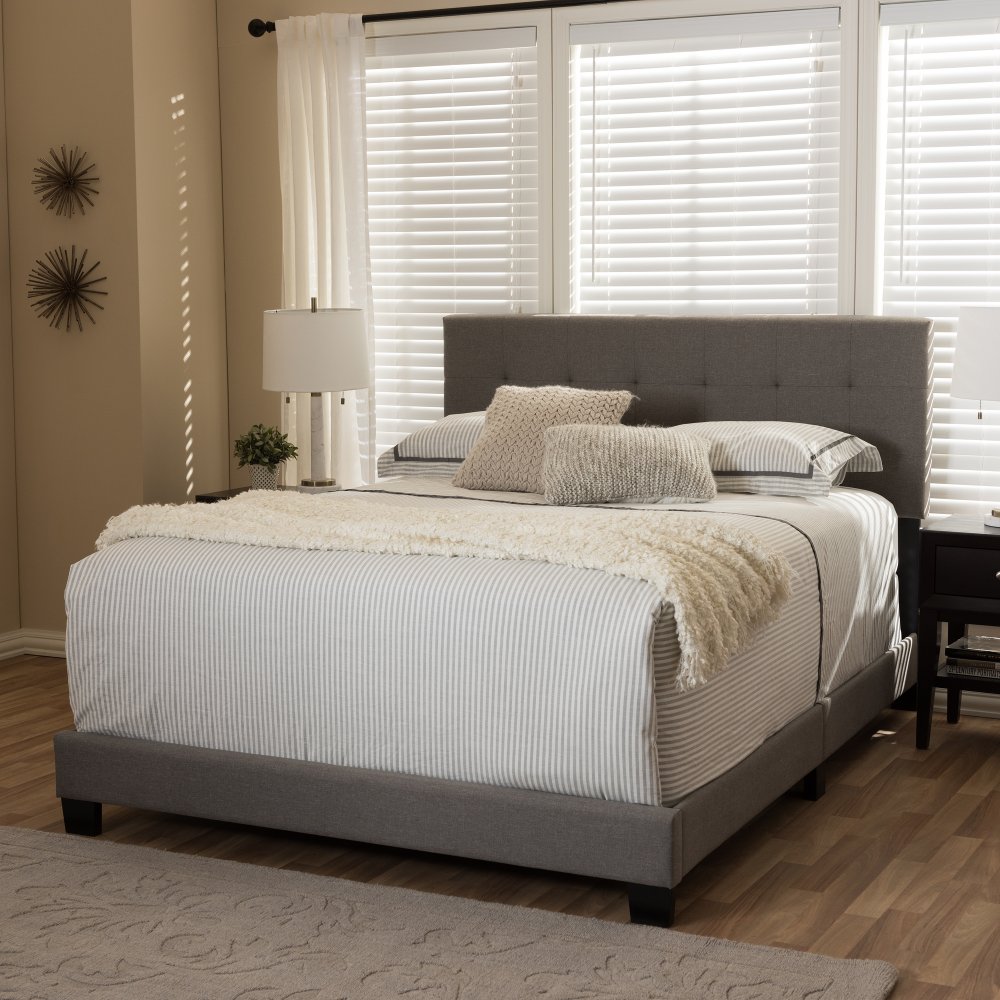
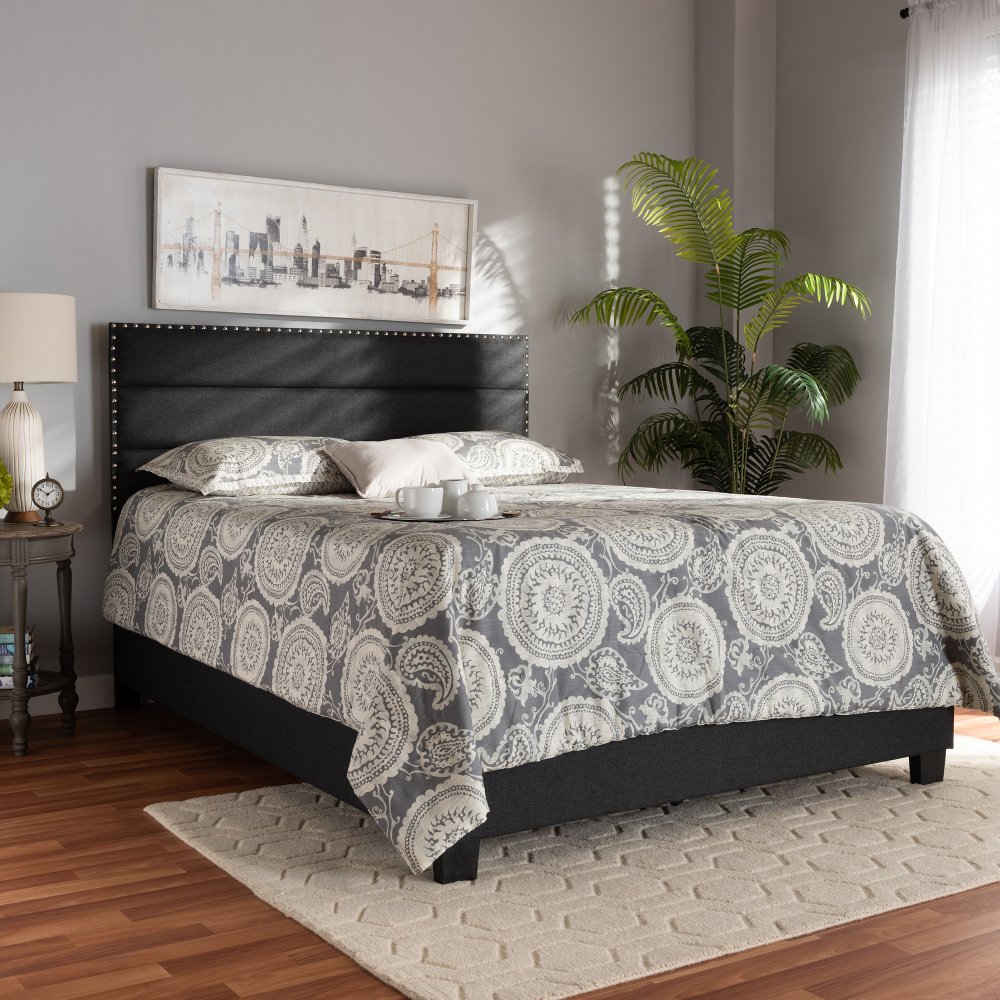
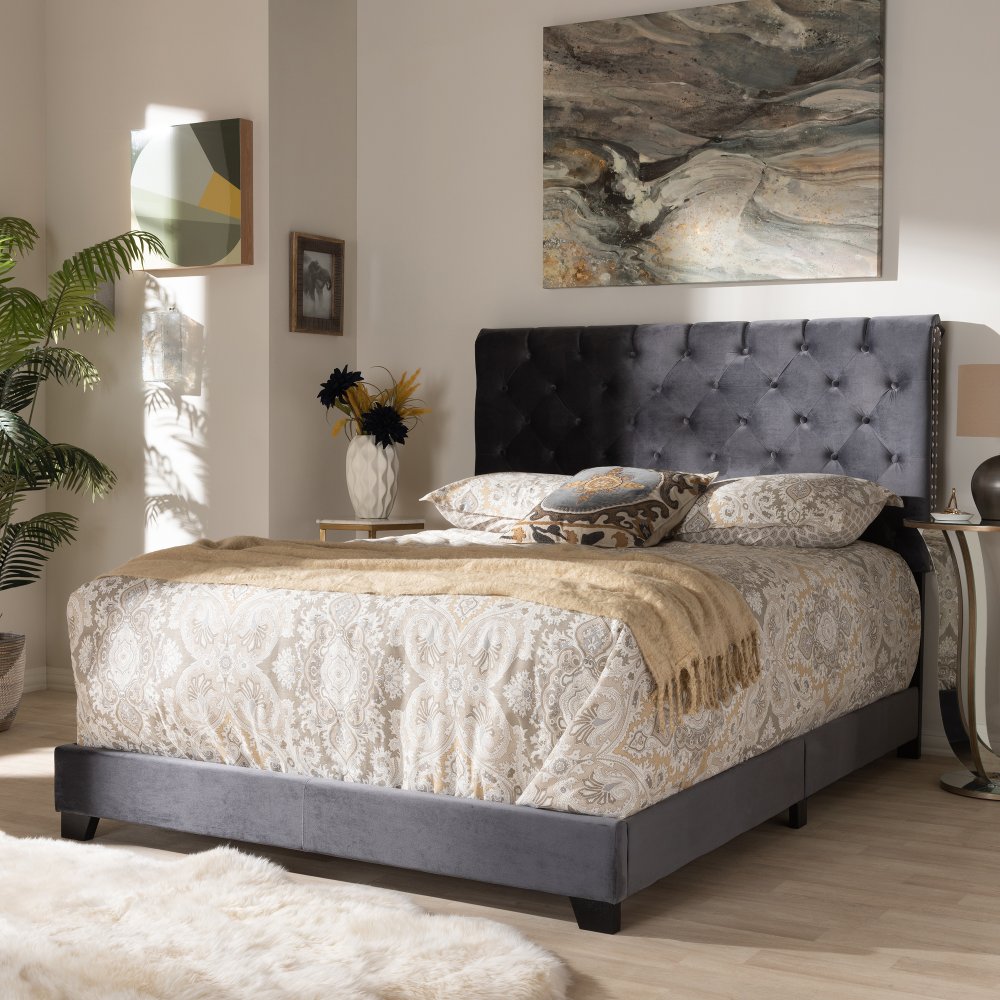
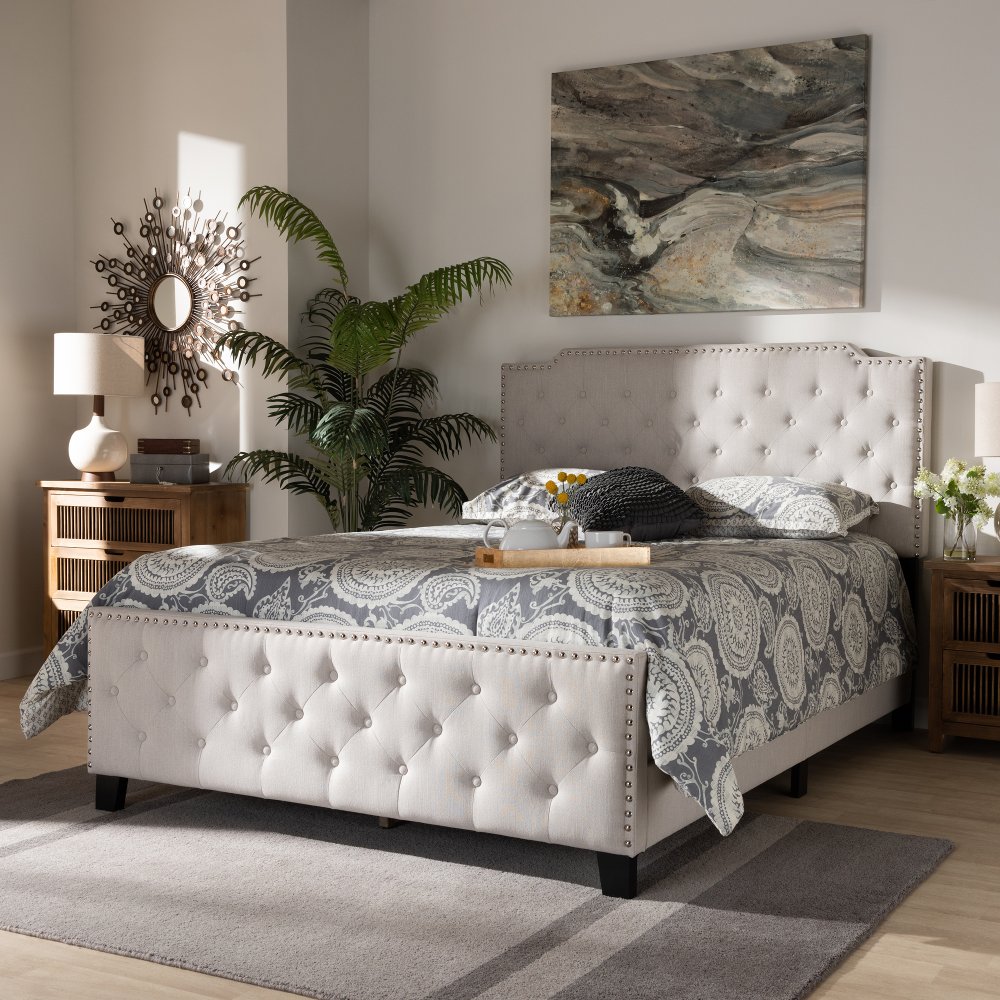
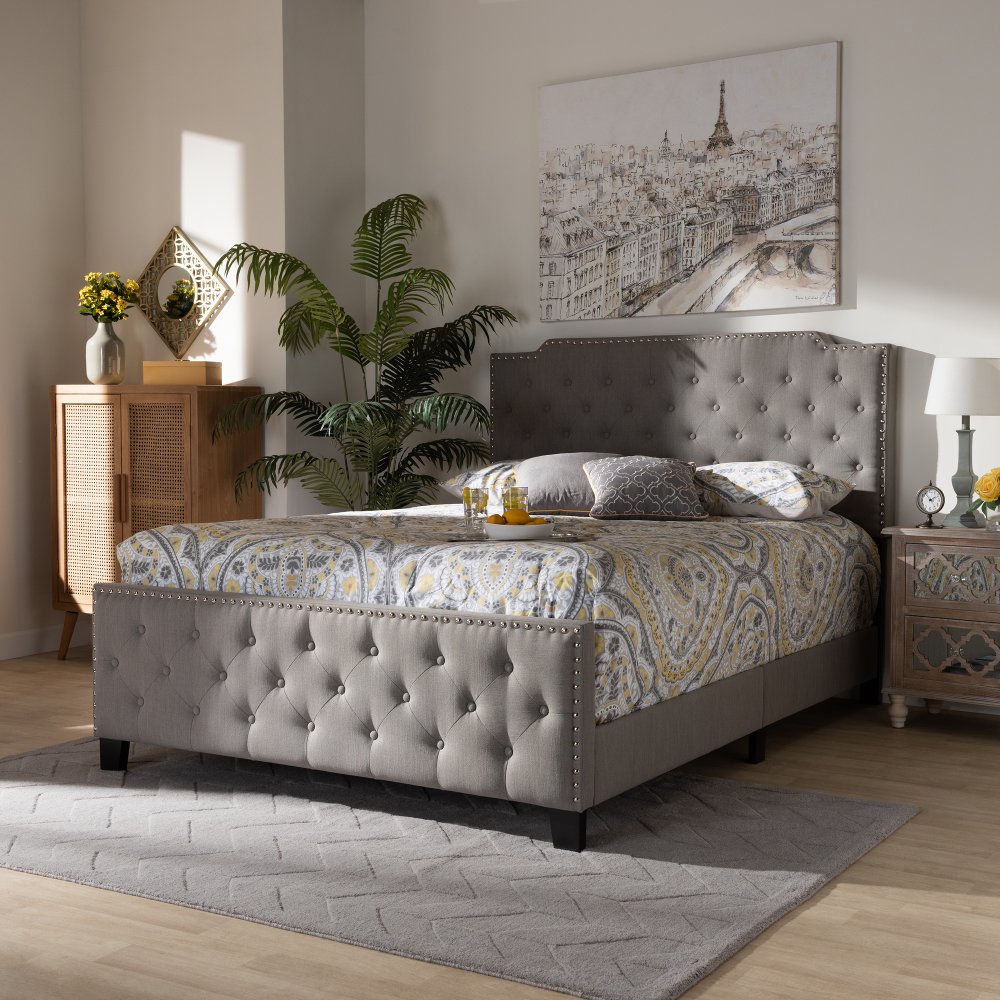
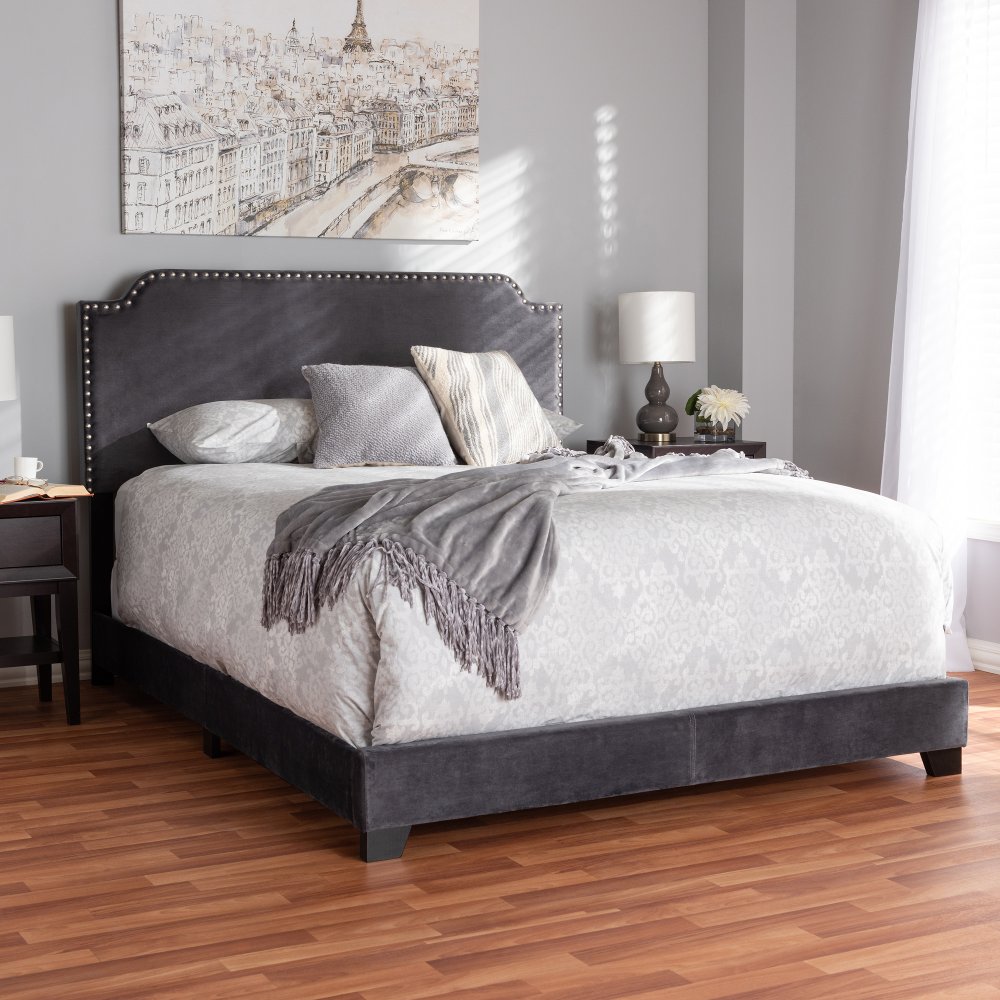
Gray queen beds give a bedroom a versatile centerpiece, combining a familiar neutral color with a size that works for many primary bedrooms, guest rooms, and growing teens’ spaces. A standard queen mattress measures 60 inches wide by 80 inches long, offering room for a solo sleeper to stretch out or for two people to share. The bed frame extends beyond those mattress dimensions, so its overall measurements matter just as much as its mattress size. Within that footprint, the shade of gray and the frame’s shape can set very different moods. Pale gray upholstery creates a soft backdrop for white bedding and light wood nightstands, while a charcoal frame adds definition beside cream walls or a patterned rug. Warm grays with brown undertones pair naturally with oak, woven baskets, and earthy textiles; cooler grays complement blue accents, crisp whites, and silvery hardware. Gray wood beds can show grain through a washed or brushed finish, giving the color depth without needing much decoration. A gray upholstered queen bed brings texture through woven fabric, tufting, or padded panels, and a gray metal bed can feel open and understated thanks to slim rails and a more visible wall behind the headboard. Shape makes a difference, too. A tall wingback headboard creates a substantial focal point, while a straight, low-profile frame keeps the room visually quieter. For a bedroom that doubles as a place to read or unwind, a padded headboard offers a softer surface to lean against with pillows. In a guest room, a simple silhouette makes it easy to change bedding and coordinate with furniture that’s already there. Gray also leaves room for personal details: a colorful quilt, framed photographs, or an inherited dresser can stand out without competing with the bed. The result can feel coordinated without requiring every piece of bedroom furniture to match exactly.
Materials and construction determine how a gray queen bed feels in daily use, how it wears, and how much attention it needs. Wood frames may use solid wood, wood veneers over an engineered core, or a combination of materials. Solid wood brings natural grain variation, while veneers provide a real wood surface over a supporting core; neither description alone tells the whole story about durability. Secure joints, sturdy side rails, appropriate center support, and properly installed hardware all contribute to a stable bed. Metal frames can provide strong support with relatively slender components, although connection points still need careful assembly and occasional checks for loosened hardware. Upholstered frames typically wrap padding and fabric around a wood or metal structure. Tightly woven fabrics can suit everyday use, while velvet adds a soft pile that changes appearance as light catches it from different directions. Linen and linen-look upholstery offer visible texture, but their fiber content and cleaning requirements can differ, so check the care label rather than judging by appearance alone. For households with pets, consider whether a fabric’s weave might catch claws and how easily hair can be removed. Smooth, accessible surfaces tend to be simpler to dust, while deep tufting and decorative trim take a little more attention. Vacuum upholstery gently with an appropriate attachment, blot spills promptly, and follow the manufacturer’s cleaning instructions before applying any product. Wood and metal finishes generally benefit from a soft cloth and approved cleaners rather than abrasive scrubbing. Mattress support deserves the same attention as the finish. A platform bed may support a compatible mattress without a box spring, but slat spacing, weight limits, and foundation requirements vary. Other frames require a separate foundation to create the intended sleeping surface. Confirm the mattress manufacturer’s support requirements, and check whether any advertised weight capacity includes the mattress and foundation. If an adjustable base is part of the setup, verify compatibility with the frame’s interior dimensions and construction; removable slats alone don’t guarantee a suitable fit.
A well-chosen gray queen bed should make everyday routines easier, from walking around the foot of the mattress to reaching a bedside lamp. Measure the room with the full frame dimensions in mind, including headboard wings, a projecting footboard, and any trim that extends beyond the rails. Where space allows, roughly 30 inches of clearance along accessible sides gives you room to move and change sheets; individual mobility needs may call for more. Check door swings, closet access, and dresser drawers before settling on a layout. In a compact bedroom, a low footboard can keep the view open, while a taller footboard creates a more enclosed look and may feel restrictive to sleepers whose feet extend beyond the mattress. Storage beds put the area beneath the mattress to work, making them useful for spare linens, folded clothing, or extra pillows. Side drawers need enough clearance to open fully without hitting a nightstand or wall, and foot-end drawers need open floor space beyond the bed. Lift-up storage provides a different access point, but its mechanism, mattress weight requirements, and operating instructions deserve careful review. An open frame with sufficient underbed clearance may accommodate separate bins and make floor cleaning easier. Finished bed height matters as well: combine the frame’s support height with the thickness of the mattress and any required foundation to estimate where you’ll sit when getting dressed. A thick mattress can also cover more of a headboard’s upholstery or decorative detailing than expected. If your existing frame already meets your needs, gray queen headboards offer another way to introduce the color, provided the mounting method, width, and hardware are compatible. For a complete bed, review assembly instructions, delivery-path measurements, and whether the mattress or foundation is sold separately. Large headboard panels need to clear stairways and tight turns, not just the bedroom doorway. Taking those practical details into account helps you choose a bed that looks at home in the room and supports the way you actually use it.
Read More