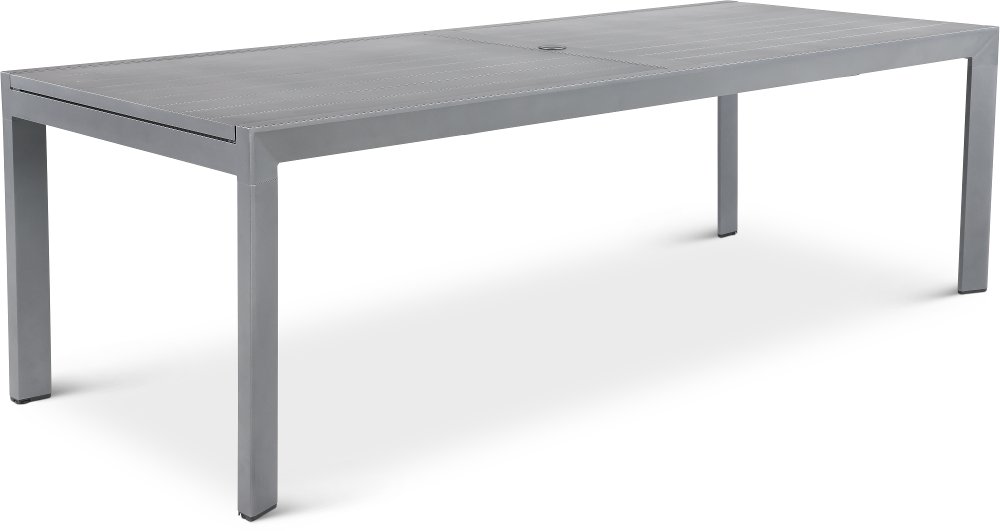
Gray outdoor tables bring a versatile neutral finish to patios, decks, balconies, and backyard seating areas. The category includes outdoor dining tables, compact bistro tables, low coffee tables, and side tables, each suited to a different part of daily life outside. A dining table gives family meals and casual get-togethers a comfortable home, while a small accent table keeps a drink or paperback within reach of a favorite chair. Gray works especially well when you want those different spaces to feel connected without matching every finish. Pale gray can create a soft contrast against dark cushions, charcoal adds definition beside light upholstery, and warm gray complements natural wood and woven textures. Undertones make a difference: a blue-gray surface looks cooler next to brick or terracotta, while a brown-gray finish blends more gently with those earthy colors. Looking at finish samples or detailed images alongside your existing furniture can help you picture the combination. Shape also influences how a table feels in its setting. Round outdoor tables make conversation easy and eliminate sharp corners along the tabletop, though the base still needs enough clearance for feet and chairs. Square tables can create an intimate dining spot, and rectangular tables often suit longer patios or larger gatherings. For a lounge arrangement, gray outdoor coffee tables provide a central surface for snacks, a serving tray, or a relaxed board game without introducing dining-table height into a low seating area. Side tables work well between two chairs or beside a chaise, particularly when the space needs useful surfaces without a large central piece. For households that use the patio in several ways, coordinating gray finishes can tie a dining area to a separate conversation space while leaving room for different materials and silhouettes. The result can feel collected and comfortable rather than overly uniform, with each table serving a clear purpose.
The material beneath a gray finish determines much of an outdoor table’s weight, upkeep, and performance. Powder-coated aluminum is relatively lightweight and resists rust, making it useful when you occasionally rearrange chairs or move a table for cleaning. Steel and iron generally add more weight and can provide sturdy support, but their protective coatings need attention because exposed metal may rust where scratches or chips develop. A powder-coated finish helps protect the frame; it doesn’t make every metal table maintenance-free. High-density polyethylene, often called HDPE, is a plastic used in outdoor furniture that generally resists moisture and doesn’t require the staining associated with many wood surfaces. UV protection, construction quality, and manufacturer specifications still matter when evaluating color retention and long-term durability. Composite materials vary in composition, so a wood-look tabletop shouldn’t automatically be treated as solid wood or assumed to perform like HDPE. Gray-finished wood offers visible grain and a more natural texture, with care needs that depend on the wood species and finish. Some surfaces require periodic sealing or refinishing, and natural changes in color can be part of their character. Synthetic wicker tables offer woven detail over a supporting frame; a rigid tabletop or tray-friendly surface is helpful when you’ll be setting down glasses. Concrete and stone surfaces can bring substantial weight and texture, although porosity, sealing requirements, and suitability for freezing conditions differ by material. Tempered-glass tops offer a smooth surface that’s easy to wipe, but fingerprints, water spots, and debris may be more noticeable. Across all these options, outdoor-rated construction matters more than color alone. Check whether the entire table, including its fasteners, frame, and top, is intended for the exposure it will receive. A covered porch and an open patio place different demands on furniture, and even weather-resistant materials benefit from care. Gray can soften the appearance of everyday dust, but no shade replaces routine cleaning or protection appropriate to the material.
A good fit starts with the way you’ll sit, walk, and serve around the table. Measure the usable area rather than the full dimensions of the patio, allowing for doors, steps, planters, railings, and paths to other seating. Around an outdoor dining table, roughly 36 inches of clearance from the table edge to a wall or other obstruction is a useful starting point for pulling out chairs; allow more where people need to walk behind seated guests. Seating capacity depends on the tabletop dimensions, chair widths, and leg placement, not simply whether a table is described as round or rectangular. About 24 inches of table edge per diner is a common planning allowance, with additional room helpful for broad armchairs. Check that chair arms fit beneath the tabletop or apron, and pair counter-height or bar-height tables with seating designed for that height. For coffee tables, a top close to the seat-cushion height usually keeps drinks accessible, while approximately 14 to 18 inches between the table and seating can balance reach with legroom. An umbrella hole can support a shaded dining arrangement, but its diameter must suit the umbrella pole, and the umbrella needs a properly rated base; the table alone shouldn’t serve as its anchor. Adjustable feet can help a table sit steadily on slightly uneven paving, provided it rests on a sound surface. Practical care keeps the space ready for everything from a quiet breakfast to a dinner with friends. Follow the manufacturer’s cleaning instructions, remove spills promptly, and use gentle cleaning products approved for the surface. Placemats, coasters, and trivets help limit marks and heat damage where appropriate. Clear leaves and debris from joints or tabletop openings, inspect fasteners periodically, and address damaged protective finishes as directed. When covering a table, choose a suitable furniture cover and allow the surface to dry first to reduce trapped moisture. Storage or additional protection may be necessary for materials that aren’t rated for prolonged exposure or freezing temperatures. With the right proportions and manageable care needs, a gray outdoor table becomes a useful part of your home, ready for both everyday routines and shared meals.
Read More