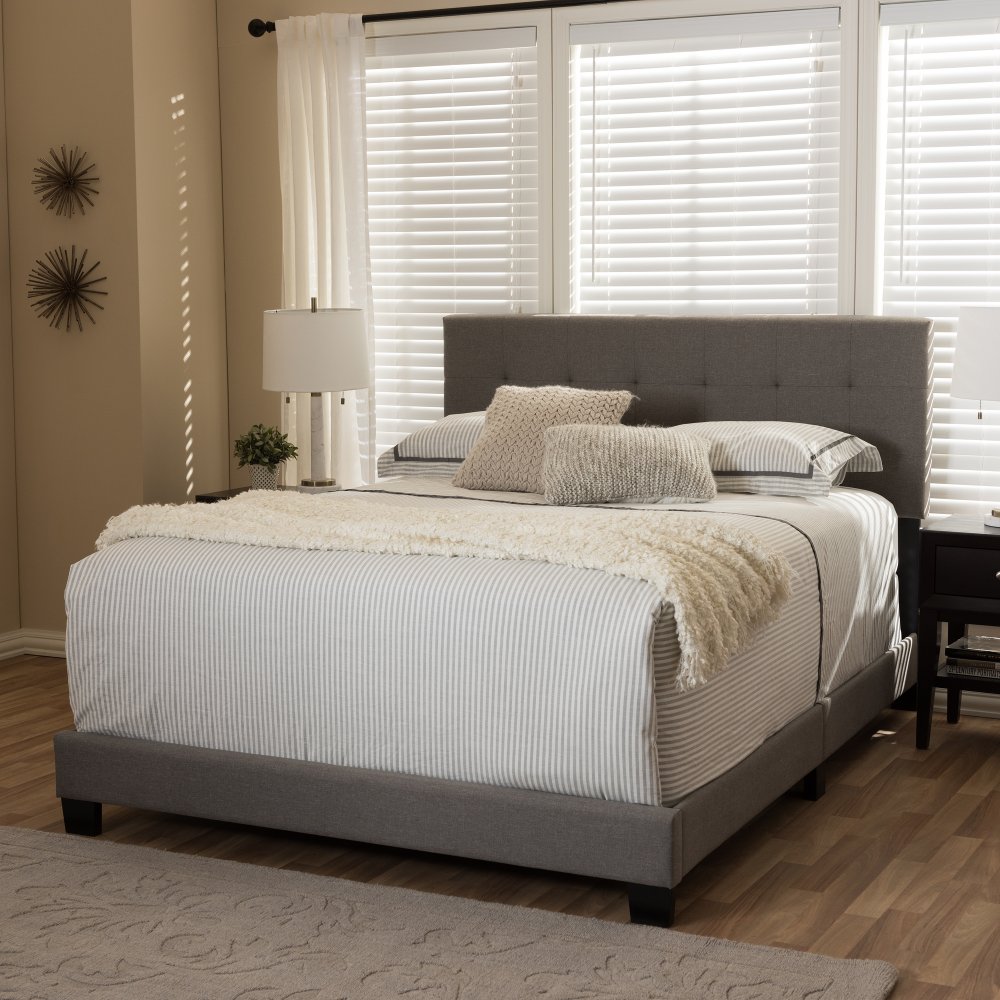
Gray queen headboards give your bed a finished look while leaving plenty of room for personal style. A gray headboard can blend into a quiet, neutral bedroom or provide a backdrop for colorful bedding, patterned pillows, and artwork. The shade makes a noticeable difference: pale gray feels light and understated, medium gray adds definition without a strong contrast, and charcoal creates a bolder focal point against light walls. Undertones matter, too. A warm gray can complement cream bedding and natural wood furniture, while a cooler gray pairs well with crisp white, blue accents, and brushed metal finishes. Fabric and shape bring another layer of character. A gray upholstered queen headboard offers a softer surface behind your pillows, making it a comfortable choice for reading a few chapters or sitting up to watch a favorite show. Linen-look weaves have a relaxed texture, polyester upholstery can offer practical everyday durability, and velvet adds a plush surface with a subtle sheen. Velvet’s appearance can shift as the pile catches light, so the same shade may look lighter or darker from different angles. Button tufting introduces depth and a tailored feel, while channel tufting creates a more structured pattern. A smooth rectangular panel keeps the focus on your bedding; an arched or gently curved silhouette softens the lines of the room. Nailhead trim can add definition around the edges without requiring additional decoration above the bed. Gray wood or wood-look headboards offer a different texture, with painted, stained, or washed finishes that work well alongside dressers and nightstands. For a bedroom that already has several wood tones, upholstery can provide a welcome break from matching every finish. These details let you shape a primary bedroom, furnish a guest room, or give a young adult’s space a more settled feel without changing the room’s entire personality. A headboard is also an opportunity to make an existing bed feel more complete when the mattress and foundation still suit your needs.
The right fit starts with the bed you have, not just the size named in the product description. A standard queen mattress measures 60 inches wide by 80 inches long, but a queen headboard’s overall width can extend beyond the mattress on either side. That extra width may look intentional behind the bed, yet it still needs to fit between nearby furniture, windows, and doorways. Overall height deserves equal attention. A tall mattress, foundation, and stack of pillows can hide much of a shorter headboard, while a taller design keeps more of its shape and upholstery visible. An adjustable-height headboard gives you flexibility when its mounting positions accommodate your bed’s proportions. In a room with a low window or artwork above the bed, the total installed height helps you picture how everything will sit together. Mounting style is just as important as dimensions. A frame-mounted headboard attaches to compatible brackets on the bed frame; a wall-mounted headboard attaches independently to the wall with hardware suited to the wall’s construction. Some designs accommodate more than one installation method, but that flexibility should be confirmed in the product specifications rather than assumed. Matching the queen size alone doesn’t guarantee that bolt spacing, brackets, or attachment heights will line up. If you’re pairing a separate headboard with gray queen bed frames, check both pieces’ measurements and connection requirements for a coordinated setup. A standalone headboard generally serves as the backdrop to the bed rather than the support for the mattress, so the frame or foundation still needs to provide the support your mattress requires. For an adjustable base, confirm compatibility and allow the clearance specified by the manufacturers. Wall outlets, baseboards, and bedside lighting can also affect placement. A little attention to those everyday details helps keep charging cords accessible, lamps useful, and the headboard positioned comfortably behind your pillows rather than awkwardly above or below them.
Materials, construction, and care determine how well a gray queen headboard fits your household over time. For upholstered designs, the fabric’s fiber content and cleaning instructions are more useful than color alone. A tightly woven fabric may suit regular use, while a textured weave can help soften the appearance of minor surface marks. Performance upholstery can offer added stain resistance, but the term doesn’t mean every spill will wipe away or that every cleaning product is safe. Check the stated care requirements, especially in a bedroom where a morning cup of coffee, a pet’s favorite sleeping spot, or a child’s bedtime visit is part of daily life. Light gray can show darker marks, while charcoal may make pale lint and pet hair more noticeable. Regular vacuuming with an upholstery attachment helps remove dust from fabric surfaces, seams, and tufted areas. For spills, prompt blotting and the manufacturer’s recommended cleaning method help protect the fabric; vigorous rubbing can spread a stain or change the texture. Velvet may need gentle care that respects the direction of its pile, and wood or wood-look surfaces typically need dusting and cleaning products appropriate to their finish. Durability also depends on what sits beneath the surface. A sturdy internal frame, securely attached upholstery, neatly finished edges, and stable mounting connections all contribute to a headboard that feels settled behind the bed. Padding should feel comfortable for its intended use without taking the place of supportive pillows. Periodically checking fasteners according to the assembly instructions can help address loosening from everyday movement, and moving the bed carefully helps protect the headboard’s legs and attachment points. In a guest bedroom, straightforward care and a versatile gray finish make it easier to refresh the bedding between visits. In your everyday bedroom, the best choice balances the texture you enjoy, the proportions that fit your space, and the upkeep that feels manageable. Those practical details turn a decorative finishing touch into a lasting part of a room that feels comfortable and distinctly yours.
Read More