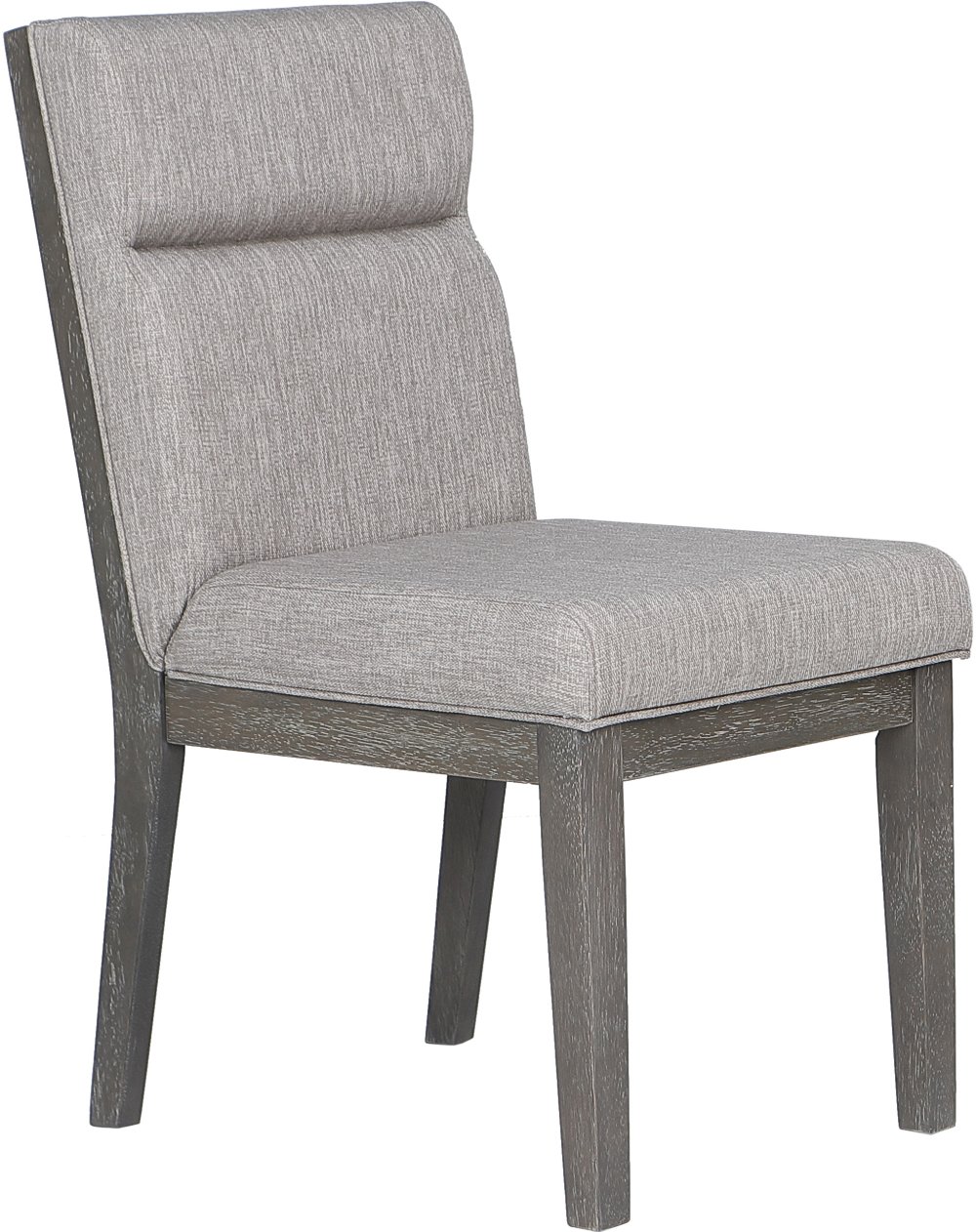
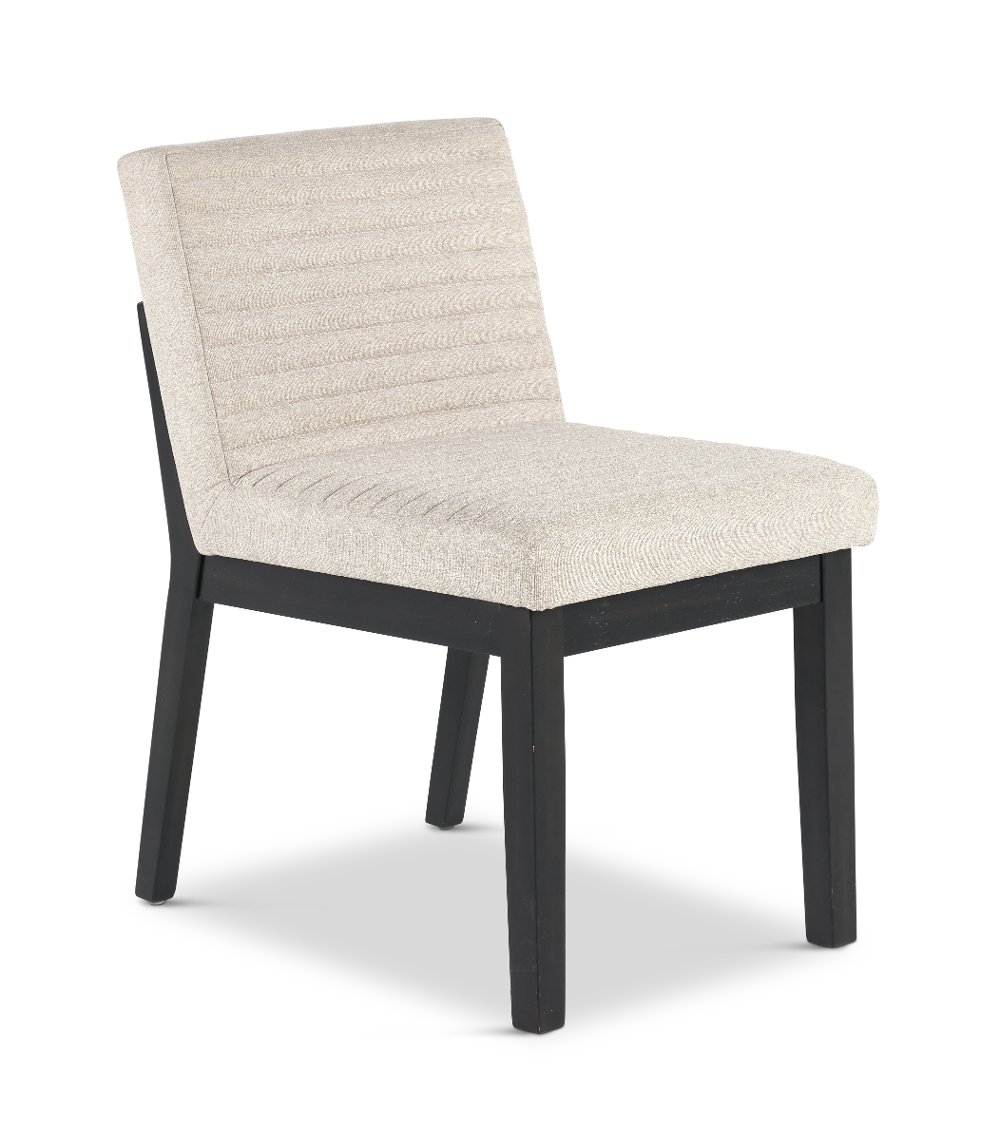
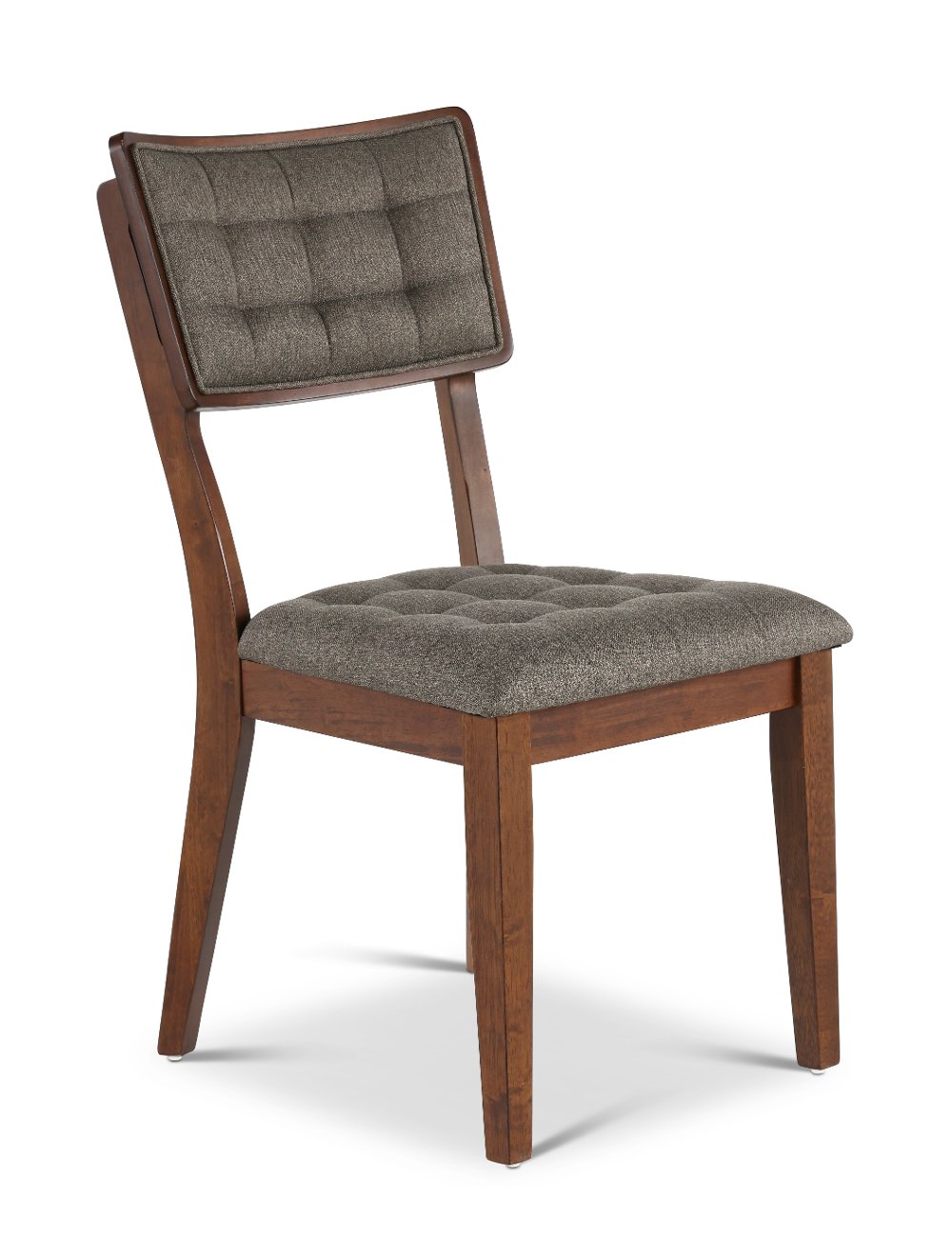
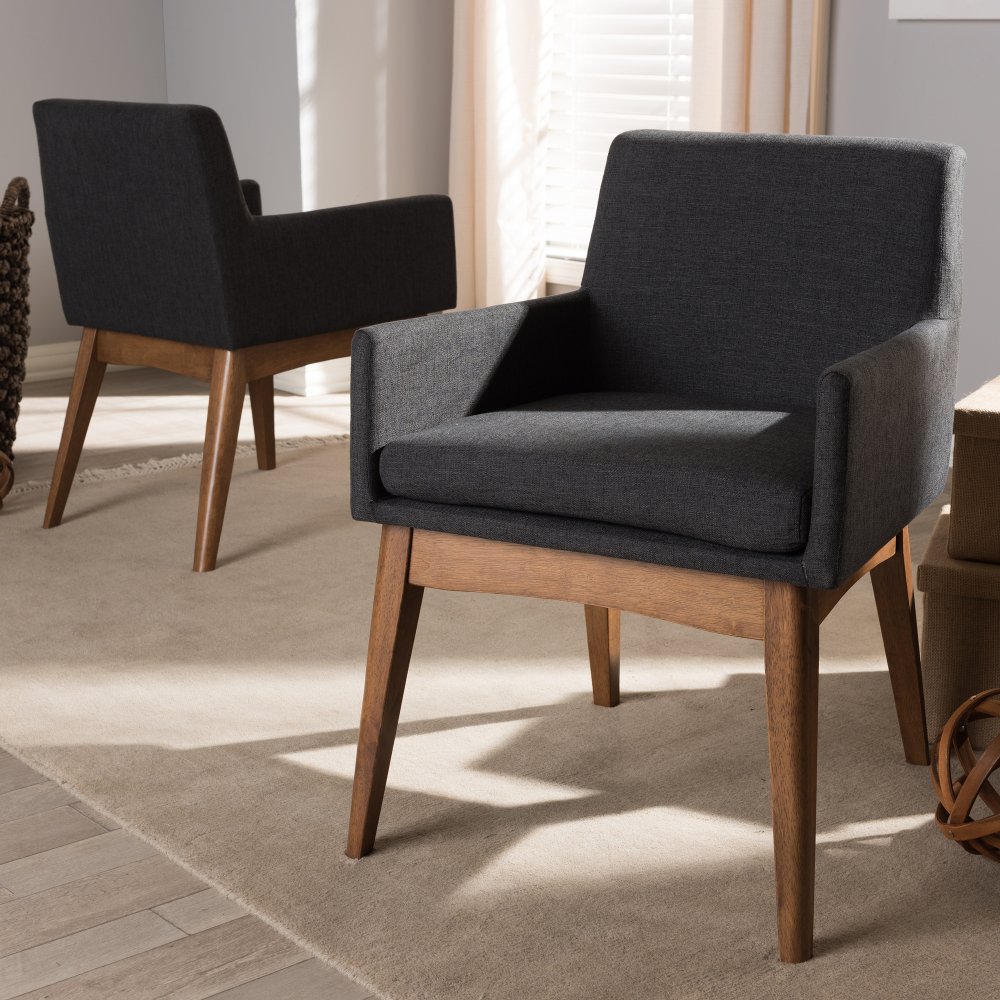
Gray side dining chairs are armless dining chairs in shades ranging from light dove gray to deep charcoal, designed to provide seating without the added width of chair arms. Often placed along the sides of a dining table, they also work at the ends when their proportions suit the space. Their neutral color makes them easy to coordinate with different table finishes, while the seat material, back shape, and frame give each style its character. Light gray upholstery can soften a dark wood table, while charcoal seating adds definition beside pale oak or a white tabletop. Warm grays with brown or beige undertones tend to complement natural wood and earthy colors; cooler grays can work well with black accents, glass, and crisp white finishes. Color names alone don’t tell the whole story, since fabric texture and room lighting affect how a shade looks. A woven gray seat may show several tones up close, while a smooth upholstered surface can look more uniform. For a relaxed dining area, gently curved backs and textured fabrics create a comfortable, welcoming feel. Straight lines, tailored upholstery, and slender legs offer a more streamlined appearance. Button details, nailhead trim, and shaped wood frames can lend a traditional touch without requiring an entirely matching dining room. For an industrial or contemporary direction, Gray Metal Dining Chairs offer another way to introduce gray seating alongside wood, glass, or stone-look surfaces. The right combination depends on the room you want to create: quiet and coordinated, layered and casual, or defined by a few contrasting materials. Matching every finish isn’t necessary. Repeating a gray tone, leg color, or curved silhouette elsewhere in the room can help different pieces feel connected. That flexibility makes gray a practical foundation when you’re refreshing the seating around a table you already enjoy.
A good fit starts with the relationship between the chair, the table, and the people sitting there. Many standard-height dining tables pair with seats around 17 to 19 inches high, but actual measurements matter more than category labels. About 10 to 12 inches between the seat and the underside of the tabletop generally provides comfortable legroom, with extra attention needed for a low table apron or thick upholstered cushion. Seat height should be considered alongside seat depth and back shape. A deep seat may feel roomy to a taller adult but leave a shorter person sitting forward without back support. A gently shaped back and supportive cushioning can make a difference when dinner turns into a long conversation. Width matters, too. Allowing roughly 24 inches of table edge per diner is a useful starting point, though broader chairs and more generous elbowroom call for additional space. Table legs, corner brackets, and pedestal bases can reduce the usable area, even when the tabletop looks large enough. Armless chairs often tuck neatly beneath a table, but a wide back or angled rear legs may still extend into a walkway. Around 36 inches between the table edge and a wall or nearby furniture usually gives someone room to pull out a chair; a busy route behind seated diners benefits from more clearance. In a breakfast nook, a lighter chair can be easier to move several times a day. In a dining room used for longer gatherings, a more substantial seat and supportive back may take priority. Construction deserves the same attention as dimensions. Secure joints, appropriate bracing, and a stable frame help seating handle everyday movement. Wood frames bring natural grain and warmth, while metal frames can provide a slender profile. Neither material alone guarantees durability; joinery, finish quality, intended use, and the manufacturer’s weight rating all matter. A chair designed for indoor residential dining should be used within those limits, rather than treated as outdoor or commercial seating.
The best upholstery or seat surface is one that fits your household’s routines as comfortably as it fits the room. Fabric dining chairs bring softness and texture to a space with hard flooring and a smooth tabletop. Tightly woven materials may be easier to keep free of crumbs than deeply textured fabrics, although cleaning needs depend on the fiber and finish. Performance fabric can be helpful around frequent spills, but the term doesn’t mean every stain will release or that every cleaning method is safe. Leather and faux leather offer a smoother surface for wiping up everyday messes, yet they require different care, and harsh cleaners can damage either one. Wood or metal seats reduce upholstery maintenance but offer a firmer feel; a properly fitted cushion can add comfort if it stays securely in place. In a home with young children, a seat with fewer crevices can make cleanup simpler after meals and craft projects. Pet owners may prefer a smoother weave over loops that can catch claws, without expecting any upholstery to be completely snag-resistant. Gray can help soften the appearance of minor everyday marks, but it doesn’t replace regular cleaning. Promptly blotting spills, vacuuming upholstery with a suitable attachment, and following the care label help preserve the material’s appearance. Felt pads or manufacturer-approved glides can reduce scraping on compatible floors, and occasional checks for loose hardware help keep chairs steady. Away from the table, an armless dining chair can serve as occasional seating for a guest or a place to sit at a small writing desk, provided its height and support suit the task. That versatility is especially useful in apartments and multipurpose dining spaces. A coordinated set creates a calm, consistent look, while gray side chairs paired with different host chairs can make a dining area feel more personal. With comfortable proportions, suitable materials, and care that fits your routine, gray dining seating can support everything from quick breakfasts to unhurried meals with friends.
Read More