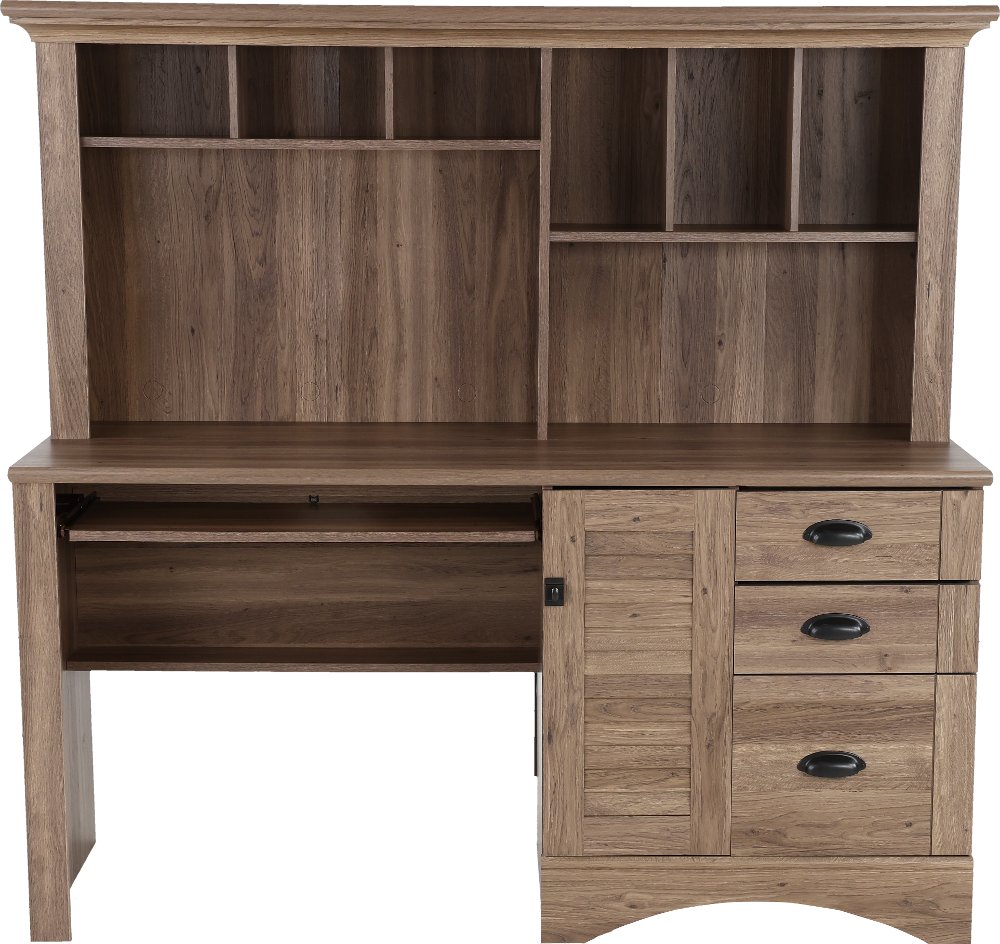
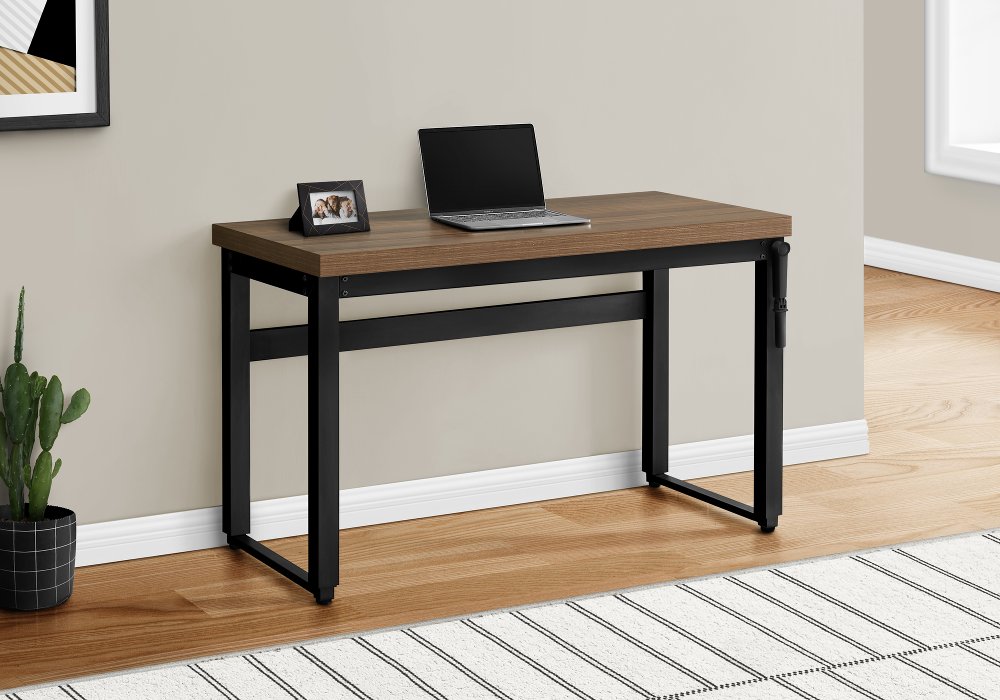
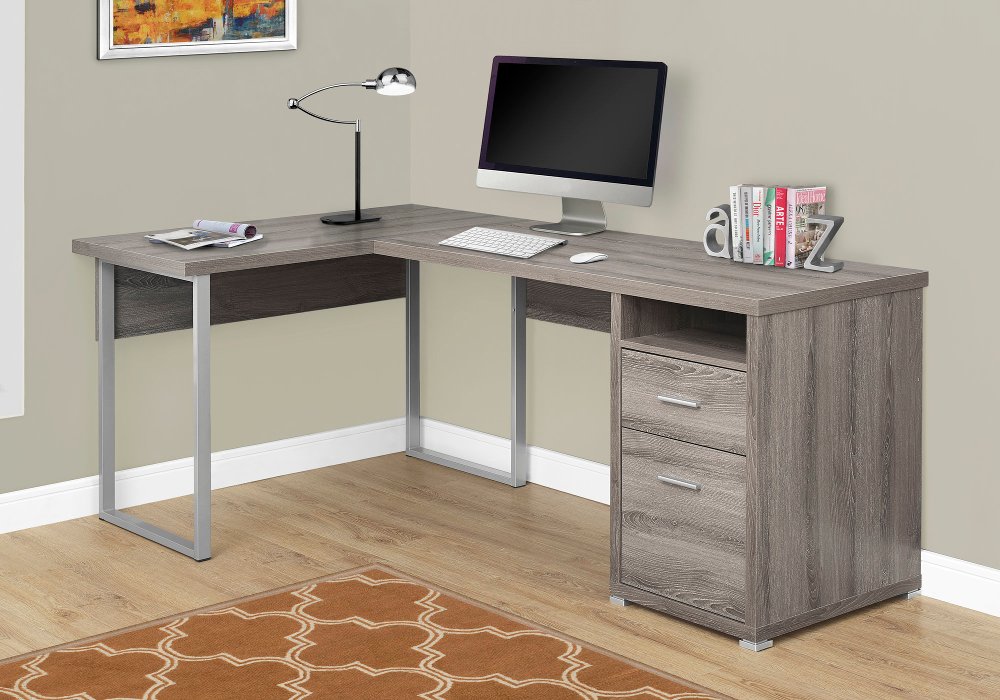
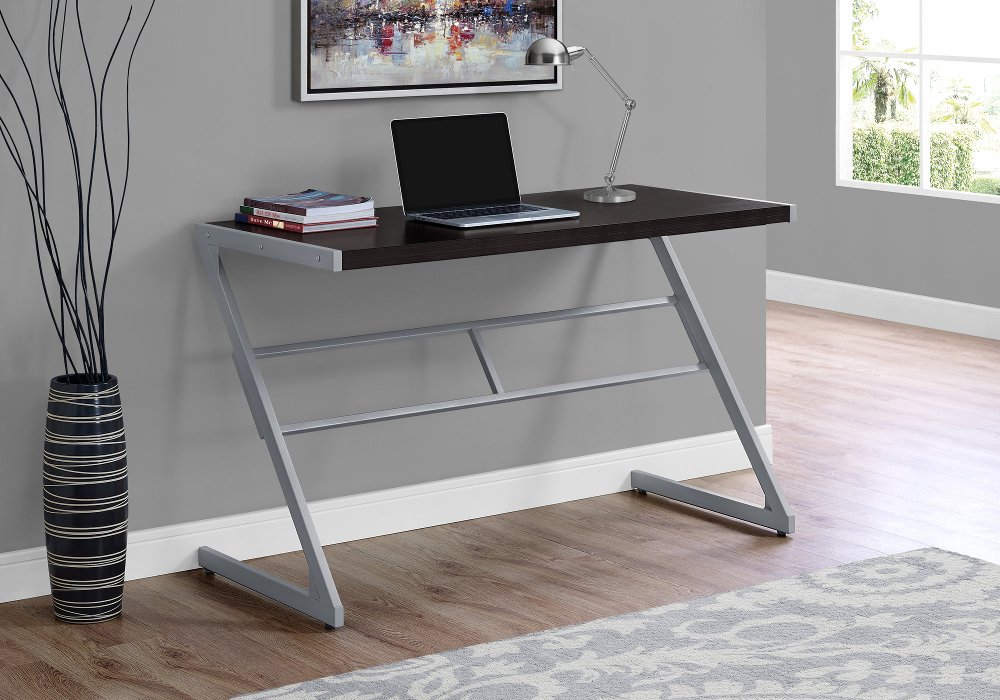
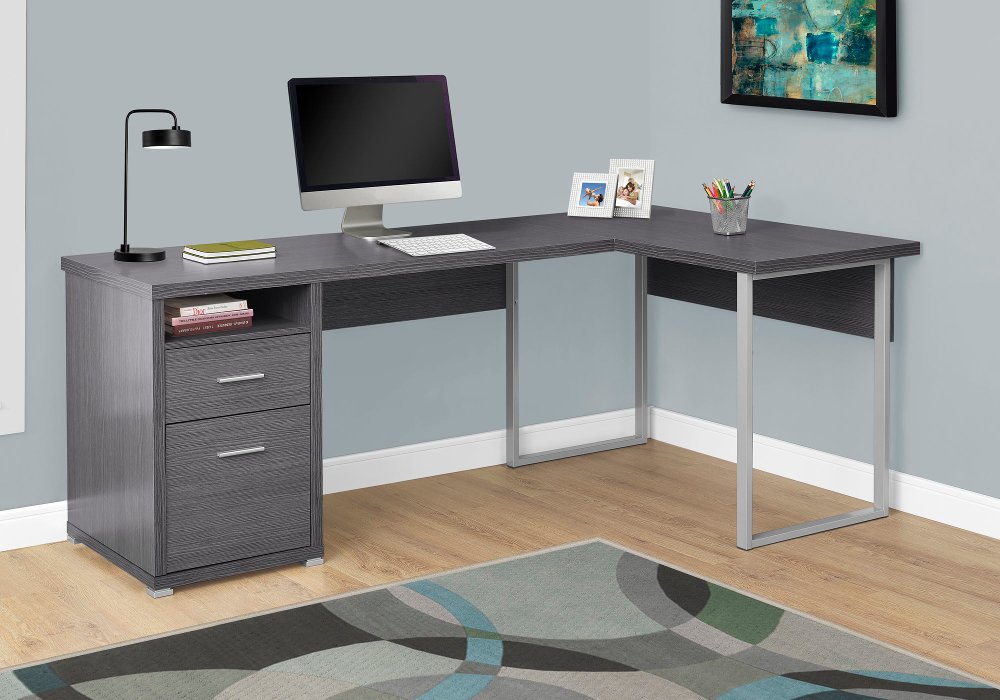
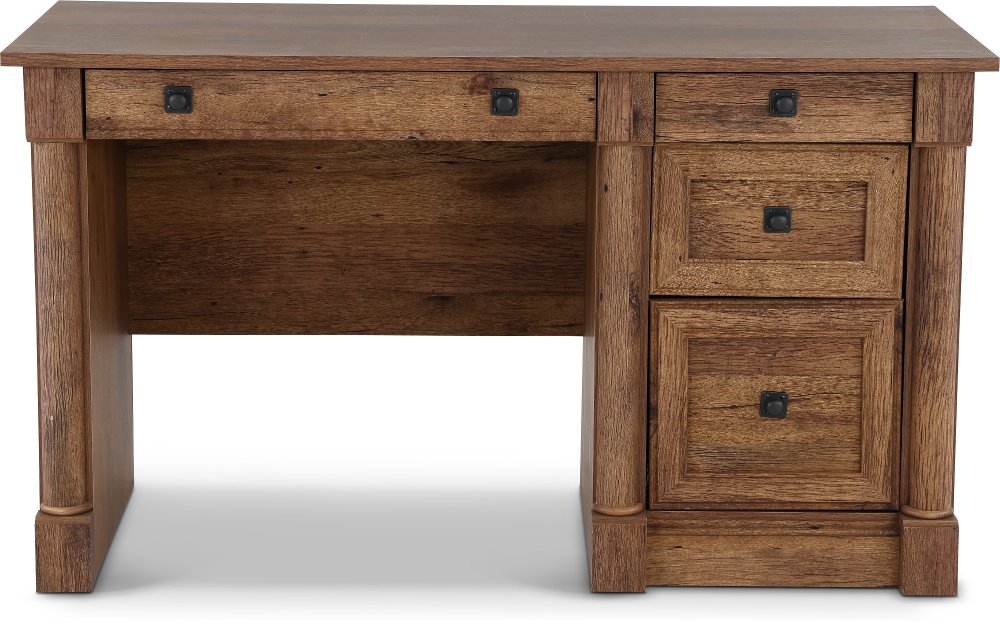
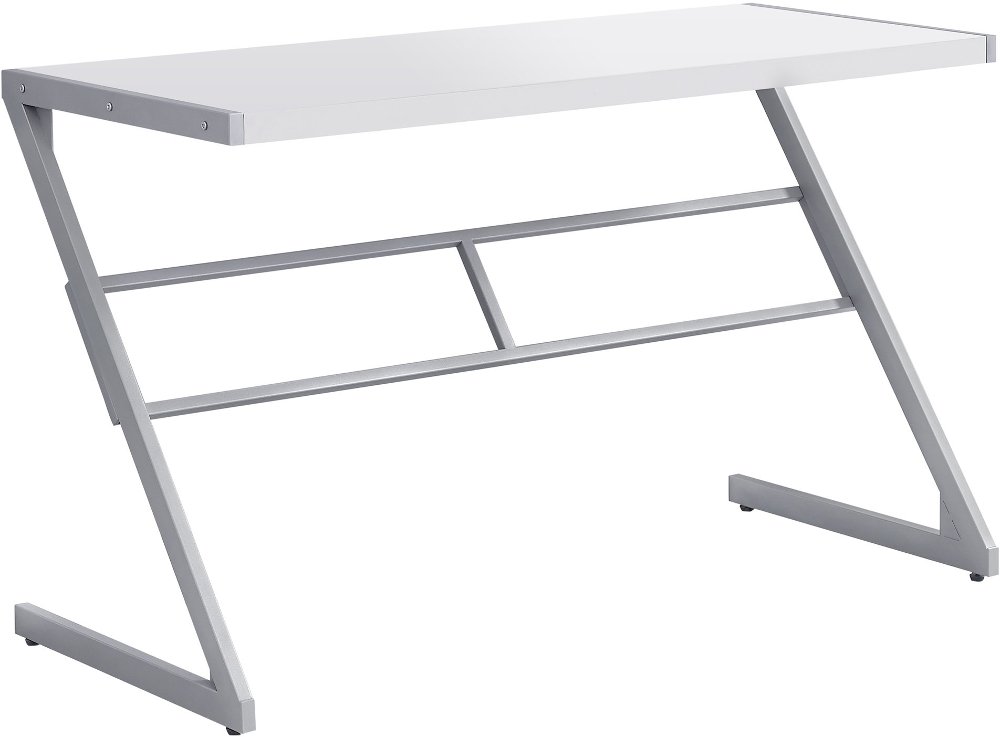
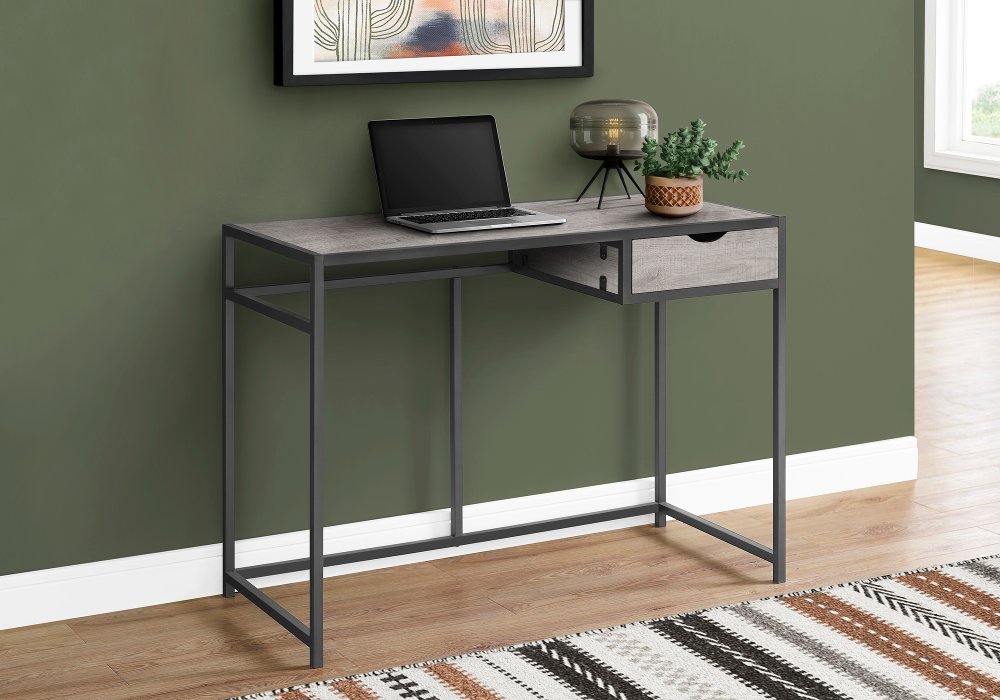
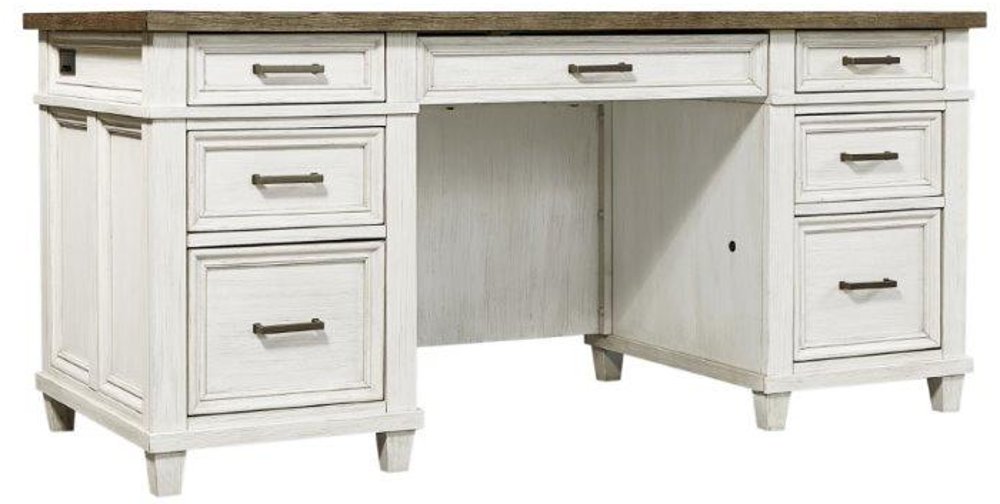
Home office essentials include a desk that fits your daily tasks, an adjustable chair, task lighting, and storage that keeps supplies within reach. Monitor space, cable management, and room for a keyboard and mouse also matter when most of your work happens on a screen. Together, these furnishings and accessories support a workspace for remote work, studying, household paperwork, or creative projects. A home office doesn’t have to occupy an entire room: a compact desk can turn an unused corner into a place to answer emails, while a larger work surface gives you room to spread out drawings, reference books, or multiple screens. The best desk shape depends on both your work and your floor plan. Rectangular desks suit many layouts, corner desks make use of angled spaces, and L-shaped desks separate computer work from writing or sorting paperwork. A shallow desk may fit neatly against a living room wall, but its surface still needs enough depth for comfortable screen placement. Knee clearance, drawer placement, and space to move your chair are just as important as the desktop’s width. Height-adjustable desks offer flexibility for people who prefer to change positions throughout the day; their adjustment range and weight capacity should suit the user and the equipment on top. Materials influence how office furniture looks, feels, and holds up to everyday use. Solid wood brings natural grain and can develop character with age, while wood veneer provides a real-wood surface over a supporting core. Laminate surfaces are often easy to wipe clean, and metal frames can add stability without much visual bulk. Construction matters alongside the finish: secure joints, smooth drawer operation, and a steady work surface contribute to lasting usefulness. Coasters, desk pads, and prompt spill cleanup help protect surfaces, while care products should match the manufacturer’s recommendations. For a workspace in a shared room, a finish that coordinates with nearby furniture helps the desk feel like part of your home rather than an afterthought.
A supportive office chair is another foundation of a comfortable workspace, especially for anyone who spends several hours at a desk. Useful features include adjustable seat height, lumbar support, armrests, and a backrest that accommodates changes in position. Fit matters more than a chair’s appearance alone. Your feet should rest comfortably on the floor or a footrest, the seat should leave space behind your knees, and the armrests should allow your shoulders to relax without preventing the chair from moving close to the desk. Seat depth and width deserve attention, particularly when several household members share a workspace. An adjustable chair can make the same desk more useful for a parent handling bills in the morning and a student completing assignments later. Mesh backs allow airflow, upholstered seats offer a softer feel, and leather or leather-look finishes each have their own cleaning requirements. Manufacturer guidance is especially helpful for upholstery, since a cleaner suitable for one material may damage another. Weight ratings, stable bases, and casters suited to the flooring also affect everyday performance. A compatible chair mat can protect the floor and help the chair roll smoothly, while a standing mat can add cushioning during standing tasks. Beyond seating, the way your equipment fits on the desk shapes how easily you work. A monitor stand or compatible monitor arm can raise a screen and free space underneath, but its size, mounting requirements, and weight limits need to match the setup. Extra screen space can be useful for comparing documents or keeping meeting notes visible beside a video call. Keyboards and mice need enough room for relaxed positioning, whether they connect wirelessly or by cable. Headphones can help manage distractions in a shared household, and a dedicated place to set them keeps them from getting buried under papers. The goal is a layout that accommodates the tools you actually use, without filling every inch of the desktop.
Lighting and organization complete a home office by making everyday tasks easier to see and supplies easier to find. An adjustable task lamp directs light toward a notebook, keyboard, or reading material without requiring bright overhead lighting throughout the room. Placement matters: light aimed directly at a screen can create glare, while a lamp positioned to suit your writing hand can help limit shadows across the page. Lamp dimensions, adjustment options, and brightness controls are worth considering alongside style, particularly on a small desktop where every inch counts. Storage works best when it reflects what passes through your workspace. Shallow drawers can hold pens and charging cables, deeper drawers accommodate larger supplies, and file storage keeps documents upright and easier to sort. Check whether filing drawers accommodate letter-size or legal-size folders, and look for lockable storage when sensitive paperwork needs a more secure place. Open shelves make frequently used books accessible, while enclosed cabinets keep less-used materials out of sight. Browse Home Office Organization Products for storage options that help keep everyday supplies close and paperwork tucked away. Cable clips, sleeves, and built-in routing openings can keep cords from trailing across the work surface or catching beneath chair wheels. Power accessories should suit the connected equipment, and cords need enough slack to move safely with a height-adjustable desk. For households where office furniture shares space with dining or living areas, concealed storage makes it easier to put work away at the end of the day. A bookcase or cabinet can hold both office materials and a few personal touches, giving the room a finished look without crowding the work area. These essentials can also make thoughtful gifts for a student, a new remote worker, or someone setting up a dedicated creative space, especially when dimensions and preferences are already known. Furniture with useful proportions, appropriate materials, and straightforward care can continue serving your home as routines change, from school assignments and video meetings to personal projects and everyday planning.
Read More