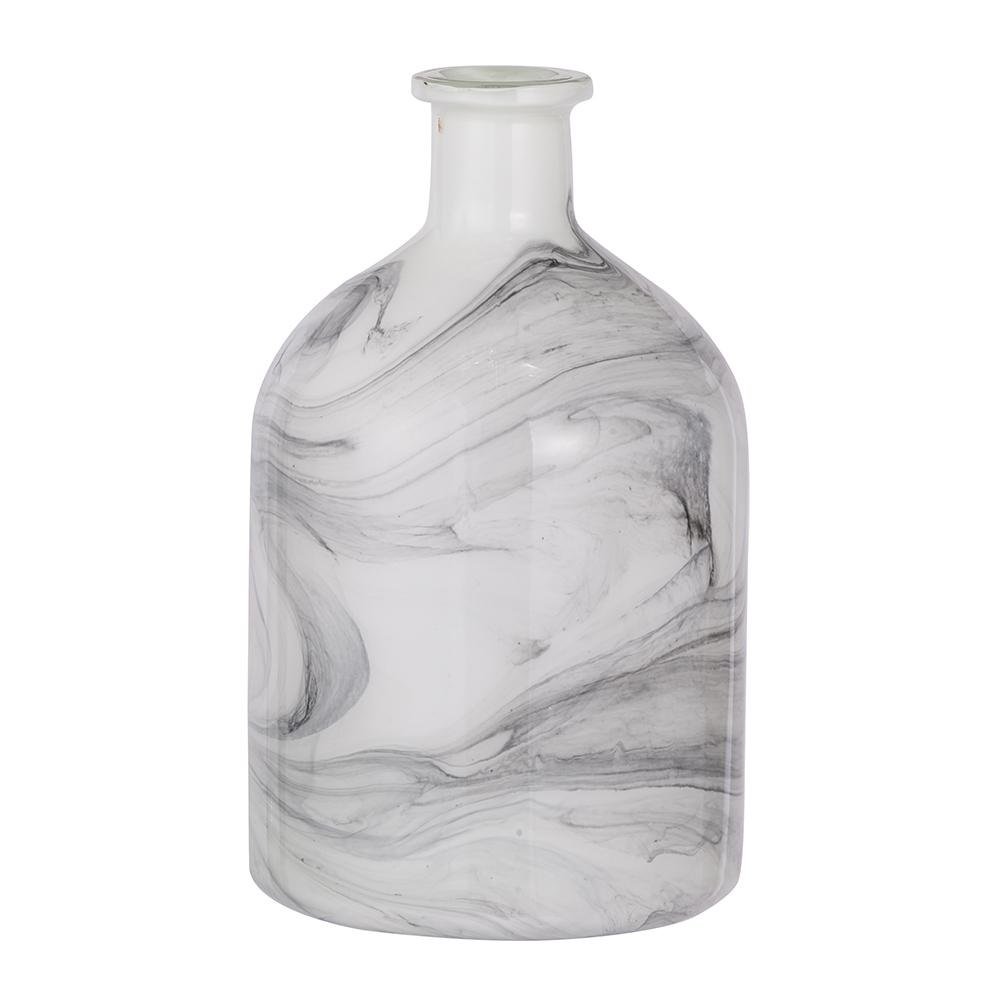
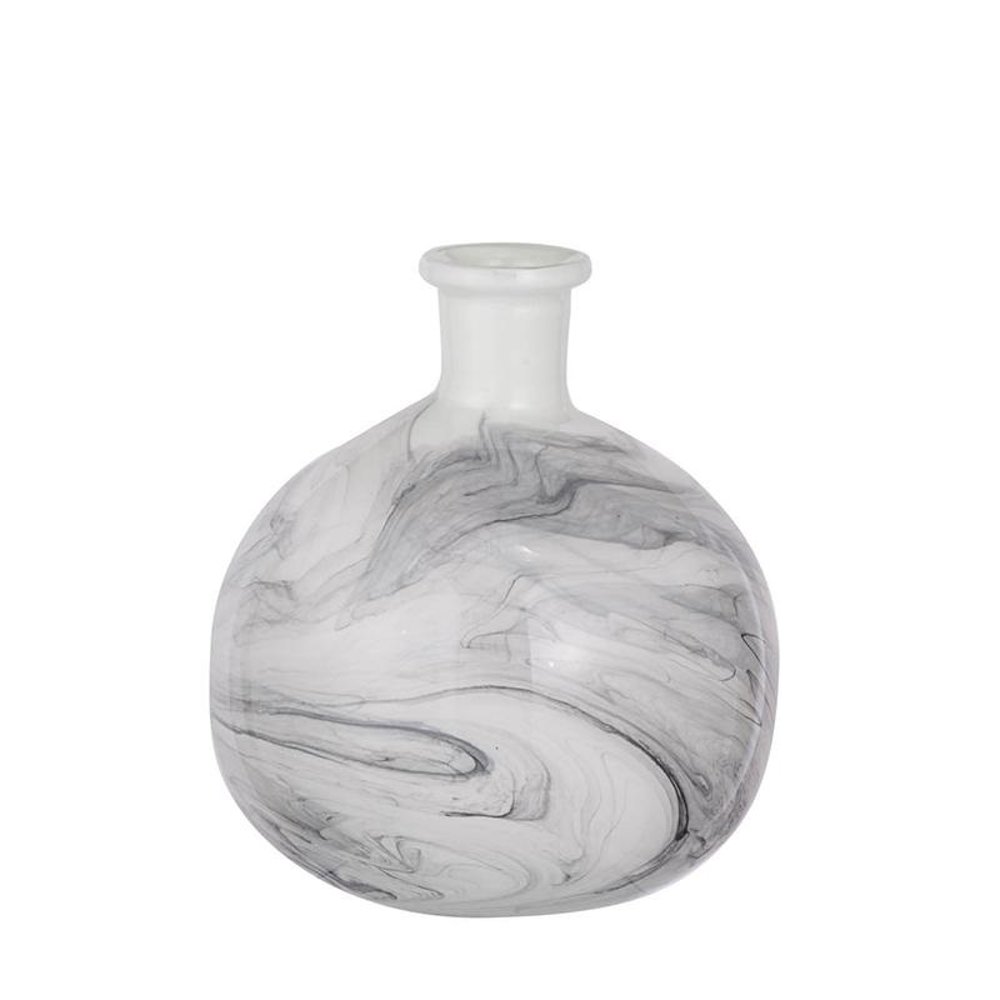
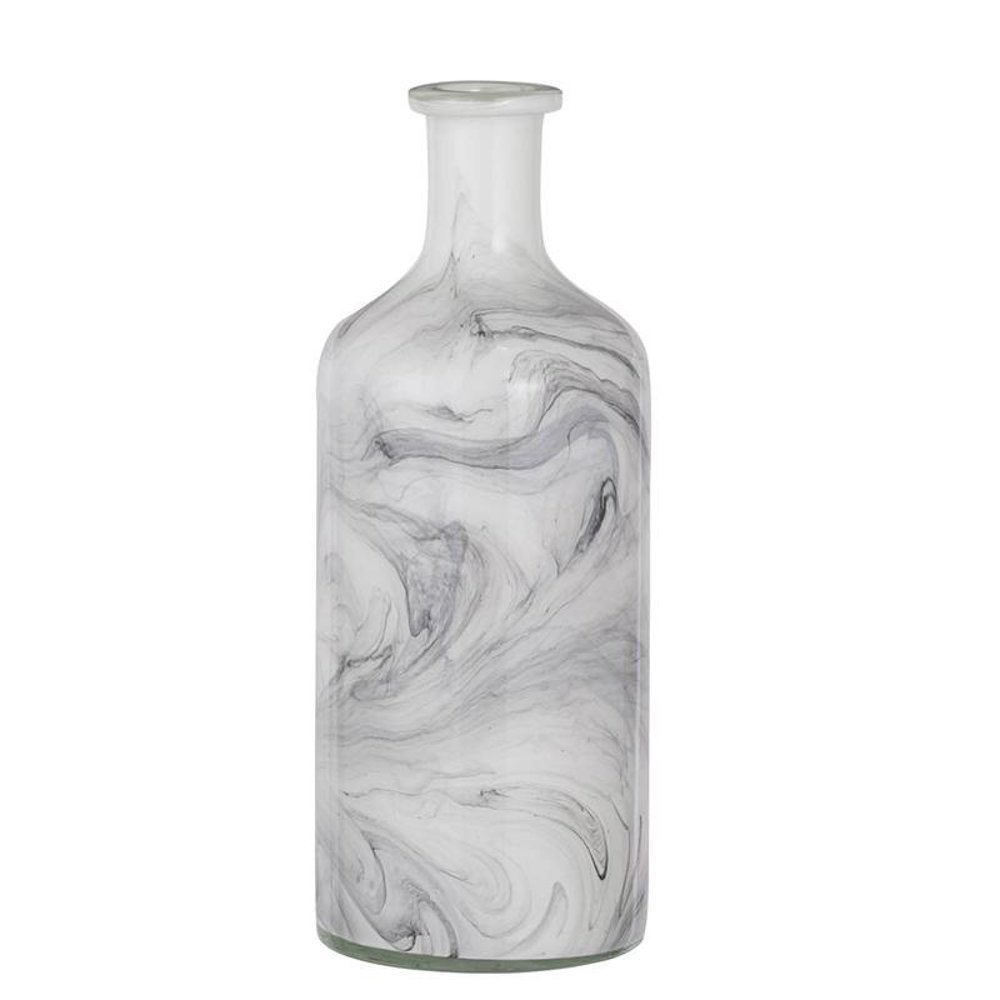
Indoor vases are decorative containers for fresh flowers, dried stems, artificial arrangements, and plant cuttings suited to rooting in water. They also work as accents on their own, adding shape, color, and texture to a room without requiring a floral display. Glass, ceramic, stoneware, and terracotta each bring a different look and have different care needs. Clear glass keeps an arrangement light and open, lets the stems become part of the design, and makes it easy to see the water level. A slender glass vase with a single leafy branch can give a small table a finished look without crowding it. Colored or frosted glass offers a softer view of the stems while adding another layer of color to your space. For displays that highlight greenery and visible roots, explore Glass Vases for Indoor Plants. Ceramic vases offer opaque surfaces that conceal stems, with finishes ranging from smooth, glossy glazes to softly textured matte surfaces. Stoneware often has a substantial feel and an earthy appearance that pairs comfortably with wood furniture, woven baskets, and linen upholstery. Terracotta brings warm clay tones and a rustic character, but unsealed terracotta is porous and generally better suited to dry arrangements unless it has a watertight liner. Any vase intended for fresh flowers should be confirmed suitable for holding water; a decorative glaze alone doesn’t guarantee that it won’t leak. Metal, wood, and other decorative materials can make striking vessels for dried or artificial stems, with suitability for water depending on their construction and lining. Material also affects how a vase looks when empty. A sculptural ceramic form can stand comfortably on a bookshelf beside framed photos, while transparent glass allows the wall color and surrounding objects to show through. Small details such as an uneven rim, a ribbed surface, or a rounded shoulder can give a simple arrangement character. The best match is a vase whose material supports both the look you enjoy and the way you plan to use it.
Size and shape determine where an indoor vase fits and how it holds an arrangement. A bud vase has a small footprint and usually supports one or a few stems, making it a natural fit for a bedside table, bathroom vanity, or compact desk. A wider tabletop vase gives a fuller bouquet room to spread, while a tall floor vase can add height beside a console or in an open corner. Height alone doesn’t tell the whole story: the width of the base, the size of the opening, and the space around the display all matter. On a dining table, a low arrangement leaves room for conversation across the table and keeps flowers clear of hanging lighting. On an entryway console, a taller vase can sit beside a lamp, provided there’s still space for keys and everyday essentials. A narrow neck gathers stems close together and helps a modest bunch look intentional; a broad opening accommodates fuller arrangements but may need more stems to create a balanced shape. Heavy branches and tall flowers call for a stable vessel with a broad enough base to resist tipping. Floor vases belong where passing feet, opening doors, and curious pets are less likely to knock them over. Shelves need enough overhead clearance for both the vase and its contents, along with enough depth to support the entire base. Color can connect the display to furniture and artwork without matching every detail. A cream vase feels quiet against a patterned wall, while a deep blue or green vessel can pick up a small accent in a rug or painting. Grouping two or three vases with different heights creates a relaxed display, especially when they share a color or finish. Leaving some open space around them lets each shape read clearly. For smaller rooms, one well-proportioned vase often feels more settled than several pieces competing for space. An empty vase is a complete decorative choice, too, particularly when its outline or surface adds something the room needs.
Care and durability are worth considering before choosing a vase for everyday use. Glass and ceramic can last for years with careful handling, but both can chip or break when bumped against a sink, faucet, or hard countertop. A heavier vessel may feel stable, yet its weight also matters when you’ll be lifting it to change water or clean it. Smooth interiors are generally easier to rinse than deeply textured surfaces or very narrow necks. For most routine cleaning, mild soap, warm water, and a soft cloth are a gentle starting point, with the maker’s care directions taking priority. Painted finishes, metallic accents, and delicate surface treatments may need a damp cloth rather than soaking, and dishwasher use should be limited to vases specifically identified as dishwasher-safe. Fresh-flower displays benefit from regular water changes and clean interiors, which help limit residue and unpleasant odors. Visible buildup is especially noticeable in clear glass, so cleaning between arrangements keeps the vessel looking its best. Dried and artificial stems need less attention, though both the arrangement and vase will collect dust. A soft brush can reach grooves and raised details without rubbing away a delicate finish. Furniture protection matters as well: a fully dry base and an appropriate protective pad can help prevent scratches, while a watertight vessel protects wood surfaces from moisture damage. Pads aren’t a substitute for checking that a vase holds water securely. In homes with children or pets, sturdy placement and flowers appropriate for the household make the display easier to enjoy. Indoor vases also make thoughtful housewarming, wedding, or birthday gifts because they’re useful without requiring an exact furniture match. A compact vase suits someone furnishing a first apartment, while a simple glass vessel may appeal to a friend who enjoys arranging flowers or propagating plants. Neutral colors and manageable sizes offer flexibility when the recipient’s room layout is unfamiliar. With a shape that fits the space and a material that fits the routine, a vase can become a familiar part of everyday life, holding a fresh bouquet one day and standing beautifully on its own the next.
Read More