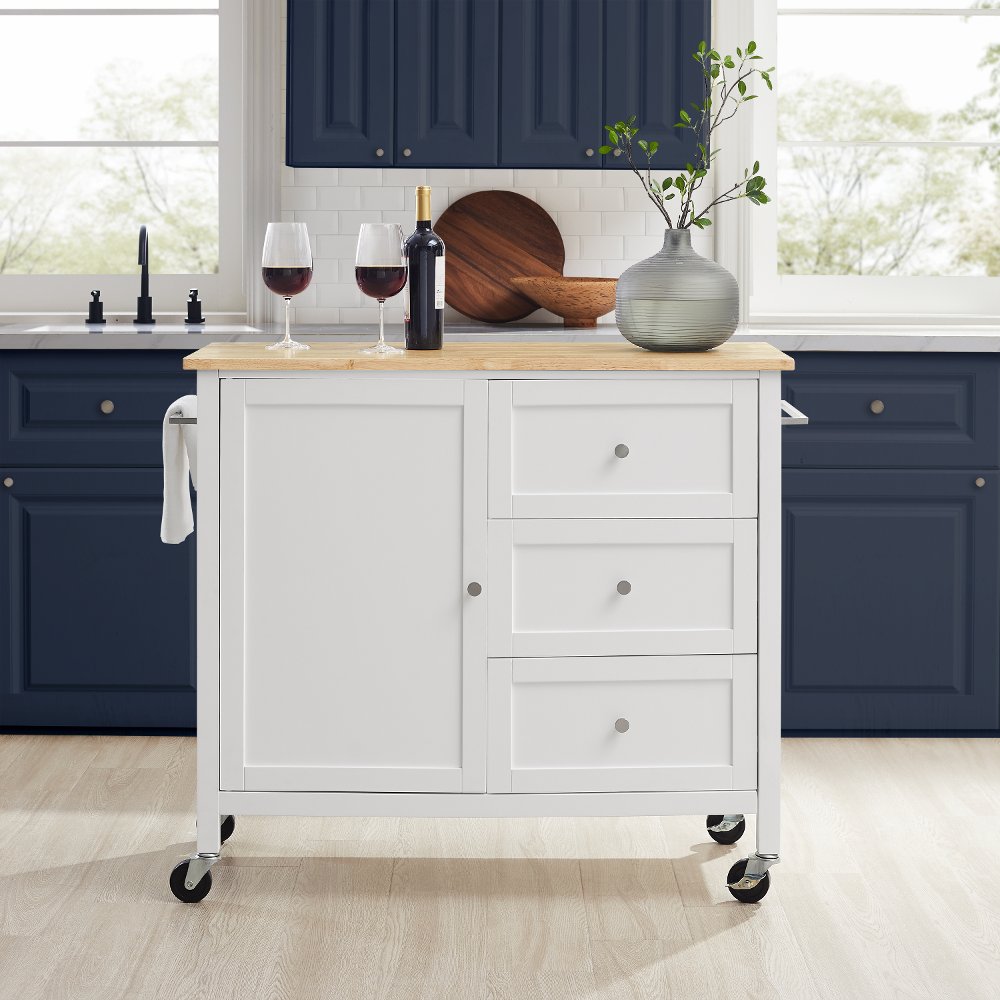
A kitchen coffee cart gives your daily coffee routine a place of its own, bringing the brewer, favorite mugs, and everyday extras together without taking over the main countertop. It can turn an unused wall into a welcoming coffee station, add useful storage beside a breakfast nook, or create a convenient serving spot between the kitchen and dining area. For an apartment dweller working with limited counter space, a compact cart can help separate coffee preparation from meal prep. In a busy household, a larger design can keep several people’s preferences within reach, from espresso cups and tea bags to travel tumblers and a container of decaf. The most useful layout depends on what you reach for each day. An open shelf makes mugs and canisters easy to see, while a drawer gives scoops, filters, and stirring spoons a tidy home. Cabinet doors can tuck away extra supplies and keep the overall look calm, especially when the cart sits in an open living space. A lower shelf offers room for less frequently used serving pieces, provided their weight stays within the cart’s stated capacity. Details such as a raised edge, towel bar, or adjustable shelf can add convenience, though the right combination depends on how you plan to use the space. A coffee cart can also become a small expression of your style: a ceramic canister beside the grinder, a neatly folded towel, and a few well-loved cups make the station feel personal without crowding the work surface. Leaving room to set down a mug, fill a water reservoir, and lift a carafe matters more than fitting every accessory on top. With a thoughtful balance of display space and concealed storage, kitchen coffee carts can make a familiar morning ritual feel more organized and give afternoon coffee breaks an equally comfortable landing place. That dedicated setup can also make hosting easier, giving guests a clear place to help themselves while keeping the cooking area free for food preparation.
Materials and finishes influence both the look of a coffee cart and how comfortably it handles everyday use. Solid wood brings natural grain and warmth, with character that varies by species and finish. Wood veneers can offer a similar appearance over an engineered core, while laminate surfaces often provide a consistent finish that’s straightforward to wipe clean. Metal frames can create a clean, open outline, and powder-coated finishes add color or a more understated industrial feel. Stainless steel surfaces suit a practical, kitchen-focused look, though fingerprints and water spots may need regular attention. Whatever the material, the construction deserves as much attention as the appearance. Secure joints, well-supported shelves, smooth drawer movement, and hardware that feels comfortable in your hand all contribute to a cart that’s pleasant to use repeatedly. A coffee station sees its share of drips, so a surface that tolerates routine cleaning is especially useful. Even a durable finish benefits from prompt spill cleanup, particularly around seams, edges, and hardware. Wood and wood-based surfaces generally do best when standing water is wiped away rather than left to soak in. A soft cloth and a cleaner approved for the finish help protect the surface, while an appropriate mat or tray can catch splashes beneath the brewing area. Heat resistance varies, so follow the care instructions for both the cart and any appliance placed on it instead of assuming the top can handle direct heat. Style can be just as practical as surface care. A light finish may blend into a bright kitchen, a darker cabinet can echo nearby dining furniture, and a slender metal frame can keep a small corner from feeling visually crowded. For a relaxed look with more texture, Rustic Kitchen Carts can complement wood cabinetry, woven accents, and everyday stoneware. Matching every finish isn’t necessary; repeating a wood tone, hardware color, or simple shape can help the cart feel connected to the room.
The right fit involves more than finding an open patch of floor. A kitchen coffee cart needs enough space for its footprint, comfortable access to storage, and the small movements that happen around a working coffee station. A drawer should open without meeting a chair back, and cabinet doors need clearance beyond the cart itself. Appliance dimensions matter, too: a brewer may fit on the top but still need extra room above it for opening a lid or removing a water tank. The cart’s overall weight rating and the capacity of individual shelves should support the equipment and supplies you intend to place there. Counter-height designs can feel familiar for standing preparation, while a lower cart may work better as a serving piece beside a dining table. Wheels add flexibility when a cart needs to shift for cleaning or move closer to a gathering, and locking casters help hold it steady during use. A stationary design may suit a coffee station that will stay in one dedicated spot. For any powered appliance, a location near a suitable outlet helps keep cords clear of walkways, sinks, and moving parts. Follow the appliance manufacturer’s placement and electrical requirements, and let hot equipment cool before relocating the cart. Cups, glass containers, and loose accessories also need securing or removal before a move. These practical considerations help a cart support real household routines, whether that means one person brewing a quiet cup before work or several guests gathering after dinner. A coffee cart can also make a thoughtful housewarming or wedding gift when the recipient’s space, style, and habits are familiar. For someone who already enjoys making coffee at home, dedicated storage can be as welcome as another brewing accessory. The best choice feels comfortable in the room, keeps everyday essentials easy to reach, and leaves enough breathing room for the simple pleasure of making a good cup.
Read More