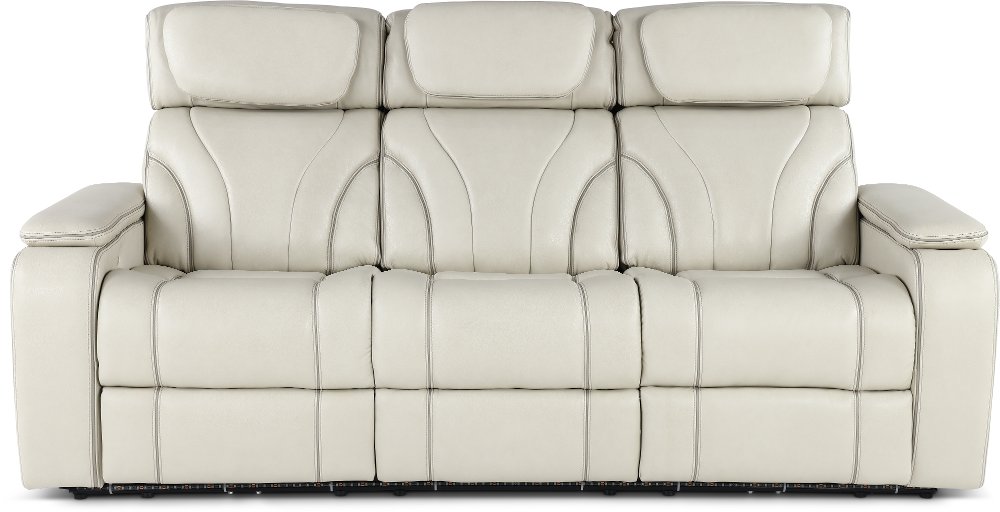
Large white leather sofas bring spacious seating and a clean, light look to living rooms, family rooms, and open gathering spaces. Their generous proportions give family and friends room to settle in, while white upholstery creates a strong contrast against wood floors, colorful rugs, and darker accent furniture. The overall effect depends on the silhouette: a low back and slim arms feel streamlined, while rolled arms, tufting, or substantial cushions create a more traditional presence. White also covers a range of shades, from crisp, bright white to softer ivory and warm cream. Looking at upholstery samples alongside your flooring and wall color can help you choose a shade that feels right at home. A large sofa generally offers more width than a compact sofa, but the label alone doesn’t tell you how many people can sit comfortably. Broad arms and thick side cushions take up space, so usable seat width matters as much as overall length. A long, straight sofa can anchor a conversation area without extending into the room as far as a sectional. An L-shaped sectional adds seating along two sides, while a chaise provides a place to stretch out without requiring a separate ottoman. Larger U-shaped arrangements can suit households that regularly gather for movies or game nights, provided the room has enough open floor space. Before choosing a shape, measure the intended spot and mark its footprint with painter’s tape. Include nearby tables, door swings, and the space needed to move between rooms. About 30 to 36 inches can be a useful starting point for a main walkway, with more room where accessibility needs call for it. Delivery access deserves the same attention: narrow doorways, tight stair turns, elevator dimensions, and low ceilings can affect whether a sofa reaches its destination. For modular designs, confirm the dimensions of each section rather than assuming that every piece will fit.
The upholstery details make a real difference in how a white leather sofa looks, feels, and holds up to everyday use. Full-grain leather retains the hide’s natural surface, including variations that give it character. Top-grain leather has had its outer surface lightly altered and may receive additional finishing for a more consistent appearance. Neither term, on its own, tells the whole story about stain resistance or maintenance. The finish matters, too. Aniline leather typically shows more natural markings and can absorb spills readily, while semi-aniline and pigmented finishes generally offer greater surface protection. Follow the upholstery description closely, especially when comparing all-leather construction with leather-match upholstery. Leather-match designs commonly use genuine leather on primary contact areas and a different material on other surfaces; the exact placement varies. Faux leather is a separate upholstery category and should not be assumed to have the same aging characteristics or care requirements as genuine leather. On a white sofa, even subtle differences in grain, sheen, and panel texture can be noticeable, so viewing a sample in your room’s lighting is worthwhile. Durability also depends on what’s beneath the upholstery. Frame construction, joinery, suspension, and cushion materials all contribute to long-term support. High-resilience foam can offer a more structured feel, while fiber or feather blends may create a softer seat that needs regular reshaping. Neither feel is automatically better; the useful choice is the one that supports how you sit. A deep seat may suit someone who curls up with a book, while a shallower seat can make it easier to sit upright with feet on the floor. Seat height, back support, and arm placement deserve attention, especially for anyone who finds low seating difficult to get out of. Reclining designs add another consideration: allow the manufacturer’s required clearance for the back and footrest, and plan safe access to an outlet for powered mechanisms.
White leather can work beautifully in an actively used home, but its pale surface makes routine care especially important. Dust and loose grit can collect in seams and contribute to wear, so gentle, regular cleaning helps preserve the finish. Use a soft cloth and, when permitted by the care instructions, a vacuum attachment with a soft brush. Blot spills promptly rather than rubbing them across the upholstery. For cleaning products and conditioners, follow the manufacturer’s directions and test approved treatments in an inconspicuous area first. Some leather finishes benefit from conditioning, while others require different care; adding more product isn’t necessarily helpful. Household solvents, abrasive pads, and unapproved cleaners can damage a protective finish. Keep the sofa away from prolonged direct sunlight and concentrated heat sources, which can contribute to fading, drying, or discoloration. Dark denim, richly dyed throws, and other colorfastness concerns deserve attention because transferred dye can be particularly visible on white upholstery. Pets add another practical consideration: leather does not readily trap pet hair, but claws can scratch or puncture it. A washable throw used in a favorite lounging spot can help reduce direct contact, provided its dye won’t transfer. Styling can make a large white sofa feel inviting rather than formal. A textured rug defines the seating area, a wood coffee table adds warmth, and pillows introduce color without covering the sofa’s clean lines. Choose a table size that leaves comfortable reach and enough space for knees and movement. In a room with several seats, coordinate scale as well as color so that one oversized piece doesn’t overwhelm smaller companions. For an individual seat with a footrest, White Leather Recliners can complement a larger seating arrangement; compare undertones and upholstery finishes before pairing them. With thoughtful proportions, supportive cushions, and a care routine suited to the leather, a large white sofa can serve as a comfortable centerpiece for everyday conversations, quiet evenings, and welcoming guests.
Read More