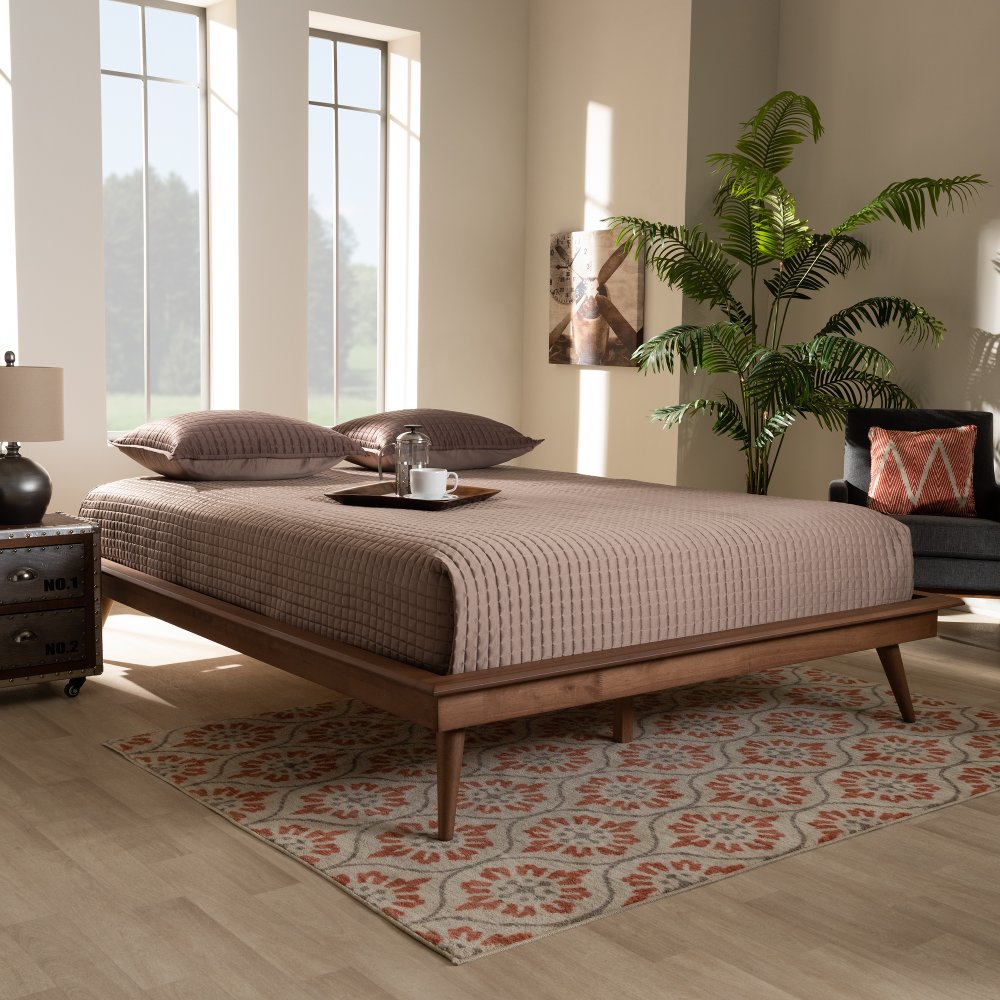
Minimalist king size bed frames give a spacious mattress a clean, understated foundation, with simple lines that let the rest of your bedroom feel settled rather than crowded. The defining details are usually straightforward: a streamlined headboard, an unfussy footboard or open foot end, and wood, metal, or upholstery without heavy ornamentation. A low-profile frame can make the bed feel less visually dominant, while slender legs reveal more of the floor. Floating-style designs use recessed supports to create a similar sense of openness, though neither approach changes the space a king mattress actually requires. A standard king mattress measures approximately 76 inches wide by 80 inches long, and the frame’s overall dimensions will generally extend beyond that footprint. That extra width matters when you’re placing nightstands beside the bed or making room for a dresser across from it. Minimalist styling works especially well when you want generous sleeping space without an elaborate bedroom centerpiece. Couples who prefer room to stretch out, taller sleepers comparing mattress lengths, and anyone furnishing a primary bedroom can appreciate the balance of comfort and simplicity. A California king is a different size, typically 72 inches wide by 84 inches long, so its mattress and frame aren’t interchangeable with a standard king. Within the minimalist look, there’s still plenty of personality. Pale wood with visible grain adds warmth beside white bedding; a slender black metal frame gives soft textiles a crisp outline. An upholstered headboard creates a gentler backdrop for reading before bed, while subtle paneling or fluting adds texture without relying on ornate trim. A headboard-free platform keeps the silhouette especially simple and can work beneath artwork or a low window, provided it doesn’t interfere with window access. The best fit is a frame that supports your mattress properly, leaves comfortable paths through the room, and looks at home with the pieces you already enjoy. Minimalism doesn’t require an empty bedroom; it simply gives each piece a little more room to stand on its own.
Materials and construction influence how a minimalist king bed frame looks, feels, and holds up through everyday use. Solid wood brings natural variation in grain and color, along with a substantial feel, but its finish still needs protection from moisture, scratches, and prolonged direct sunlight. Wood veneer over an engineered core can provide a consistent appearance and make broad, simple panels possible; durability depends on the quality of the core, edges, finish, and joinery rather than the surface description alone. Metal frames offer slim profiles and clearly defined lines, with stability depending on the frame design, connections, and support structure. Upholstered frames soften the outline of a large bed, and tightly tailored fabric can feel just as minimalist as exposed wood. If pets share the bedroom, consider how easily hair releases from the fabric and whether claws might catch in a loose weave. For any material, a king frame needs support suited to its width. Look at the center rail, support legs, attachment points, and stated weight capacity, including whether that capacity accounts for the mattress as well as sleepers. Platform construction is common in minimalist designs because it can support a mattress without the added height of a box spring. For more options with that type of foundation, explore King Size Platform Bed Frames. Not every minimalist frame is a platform, however, and not every mattress works with every support system. Slat spacing, slat width, and any requirements for a solid surface should match the mattress manufacturer’s guidance, especially for foam and latex mattresses. Some frames require a separate foundation, so check the construction details rather than assuming a spare silhouette means direct mattress support. Secure hardware and properly seated slats help limit movement and noise; padding at contact points may help, but no material alone guarantees a silent bed. If you use an adjustable base, confirm compatibility and internal clearance before choosing a surrounding frame, since fixed slats, center supports, or side rails may interfere with the base.
Fit goes beyond whether the frame fits against the wall. Measure the room with the full bed dimensions in mind, then allow for closet doors, dresser drawers, and an easy route to each side of the mattress. Roughly 30 inches of walking space around accessible sides is a useful starting point when the room allows, with more clearance helpful for mobility needs. A projecting platform edge can look beautifully spare but still become a shin-level obstacle in a narrow walkway. Finished sleeping height matters, too: add the height of the support surface, any required foundation, and the mattress to understand where you’ll sit. A very low frame paired with a thin mattress may make standing up harder, while a thick mattress can hide much of a short headboard. Nightstands tend to feel easier to use when their tops sit near mattress height, keeping a lamp switch or glass of water within comfortable reach. Under-bed clearance deserves its own measurement. Some low-profile beds leave little room beneath them, while raised designs may accommodate shallow storage bins or a vacuum; check the actual opening rather than estimating from photos. Built-in drawers can keep extra bedding tucked away, but they also need enough floor space to open fully. Before delivery or assembly, consider stair turns, doorways, and the size of the largest headboard or rail component, particularly in older homes and upstairs bedrooms. Once the frame is in place, follow its care instructions to preserve the finish and keep the structure steady. Dust wood and metal with a soft cloth, wipe spills promptly, and avoid soaking joints or upholstered edges. Vacuum fabric with an appropriate attachment and use only cleaners permitted by its care label. Recheck fasteners as the assembly instructions recommend, and lift rather than drag the bed when moving it. With thoughtful proportions, dependable support, and manageable upkeep, a minimalist king frame provides a comfortable foundation that stays easy to live with as bedding, artwork, and bedroom routines change.
Read More