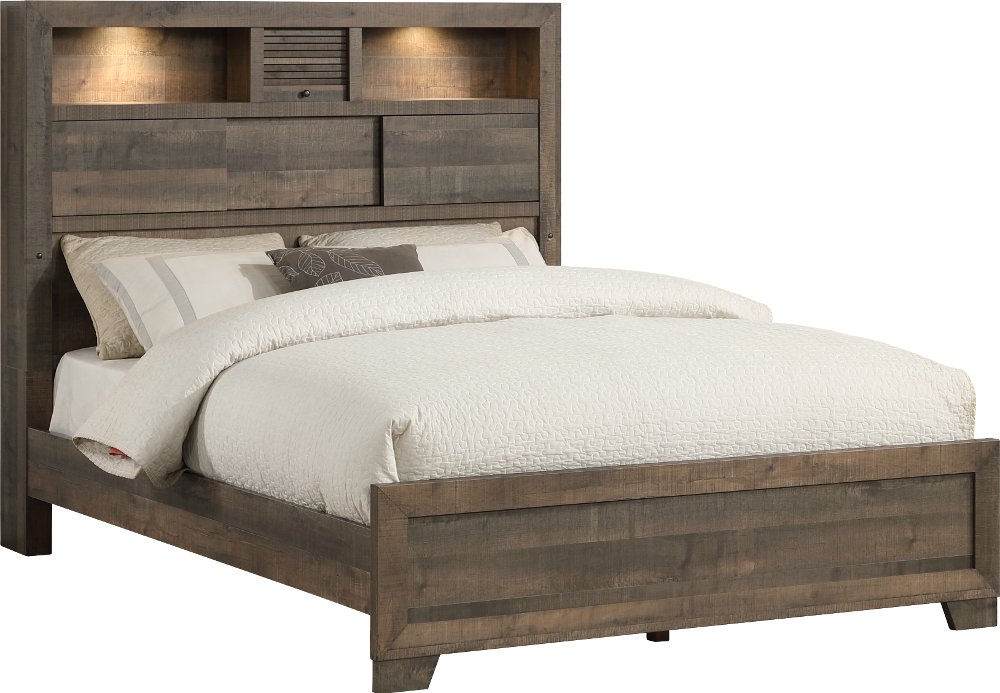
Oak queen beds bring the warmth of visible wood grain to a bedroom, with proportions that suit many primary bedrooms, guest rooms, and shared sleeping spaces. A standard queen mattress measures 60 inches wide by 80 inches long; the bed frame’s overall dimensions are larger and vary with the headboard, footboard, and side rails. Oak’s appeal comes from its distinctive grain and the way it complements both simple bedding and layered textures. Pale finishes can keep a room feeling open, while medium brown tones add warmth and darker finishes create a more substantial focal point. The material description matters as much as the color. Solid oak means the identified components are made from oak lumber, though a bed may combine solid oak with other materials in different parts of its construction. Oak veneer is a thin layer of real oak bonded to a supporting core, allowing the surface to show genuine wood grain. An oak finish describes the appearance and doesn’t, by itself, confirm that the frame contains oak. Each construction calls for attention to the details: secure rail connections, a well-supported mattress foundation, and a finish suited to everyday use. Oak is a hard, durable wood, but it can still dent, scratch, or develop marks from rough handling. Its grain also gives individual pieces natural variation, so a headboard may show differences in tone and pattern rather than a perfectly uniform surface. Broad panels highlight that character, while slatted headboards create a lighter look with more open space. Straight lines and tapered legs work comfortably with modern or mid-century furnishings; framed panels and substantial posts feel more traditional. For a broader look at this wood character across different sizes and silhouettes, explore oak beds. The right combination of finish, shape, and construction can make a queen bed feel settled in the room without requiring every surrounding piece to match.
A queen bed offers room for one adult to stretch out and is a common choice for couples who want a shared mattress without the larger footprint of a king. It can also make a guest bedroom comfortable for overnight visitors, provided the frame leaves enough space for luggage, bedside essentials, and easy movement. Measuring the full bed footprint is more useful than planning around mattress dimensions alone. A thick panel headboard, projecting legs, or a curved footboard can take up several additional inches, and those details matter when a dresser sits opposite the bed. Where the layout allows, about 30 inches of walking space along the sides makes everyday tasks such as changing sheets and reaching a nightstand easier. Door swings, closet access, and pull-out drawers need their own clearance. Headboard height deserves a look, too: a tall mattress can hide much of a low headboard, while a taller design may overlap a window or compete with artwork. A low footboard can keep sightlines open in a compact room and may feel less restrictive for taller sleepers. Beyond appearance, the support system needs to suit the mattress. Some queen platform beds support a mattress directly on slats or a solid deck; other frames require a separate foundation or box spring. Platform construction alone doesn’t establish compatibility with every mattress, so slat spacing, center support, and the mattress manufacturer’s requirements all matter. Foam and hybrid mattresses can have specific support requirements, and an adjustable base needs a frame with suitable interior clearance and construction. The combined height of the frame, foundation, and mattress also affects how comfortably someone can sit down or stand up. For a taller adult, a slightly higher sleeping surface may feel natural; a shorter sleeper may prefer a lower setup with feet resting securely on the floor. These practical details help an oak queen bed fit the people using it, not just the room’s measurements.
Daily routines often determine which bed details prove most useful. Under-bed drawers can give spare sheets, blankets, and extra pillowcases a dedicated home, especially in a bedroom with limited closet space. Their usefulness depends on having room to open them fully without moving a nightstand or bumping into a wall. An open frame offers a different advantage: clearance beneath the rails can accommodate storage bins or make floor cleaning easier, depending on the bed’s height and support layout. In a guest room, a straightforward frame with accessible sides can simplify freshening the bed between visits. In a primary bedroom, a smooth headboard can provide a comfortable backdrop for pillows when reading, while deeply textured or open designs may need more frequent dusting around edges and joints. Oak’s natural character works well alongside upholstered benches, painted dressers, woven rugs, and metal lamps, so a coordinated space doesn’t need identical wood tones throughout. Repeating one or two colors in the bedding or accessories can connect mixed finishes without making the room feel overly matched. Caring for the bed starts with the finish rather than the wood species alone. A soft, dry cloth handles routine dust, and spills should be wiped up promptly before moisture sits on the surface or reaches a joint. For deeper cleaning, follow the manufacturer’s directions and use a cleaner approved for that finish; excess water, abrasive pads, and harsh household chemicals can damage the surface. Pads beneath objects placed on a wide headboard ledge can help prevent scratches, and limiting prolonged direct sunlight can reduce uneven color changes. Stable indoor humidity also helps wood respond more evenly to its surroundings. During assembly and after a move, properly seated hardware and secure support legs help the frame perform as intended. With suitable mattress support, thoughtful placement, and regular care, an oak queen bed can remain a dependable foundation as bedding, wall colors, and bedroom needs change.
Read More