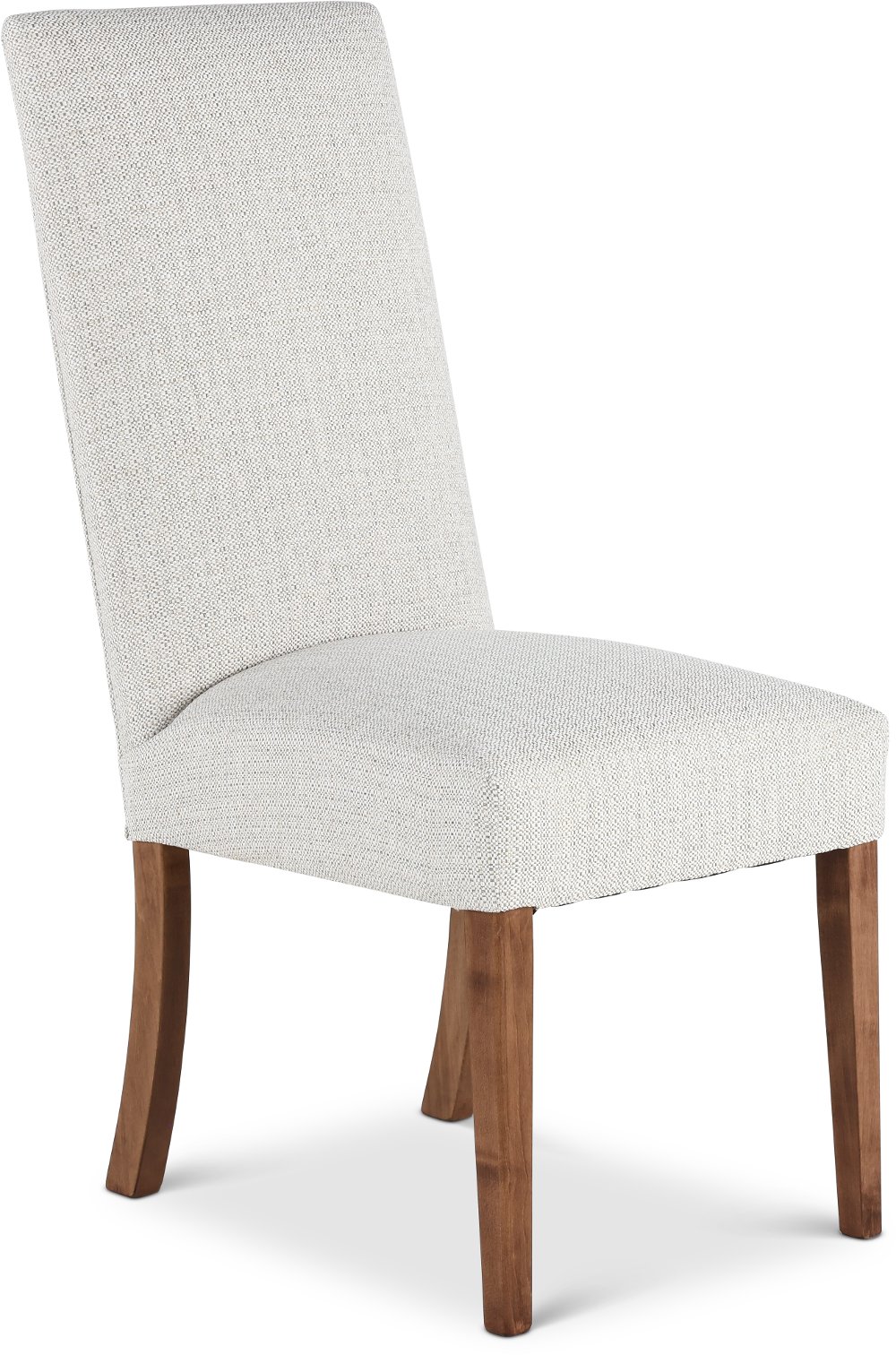
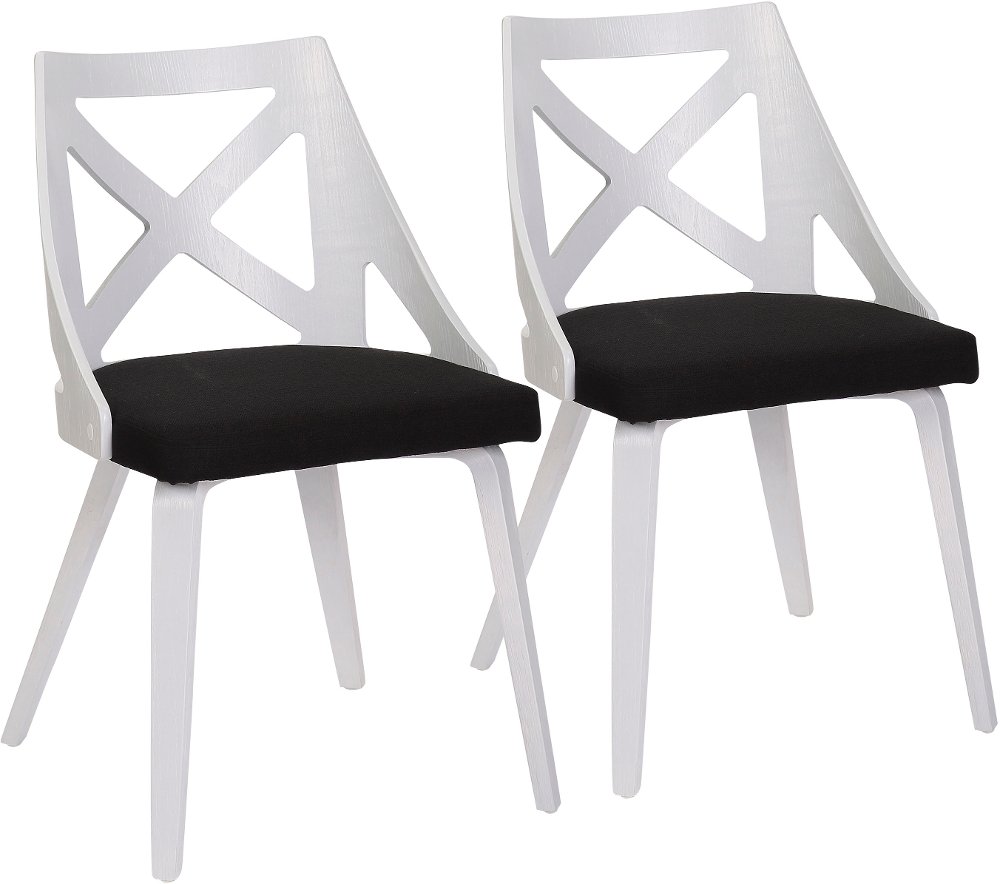
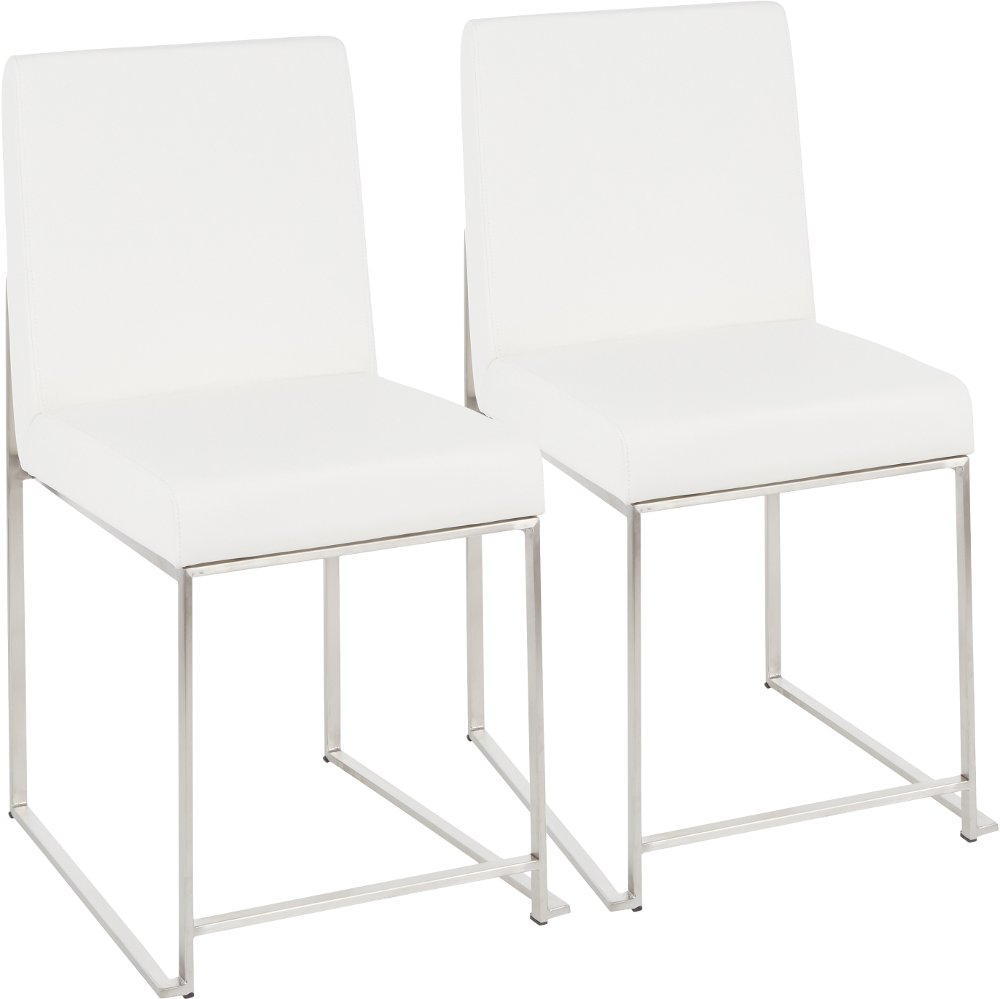
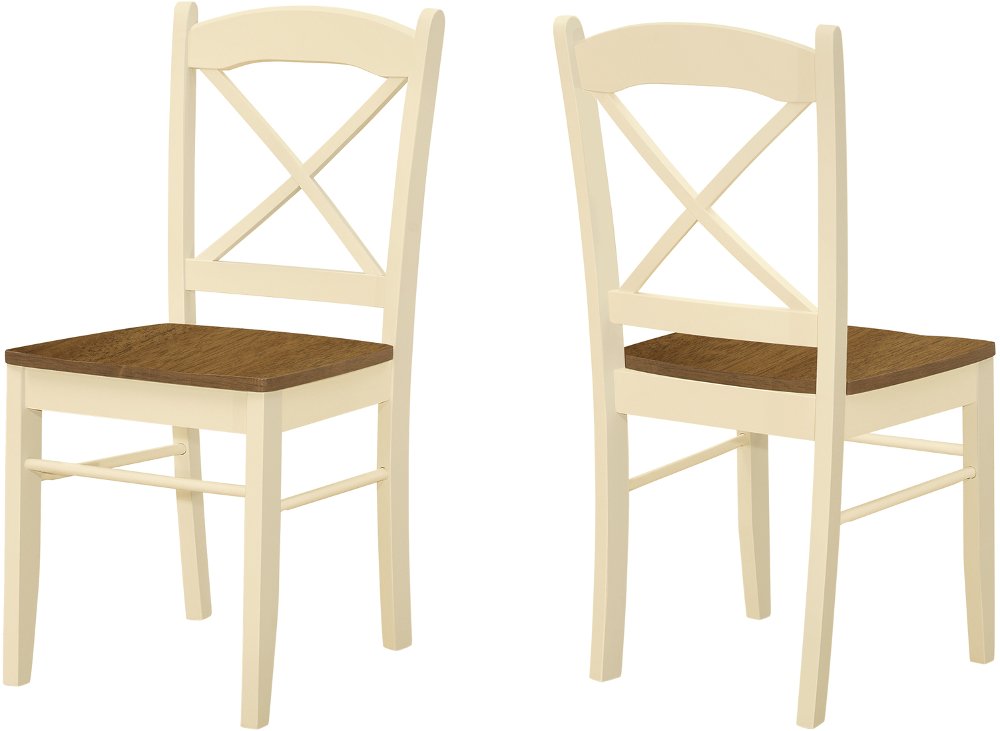
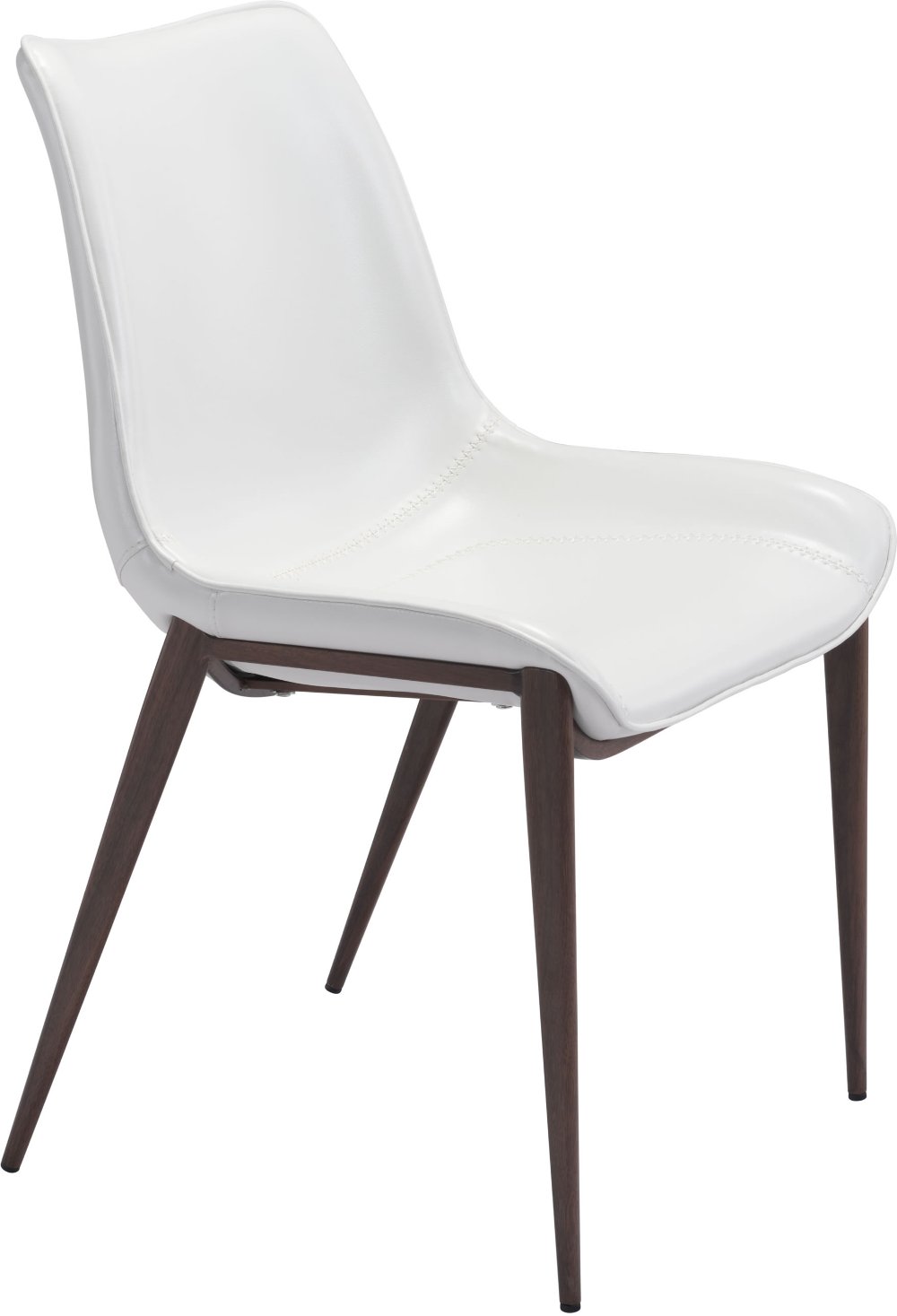
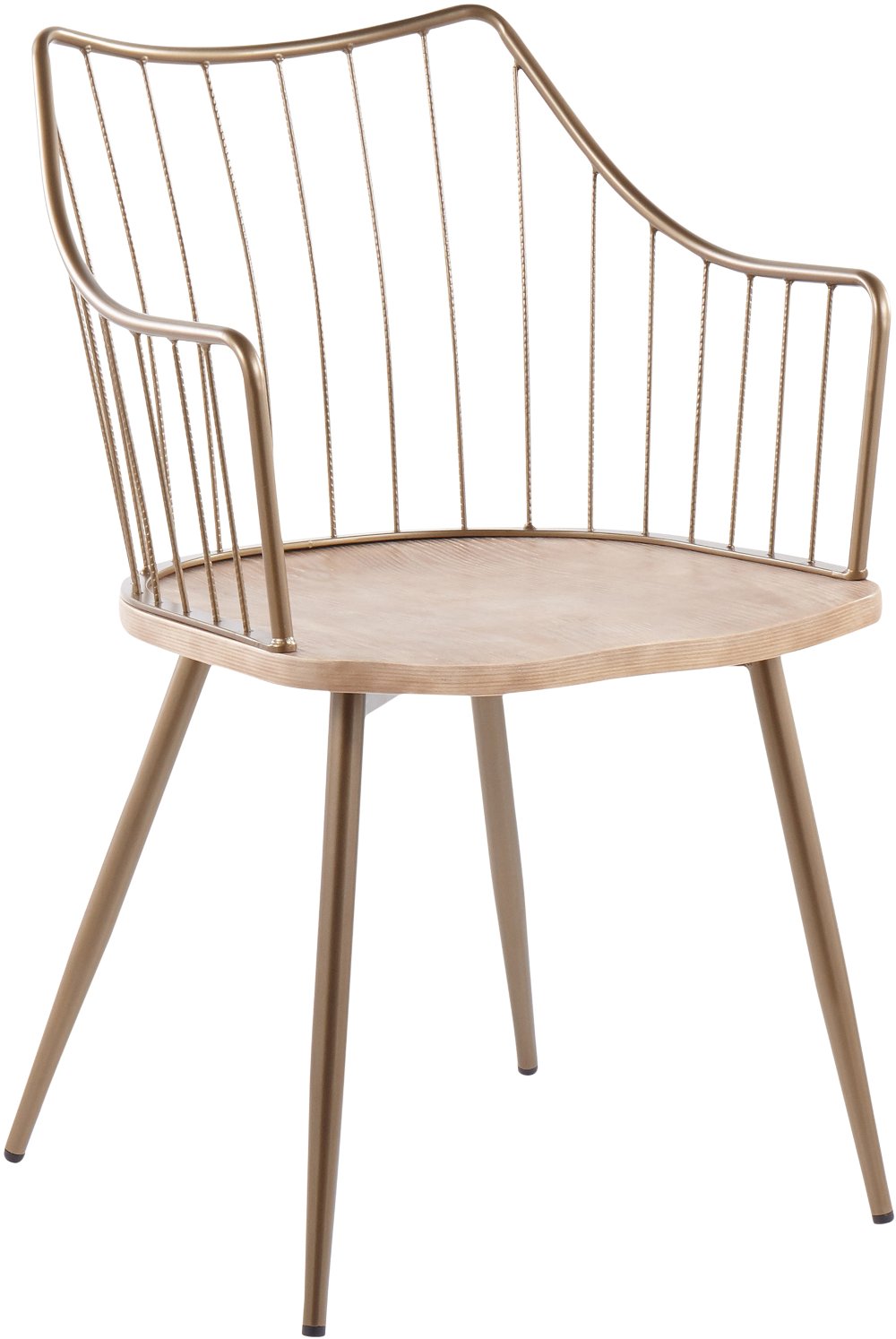
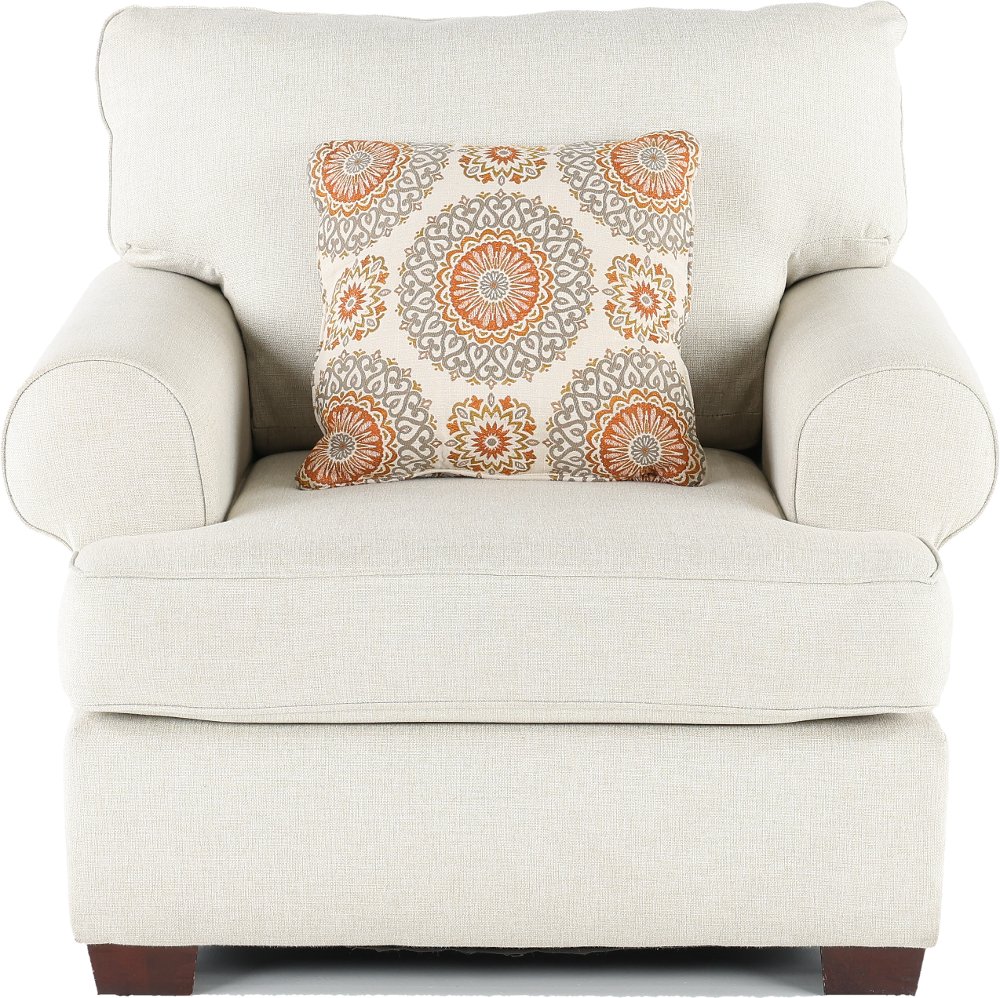
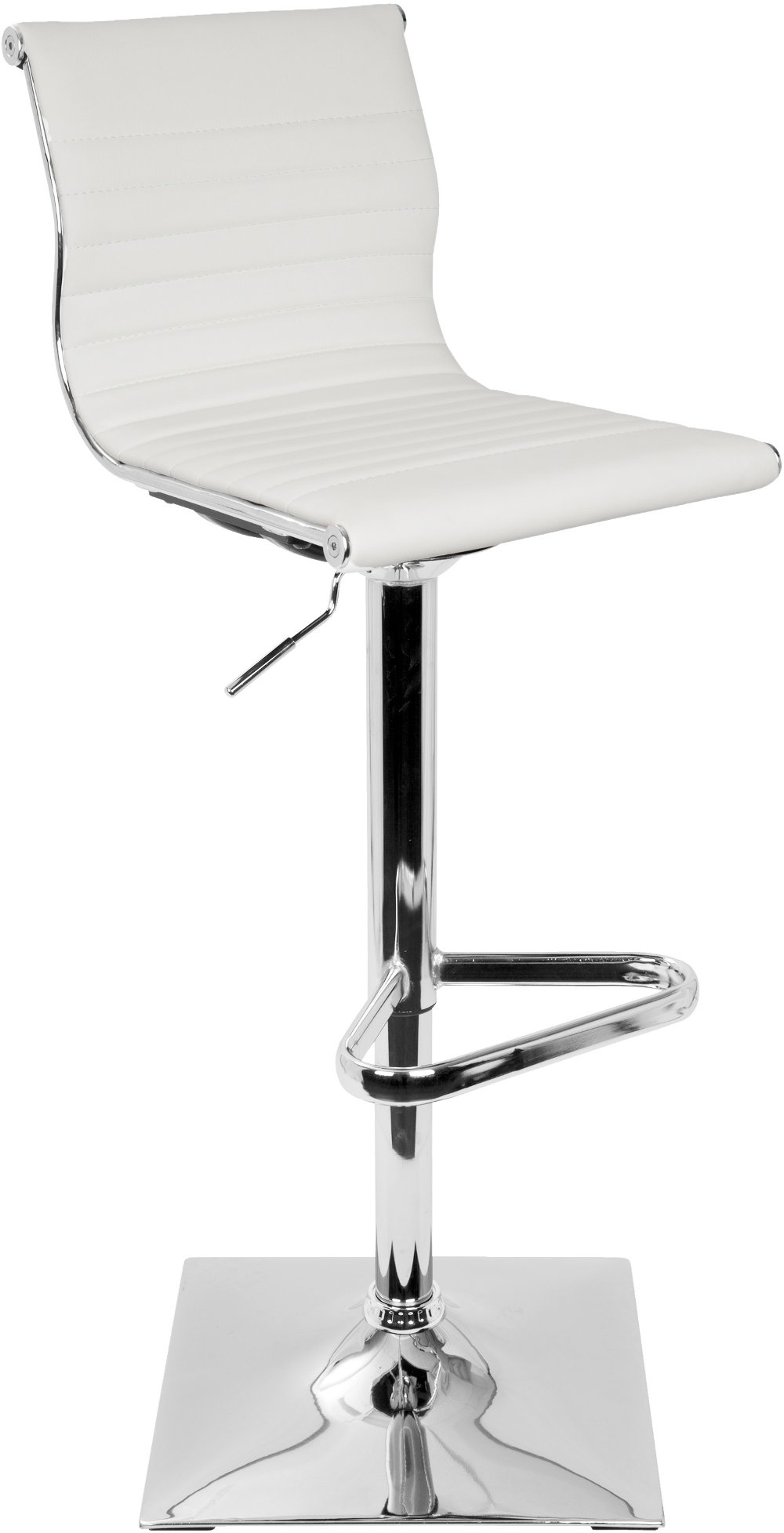
Off-white dining chairs bring a soft, light neutral to the table without the crisp contrast of bright white. Shades described as ivory, cream, or antique white can make a dining area feel welcoming while leaving plenty of room for personal style. Their versatility comes from the way they work with other finishes: an oak table brings out their warmth, dark walnut creates a more defined contrast, and a glass tabletop keeps the overall look open and airy. Off-white isn’t a single, uniform color, though. Some finishes lean yellow or beige, while others have a quieter gray undertone. Comparing the chair’s color with your table, flooring, and nearby cabinetry helps create a combination that feels intentional rather than almost matched. In an open dining and living area, coordinating the chairs with off-white living room chairs can carry that soft neutral from one space to the next without requiring every piece to look alike. Shape makes just as much difference as color. Painted spindle-back and slat-back chairs lend themselves to farmhouse, cottage, and traditional settings, especially alongside tables with visible wood grain. Upholstered Parsons chairs offer a simple, tailored profile that fits comfortably into transitional rooms. Curved backs, slim metal legs, and rounded seats give modern dining spaces a softer edge. Tufting, nailhead trim, or carved details introduce a more decorative feel, while plain upholstery lets the chair’s silhouette do the work. A matching group creates visual consistency around the table; upholstered armchairs at the ends with simpler side chairs along the sides can add variety while maintaining a shared color palette. For a small breakfast nook, a chair with an open back may feel less visually substantial than one with a fully upholstered back. In a separate dining room, taller backs and generous upholstery can give the table a stronger presence. The right combination supports the way you want the room to feel, whether that’s relaxed enough for a quick sandwich or polished enough for a dinner with friends.
Materials influence both the appearance of off-white dining chairs and how they handle everyday use. Painted wood offers a familiar, substantial look, with details ranging from smooth, clean-lined frames to deliberately distressed finishes. On some designs, an off-white frame pairs with a natural wood seat, adding contrast while keeping the seating surface free of upholstery. Wood construction varies, so sturdy joints, a stable stance, and clearly stated use and weight limits matter more than color or style alone. Metal frames can create a lighter-looking profile, and their durability depends on the construction, connections, and protective finish. Upholstered dining chairs add cushioning and texture, making them appealing for meals that stretch into conversation or an evening board game. Linen and linen-blend fabrics have a relaxed, textured appearance; tightly woven fabrics can provide a smoother, more tailored look. Velvet adds a soft sheen that shifts with the direction of the pile, while bouclé and other looped textiles give a neutral chair more visible texture. That texture also deserves consideration in homes with pets, where claws may catch on loose loops. Performance upholstery may offer stain resistance or easier cleanup, but the term doesn’t guarantee that every spill will disappear or that every cleaning method is safe. The fabric’s stated properties and care instructions provide the useful details. Leather and faux leather create a smooth surface that may simplify routine wiping, although each needs its own care approach, and faux leather can wear or peel over time. For a table used daily by children, guests, or someone working on a laptop between meals, practical upholstery and supportive construction are especially valuable. Comfort depends on more than a thick cushion: seat depth, back angle, edge shape, and firmness all affect how a chair feels. A gently shaped back can support a relaxed sitting position, while a rounded front edge may feel more comfortable behind the knees. Arms add a place to rest, but armless chairs often make it easier to slide in and out at a closely spaced table.
Fit helps turn an attractive dining chair into a comfortable part of your daily routine. Standard dining tables are typically about 28 to 30 inches high, and many dining chairs have seats roughly 17 to 19 inches from the floor. These ranges are a starting point rather than a guarantee of compatibility. Allowing about 10 to 12 inches between the seat and tabletop generally leaves comfortable room, but a low table apron can reduce usable leg space. Upholstered seats may also compress when someone sits down. For armchairs, the arm height needs to clear both the tabletop and any apron if you want the chairs to tuck in neatly. Chair width, table legs, and pedestal placement determine how many people can sit comfortably; a wide curved chair can need considerably more room than a narrow side chair. About 24 inches of table edge per person is a useful starting point, with extra space for broader chairs or arms. Behind the seating, roughly 36 inches between the table and a wall or other furniture usually provides room to pull a chair out, while a walkway behind seated diners benefits from more clearance. These details matter in a busy kitchen dining area, where someone may need to pass through while others finish breakfast. Everyday care is equally important with a pale finish. Promptly blotting spills on upholstery, vacuuming seams with an appropriate attachment, and following the fabric’s cleaning code can help keep off-white seats looking fresh. Painted wood and metal generally benefit from gentle cleaning with a soft cloth and the manufacturer’s recommended method, rather than abrasive scrubbing. Removable covers aren’t necessarily machine washable, so check their instructions before laundering. Felt pads suited to your flooring can reduce scratches when chairs move, and occasional hardware checks help keep assembled frames steady. With the right dimensions, supportive seating, and manageable care requirements, off-white dining chairs can serve everything from everyday family meals to a compact apartment dining setup, adding softness without limiting how the rest of the room comes together.
Read More