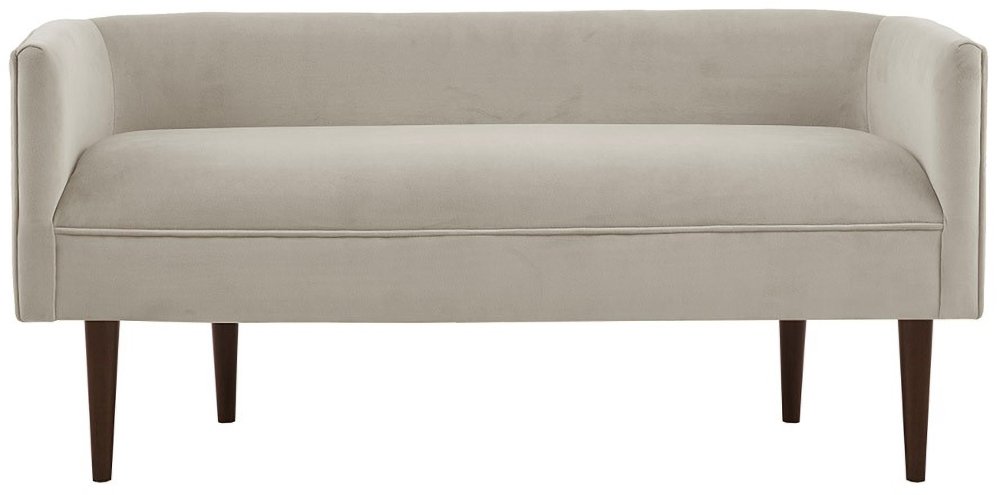
Patterned benches are accent seating pieces that bring stripes, florals, checks, geometric designs, or other decorative motifs into a room through upholstery, woven surfaces, or detailing on the frame. They combine a practical place to sit with the visual interest of a patterned textile, making them useful wherever a plain surface could use a little character. In an entryway, a striped bench gives shoes and bags a landing spot while adding definition to a narrow wall. At the foot of a bed, a softly upholstered floral or botanical design can pick up colors from the bedding without repeating the whole print. A geometric bench beside a bookcase offers an extra seat that feels intentional rather than tucked away for company. Pattern scale makes a noticeable difference: small checks and tightly repeated motifs often read almost like texture from across the room, while broad stripes and oversized flowers become a stronger focal point. The background color matters just as much as the design itself. A cream ground with a delicate blue motif feels lighter than a dark ground with contrasting shapes, even when both benches have similar dimensions. For an easy connection to existing furniture, look for a pattern that repeats one or two colors already present in a rug, artwork, or curtains. The rest of the room doesn’t need to match. A patterned seat can sit comfortably alongside a solid sofa, a wood dresser, and textured pillows when those pieces share a few tones. Mixing patterns also works when their sizes differ; a generous botanical print has room to stand out beside a fine stripe. Whether your space leans traditional, modern, farmhouse, or eclectic, the combination of motif, color, and bench shape sets the mood more reliably than a style label alone. Slim legs and crisp upholstery tend to look tailored, while turned legs, curved arms, or a skirted base create a softer, more decorative impression.
The materials beneath the pattern help determine how a bench feels and where it belongs. Cotton and linen blends can offer a relaxed, textured appearance, while polyester blends often suit everyday upholstery because of their resistance to wear; actual performance depends on the fabric’s construction and finish. Velvet brings depth to color and pattern, though its pile may show changes in direction or pressure marks. Woven patterns create the design through the fabric’s structure, while printed patterns place the motif on the surface; neither method alone guarantees better durability. For a busy hallway or family seating area, consider the upholstery’s abrasion information, seam quality, and any stated care or performance features rather than relying on appearance. A stable frame, secure joints, and a seat cushion that feels supportive are equally important. Wood legs add warmth, metal bases can create a lighter outline, and upholstered bases let the fabric take center stage. If visible grain and a more exposed frame better suit your space, Wooden Benches offer another direction, including styles that pair naturally with patterned cushions. Fit goes beyond the bench’s overall width. In an entry, account for seat depth so someone can sit down to tie a shoe without crowding the path to the door. At the foot of a bed, a bench narrower than the mattress usually leaves a comfortable visual margin at each end, but drawers, closet doors, and walking space still need clearance. For dining, compare the seat height with the tabletop and apron, and check whether the bench can slide between the table legs if that’s part of the plan. An upholstered bedroom bench isn’t automatically designed for regular dining use. Seat firmness, back support, weight capacity, and the manufacturer’s intended use all matter, especially when two people will share the seat or someone will use it every day.
Everyday routines are a useful way to narrow the possibilities. A household with young children may appreciate a small-scale, multicolor pattern that makes minor marks less noticeable, paired with fabric that has clear cleaning instructions. A pet-friendly home may favor a tightly woven surface over loose loops that claws could catch, although no upholstery is completely resistant to scratching. For someone who uses a bench while dressing, a supportive seat at a comfortable height can matter more than deep cushioning. Arms may provide a helpful place to rest a hand, but they shouldn’t be treated as weight-bearing supports unless the bench is designed for that purpose. Storage benches add another layer of usefulness, with room for throws or accessories beneath the seat; check lid operation, interior dimensions, and any safety features before making storage part of the daily routine. Keeping a patterned bench looking good starts with the care label. Regular vacuuming with an appropriate upholstery attachment removes grit that can work into fabric, and prompt blotting helps keep a small spill from spreading. Test approved cleaners in a hidden spot, and avoid assuming that a removable cover is machine washable. Wood and metal components may need different care from the seat, so follow the instructions for each material. Direct sunlight can fade some fabrics, making placement worth considering when a bench will sit beside a bright window. A decorative throw can soften the look, but leaving part of the seat uncovered lets the pattern do its job. In a compact apartment, that single patterned surface may provide all the color the room needs; in a larger home, it can connect an entry or bedroom to nearby living areas. A bench can also make a thoughtful housewarming gift when the recipient’s dimensions, preferred colors, and intended use are already known. The best fit is a piece that earns its place through both comfort and character, bringing a useful seat and a distinctive detail to the way you live at home.
Read More