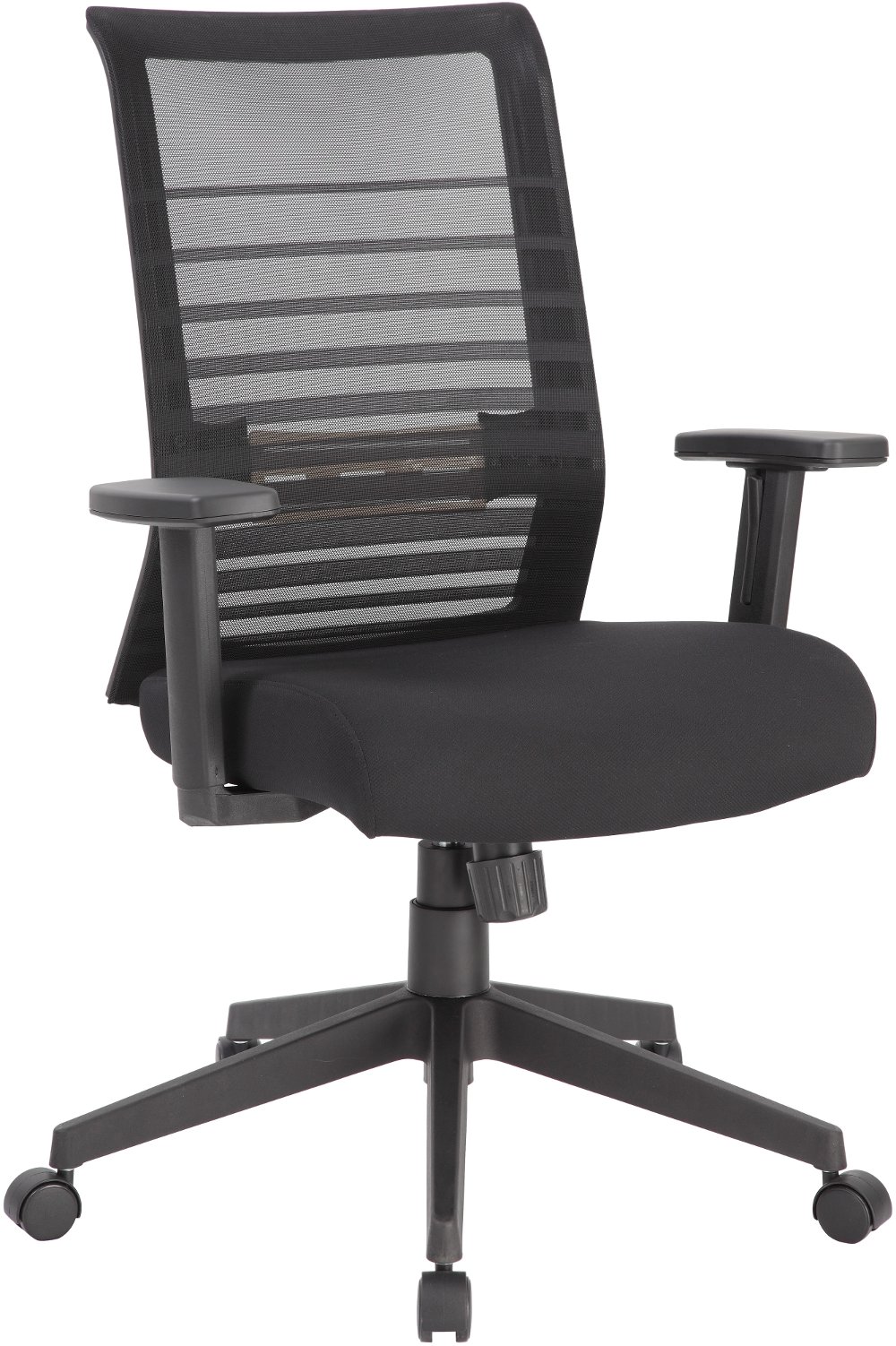
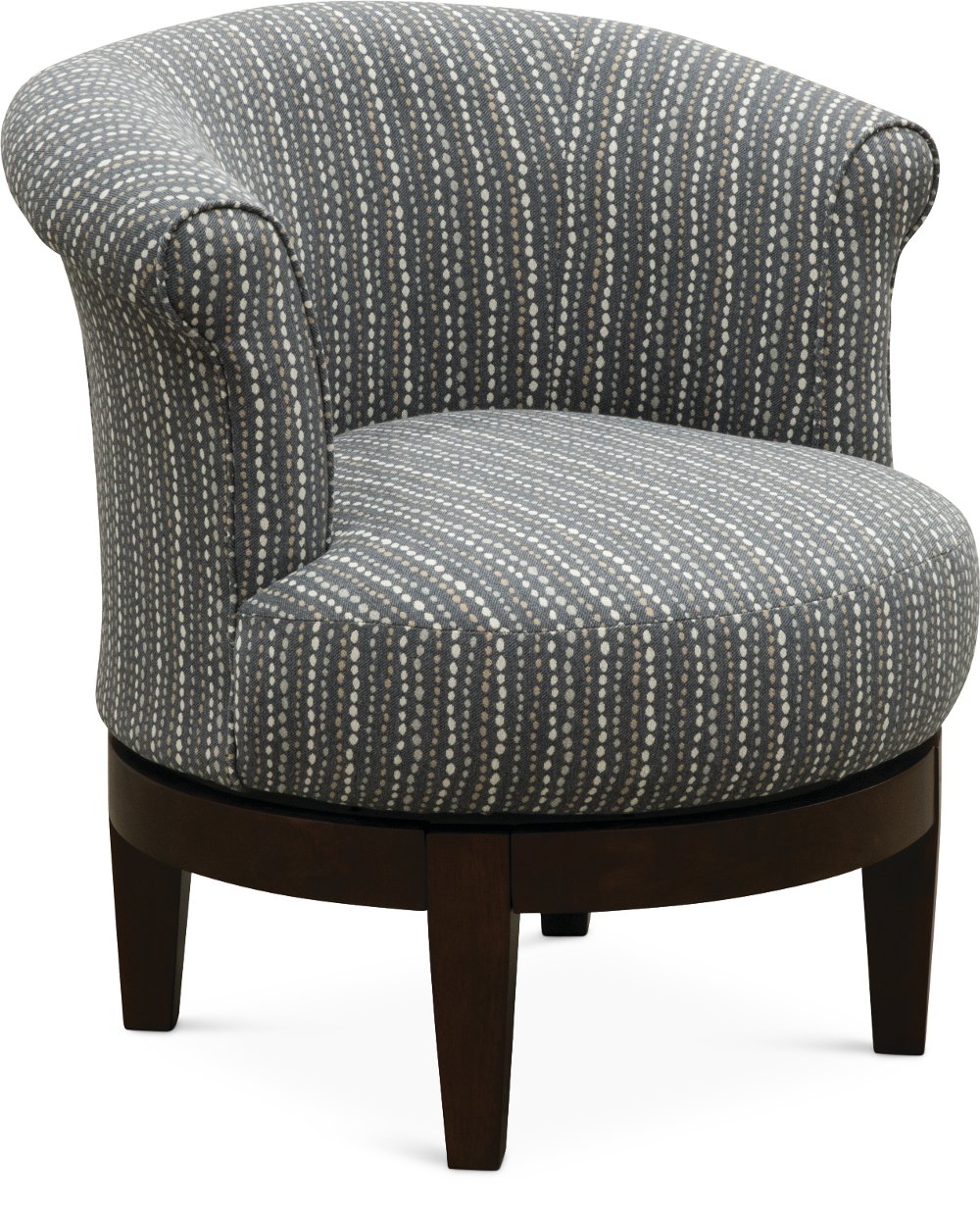
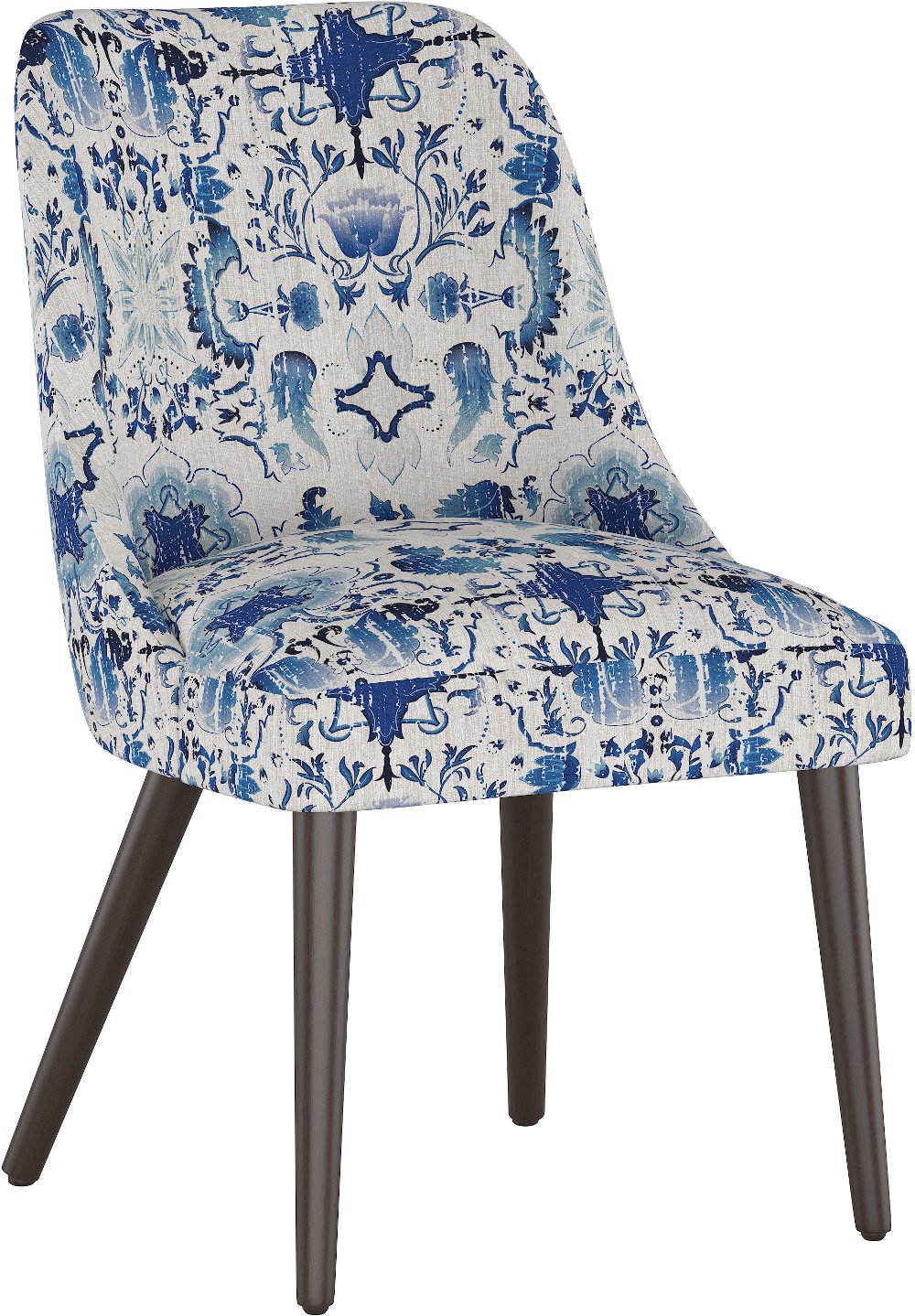
Patterned office chairs combine decorative upholstery with the everyday function of desk seating, bringing color, texture, and personality to a workspace. Their designs can include florals, stripes, checks, geometric shapes, and animal-inspired prints, with patterns ranging from subtle tone-on-tone details to bold, oversized motifs. Unlike a solid-colored chair, a patterned desk chair can connect several colors already present in a room, such as the blue in a rug, the cream of a bookcase, or the warm brown of a wood desk. That makes this seating especially useful in home offices that share space with a bedroom, living room, or dining area. A small floral print can soften a simple writing desk, while a crisp geometric pattern can complement clean-lined furniture and metal accents. Striped upholstery offers a familiar look that works with both traditional and more streamlined settings. Pattern scale matters, too: a compact repeat usually reads as texture from across the room, while a larger motif makes the chair a more noticeable part of the space. The background color has just as much influence as the print itself. A light background can create an airy appearance, while a darker background gives colorful details a richer setting. For a balanced room, a patterned chair can sit alongside a plain rug and understated curtains without requiring everything to match. In a room that already has patterned textiles, shared colors and different pattern sizes help the pieces feel connected rather than crowded. These chairs also bring personality to small workspaces where there’s little room for artwork or decorative accessories. At a desk tucked beside a bookshelf, the upholstery becomes part of the room’s design even when the computer is closed. Depending on its construction, a patterned office chair may serve as seating for remote work, homework, household paperwork, creative projects, or an occasional laptop session. The right combination of appearance and function helps a work area feel like a natural part of your home.
Comfort and fit give patterned office chairs their practical value, and the details beneath the upholstery deserve as much attention as the design. Seat height should work with both your body and your desk, allowing your feet to rest on the floor or a footrest while your shoulders stay relaxed during typing. An adjustable-height chair can make it easier to find that position, especially when more than one person uses the workspace. Seat depth also affects comfort: your back should reach the backrest without the front edge of the seat pressing into the backs of your knees. A generously padded seat may feel inviting at first, but supportive cushioning and an appropriate shape matter more than softness alone during longer sessions. Backrest height, lumbar support, arm placement, and adjustment options vary by chair, so decorative upholstery doesn’t automatically mean a chair has the features needed for a full workday. For extended computer use, features that let you adjust your position can be more useful than a fixed design intended for shorter tasks. Armrests can provide a comfortable place to rest between activities, provided they don’t keep the chair from fitting close enough to the desk. A chair used at a narrow writing desk or beneath a shallow drawer may need a lower profile or an armless shape. Swivel movement makes it easier to turn toward a nearby printer or file cabinet, while casters allow movement between work surfaces without repeatedly lifting the chair. Caster suitability depends on the flooring; wheels intended for carpet may behave differently on a hard surface, and an appropriate chair mat can help protect the floor. A stationary base can suit a compact desk area where rolling isn’t necessary. Overall width, base size, and the space behind the desk influence how comfortably a chair fits into the room. In a bedroom office, for example, there should still be room to move between the desk and the bed when the chair is pulled out. Manufacturer dimensions, weight limits, and adjustment details provide a clearer picture of suitability than the upholstery pattern alone.
Materials and construction influence how a patterned office chair feels, wears, and fits into daily life. Upholstery may include polyester, cotton, linen, or blended fabrics, each with characteristics that depend on the weave, finish, and fiber combination. Polyester blends can offer durability and straightforward care, while cotton and linen fabrics often appeal for their texture and natural feel; the upholstery label remains the best source for the care requirements of a particular chair. A tightly woven fabric may be a practical choice for frequent use, especially where clothing, bags, or pets could catch on a loose weave. Printed patterns place the design on the fabric’s surface, while woven patterns create it through the arrangement of threads, sometimes adding noticeable texture. Neither method alone determines durability, so the fabric’s intended use and care instructions matter. A busy print can make small marks less noticeable, but it doesn’t make the chair stain-resistant. Performance claims should come from the manufacturer rather than assumptions about the fabric’s appearance. Routine care generally includes gently removing dust and crumbs with an upholstery attachment and addressing spills promptly according to the specified cleaning method. Rubbing a spill or using an unapproved cleaner can affect the fabric or spread the mark, so testing permitted cleaning products in an inconspicuous area helps protect the finish. Strong direct sunlight can fade some upholstery over time, making placement near a bright window worth considering. Beyond the fabric, secure seams, a stable base, and smooth-working adjustment mechanisms contribute to everyday reliability. Following assembly instructions and checking fasteners as recommended can help keep the chair steady. For a workspace that also includes a reading corner or a spot for conversation, Patterned Fabric Armchairs can introduce complementary seating, while the office chair remains matched to the desk and its tasks. Patterned desk seating can also be a thoughtful gift for a student or someone setting up a home office, particularly when their preferred colors, desk measurements, and seating needs are known. A well-suited chair brings together a pattern you enjoy, a comfortable fit, and materials that work with your routine.
Read More