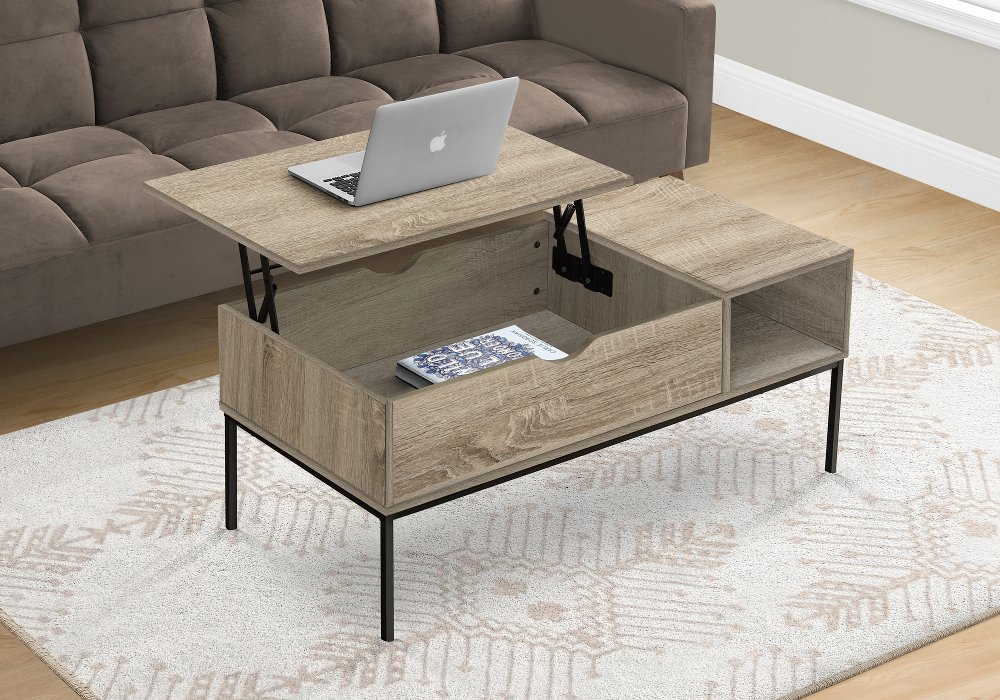
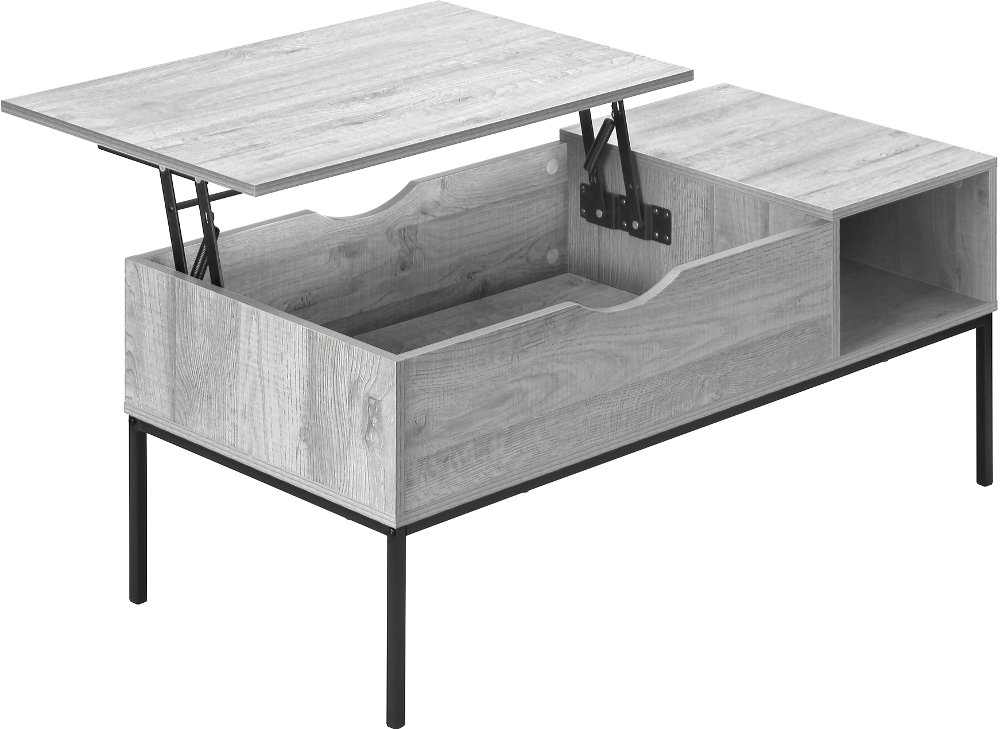
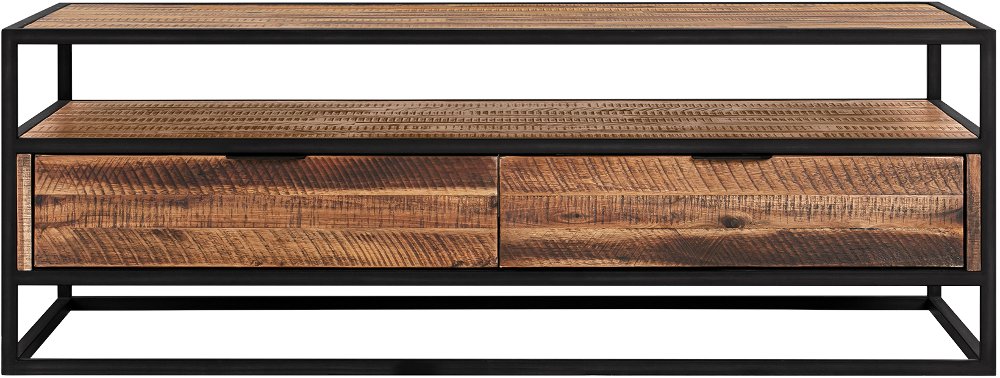
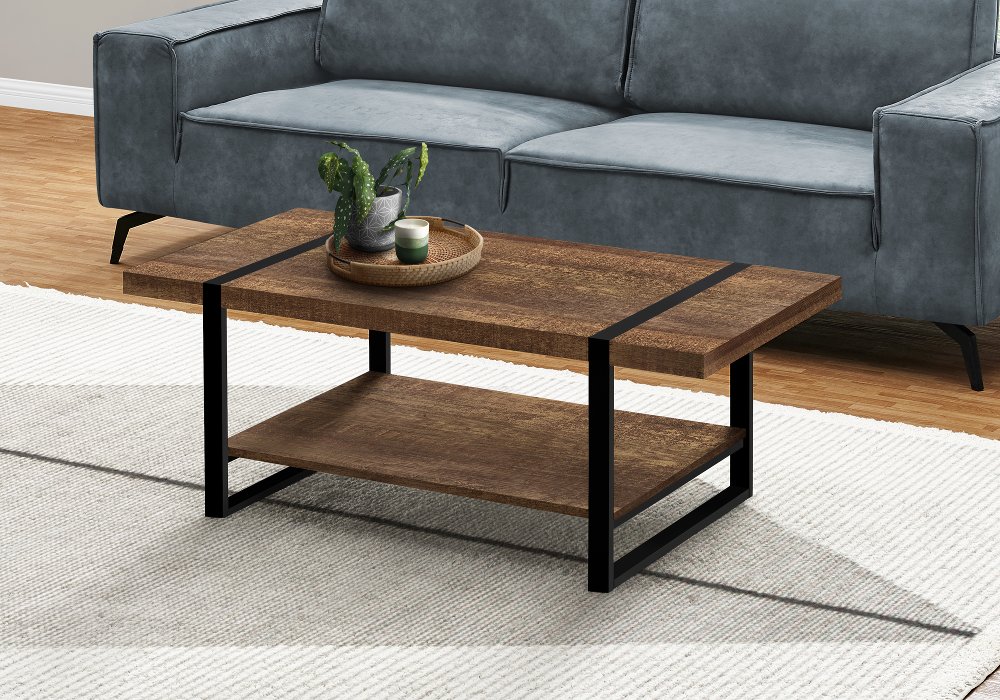
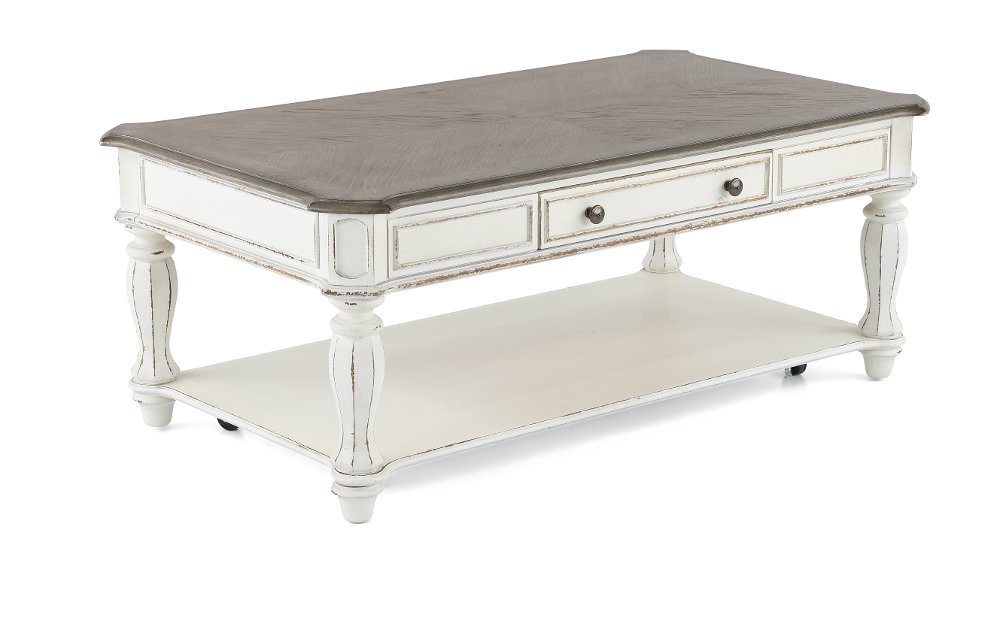
Rectangular coffee tables with storage combine a long, straight-sided tabletop with drawers, shelves, cabinets, or concealed compartments that keep living room essentials close at hand. Their shape works naturally alongside many sofas, giving everyone a convenient place for a drink while making useful storage out of the space beneath the surface. Instead of leaving remotes scattered across cushions or stacking magazines on an end table, a storage coffee table gives those everyday belongings a home. Different storage layouts serve different routines. Drawers keep charging cables, coasters, and small accessories out of sight, especially when interior dividers prevent everything from sliding into one pile. Enclosed cabinets accommodate larger belongings, such as board games or folded throws, although the opening and interior dimensions determine what actually fits. Hinged doors need clearance to swing open, while sliding doors move across the front of the table without extending as far into the seating area. An open lower shelf makes books and decorative baskets easy to reach and leaves room to display a favorite ceramic bowl or a neatly arranged stack of albums. Baskets add useful separation for households sharing the same table: one can hold game controllers, another can collect reading materials. Lift-top coffee tables provide a different kind of flexibility. On designs with storage beneath the top, the raised surface reveals a compartment and brings a laptop, notebook, or casual meal closer to someone seated on the sofa. Lift height and direction vary, so the raised position matters just as much as the closed dimensions. A comfortable typing setup depends on the relationship between the tabletop and the seat, not simply on whether the top lifts. Split-top designs may leave part of the surface stationary, but belongings still need to be moved away from any section that opens. For a living room that handles movie nights, homework, and conversation, the right combination of accessible and concealed storage helps the table support daily life without turning its entire surface into a catchall.
The best fit comes from matching a rectangular storage coffee table to the seating area rather than treating it as an isolated piece. A common starting point is a table about two-thirds the length of the sofa, with a tabletop near the height of the seat cushions or an inch or two lower. These proportions generally keep the surface within reach without making it dominate the arrangement. About 16 to 18 inches between the sofa and table often provides comfortable legroom, though the layout may need more space for reclining seats, mobility needs, or frequently used walkways. Drawers and cabinet doors also need room to open while someone is seated nearby. With a sectional, the usable space between the main sofa and chaise helps determine the table’s depth; a long tabletop can be appealing, but it should still leave an easy path into the seating area. Measuring the full footprint and marking it on the floor with painter’s tape makes the difference between a roomy arrangement and a tight squeeze easier to see. Storage construction affects the visual fit, too. A table with raised legs and an open shelf can feel lighter in a compact room, while a substantial cabinet-style base creates a more grounded presence beside generous upholstered seating. Straight edges echo the lines of a sofa, media console, or area rug, and softened corners offer a gentler profile where people pass through. Finishes help connect the table to the rest of the room without requiring every wood tone to match exactly. Warm wood grain brings texture to neutral upholstery, dark finishes create contrast, and metal details complement industrial or contemporary spaces. For a lighter look, White Coffee Tables With Storage offer another direction, pairing practical organization with a bright finish. Whether the room feels relaxed, tailored, or somewhere in between, the table should leave enough clear surface for the way people actually gather around it.
Materials, construction, and everyday care all influence how well a rectangular coffee table with storage holds up to regular use. Solid wood offers natural grain variation and a substantial feel, but it can respond to changes in indoor humidity and still needs protection from moisture, heat, and scratches. Wood veneer places a thin layer of real wood over a supporting core, providing genuine wood character without using solid lumber throughout. Engineered wood construction varies, so surface quality, edge finishing, and sturdy connections matter more than broad assumptions about the material alone. Laminate surfaces can simplify routine cleanup, although their resistance to wear depends on the finish and construction. Metal frames add structural support and a distinct visual accent; stable joints and secure fasteners are important wherever the base supports a shelf or moving top. Glass surfaces create an open look but show fingerprints readily, and even tempered glass needs protection from impacts and excessive loads. For any material, smooth drawer operation, well-aligned doors, and a lift mechanism that moves steadily are useful signs to evaluate. Storage capacity should match the intended contents: a shelf carrying a few magazines faces different demands than one holding a dense collection of hardcover books. Follow the stated weight limits for the tabletop, shelves, drawers, and raised surface rather than assuming each part supports the same load. In homes with young children, softened edges and careful supervision around hinges and moving tops deserve particular attention. Fingers should stay clear of lift mechanisms, and coffee tables aren’t intended for climbing or standing. Routine care is usually straightforward when it follows the manufacturer’s instructions. A soft cloth removes dust, spills should be wiped up promptly, and coasters and trivets help protect the finish. Avoid leaving moisture along seams or using abrasive cleaners that can dull a surface. Keeping frequently used belongings in the easiest-to-reach compartments makes the storage useful every day, while leaving space for a mug, a book, and the small moments that make a living room feel like home.
Read More