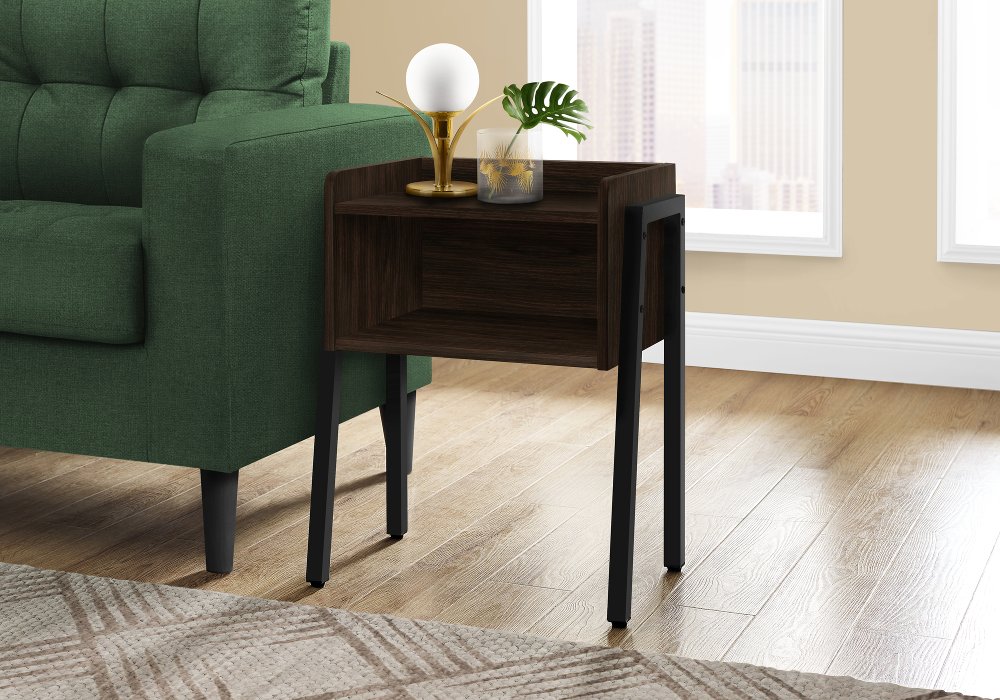
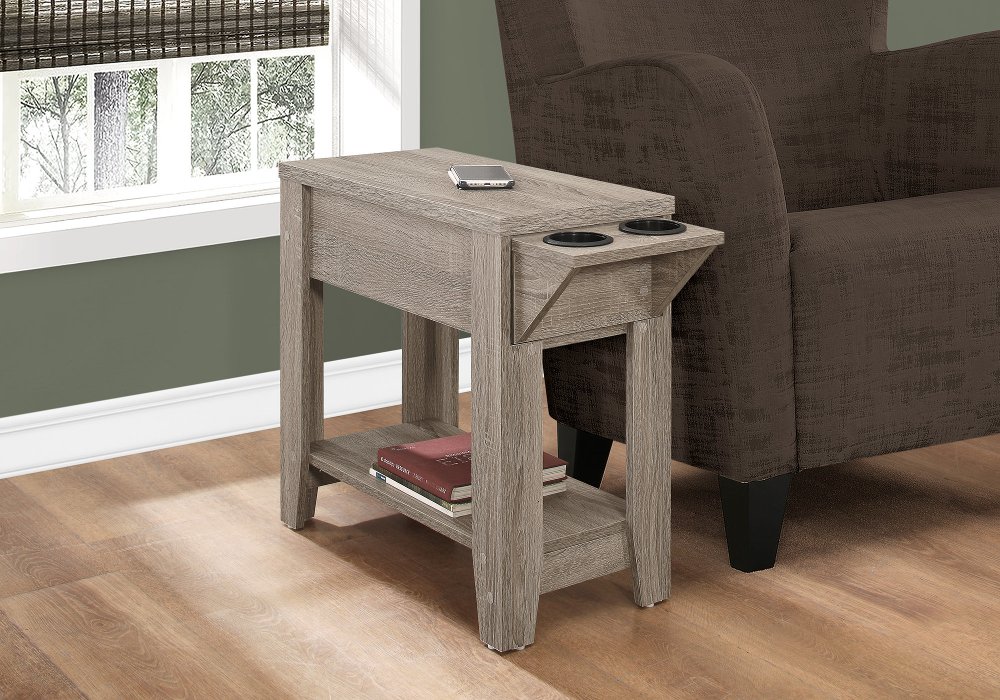
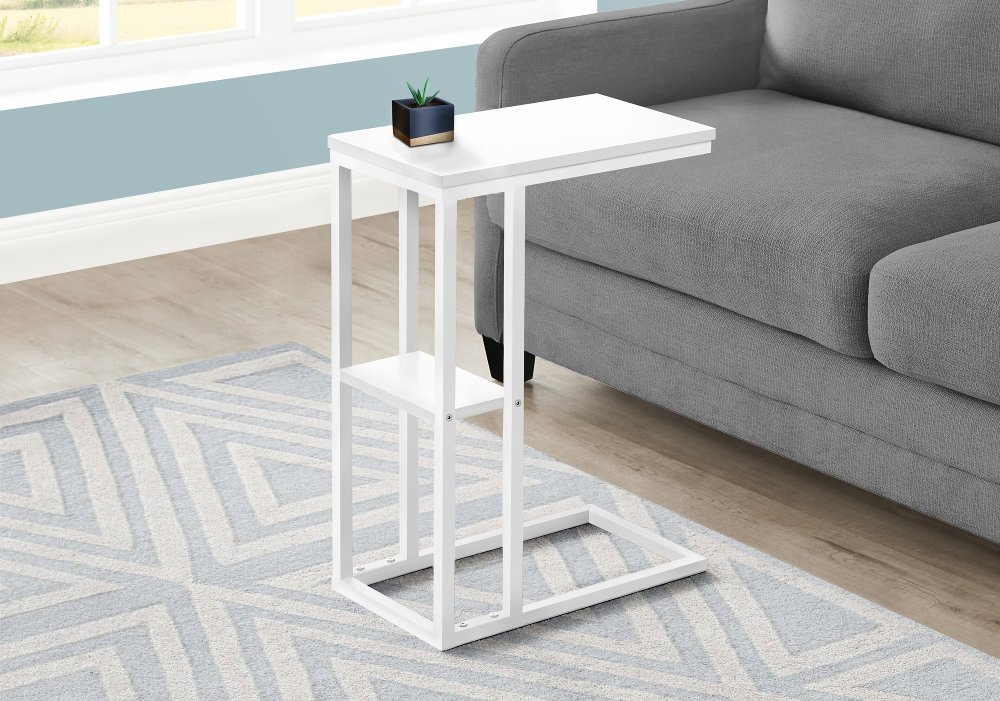
Rectangular end tables give the little things you reach for every day a comfortable place to land. Beside a sofa, one can hold a reading lamp, a glass of water, and the book you keep meaning to finish. Next to an accent chair, it can turn an unused corner into your favorite spot for a quiet evening. The familiar shape works naturally with the straight lines of sofas, walls, and area rugs, making it easy to bring a room together without adding a large piece of furniture. A narrow rectangular end table can tuck beside an armrest where a wider table would crowd the walkway, while a deeper design offers room for both a lamp and everyday essentials. That extra surface becomes especially useful during the cooler months, when evenings at home might include a warm drink, a crossword, and a throw pulled close. Think of the seat everyone gravitates toward when company comes over: a table within reach makes that spot more welcoming, with somewhere to set a mug instead of balancing it on a knee. These tables work well beyond the main living room, too. A simple design can serve as a bedside table in a guest room, a handy surface in a home office sitting area, or a companion to a reading chair in a bedroom. For someone furnishing a first apartment, a rectangular side table is a practical addition that can move from room to room as their needs change. It can also make a thoughtful housewarming gift when you know the recipient’s available space and decorating preferences. Whether you’re finishing a well-loved family room or starting with just a sofa and a rug, the right end table helps the space feel ready to use. Its appeal is straightforward: useful surface space, an easy-to-place shape, and a chance to add texture or color on a smaller scale.
A rectangular end table fits best when its proportions support the way you sit, reach, and move through the room. Surface height deserves particular attention. A tabletop near the height of your sofa or chair arm generally makes it more comfortable to set down a cup or reach for a remote; a table that sits much higher or lower can feel awkward even when the style is right. Width and depth matter just as much, especially beside a deep sofa, between two chairs, or near a doorway. Measure the open floor space rather than judging by a product photo, and leave enough clearance for people to walk past without turning sideways. A quick outline made with painter’s tape can help you picture the footprint before bringing a table home. If it’s going beside a recliner, allow room for the chair’s full motion, including any swivel function. Consider what will live on top, too. A substantial lamp base needs more surface area than a slim task light, and a table crowded with decor may leave little room for the things you actually use. Storage can make the difference between a pretty accent and a hardworking piece of living room furniture. A drawer gives reading glasses, charging cords, and remotes a place out of sight. An open shelf keeps a stack of books handy and may accommodate a basket for smaller belongings, depending on its dimensions. Cabinet-style storage can help create a calmer look when you’d rather keep everyday clutter tucked away. For shared rooms, look at how drawers and doors open so nearby seating won’t block access. Tables with built-in charging features may be convenient, but check the connection types, cord length, and distance to an outlet. The most useful choice isn’t necessarily the one with the most features. It’s the one that supports your habits, whether that means a single clear surface beside your favorite chair or extra storage where the whole household gathers.
Materials and finishes give rectangular end tables much of their personality, and they also shape how a piece fits into daily life. Wood brings warmth through its grain and color, from light finishes that feel relaxed to deeper tones that add contrast beside pale upholstery. Solid wood and wood veneer offer different construction options; consider the overall build, finish, and care requirements rather than relying on the material name alone. Painted tables can introduce a soft accent or a crisp contrast, while metal frames often provide a more open outline that suits smaller seating areas. Glass tops let light pass through and can make a table feel less visually substantial, though fingerprints and smudges may show more readily. Stone and stone-look surfaces bring another layer of texture, with weight, porosity, and maintenance needs varying by material. Whatever finish you prefer, follow the care directions and keep coasters close to protect the surface from drinks. In homes with young children or busy walkways, softened corners and a stable base are worth considering alongside appearance. You don’t need every table in the room to match, either. Repeating one detail—a wood tone, a dark metal finish, or a similar leg shape—can connect different pieces without making the room feel overly coordinated. A pair of matching rectangular end tables gives a sofa a balanced frame, while different tables on either side can suit an arrangement with unequal floor space. If you’d like another surface behind the sofa or along a nearby wall, Rectangular Sofa Tables can complement your seating-area tables while offering a different footprint. Keep the finishing touches personal and useful: a lamp that casts comfortable light, a small dish for loose essentials, or a favorite photo with room beside it for a drink. Choose with your room’s proportions and daily routines in mind, and a rectangular end table can feel like it has always belonged there.
Read More