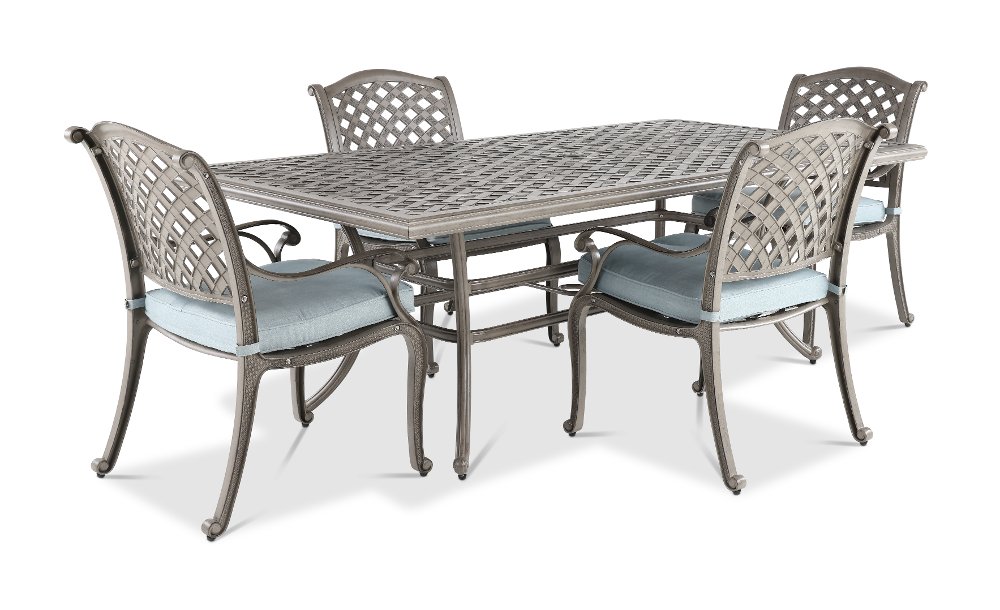
Rectangular outdoor umbrellas bring a long, balanced shade canopy to spaces where a round umbrella may leave the ends of the furniture exposed. Their shape works especially well above rectangular patio dining tables, alongside outdoor sectionals, and over narrow seating areas with a coffee table between chairs. A canopy that follows the furniture’s footprint can make an outdoor meal more comfortable, whether the table holds breakfast for two or a spread for a family gathering. The straight edges also complement the lines of decks, pavers, and contemporary outdoor furniture without making the space feel crowded. Two common styles offer different ways to arrange that coverage. A center-pole umbrella places its support beneath the middle of the canopy and can pass through a compatible patio table or stand independently in a suitable base. A cantilever umbrella supports the canopy from an offset mast, leaving the area directly beneath it open for conversation, dining, or lounging. That open layout is particularly useful above a sectional or a table without an umbrella hole, although the mast and base still need their own floor space. For dining-focused options, explore Outdoor Umbrellas for Tables. Fit involves more than matching the canopy shape to the tabletop. As a starting point, look for a canopy that extends about two feet beyond each side of the table, then consider where people sit when their chairs are pulled out. A long table with generous end seating may need more coverage than its tabletop dimensions suggest. Check the umbrella’s fully open length and width, overall height, and clearance beneath the canopy rather than relying on a single size description. On a compact balcony, those measurements also help keep fabric and ribs clear of railings, walls, and neighboring spaces. The shadow changes with the sun’s angle, so a centered canopy won’t necessarily shade every seat throughout the day. Positioning and adjustability matter just as much as the umbrella’s footprint.
Materials help determine how a rectangular patio umbrella looks, feels, and holds up to outdoor use. Polyester is a common canopy fabric, with performance that varies according to its construction, coatings, and quality. Solution-dyed acrylic incorporates color into the fibers and is often chosen for its resistance to fading from sunlight. Neither fabric name alone tells the whole story; stated fade resistance, cleaning requirements, and any published ultraviolet protection rating provide a clearer picture of what to expect. A water-resistant canopy can shed some light moisture, but an outdoor umbrella isn’t a substitute for a waterproof roof or a safe shelter during a storm. Frame materials deserve the same attention. Aluminum offers relatively light weight and corrosion resistance, making it practical for many patio settings. Powder-coated steel can provide a sturdy structure, though scratches in the finish should receive attention to help limit rust. Wood brings a warm, natural appearance that pairs easily with woven seating and wood dining furniture, but it may require periodic finish care according to the manufacturer’s recommendations. Some frames use fiberglass ribs for flexibility; that flexibility doesn’t make an umbrella safe to leave open in strong wind. Canopy vents allow some air to pass through and may reduce pressure beneath the fabric, but proper anchoring and timely closing remain essential. Everyday convenience comes from features that suit the way the space gets used. A crank mechanism can make opening a large canopy easier, while a tilt function may help shade seats as sunlight reaches the patio from the side. Certain cantilever designs also allow rotation or changes in canopy angle, reducing the need to rearrange furniture. Check how those controls operate and whether they’re comfortably within reach. Color is another practical choice: a neutral canopy can blend with cushions and decking, while a richer shade can give a simple seating group a distinct focal point. Fabric performance matters more than color alone when evaluating long-term durability.
A well-matched base is central to using a rectangular outdoor umbrella safely and comfortably. Canopy dimensions, frame design, exposure, and placement all affect the support it needs, so follow the umbrella manufacturer’s base requirements rather than choosing weight by appearance. A patio table can help hold a center pole in position, but it generally doesn’t replace the required weighted base. Confirm that the pole diameter fits both the table opening and the base sleeve, and check that any securing knobs or collars can hold it correctly. Cantilever umbrellas typically need a compatible support system designed for their offset load, which may involve specified weights or approved mounting hardware. Leave room around that support so a guest carrying a tray or a child stepping away from the table has a clear path. For households that regularly rearrange their outdoor furniture, the effort involved in moving the base is worth considering before settling on a layout. Care is usually straightforward when it follows the fabric and frame instructions. Brush away loose dirt, remove leaves that collect in canopy folds, and address bird droppings or food splashes promptly. When permitted by the manufacturer, mild soap, water, and a soft brush are often suitable for routine cleaning; harsh cleaners and aggressive scrubbing can damage finishes or protective treatments. Let the canopy dry completely before closing it for extended storage or adding a cover, since trapped moisture can encourage mildew. Close and secure the umbrella when it’s unattended and whenever wind conditions call for it, following any stated operating limits. For prolonged periods without use, a dry, protected storage area or an appropriate cover helps reduce unnecessary exposure. Check fasteners, ribs, opening mechanisms, and the base periodically for wear or looseness. With suitable support and consistent care, a rectangular outdoor umbrella can become a dependable part of a patio arranged around shared meals, quiet reading, or an afternoon conversation. Its value comes from making the space easier to enjoy, with shade placed where people actually spend their time.
Read More