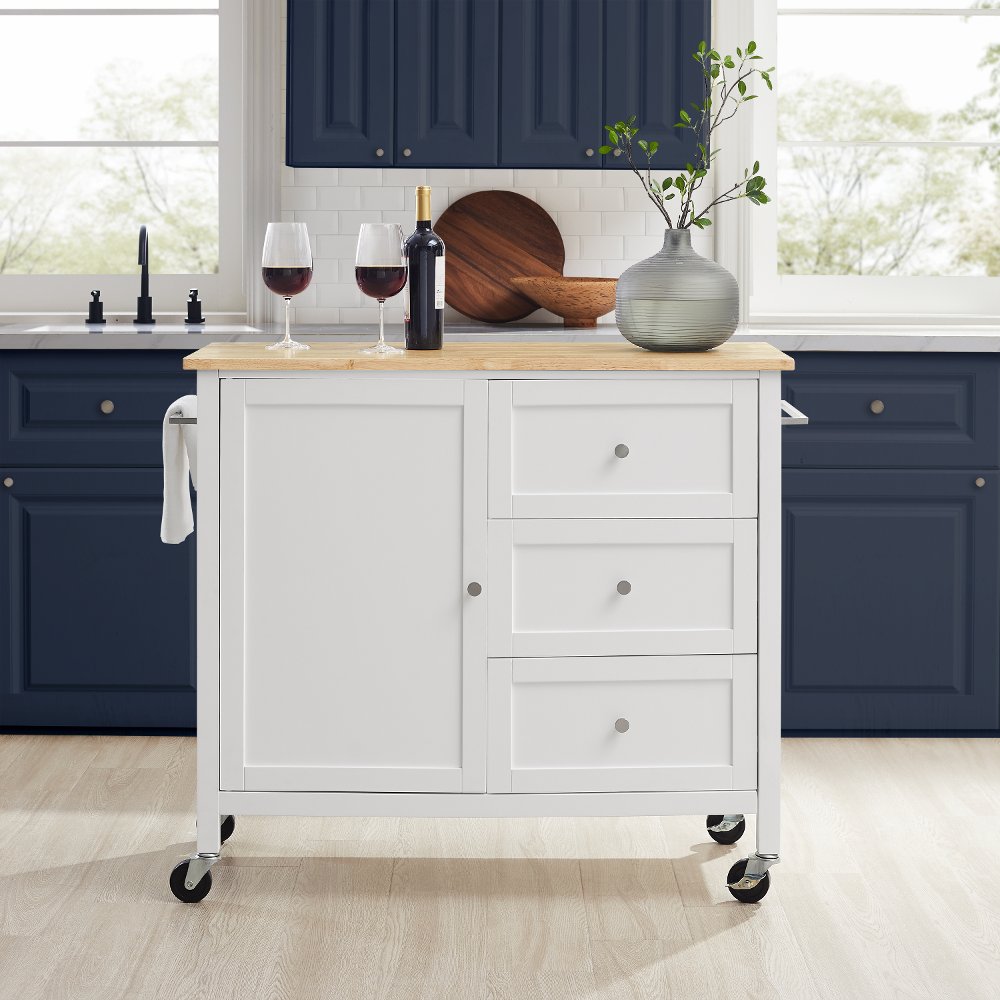
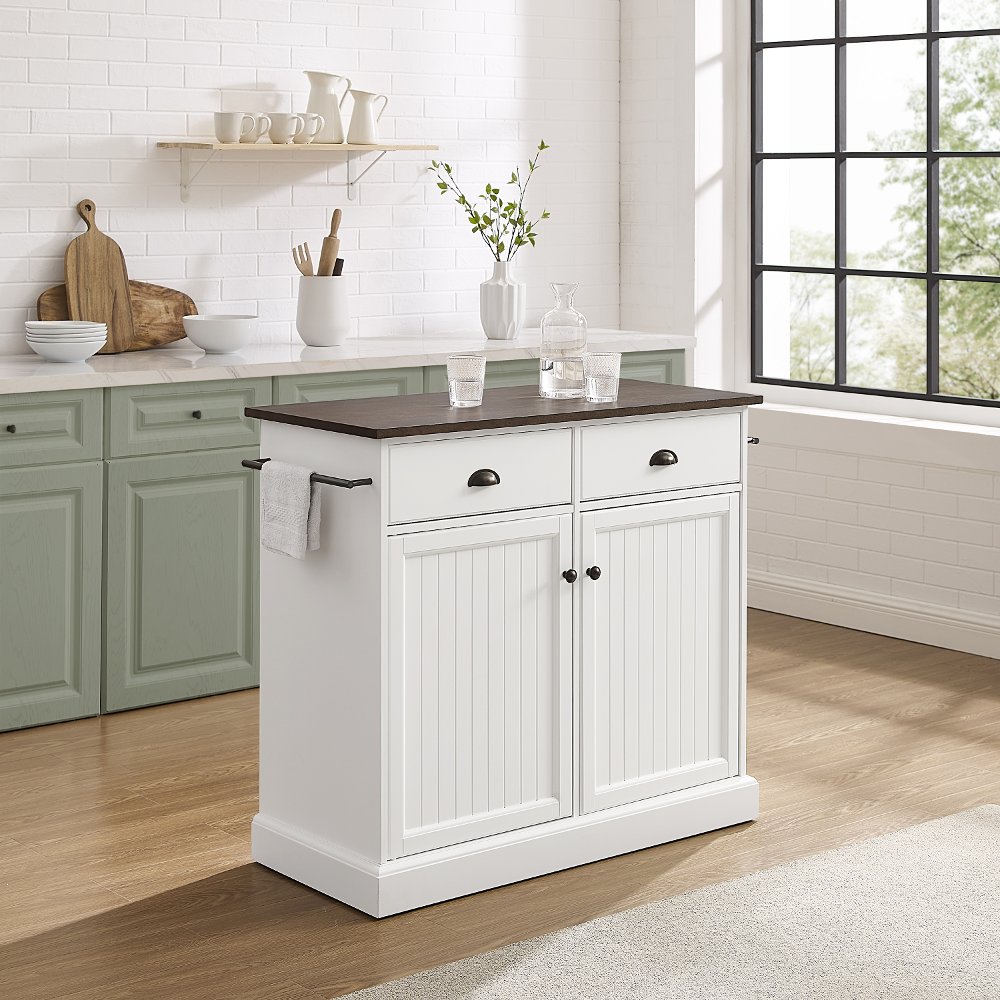
A rolling kitchen cart with a drop leaf adds usable counter space, movable storage, and a work surface that folds down when you need more room to pass. The hinged extension lifts into place for tasks such as arranging ingredients, setting out serving dishes, or packing lunches, then lowers alongside the cart to reduce its footprint. That flexibility makes rolling kitchen carts with drop leaf tops especially useful in apartments, smaller kitchens, and homes where one room handles several jobs. Picture a cart parked against a wall with mixing bowls tucked underneath, then moved closer to the main counter when dinner prep begins. An extended leaf can hold a recipe book and measured ingredients while the main top supports a cutting board, provided the cart’s instructions allow those uses. Some designs can also create a casual spot for coffee or a quick meal, although comfortable seating depends on the top height, knee clearance, and whether the extension is intended for dining. Fit involves more than finding an empty patch of floor. The cart’s folded width, fully extended depth, and overall height all affect how comfortably it works in your kitchen. Handles, towel bars, and side racks can extend beyond the cabinet, so their measurements matter, too. Allow room for drawers and doors to open, for the leaf to swing into position, and for people to move past without squeezing between furniture and an open dishwasher. A cart that feels compact with the leaf lowered may need considerably more space when fully opened. Casters make repositioning easier, but wheel size, flooring, thresholds, and the loaded weight influence how smoothly it rolls. Locking casters help limit movement while the cart is in use; the number and placement of locks vary by design. A level surface, properly engaged brakes, and a fully supported leaf help create a dependable setup for everyday tasks. For a kitchen that needs flexibility rather than a permanent layout change, this combination of a folding top and mobile base gives each square foot a little more purpose.
Materials shape both the appearance of a drop leaf kitchen cart and the care it needs over time. Solid wood tops bring visible grain and a warm, furniture-like feel, while painted or stained bases can coordinate with cabinetry, dining furniture, or nearby shelving. Rubberwood and other hardwoods appear in kitchen furniture, but performance depends on construction, finish, and maintenance—not the wood name alone. A butcher block-style surface may need periodic conditioning if it has an oil finish, while a sealed wood top may require a different cleaning routine. Follow the manufacturer’s care directions rather than treating every wood surface the same way. Engineered wood bases can provide enclosed storage and a smooth painted or laminated finish; keeping seams and edges dry helps protect them from swelling or lifting. Stainless steel surfaces offer a different look and generally wipe clean easily, though fingerprints and fine scratches may show with regular use. Stone and stone-look tops have their own care requirements, and heavier surfaces also affect how easily a loaded cart moves. Whatever the material, a separate cutting board protects the top and keeps food preparation on a surface intended for that purpose. Trivets belong beneath hot cookware, and spills are easiest to manage before they sit around hinges, joints, or exposed edges. A soft cloth and a cleaner approved for the finish usually make more sense than aggressive scrubbing. Durability also comes from details that are less noticeable than color or grain: secure caster attachments, sturdy drawer construction, dependable hinges, and leaf supports that hold the extension level. The main top, drop leaf, shelves, and drawers may each have different weight limits. A leaf suited to place settings or lightweight prep supplies should not be assumed to support a heavy countertop appliance. Matching the surface and structure to your usual routine helps the cart stay useful long after its first kitchen rearrangement.
Storage is often what turns a rolling kitchen cart from extra furniture into a hardworking part of the room. Drawers can keep measuring spoons, utensils, and kitchen towels close to the work surface, while cabinets give larger cookware and less attractive essentials a place behind closed doors. Adjustable shelves help accommodate a tall stockpot or stacks of serving bowls, although shelf capacity still matters. Open shelves make frequently used pieces easy to reach and can keep a compact kitchen feeling visually lighter, but their contents remain on display and need occasional dusting. Side racks and towel bars offer convenient access without taking up the main top; their position should still leave a clear path around the cart. Think about the tasks that repeatedly crowd your existing counters. A baker may value room for ingredient containers and baking tools, while someone who prepares lunches each morning may prefer shallow drawers for small accessories and a clear top for lining up containers. For entertaining, a cart can serve as a staging area for plates, napkins, and drinks, leaving the dining table open for guests. Move it with the leaf lowered and loose contents secured, following the manufacturer’s instructions, rather than rolling an extended surface through a narrow doorway. If seating is a priority, kitchen islands with a drop-leaf table offer a related option to consider, with particular attention to legroom and the space needed to pull out chairs. For a mobile cart, comfortable daily use starts with accessible storage, a manageable footprint, and an extension that opens without disrupting the room. The most useful configuration supports the way you already cook, serve, and gather: towels within reach, cookware stored securely, and just enough extra surface to spread out when a meal needs more room. Fold the leaf down afterward, and the kitchen has breathing room again.
Read More