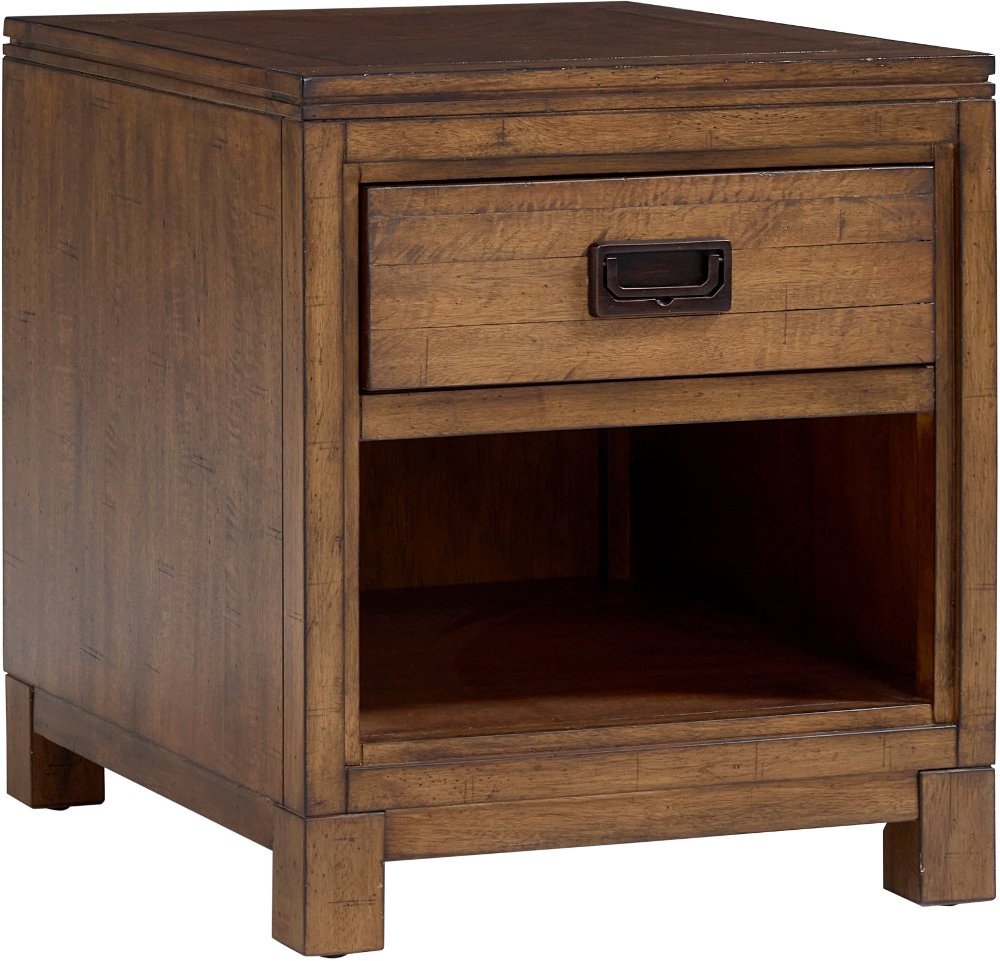
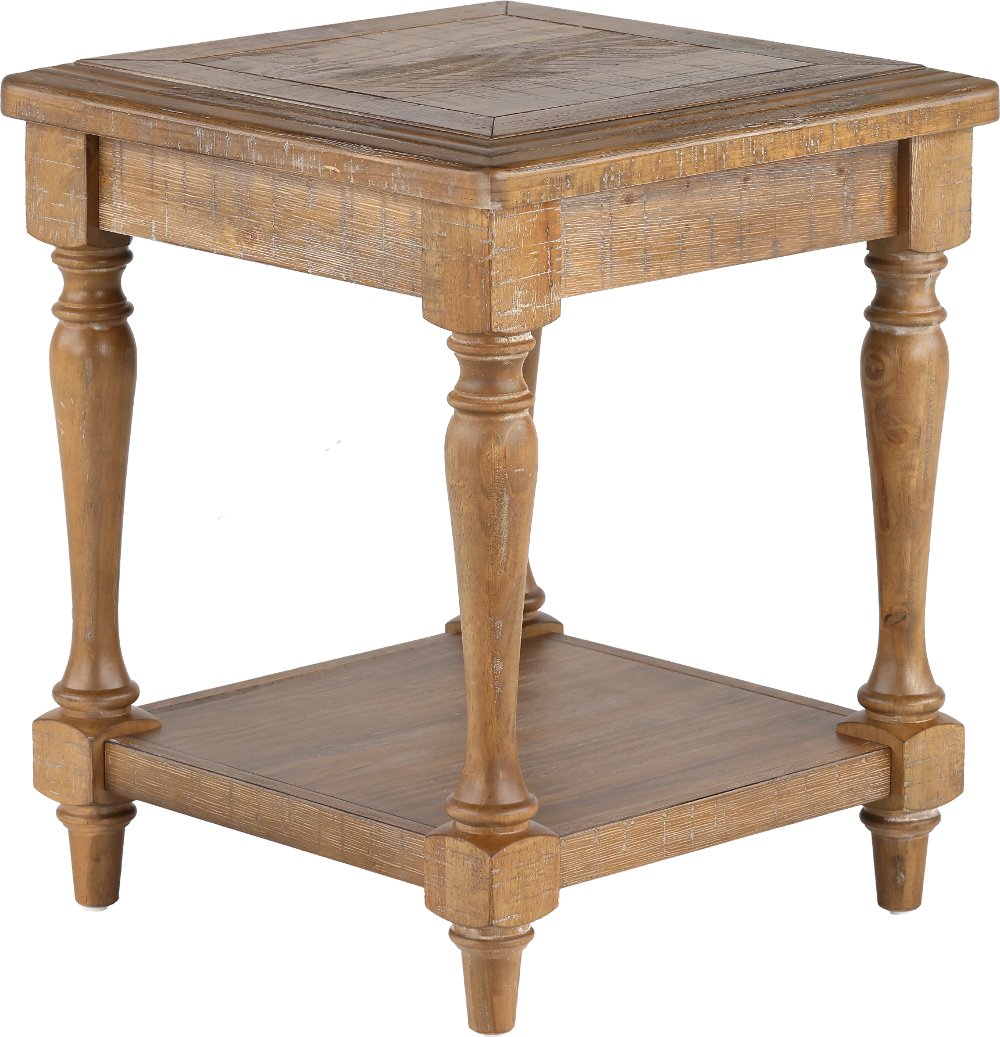
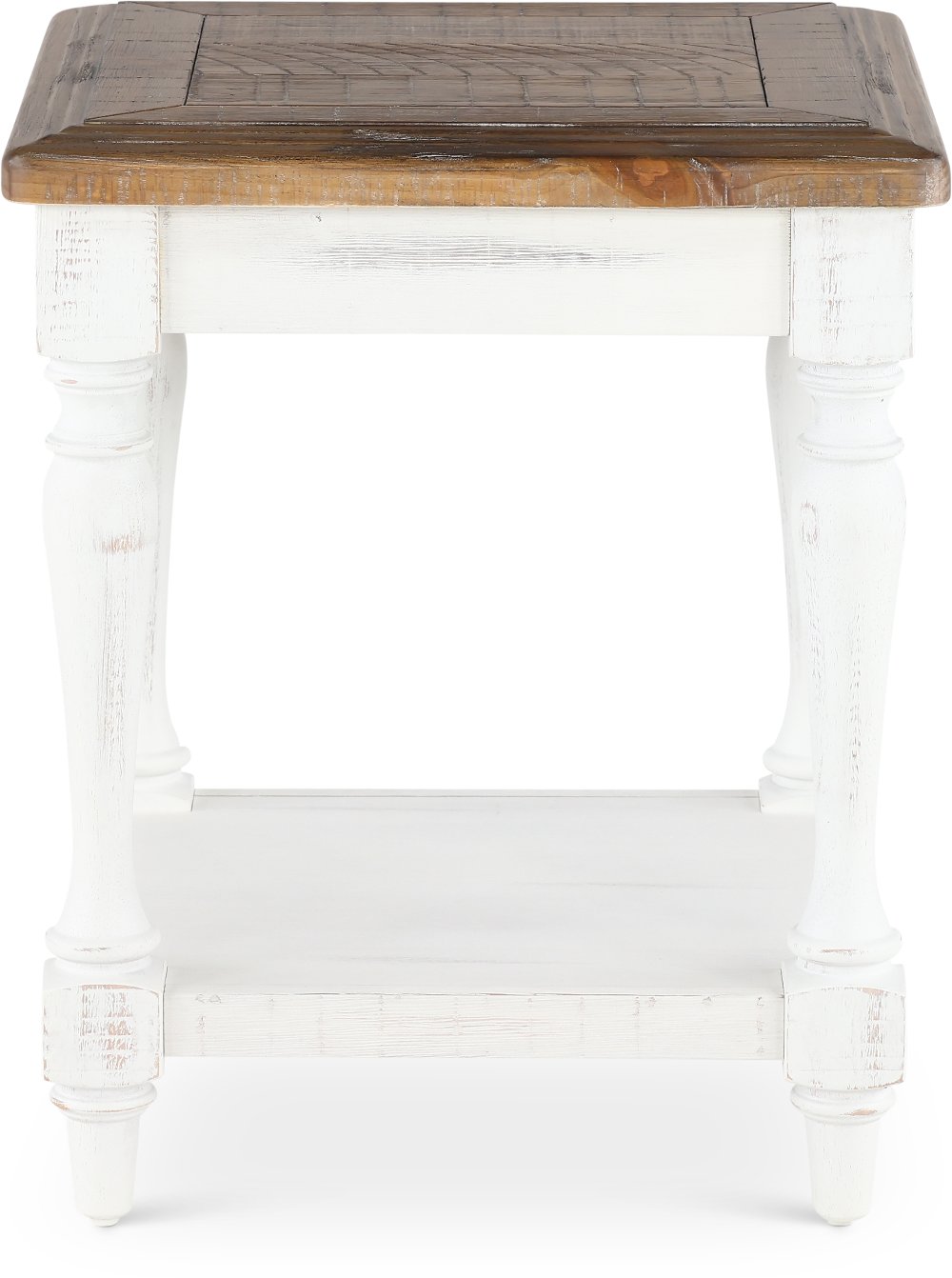
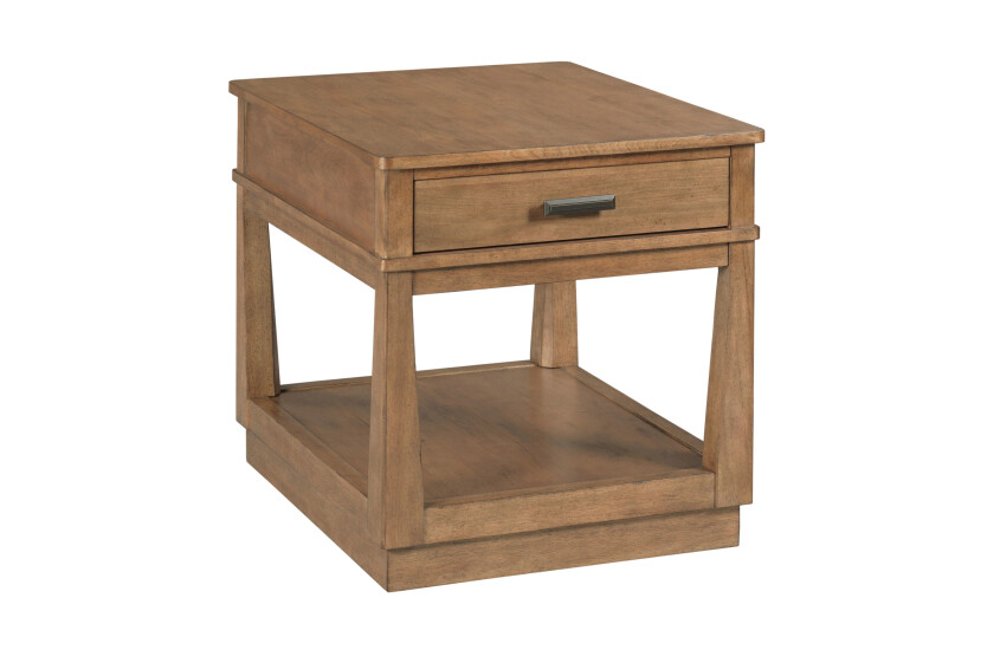
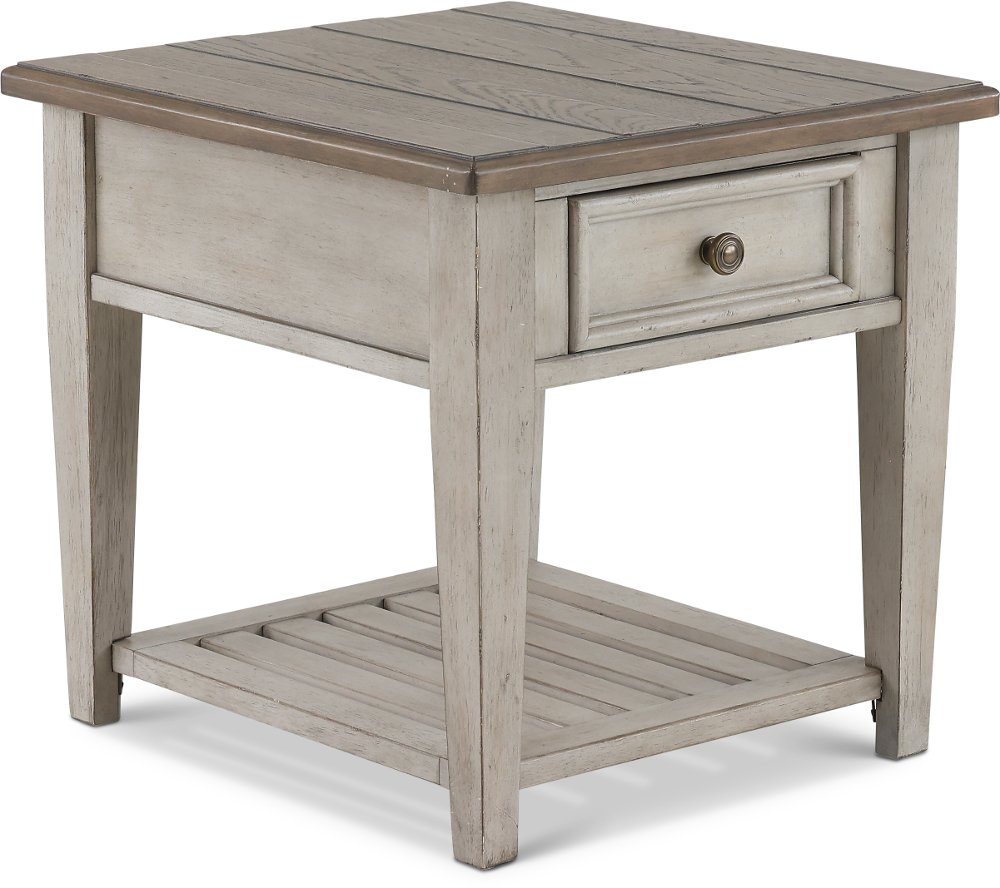
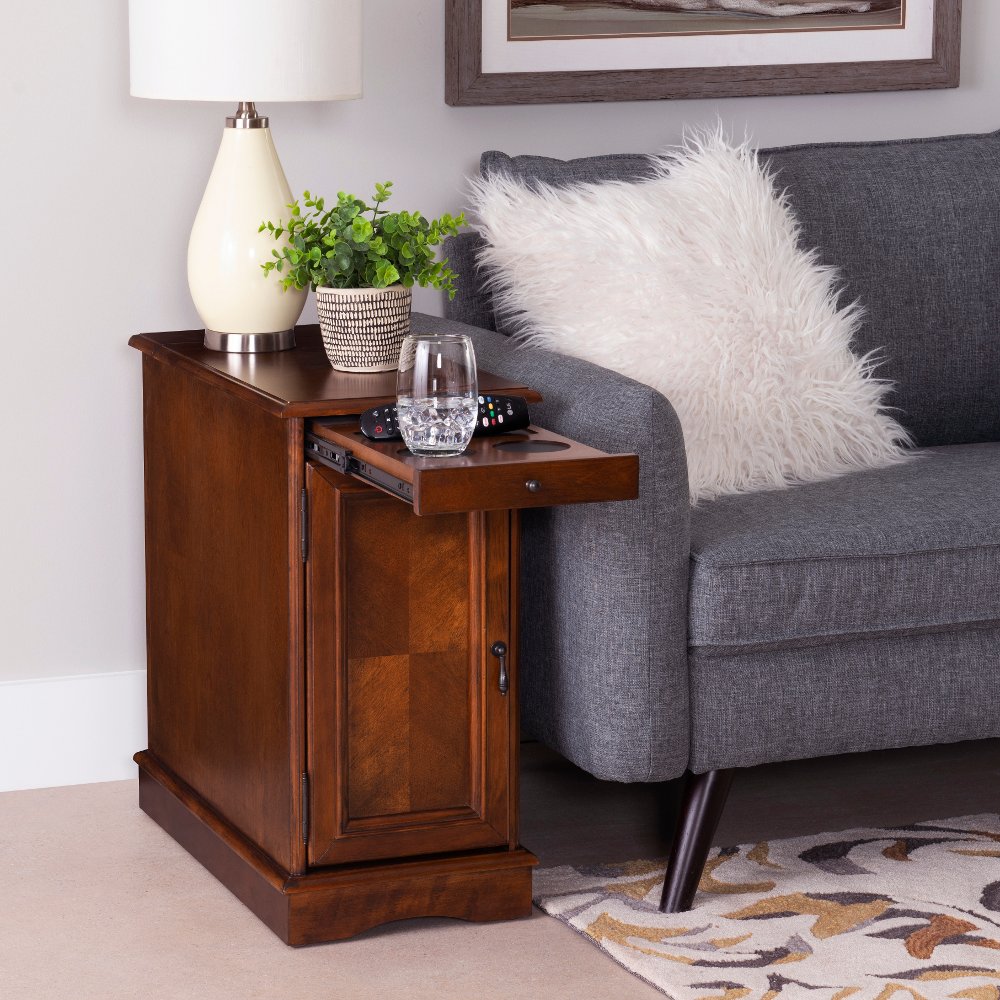
Rustic end tables with storage combine the warmth of wood-inspired finishes with practical space for everyday essentials. Typically placed beside a sofa, sectional, or accent chair, these tables give drinks, lamps, and reading glasses a convenient landing spot while keeping smaller belongings organized below. Their rustic character often comes from visible grain, distressed finishes, plank-style details, substantial legs, or dark metal hardware. That character can feel relaxed and welcoming without making a room look heavily themed. A weathered oak look works comfortably alongside linen upholstery, while deeper brown tones bring contrast to a light-colored sofa. Storage makes these pieces especially useful in rooms where the coffee table tends to collect everything. A drawer keeps remote controls, charging cords, and coasters close without leaving them in view. An enclosed cabinet provides room for larger belongings, while an open lower shelf gives books or a basket an easy-to-reach home. Combinations of drawers and shelves offer both hidden organization and display space, so the tabletop can stay ready for a lamp and a favorite mug. The most useful arrangement depends on what happens beside that particular seat. Someone who reads every evening may appreciate an open shelf for books, while a shared family room may benefit from closed storage that keeps game controllers and extra cables together. In a compact apartment, one well-proportioned table can handle several of these jobs without adding another storage piece. Beside a bed, a rustic side table with a drawer can also serve as a simple nightstand, provided its height and storage layout suit the space. For a reading corner or guest room, a shelf beneath the tabletop adds useful storage without the visual weight of a larger cabinet. The appeal is straightforward: a comfortable, lived-in look paired with a place for the things that make relaxing easier.
A good fit starts with the relationship between the table, the seating, and the surrounding walkway. A tabletop close to the height of the sofa or chair arm usually makes it easier to set down a glass without reaching awkwardly up or down. Width matters just as much, especially between a sofa and a wall or beside a recliner. A narrow profile can suit a tight gap, while a wider top provides more breathing room for a lamp base, coaster, and book. Depth deserves attention, too; a table that extends well beyond the front of the seating can interrupt a walking path. Drawer clearance and cabinet-door swing should fit the room with the furniture in its everyday position, including a recliner’s extended footrest. Storage dimensions also matter more than the outside measurements alone. A small drawer may be ideal for remotes but too shallow for larger accessories, and a shelf needs enough clearance for the basket intended to sit on it. Materials influence both appearance and upkeep. Solid wood can offer distinctive grain and natural variation, though it may respond to changes in indoor humidity. Wood veneer provides a real-wood surface over a supporting core, while engineered wood with a decorative finish can create a consistent wood-look appearance. Mixed-material designs often pair wood surfaces with metal frames or hardware for a rustic-industrial feel. No single material tells the whole durability story; construction, finish quality, and how the table is used all play a part. Stable legs, secure hardware, smoothly operating drawers, and well-supported shelves are useful details to consider. A distressed finish adds visual texture, but it doesn’t necessarily make a surface resistant to scratches or moisture. For a busy household, an easy-to-wipe top and accessible storage may be more practical than deep grooves or intricate details that take extra effort to clean.
The right finish can connect a rustic storage end table to the rest of the room without requiring every piece to match. Repeating one element, such as a warm brown undertone or a dark metal pull, creates a comfortable connection between different furnishings. Lighter wood tones and whitewashed finishes can keep a small seating area feeling open, while richer finishes give pale upholstery a stronger outline. Rustic details also work beyond farmhouse interiors. A clean-lined table with visible grain can soften a contemporary room, and a wood-and-metal combination can sit naturally beside leather seating. For a broader view of the style, explore rustic end tables and consider how the proportions, finishes, and silhouettes relate to the furniture already in place. A matching pair can bring balance to either end of a sofa, but two different tables can work just as well when their heights and visual weight feel compatible. Keeping the tabletop lightly arranged lets the storage do its job: a lamp, a coaster, and one personal accent often leave enough usable space for daily routines. On an open shelf, a properly sized basket can gather loose accessories while preserving the table’s relaxed appearance. Everyday care helps maintain that look. A soft cloth removes dust, spills are best wiped up promptly, and coasters help protect the finish from moisture and heat. Cleaning products should follow the manufacturer’s recommendations, since a product suited to one finish may damage another. Rough-sawn textures may need gentler attention around grooves, and drawer pulls or other hardware may benefit from occasional tightening as directed. Moving a table by lifting it rather than dragging it also helps protect its joints and the flooring beneath it. Whether furnishing a first apartment, making a family room easier to enjoy, or adding useful storage beside a favorite chair, a thoughtfully chosen rustic end table brings character and everyday convenience within reach.
Read More