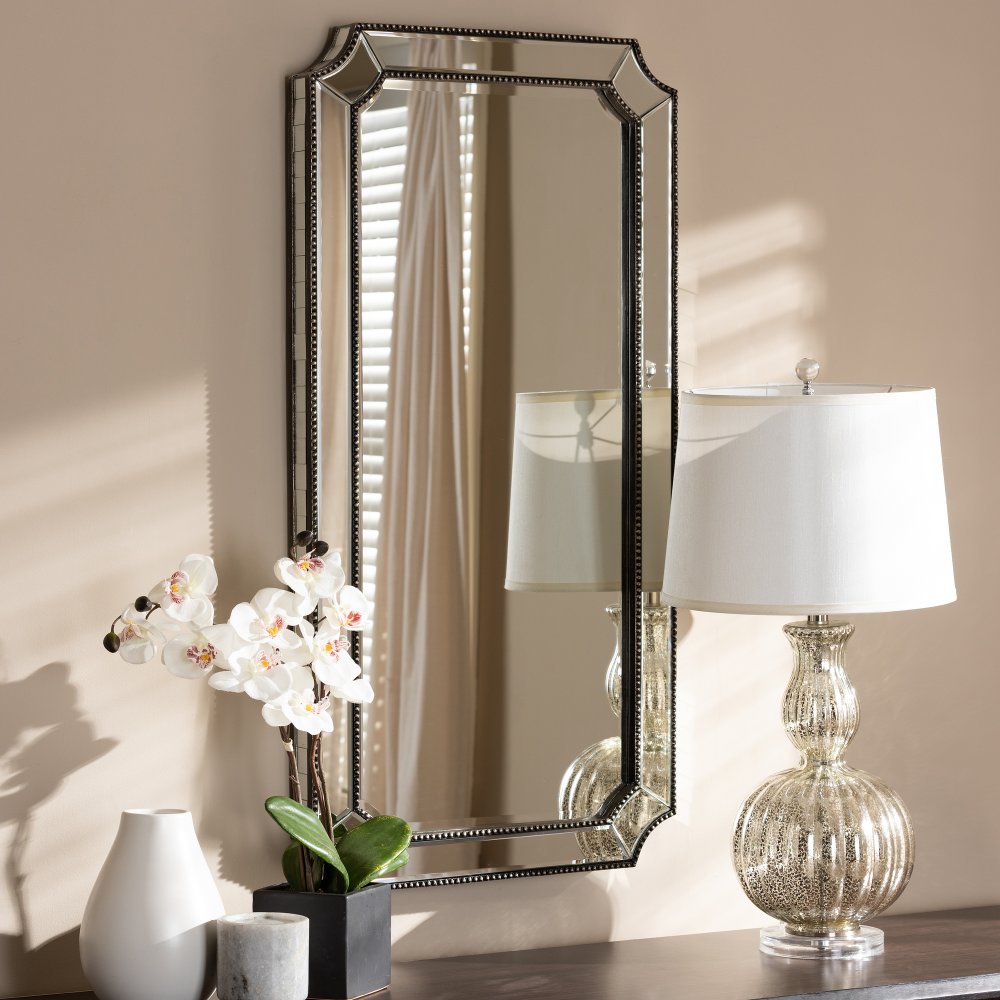
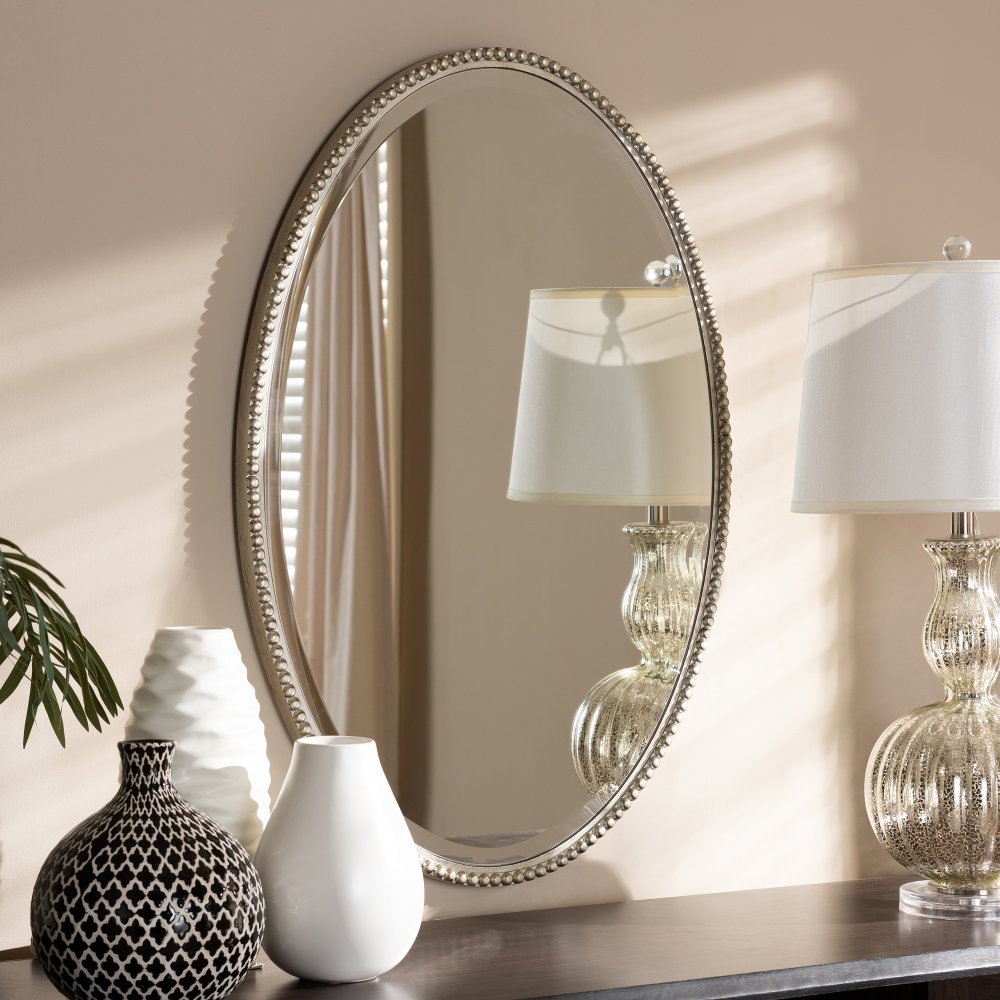
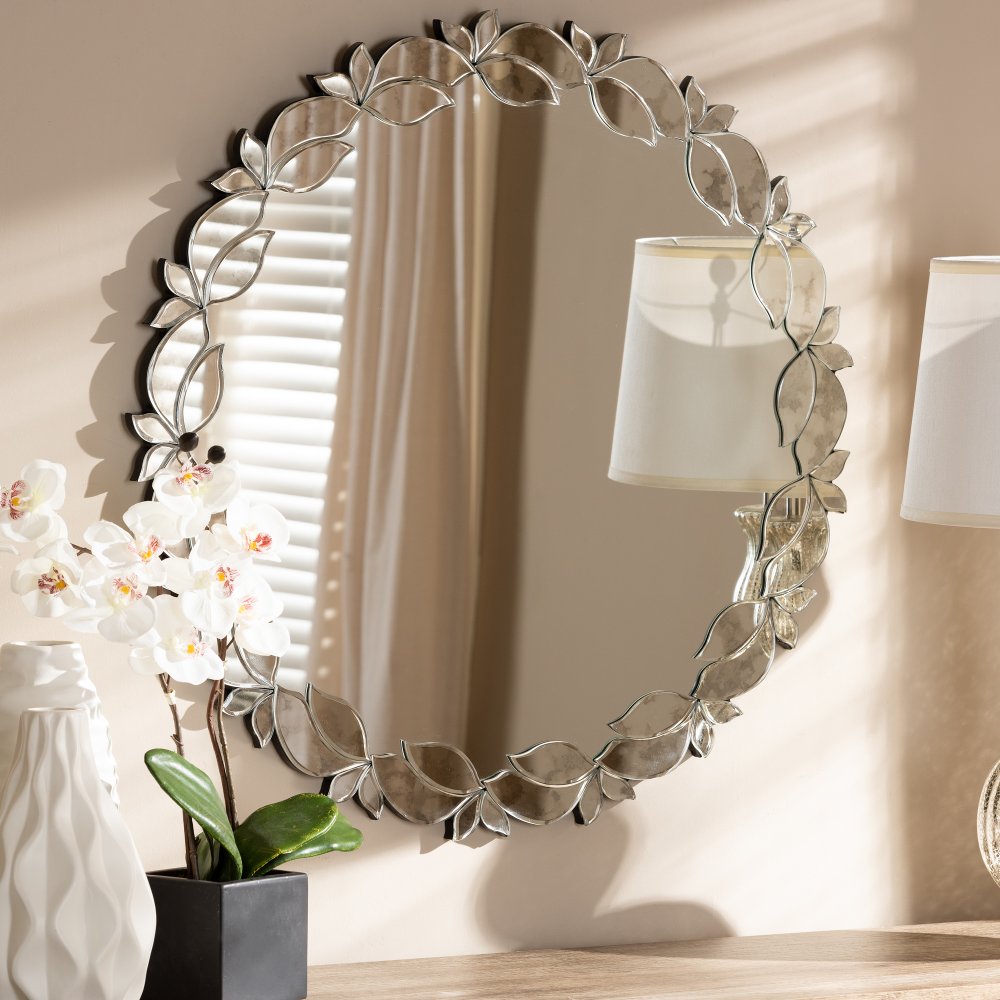
Silver mirrors bring a reflective accent to a room through silver-colored frames, metallic edging, or decorative finishes that range from bright and polished to softly brushed and antiqued. In home décor, the name usually describes the mirror’s visible finish, rather than the material behind the glass. Silver-backed mirrors are a separate, related category: they use a thin layer of metallic silver behind the glass to create a reflection, typically with protective coatings over that layer. A silver-colored frame doesn’t necessarily mean the glass has silver backing, and silver backing alone doesn’t make a mirror waterproof. For decorating, the frame’s tone, texture, and shape make the biggest visual difference. A narrow polished border gives a rectangular wall mirror a crisp outline, while a wide, carved silver frame creates a more substantial focal point above a console or dresser. Brushed finishes offer a quieter sheen that sits comfortably beside linen upholstery, natural wood, and matte ceramics. Antiqued silver often includes darker recesses or intentionally uneven coloring, lending depth to ornamental details without the brightness of a highly polished surface. Round silver mirrors soften the straight lines of cabinets and tables; oval shapes add a similar softness in narrower spaces. Rectangular and arched mirrors work well where height or architectural definition matters, such as an entryway wall or a bedroom dressing area. Silver pairs naturally with white, charcoal, navy, and pale blue, but it also gives warm wood and earthy fabrics a pleasing contrast. Matching every metal finish in the room isn’t necessary. A silver mirror can look at home near black cabinet hardware or brass lighting when those finishes repeat elsewhere in the space. For a warmer metallic accent, mirrors with gold frames offer another direction, especially alongside honey-colored wood or warm neutral fabrics. The most comfortable combination is one that relates to the furniture and details already in the room, rather than making the mirror feel like an isolated addition.
Beyond their finish, silver wall mirrors and full-length mirrors serve different everyday purposes, and their proportions help determine where they fit best. An entryway mirror provides a convenient place to check a collar before heading out while giving a compact landing area more visual depth. Above a console, a mirror that’s narrower than the furniture beneath it generally creates a balanced arrangement, with enough wall showing around the frame to keep the grouping from feeling crowded. In a living room, a large silver mirror can reflect a favorite piece of artwork, an attractive light fixture, or a view into an adjoining space. Placement matters as much as size: reflecting a cluttered countertop doubles its visual presence, while reflecting an open area can make the room feel less confined. Mirrors redistribute existing light rather than producing it, so a position that catches indirect daylight or lamplight can brighten the impression of a space without adding another fixture. Direct reflections of exposed bulbs or strong sunlight may create glare at a sofa or dining seat. In bedrooms, full-length silver mirrors support dressing and outfit checks, whether mounted on a wall or built with a freestanding support. Both the glass dimensions and the available viewing distance affect how comfortably someone can see a complete reflection; a wide decorative frame can take up considerable wall space without adding usable mirror area. Smaller wall mirrors suit tight entryways or accent groupings, but a mirror intended for grooming needs a useful viewing area at the height of the people using it. Over a dresser or vanity, allow room for lamps, faucets, and everyday belongings so the arrangement stays practical. A bathroom calls for particular attention to the manufacturer’s stated suitability for damp locations. Decorative living-room mirrors aren’t automatically appropriate above a frequently used sink. For a shared home, a thoughtfully placed silver mirror can serve several people throughout the day, adding utility and a finished look without requiring extra floor space.
Materials and construction influence a silver mirror’s weight, upkeep, and long-term appearance just as much as its style. Silver-toned frames may be made from metal, painted or leaf-finished wood, engineered wood, or molded resin, with each material offering different possibilities for shape and detail. Metal can give a slim frame a clean profile, while wood and resin can support deeper molding and decorative patterns. The silver color may come from plating, paint, foil, or another applied finish, so it shouldn’t be treated as solid silver unless the product information specifically identifies it that way. A substantial frame isn’t automatically more durable than a lightweight one; secure corner joints, sound backing, well-attached hardware, and a finish suited to the intended room all matter. For mirrors used while dressing or grooming, a clear, undistorted reflection is more important than decorative effects that intentionally age the glass. Beveled edges add a light-catching detail, while flat glass with a simple border tends to look more understated. Before placing a heavy wall mirror, check its listed weight, mounting instructions, and wall requirements. Hanging hardware and anchors need to suit both the load and the wall construction, and professional installation can be a practical choice for large or awkward pieces. Leaning mirrors also need the restraint or anchoring specified by their manufacturer, especially in homes with children or pets. Everyday care is usually straightforward: dust the frame with a soft cloth, use a cleaner approved for the mirror’s glass, and apply it to the cloth rather than spraying the surface directly. Keeping liquid away from edges and backing helps protect areas where moisture can cause deterioration. Abrasive pads and metal polish can damage decorative silver finishes, even when those finishes resemble polished metal. A silver mirror can also make a thoughtful housewarming or wedding gift when the recipient’s style, wall space, and mounting options are known. Whether it becomes a daily dressing essential or an accent above a favorite cabinet, its lasting appeal comes from the combination of a useful reflection, comfortable proportions, and a finish that feels at home.
Read More