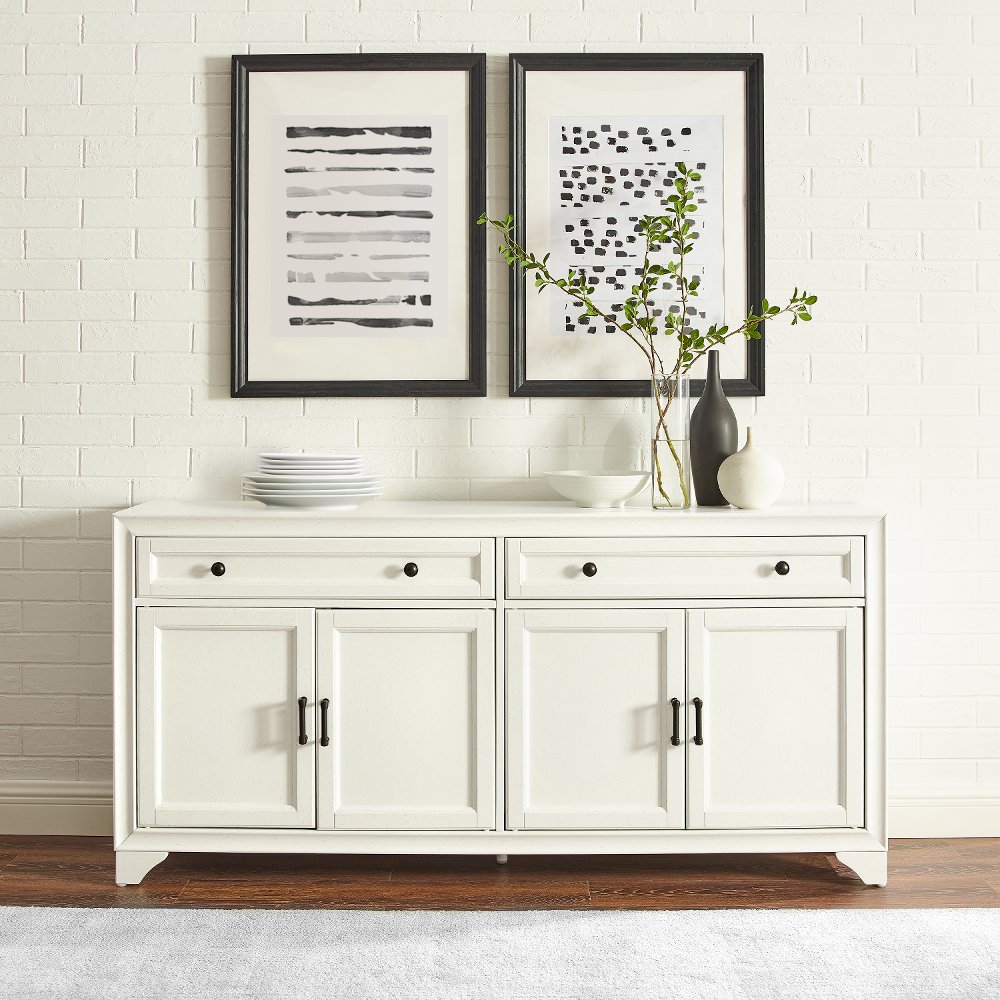
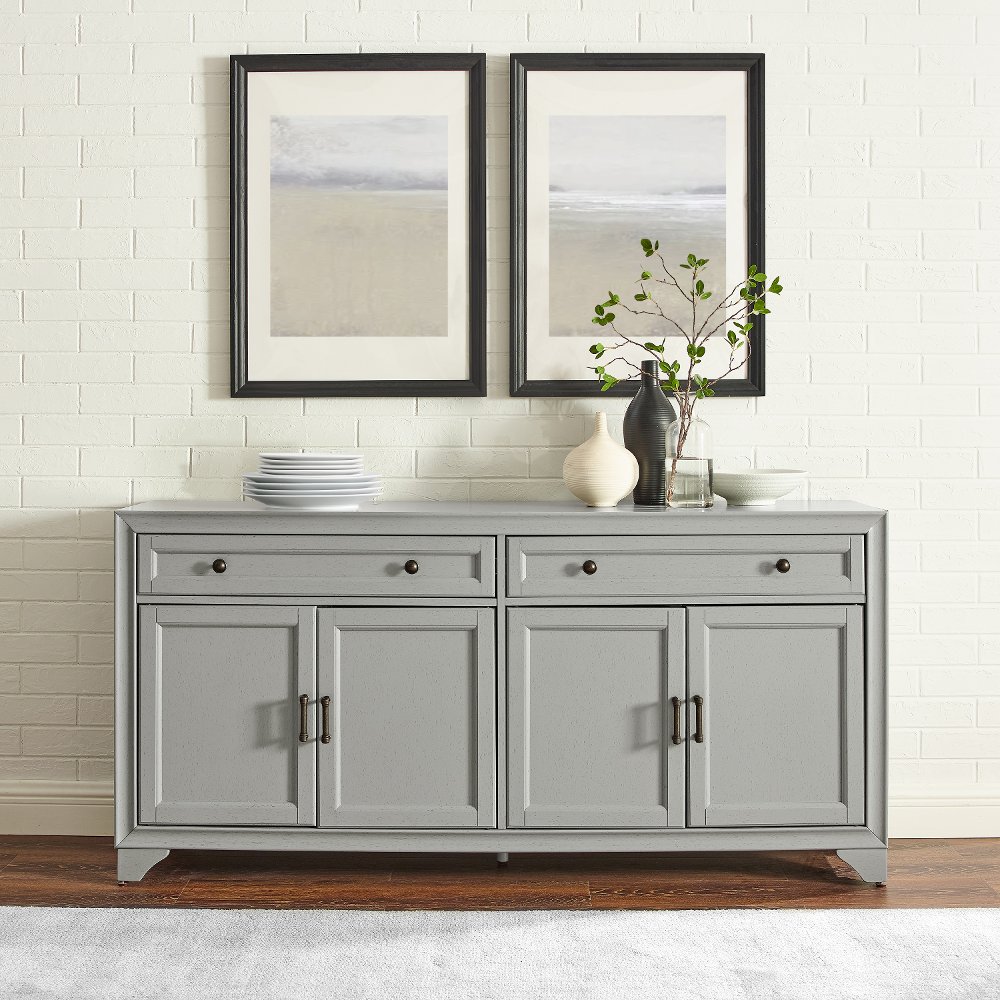
Storage sideboards combine a usable top with cabinets, drawers, or open shelving, giving everyday essentials a home without adding the bulk of a full-height cabinet. Most often placed in dining rooms, these versatile pieces also work in living rooms, entryways, and open-plan spaces where a little extra organization makes a noticeable difference. A dining room sideboard can hold stacks of dinner plates behind closed doors, keep cloth napkins neatly folded in a drawer, and leave serving bowls within easy reach of the table. In a living room, the same type of furniture can tuck away board games, chargers, and photo albums while providing a spot for a lamp or framed artwork. The best storage layout depends on what needs to go inside. Closed cabinets conceal busy collections of everyday belongings, drawers separate smaller essentials, and glass doors put favorite dishes or decorative objects on display while helping keep dust off them. Adjustable shelves make it easier to accommodate a tall pitcher beside shorter stacks of bowls, though shelf depth and weight limits matter just as much as shelf height. Deep drawers can be useful for table linens, while shallow drawers keep flatware and serving utensils from disappearing beneath larger objects. For households that entertain, a buffet sideboard creates a convenient place to set out dishes and serving utensils without crowding the dining table. For apartment dwellers, a single cabinet may serve several purposes, holding dinnerware on one side and household paperwork on the other. Families may appreciate enclosed space for craft supplies, while someone furnishing a first home might use a sideboard to bring definition to a dining area that shares space with the kitchen. Sideboards, buffets, and credenzas often overlap in design and function, so the label matters less than the dimensions, compartments, and intended use. A thoughtfully arranged interior keeps frequently used belongings accessible and leaves the top free for serving or display rather than becoming another landing spot for clutter.
A comfortable fit starts with the sideboard’s outside dimensions and continues with the space needed to use it. Many compact and midsize sideboards fall roughly within a 47- to 63-inch width range, but narrower and substantially wider designs exist; the right size depends on the room rather than a standard measurement. Measure the wall, the cabinet’s depth, and the available walking space, especially when dining chairs sit directly in front of it. Painter’s tape on the floor can help show how far the furniture will extend into the room. Allow enough clearance to open doors and pull drawers out while someone moves past, and check that nearby doorways, floor vents, and electrical outlets remain usable. Baseboards can prevent a cabinet from sitting flush against the wall, so include that small gap when planning the footprint. Interior measurements deserve the same attention: a wide exterior doesn’t guarantee that a large serving platter will fit through a narrow door opening or between fixed dividers. Check shelf depth against dinner plates, drawer dimensions against utensil organizers, and cabinet height against pitchers or small appliances stored between uses. A sideboard near dining-table height can offer a convenient serving surface, while a taller design may provide more storage without taking up additional floor space. Visual balance matters, too. A long cabinet can anchor an expansive wall, while a shallower piece may feel more comfortable in a narrow dining area. Light finishes can soften the appearance of a substantial cabinet, and white sideboards with drawers combine that lighter look with divided storage for smaller belongings. Natural wood tones add warmth, darker finishes create contrast, and glass-front doors let the contents become part of the room’s design. Consider nearby furniture without feeling tied to an exact match. Repeating a wood undertone, metal finish, or simple door profile can connect the sideboard to the dining table and chairs while allowing each piece its own character.
Materials and construction influence how a storage sideboard looks, feels, and handles daily use. Solid wood brings natural grain variation and may allow refinishing, depending on the piece and its finish. Wood veneer places a thin layer of real wood over a supporting core, offering genuine grain with a construction that can help limit movement; it still needs protection from standing moisture and deep scratches. Engineered wood varies in density and quality, and its durability depends on the surface finish, edge protection, joinery, and hardware as well as the core material. Metal components can provide sturdy support and a clean-lined appearance, while glass doors add visibility but need regular attention to fingerprints. For a cabinet that opens several times a day, smooth drawer operation, secure hinges, and well-supported shelves are more useful indicators than appearance alone. Soft-close hardware, when included, can make everyday use quieter, but it doesn’t replace careful handling or proper assembly. Weight capacity should match the intended contents, with separate limits checked for the top, each shelf, and drawers. There’s no universal 300-pound requirement for a sideboard: stacks of stoneware, a collection of books, or a beverage setup each place different demands on the furniture. Distribute heavy belongings evenly, keep heavier contents low when practical, and follow the manufacturer’s loading instructions. If a television is part of the plan, confirm that the furniture is suitable for that use, supports the television’s weight and base dimensions, and accommodates cords and ventilation. Secure furniture and televisions as directed, particularly in homes with children or pets. Routine care is usually straightforward: dust with a soft cloth, wipe spills promptly, and use only cleaning products approved for the finish. Coasters, trays, and protective pads help shield the top from rings and scratches, while suitable heat protection is essential beneath warm serving dishes. Avoid overfilling drawers or forcing tall objects beneath shelves. With a layout suited to the household and a little regular care, a storage sideboard can keep the room feeling settled, make shared meals easier to organize, and give useful belongings a place that looks as considered as the rest of the home.
Read More