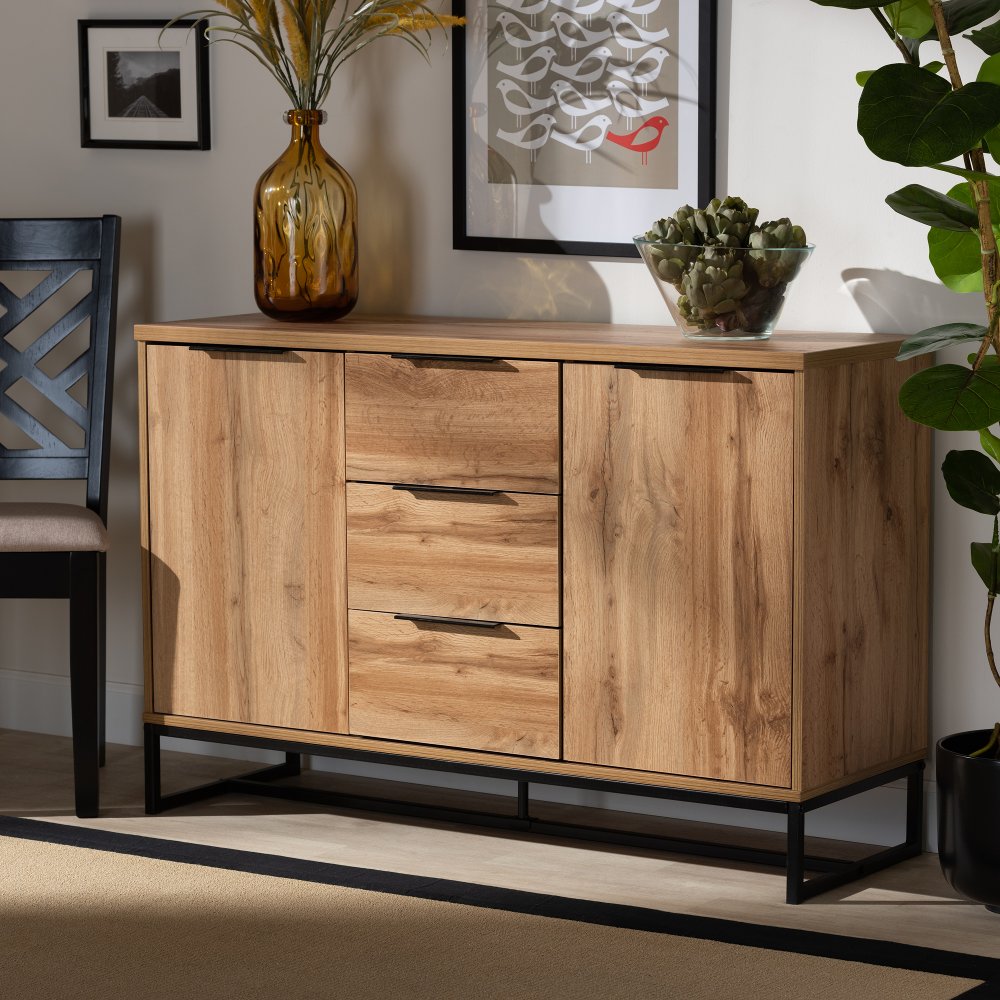
Oak sideboards bring practical storage and warm, natural character to the rooms where everyday life unfolds. Their broad, low profile makes them especially useful in dining rooms, living rooms, entryways, and open-concept spaces that need a little more organization without the visual weight of a tall cabinet. Oak has a distinctive grain pattern that can range from subtle and straight to richly textured, giving each finish its own personality. Lighter oak tones can brighten a room and complement soft neutrals, while medium and weathered finishes add depth beside upholstered seating, woven baskets, or a well-loved dining table. If you prefer a deeper, more dramatic palette, browse our Dark Wood Sideboards for another way to bring warmth to your space. When choosing an oak sideboard, begin with the available floor space. Measure the wall from baseboard to baseboard, account for nearby doorways and walkways, and leave enough room to open cabinet doors or drawers comfortably. A sideboard should offer generous storage while allowing people to move easily around it, especially in a dining area where chairs may be pulled out during meals. Check the overall height as well. A lower design can sit neatly beneath artwork or a mirror, while a taller profile may provide more concealed storage in a compact room. It’s also helpful to compare the listed dimensions with the size of the items you plan to store, from serving platters and table linens to board games, small appliances, books, or media accessories.
Oak sideboards are available in a range of constructions, and understanding the difference can make it easier to find a piece that suits your home and budget. Solid oak uses oak throughout the main wood components and offers a substantial feel, visible grain, and dependable durability when cared for properly. Oak veneer places a genuine oak surface over a stable engineered-wood core, creating the appearance and texture of oak while helping manage cost and reduce the movement that can occur with changes in humidity. Engineered wood with an oak-look finish can offer an approachable price and a polished appearance, making it a practical option for apartments, first homes, guest spaces, or rooms that need flexible storage. Look closely at the interior layout, too. Adjustable shelves let you make room for taller serving pieces or baskets, while fixed shelves can provide dependable support for heavier items. Drawers are convenient for cutlery, napkins, chargers, remotes, and other smaller essentials that tend to disappear into larger cabinets. Sliding doors can work well where clearance is limited, while hinged doors provide a full view of the cabinet interior. Soft-close hardware helps doors and drawers move smoothly and quietly, a small detail that feels especially welcome during an early breakfast or a late evening cleanup. Cable-management openings may be useful when a sideboard supports a television, speaker, lamp, or charging station. Pay attention to the legs and base as well: raised legs make vacuuming and sweeping easier, while a plinth or solid base creates a grounded, substantial look. Rustic and modern farmhouse designs often highlight heavier silhouettes, framed doors, and pronounced grain, while mid-century-inspired options may feature clean lines, tapered legs, and simple pulls. Contemporary styles tend to pair oak tones with streamlined fronts and understated hardware, allowing the natural finish to remain the focus.
An oak sideboard can serve different purposes as your household changes. In the dining room, it keeps extra dishes, glassware, serving bowls, tablecloths, and entertaining supplies close at hand without crowding the table. During cooler months, it can hold a stack of cloth napkins, seasonal serving pieces, candles, or a basket of cozy accessories for gatherings. In the living room, the same cabinet can organize books, games, blankets, electronics, and children’s activities while giving the room a finished focal point. An entryway sideboard creates a landing place for keys, mail, bags, and everyday essentials, though it’s important to select a depth that leaves a comfortable passage through the space. In a home office, it can store paper, files, supplies, and equipment that you want nearby but out of sight. Oak sideboards can also make thoughtful housewarming, wedding, or anniversary gifts because they combine useful storage with a timeless material that can move from one room to another over the years. Someone furnishing a first apartment might use one as a dining cabinet today and a media console later; a growing family may appreciate the enclosed storage for games and craft supplies; and a host who enjoys gathering friends can keep table settings ready for everything from a relaxed weekend meal to a more formal celebration. To help an oak sideboard stay beautiful, place it away from prolonged direct sunlight and sources of heat, use coasters and protective pads, and wipe spills promptly with a soft, lightly damp cloth. Follow the care instructions for the specific finish, avoid harsh cleaners, and lift the cabinet when moving it rather than dragging it across the floor. With the right size, layout, and finish, an oak sideboard adds the kind of everyday order that makes a room feel calmer: doors close on the clutter, serving pieces are easy to reach, and the natural wood grain quietly brings the whole space together.
Read More