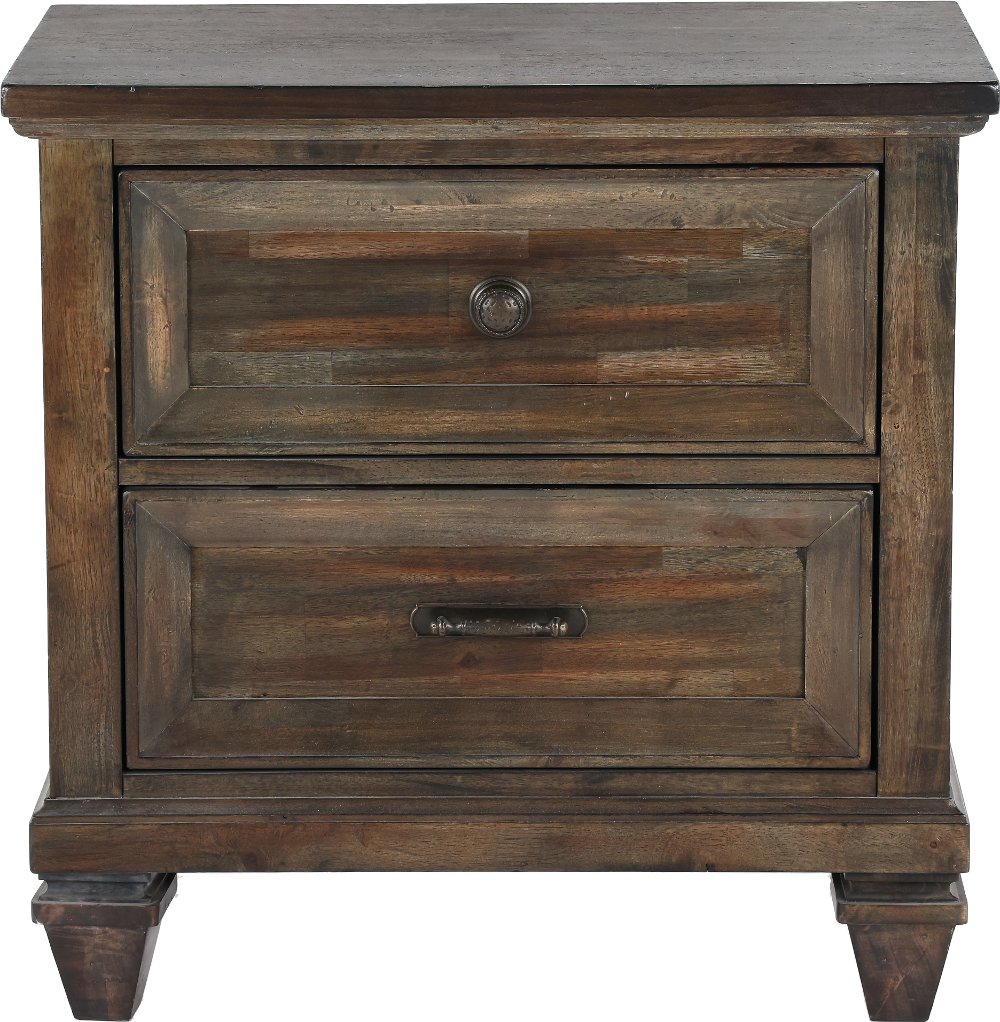
Transitional bedside tables combine the warmth and familiar details of traditional furniture with the simpler shapes of contemporary design. Also called transitional nightstands, they bring balance to a bedroom without leaning heavily toward ornate decoration or sharp minimalism. Picture a wood bedside table with a gently framed drawer, tapered legs, and an understated metal pull: each detail adds character, while the overall shape stays easy to pair with different beds and dressers. This flexibility makes transitional bedroom furniture especially useful when a room includes pieces collected over time. A softly upholstered headboard, a wood dresser, and a simple reading lamp can feel connected without every finish matching exactly. Warm brown finishes emphasize wood grain and lend depth to lighter bedding, while painted white, cream, or gray finishes create a softer contrast beside darker furniture. Black finishes can give a quiet bedroom a stronger outline, particularly when smaller details echo the color elsewhere in the room. Hardware also influences the look. Rounded knobs feel familiar and restrained, while slim bar pulls introduce a cleaner line. For a relaxed arrangement, repeating one feature, such as a warm wood undertone or brushed metal finish, often creates more cohesion than matching every piece. Materials contribute just as much to the character of a bedside table. Solid wood offers natural grain variation and can develop small marks with everyday use. Wood veneer brings a genuine wood surface to an underlying core, while engineered wood can provide a consistent foundation beneath painted, laminated, or veneered finishes. Construction and surface treatment matter alongside the material name; a well-supported drawer and a finish suited to daily use deserve attention, too. Glass, metal, and stone accents may add contrast, though their care requirements differ from those of wood. The result is a bedroom essential that can feel polished enough for a primary suite and welcoming enough for a guest room.
A comfortable bedside arrangement starts with proportions that suit both the bed and the room. The best height for a transitional bedside table is generally close to the top of the mattress, where a lamp switch, eyeglasses, or a glass of water sits within comfortable reach. Measuring from the floor to the mattress surface is more useful than relying on a standard nightstand height, since bed frames, foundations, and mattresses vary. Width and depth deserve the same attention. A generous tabletop can balance a broad headboard and hold a lamp alongside everyday essentials, while a narrower table preserves walking space beside a bed in a compact room. Baseboards, nearby doors, and drawer clearance can affect how comfortably the piece fits, especially when a bedroom has limited space between the bed and the wall. A drawer needs enough room to open without bumping bedding or nearby furniture. Storage choices shape the daily experience as much as the dimensions do. Closed drawers keep charging cords, hand cream, journals, and other small belongings tucked away, leaving the surface calmer at bedtime. An open shelf offers easy access to a favorite book or a basket, and an open base gives the furniture a lighter appearance. Drawer interiors matter when larger belongings need a home; exterior dimensions alone don’t reveal whether a tablet or reading stack will fit. On top, a lamp base should leave enough usable space for the things reached for every night. Bedside tables with charging features can simplify a bedroom setup, but the connections should suit the devices being used. USB-A and USB-C ports aren’t interchangeable, and charging performance depends on the port’s output and the device. Integrated outlets also need access to a wall receptacle, with cords routed according to the manufacturer’s directions. In a shared bedroom, matching tables create symmetry, but different storage layouts can still look coordinated when their heights, finishes, and visual weight work together.
Durability shows up in the small moments: a drawer opening smoothly before bed, a table staying steady when a lamp is switched on, or a finish holding up to regular cleaning. Secure joints, stable legs, supported shelves, and drawer hardware designed for the intended load all contribute to dependable use. Drawer stops can help keep a drawer from being pulled out unintentionally, while the manufacturer’s weight limits clarify what the top, shelves, and drawers can support. Any supplied anchoring hardware should be installed as directed, particularly in homes with children, and a bedside table should never serve as a step stool or seat. Everyday care can help preserve both appearance and function. A soft cloth removes dust without unnecessary abrasion, and coasters give water glasses an extra layer of protection against rings. Spills are best wiped up promptly rather than left to settle around seams or drawer edges. Cleaning products should match the surface: wood finishes, painted surfaces, glass, and stone may each need different treatment. Spraying cleaner onto a cloth instead of directly onto the furniture helps control moisture, while following the care instructions avoids damage from an unsuitable polish or solvent. A little space for cleaning around the base also makes routine upkeep easier. Beyond the primary bedroom, transitional bedside tables bring useful storage to guest rooms, teen bedrooms, and multipurpose spaces. Guests appreciate an accessible place for a phone and glasses, while a growing teenager may benefit from drawers that keep personal essentials separate from school supplies. In a bedroom that also serves as a workspace, coordinating finishes with Transitional Desks can connect the sleeping and working areas without making them look identical. Shared details such as tapered legs or simple hardware provide continuity while each piece serves its own purpose. With proportions, storage, and materials suited to the household, a transitional bedside table supports the everyday routines that make a bedroom feel personal and comfortable.
Read More