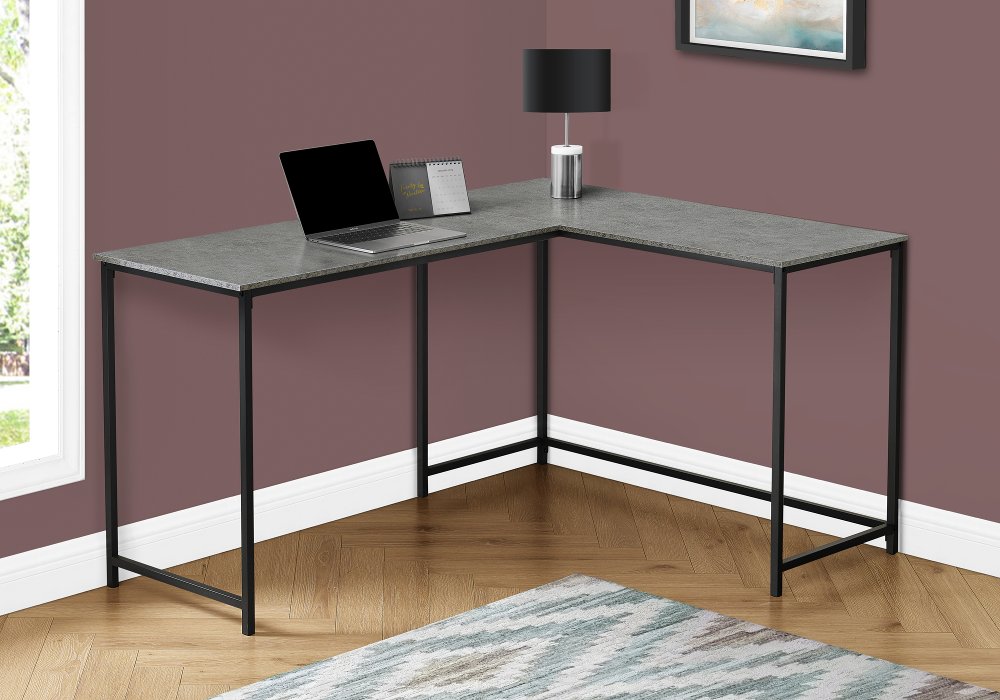
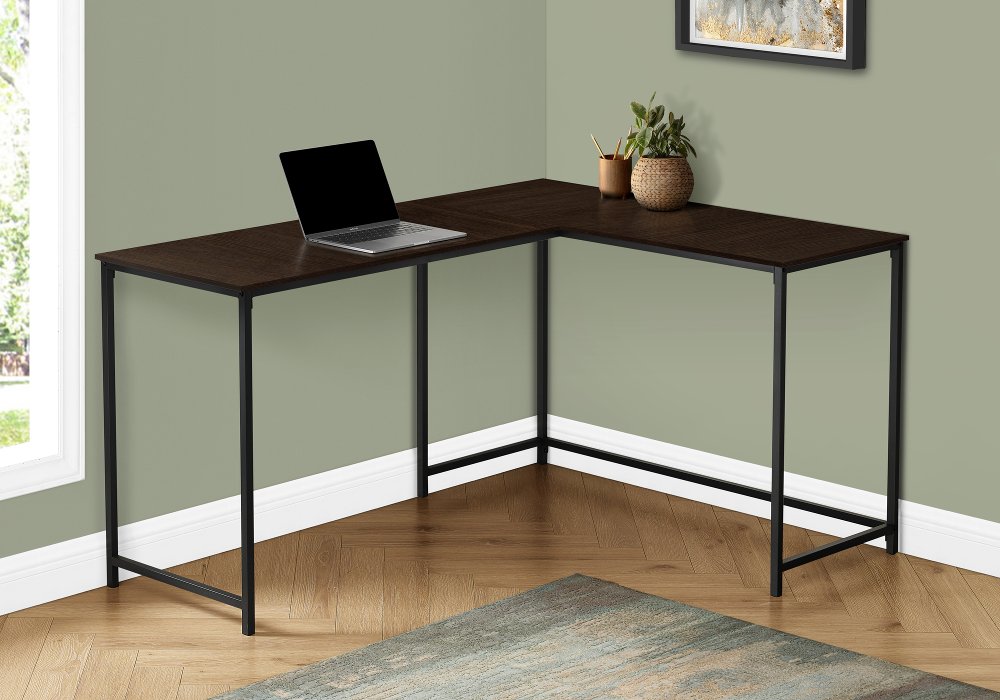
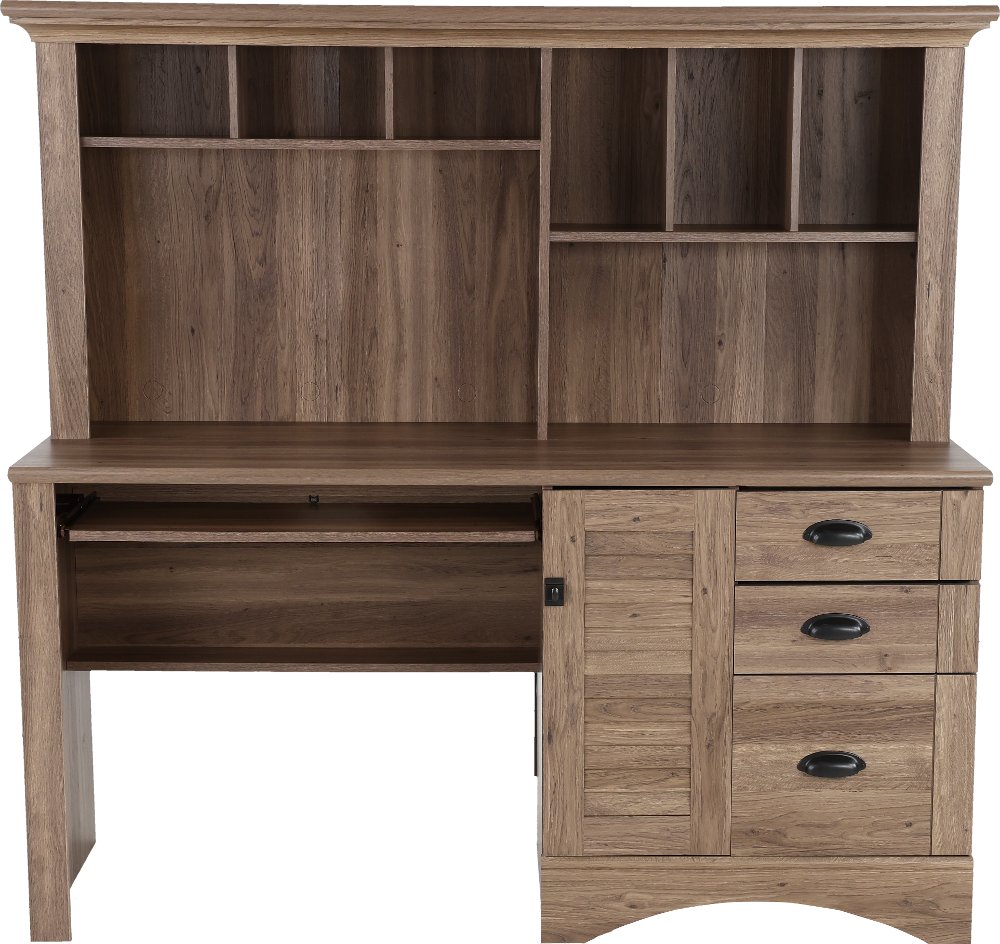
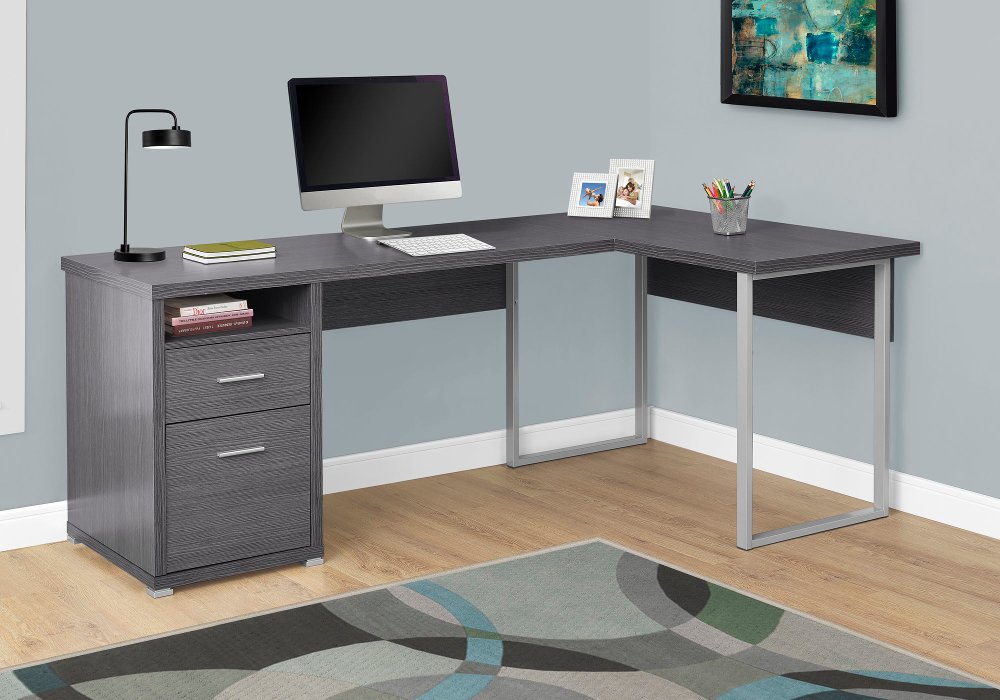
Transitional desks combine the warmth and familiar proportions of traditional furniture with the clean lines and restrained details of modern design. The result is a workspace that feels comfortable, polished, and easy to coordinate with the rest of your home. Instead of elaborate carving or stark, industrial shapes, this style often uses gently tapered legs, simple drawer fronts, modest molding, and understated hardware. A warm wood finish might pair with slim metal pulls, while a painted base and wood-tone top can add contrast without making the desk feel busy. These details give transitional home office desks their flexibility: they can sit comfortably beside an upholstered chair, a classic bookcase, or a more contemporary storage cabinet. In a dedicated office, a substantial desk can serve as the room’s focal point. In a living room or bedroom, a lighter writing-desk silhouette can create a useful work area without making the entire space look like an office. Materials contribute as much to the character as the shape. Solid wood offers natural grain variation and a substantial feel, while wood veneers bring the appearance of real wood to surfaces built over a supporting core. Engineered wood can provide a smooth, consistent foundation for painted or laminated finishes. Each construction has its own care needs, and overall durability depends on the quality of the joints, surface finish, hardware, and supporting structure—not simply whether a desk is solid wood. Oak and walnut tones tend to highlight grain and warmth, while white, gray, and deeper painted finishes can make the same basic silhouette feel quite different. The most successful match usually relates to the room’s existing undertones rather than copying every finish exactly. A desk with a warm brown top, for example, can connect with a nearby wood bookshelf while its darker base echoes a lamp or chair frame. That balance makes transitional style especially useful in homes furnished gradually, where favorite pieces come from different design traditions.
The right transitional desk also needs to support what happens at its surface, whether that’s a full workday, an evening class, household paperwork, or a child’s homework. Writing desks generally favor an open profile and a straightforward work surface, making them a natural fit for laptops, notebooks, and lighter daily tasks. Computer desks may offer more space or features intended to accommodate equipment, while larger executive-style desks often provide a broader surface and additional enclosed storage. Those category names are helpful starting points, but the actual dimensions and layout matter more than the label. A laptop and a small lamp need less room than two monitors, a keyboard, reference books, and a place to write. Depth matters, too: a shallow desktop can leave little space between a monitor, keyboard, and the front edge, even when the desk looks generously wide. For a compact room, a slim desk may preserve walking space, but it still needs enough clearance for your knees, chair arms, and the chair’s movement. A drawer or apron beneath the top can reduce usable legroom, so the full height of the desk doesn’t tell the whole story. If you already have an office chair, compare its seat and arm heights with the opening beneath the desktop. A comfortable arrangement allows relaxed shoulders, supported feet, and a screen positioned for easy viewing; an adjustable chair or monitor stand may help achieve that fit. Storage should reflect your routine rather than simply add more drawers. A shallow drawer can keep pens and charging cords close without cluttering the top, while a file drawer may suit someone who regularly handles printed records. If file storage matters, confirm the intended paper size and drawer configuration. Cable openings, keyboard trays, power connections, and other conveniences vary by design and should be evaluated individually. A desk used away from the wall also benefits from a finished back and a practical route for cords. Before choosing a size, account for nearby doors, drawer extension, outlets, and the space needed to move comfortably behind the chair.
A transitional desk earns its place through everyday usefulness as well as appearance. For someone working from home, that may mean a sturdy surface that stays steady while typing and storage that keeps paperwork out of sight after the workday. For a student, it may mean room to spread out a textbook beside a laptop without taking over the dining table. In a shared household, a desk can become the place for paying bills, planning projects, or handling video calls, with a simple silhouette that suits more than one person’s taste. It can also make a thoughtful gift for a graduate or someone setting up a home office, provided the room measurements, storage needs, and recipient’s preferences are known. Long-term satisfaction comes from details that are easy to overlook in a photograph: drawers that move smoothly, secure pulls, supportive legs, and a finish suited to the desk’s intended use. Weight limits matter when adding heavy equipment, and drawers shouldn’t be treated as steps or supports. Follow any anchoring instructions supplied with the furniture, especially in homes with children. Day-to-day care is usually straightforward, but the manufacturer’s directions should guide cleaning. A soft cloth removes dust, prompt attention to spills helps protect surfaces, and a coaster keeps a coffee cup from leaving moisture behind. A desk pad can protect the writing area from pen impressions and repeated friction. Avoid dragging monitors or other equipment across the top, and use only cleaners appropriate for the finish. Wood and wood-veneer furniture also benefit from placement away from direct heat and prolonged strong sunlight. To carry the same balanced look through the room, explore Transitional Home Office Furniture for a coordinated design direction. Seating and storage don’t need to match the desk perfectly; repeating a wood tone, hardware finish, or simple line can make the space feel connected. The goal is a workspace that fits your habits, leaves room to move, and feels at home among the furniture you already enjoy.
Read More