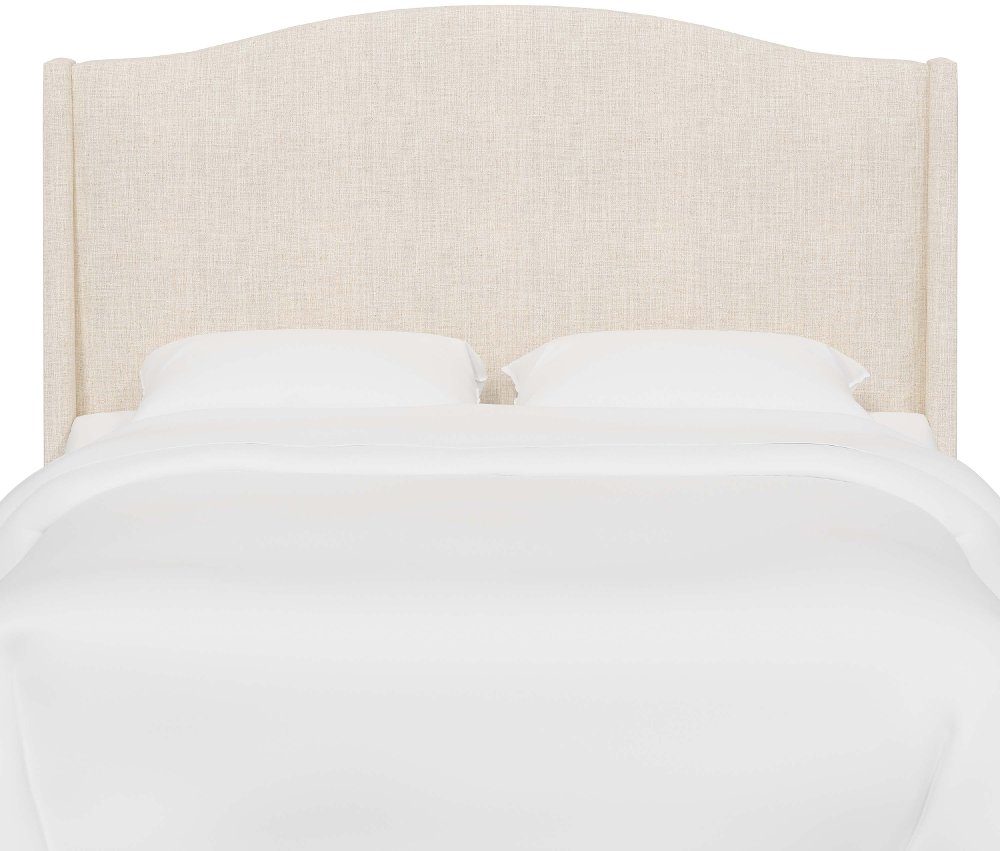
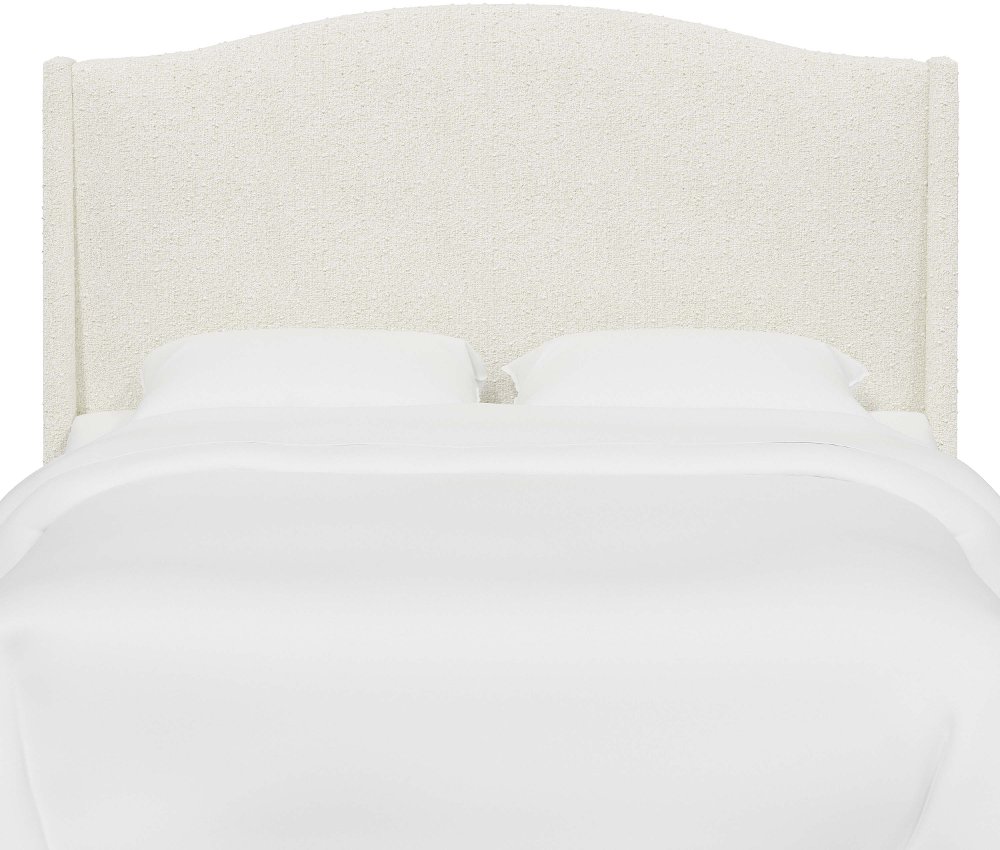
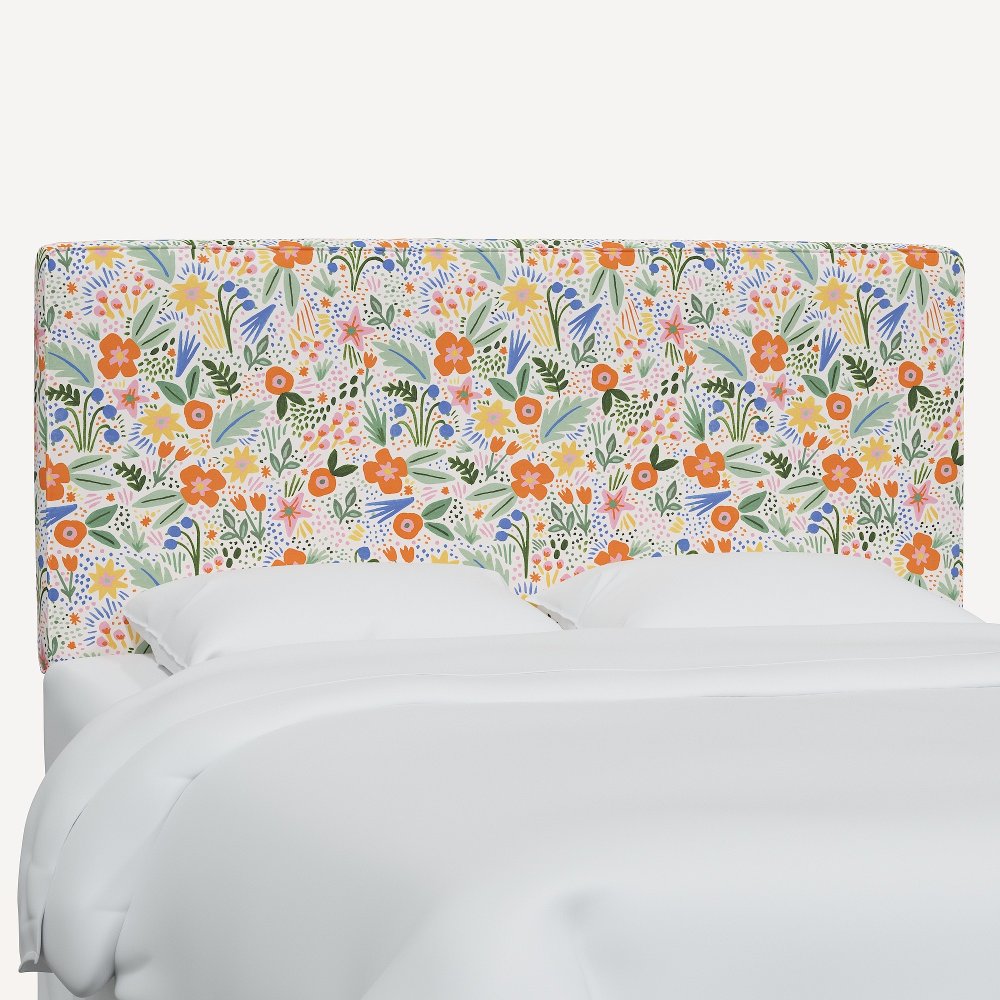
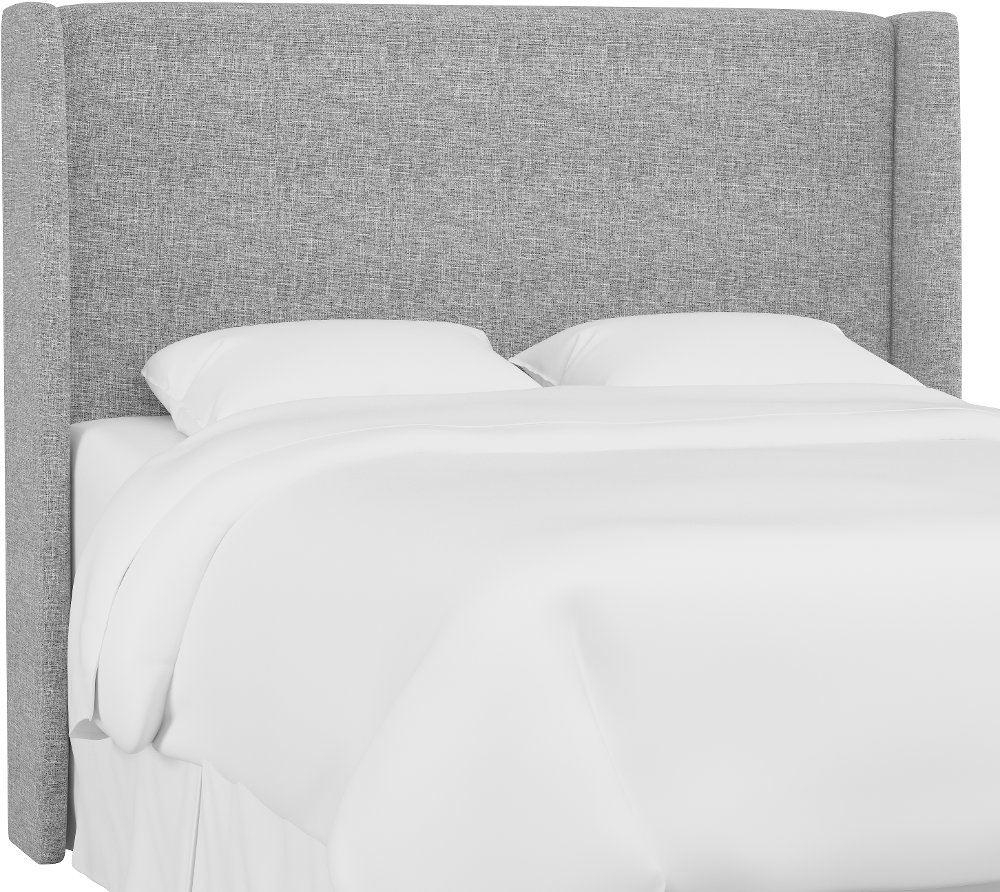
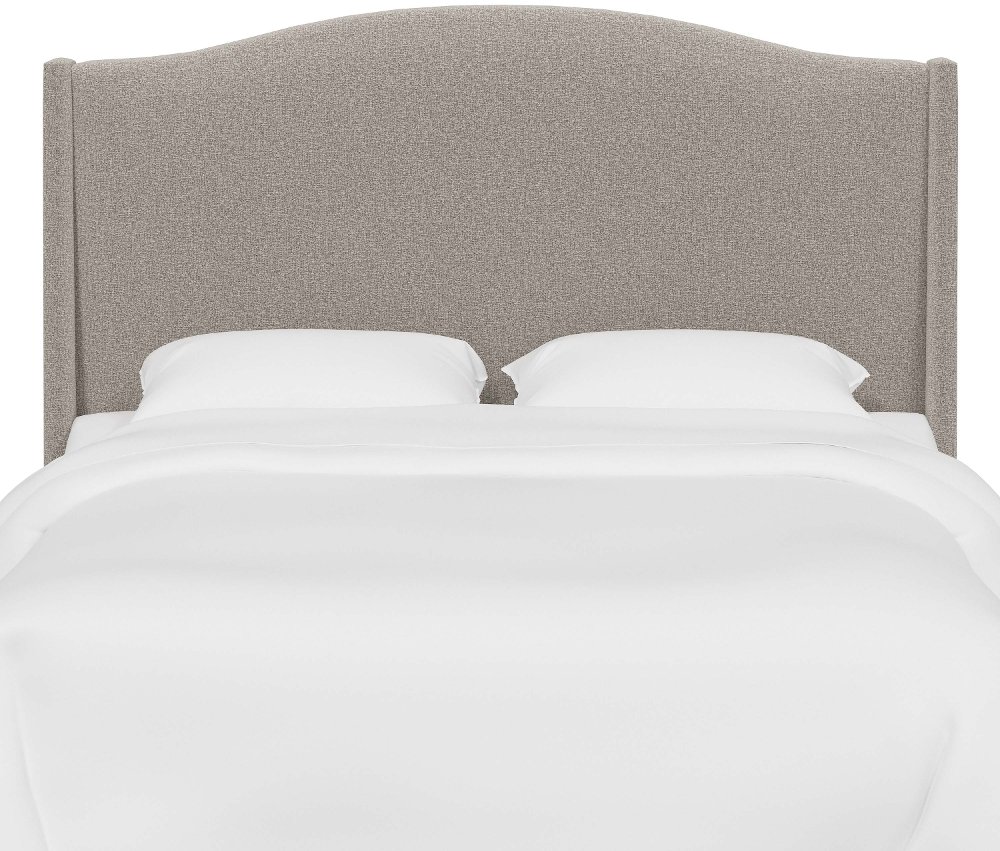
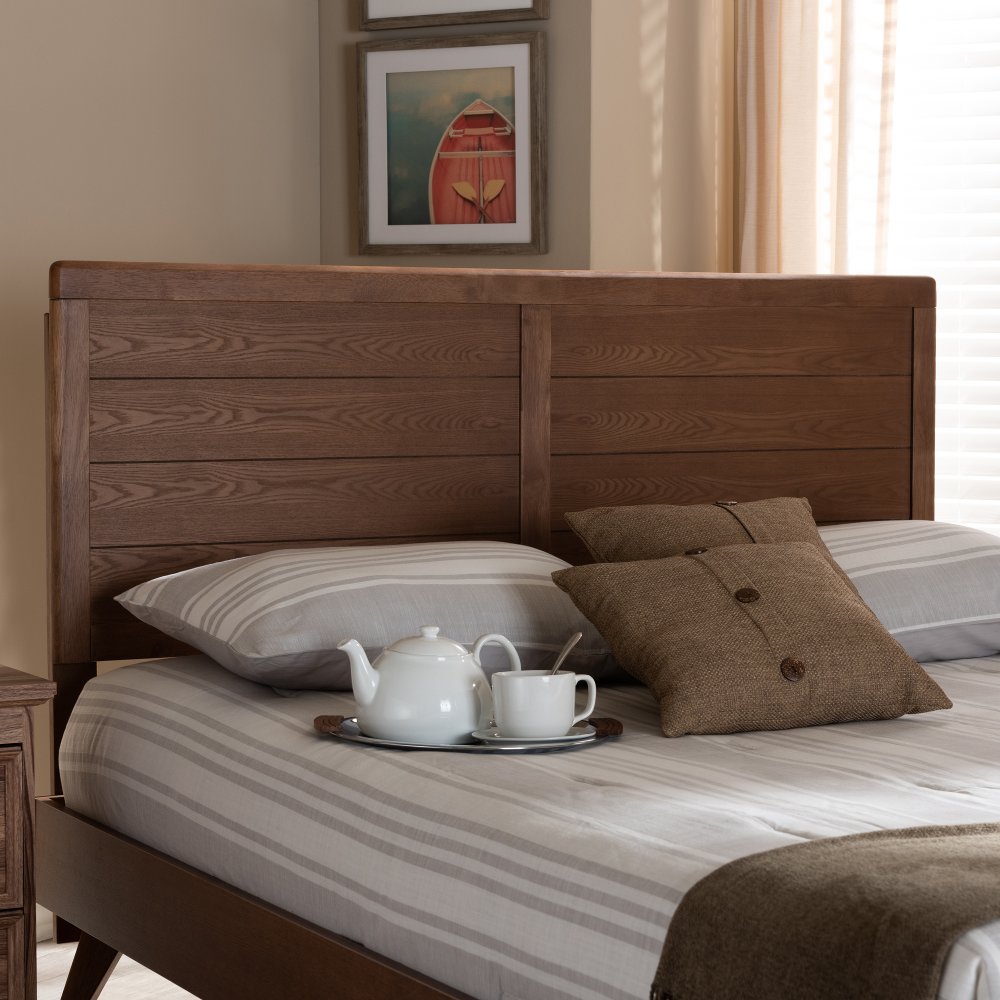
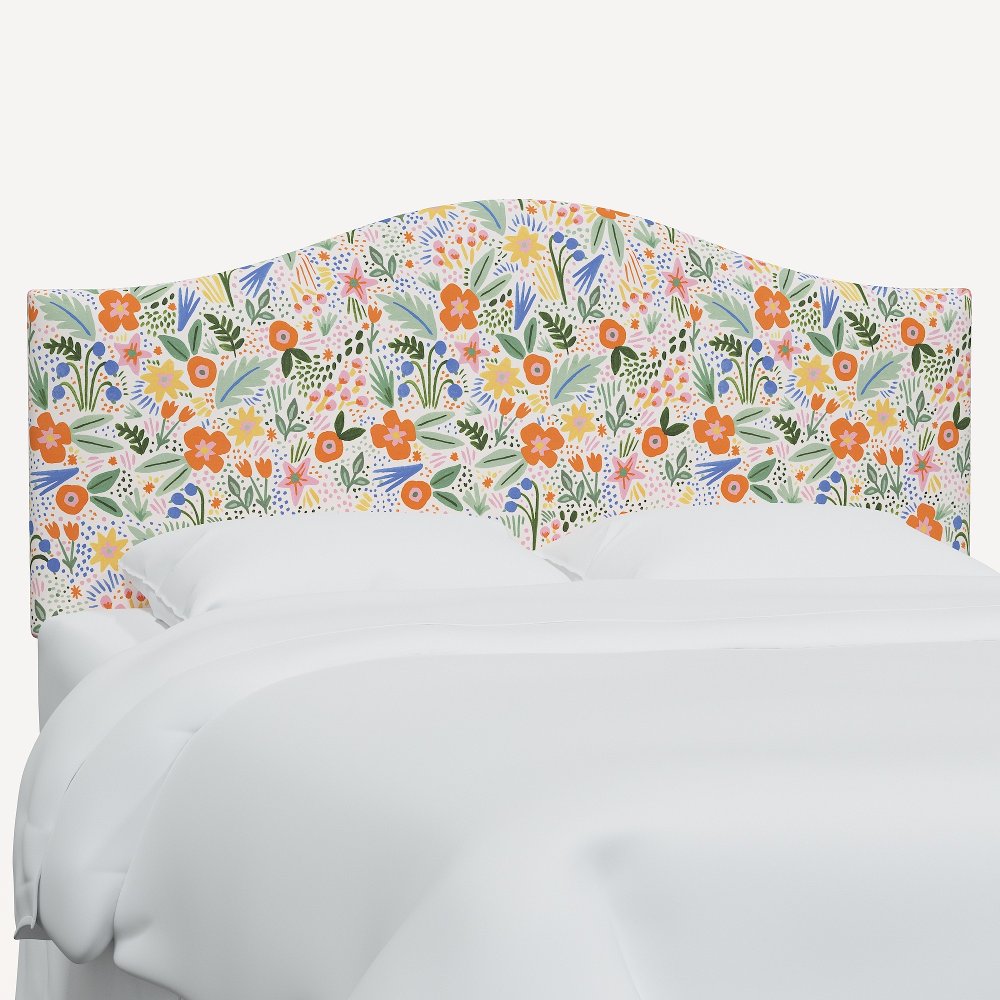
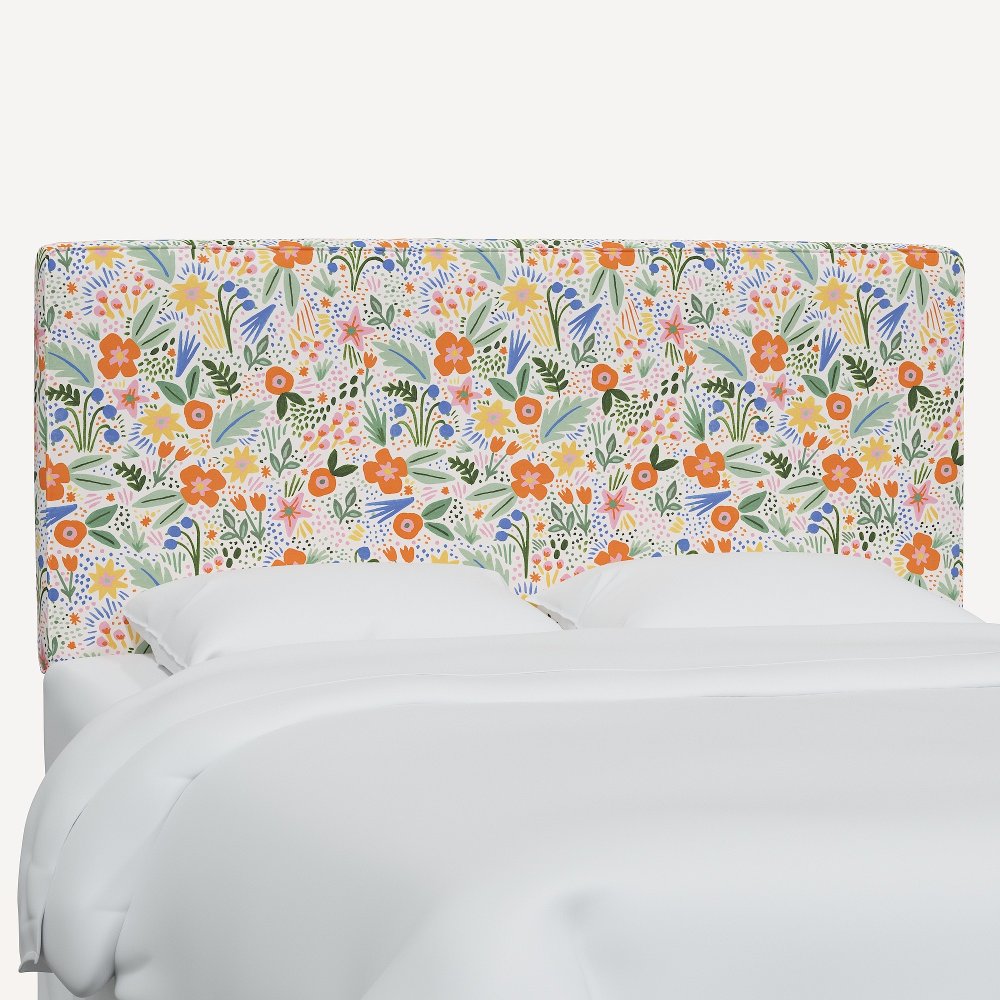
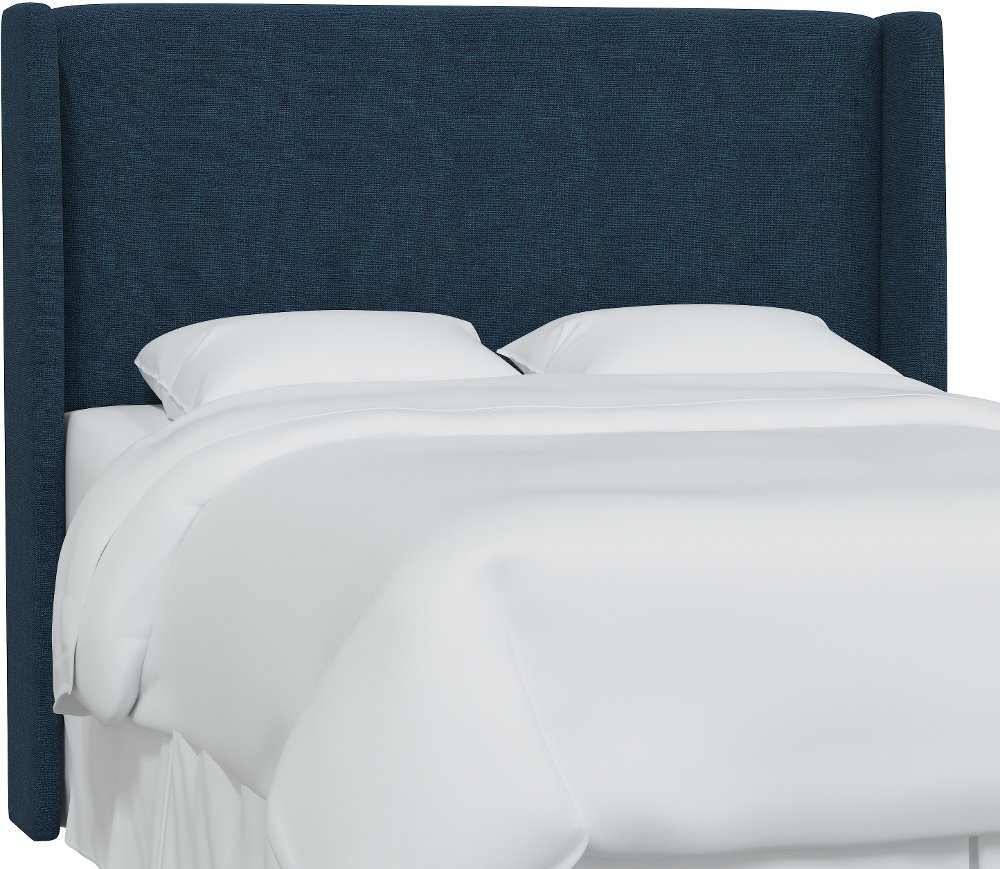
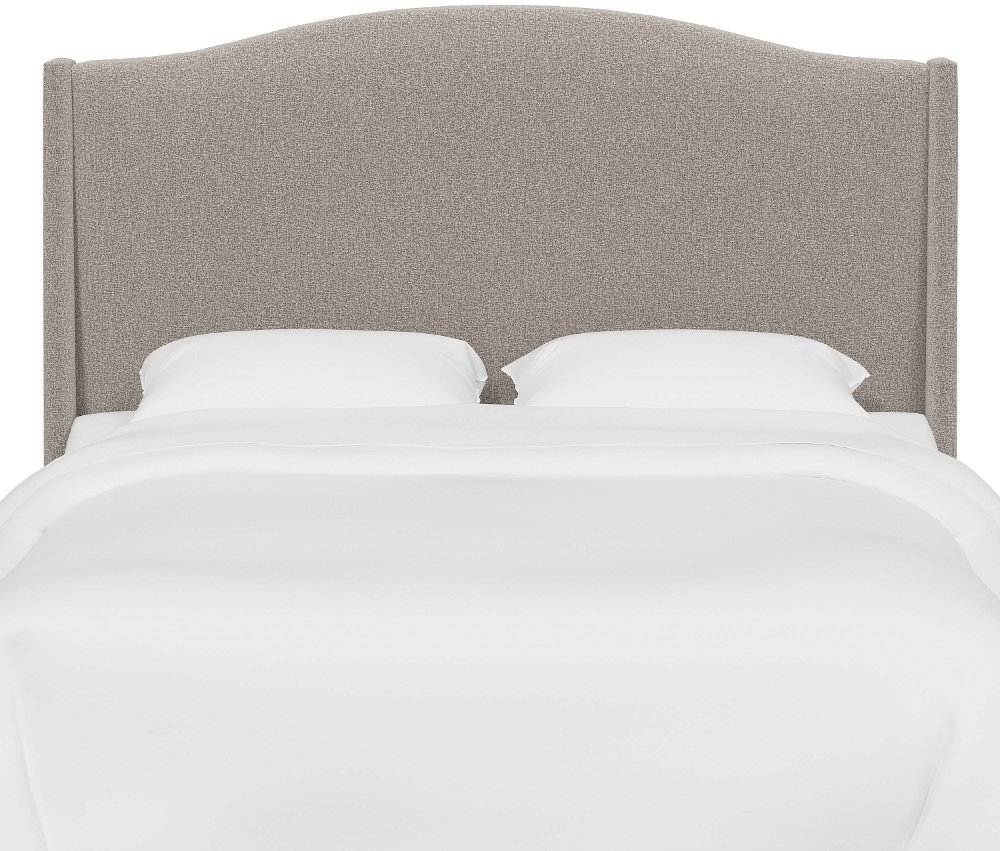
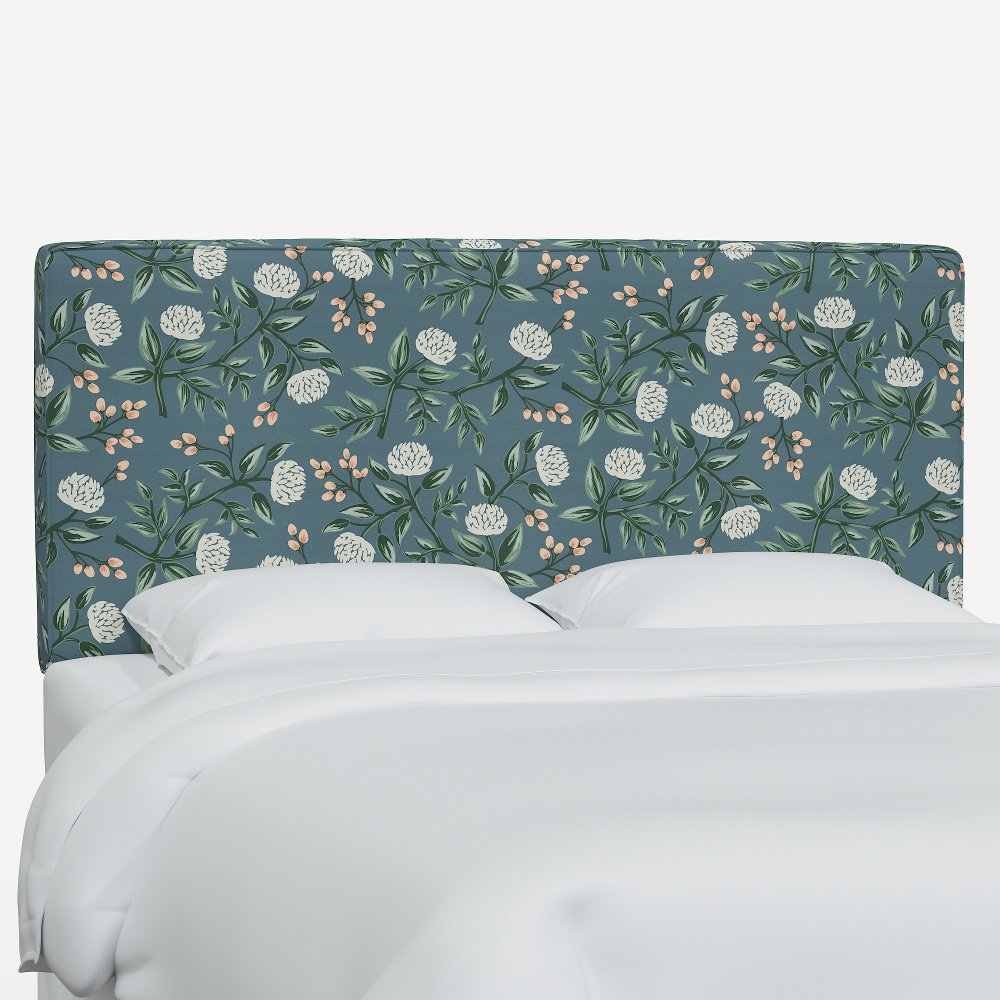
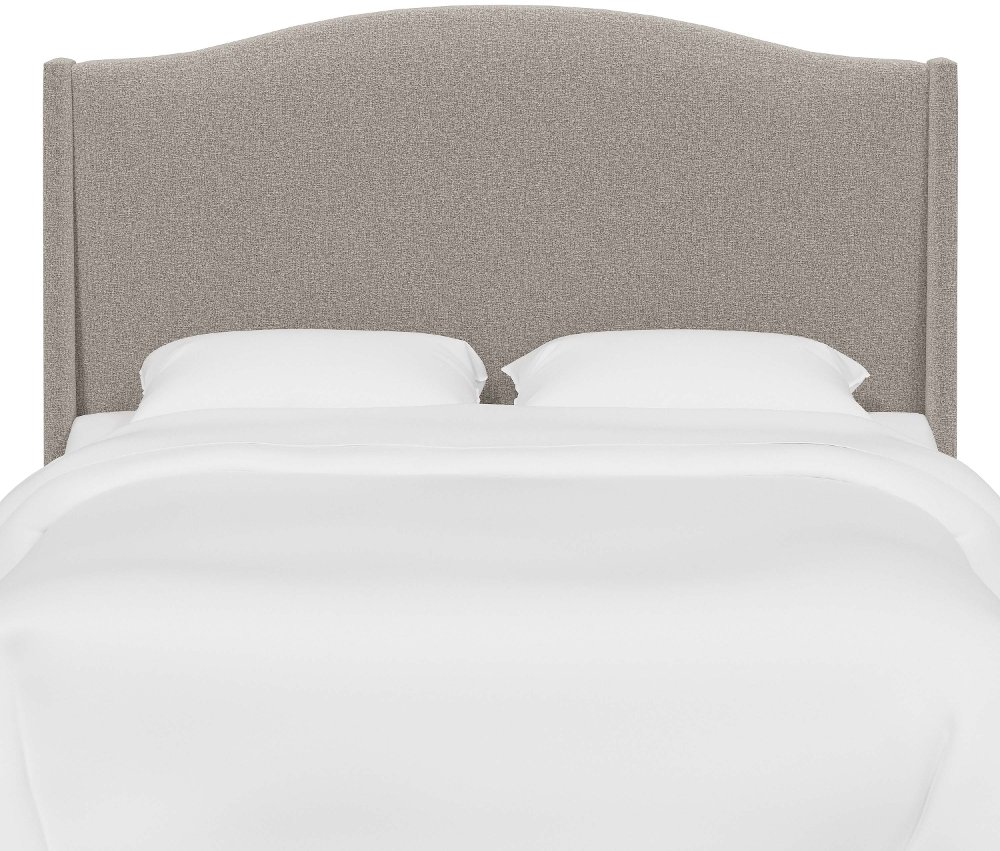
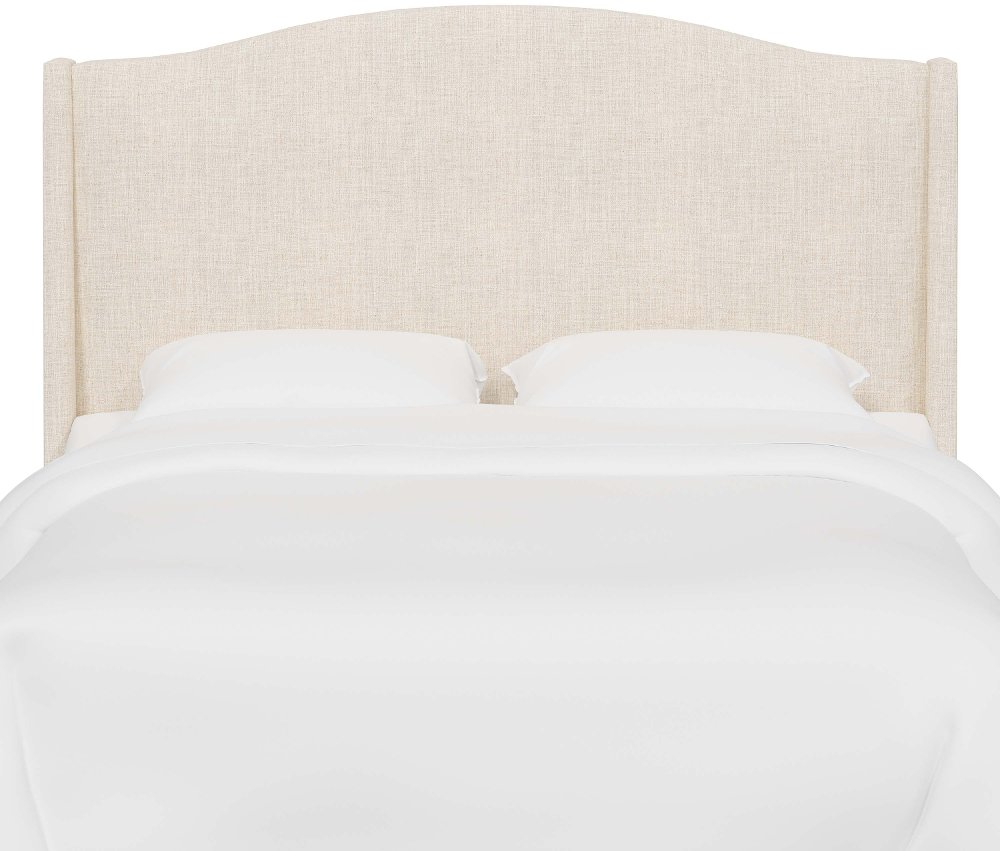
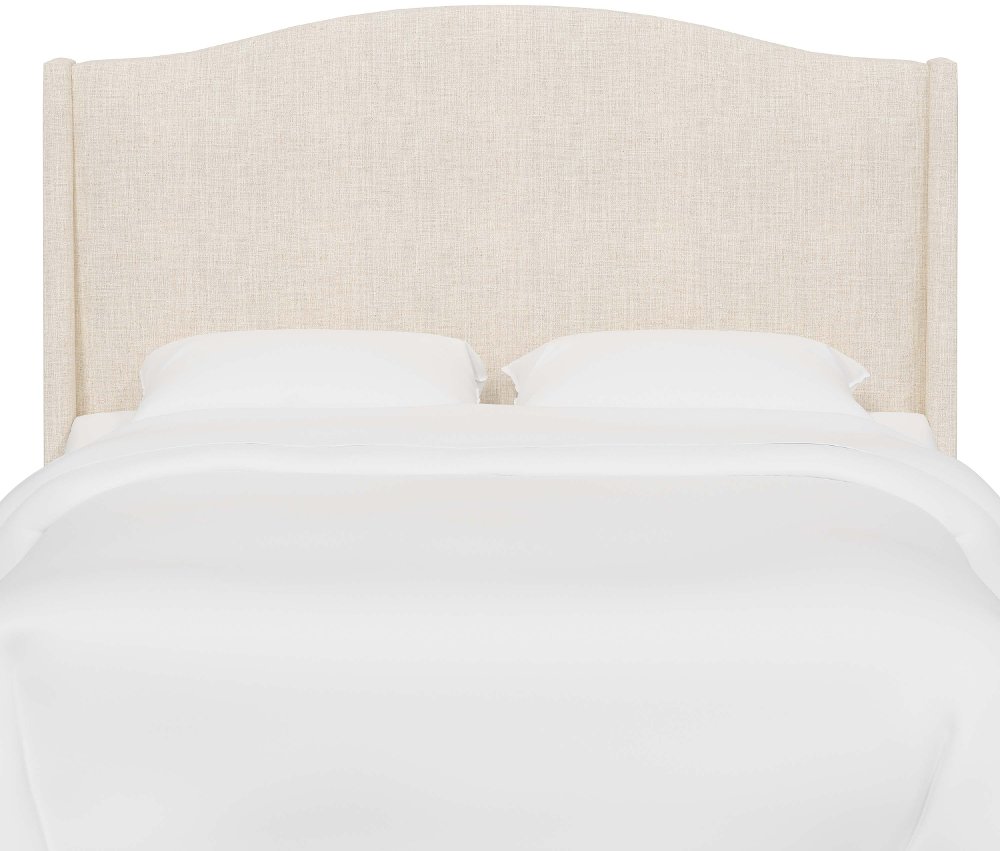
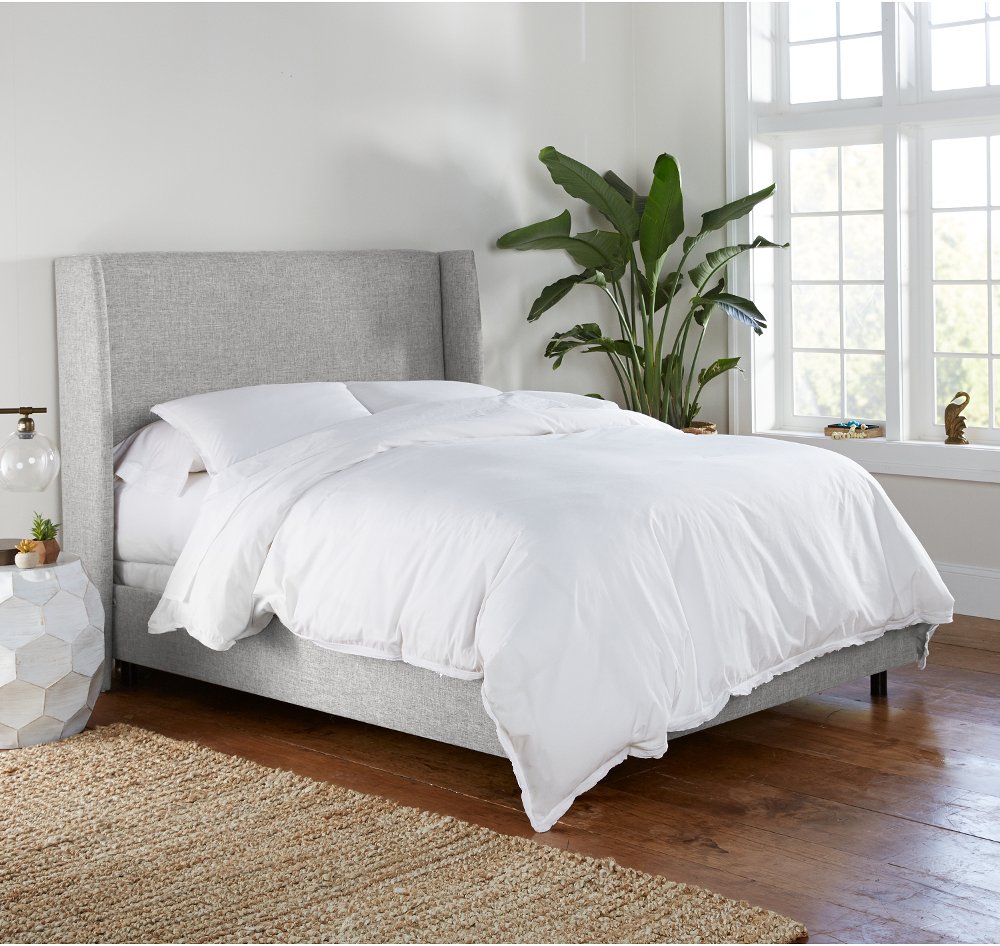
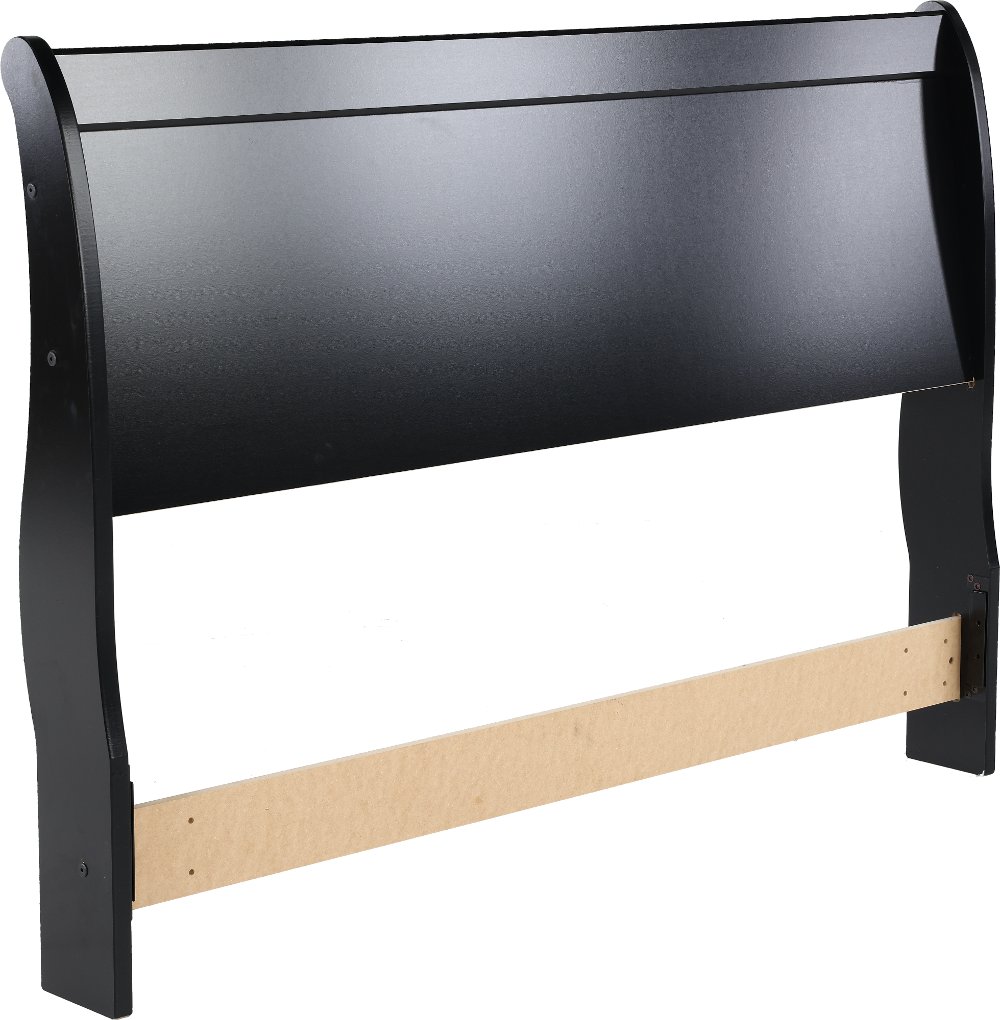
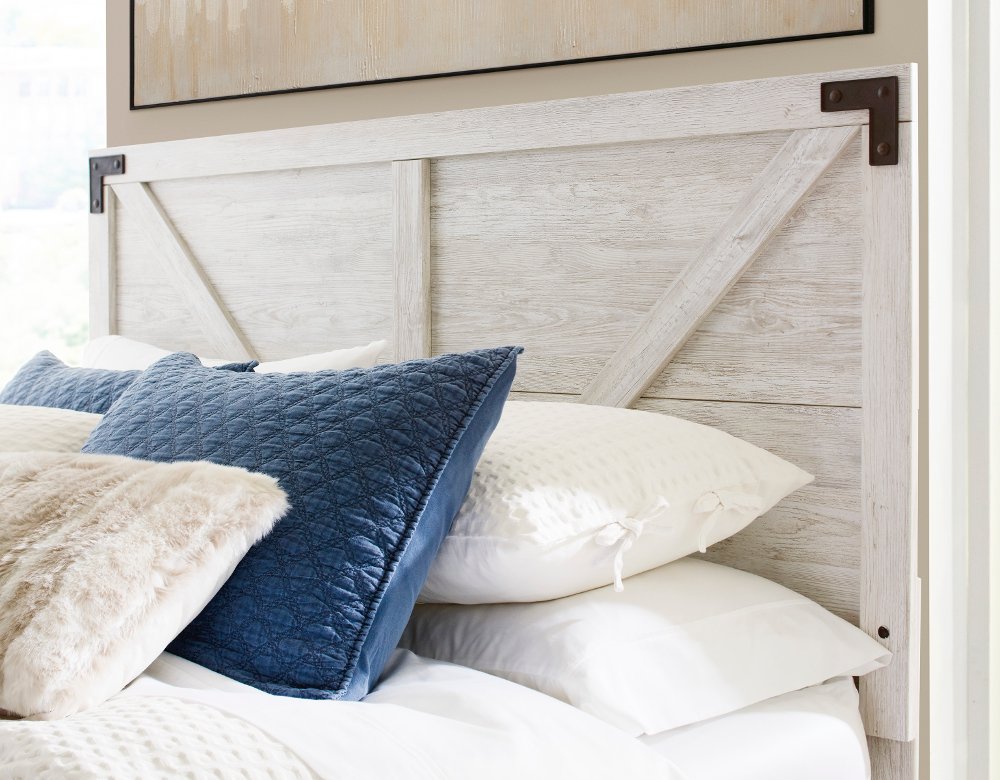
Transitional headboards blend the warmth and familiar shapes of traditional furniture with the clean lines of contemporary design. The result is a bedroom focal point that feels welcoming without looking overly ornate or stark. Typical details include gently curved tops, understated paneling, subtle button tufting, and neatly tailored upholstery borders. Rather than relying on elaborate carving or dramatic silhouettes, these headboards bring interest through balanced proportions, texture, and small finishing touches. That makes them especially useful when your bedroom brings together furniture from different chapters of life: a favorite wood dresser, newer bedside tables, and a bench that doesn’t match either piece exactly. A transitional headboard can help those elements feel connected without requiring a fully matched bedroom set. Neutral upholstered headboards in cream, beige, gray, or taupe offer a soft backdrop for patterned bedding, while wood headboards introduce grain and color that can tie into other furnishings. Straight-edged designs tend to feel more contemporary; a modest arch or framed panel adds a traditional note. If your room leans toward more pronounced molding and time-honored shapes, classic headboards offer another direction to explore. Transitional styles sit comfortably between those looks, making room for both crisp cotton sheets and a well-loved quilt. They work in primary bedrooms, guest rooms, and growing teens’ rooms, where tastes and accessories may change more often than the furniture. A restrained shape can carry the room through new paint colors, different lamps, and fresh bedding without competing for attention. During the cooler months, a woven throw and layered pillows bring out the warmth of an upholstered or wood design; lighter bedding gives the same headboard a more open feel. The appeal isn’t a particular decorating formula. It’s the flexibility to create a bedroom that looks pulled together while still feeling like your own space. Even a simple rectangular headboard can establish that sense of order by giving the bed a clear outline against the wall.
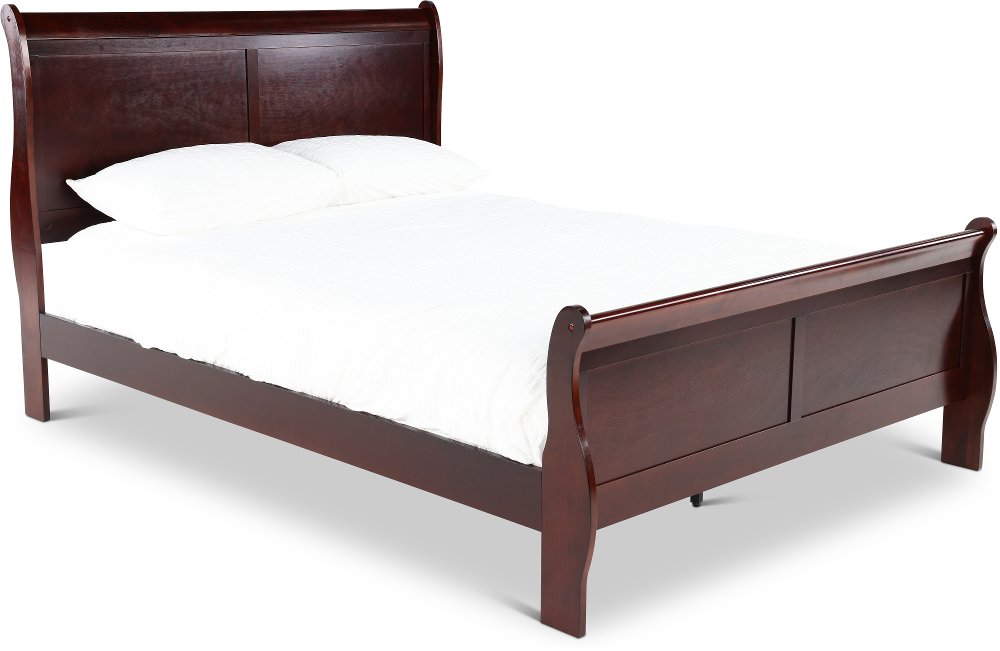
Materials influence both the appearance of transitional headboards and how they fit into everyday routines. Upholstered designs typically combine a supporting frame, padding, and a fabric cover, creating a softer surface behind your pillows. Polyester fabrics, woven blends, and cotton twill can all suit the tailored character of transitional furniture, though their texture and care requirements vary. A fine weave reads smooth and understated, while a more visible weave adds depth to a neutral color. Button tufting creates gentle dimension; a plain padded panel or stitched border keeps the look quieter. For someone who reads a few chapters before bed or enjoys a slow weekend morning with coffee, a padded headboard can make sitting up more comfortable when paired with supportive pillows. Upholstery still needs attention to everyday wear: hair products, skin oils, pet claws, and spills can affect its appearance. Removable decorative pillows can provide a buffer during regular use, and the manufacturer’s cleaning instructions should determine which treatments are safe. Wood headboards offer a different kind of warmth, with grain patterns, framed panels, and finishes that range from light and airy to deep and rich. Solid wood, wood veneer, and engineered wood each have a place in furniture construction; the material label alone doesn’t tell the whole durability story. Well-fitted joints, sound mounting points, and a properly applied finish matter, too. Veneer brings a real wood surface to an underlying panel, while engineered wood can provide a consistent base for painted or decorative finishes. Small metal accents may add definition without overpowering the design. In a guest bedroom, an uncomplicated wood panel may suit a preference for easy dusting, while upholstered padding may feel especially inviting in a room used every night. Homes with pets benefit from a closer look at fabric texture, since loosely woven surfaces may catch claws more readily. The best material choice balances the look you enjoy with the way the room actually gets used, rather than appearance alone.
Fit deserves as much attention as color or fabric when comparing twin, full, queen, and king transitional headboards. The named size is a starting point, but the headboard’s actual width, overall height, and attachment method determine whether it works with your setup. Some designs attach to a compatible bed frame, while others mount to the wall; those installation methods aren’t automatically interchangeable. A headboard generally provides a decorative backdrop rather than support for the mattress, so a suitable bed base remains essential. Frame-mounted designs need mounting holes and hardware that align with the frame, and wall-mounted designs need secure installation appropriate for the wall construction and the manufacturer’s instructions. Adjustable bases may require compatible brackets and enough clearance for movement. King and California king dimensions differ, so checking the exact specifications matters even when the size names sound similar. Height also changes the finished look. A thick mattress and tall foundation can hide much of a short upholstered panel, including tufting or decorative stitching. A taller headboard keeps more of its design visible, but it may overlap a window, crowd a sloped ceiling, or compete with artwork above the bed. Measuring from the floor to the top of your mattress helps you picture how much headboard will show. Width affects the surrounding furniture as well: a broad silhouette can look substantial behind the bed while leaving less visual breathing room beside small nightstands. Once installed, simple care helps preserve the finish and keeps the setup feeling secure. Upholstery often benefits from gentle vacuuming with an appropriate attachment, especially around seams and tufting, while wood surfaces generally need light dusting and prompt attention to moisture. Follow the care label before using any cleaner, and avoid soaking fabric or wood. Periodically checking accessible mounting hardware can help address loosening from everyday movement. With the right proportions, a compatible attachment, and materials suited to your routine, a transitional headboard gives your bedroom a comfortable, cohesive foundation for years of changing bedding and personal touches.
Read More