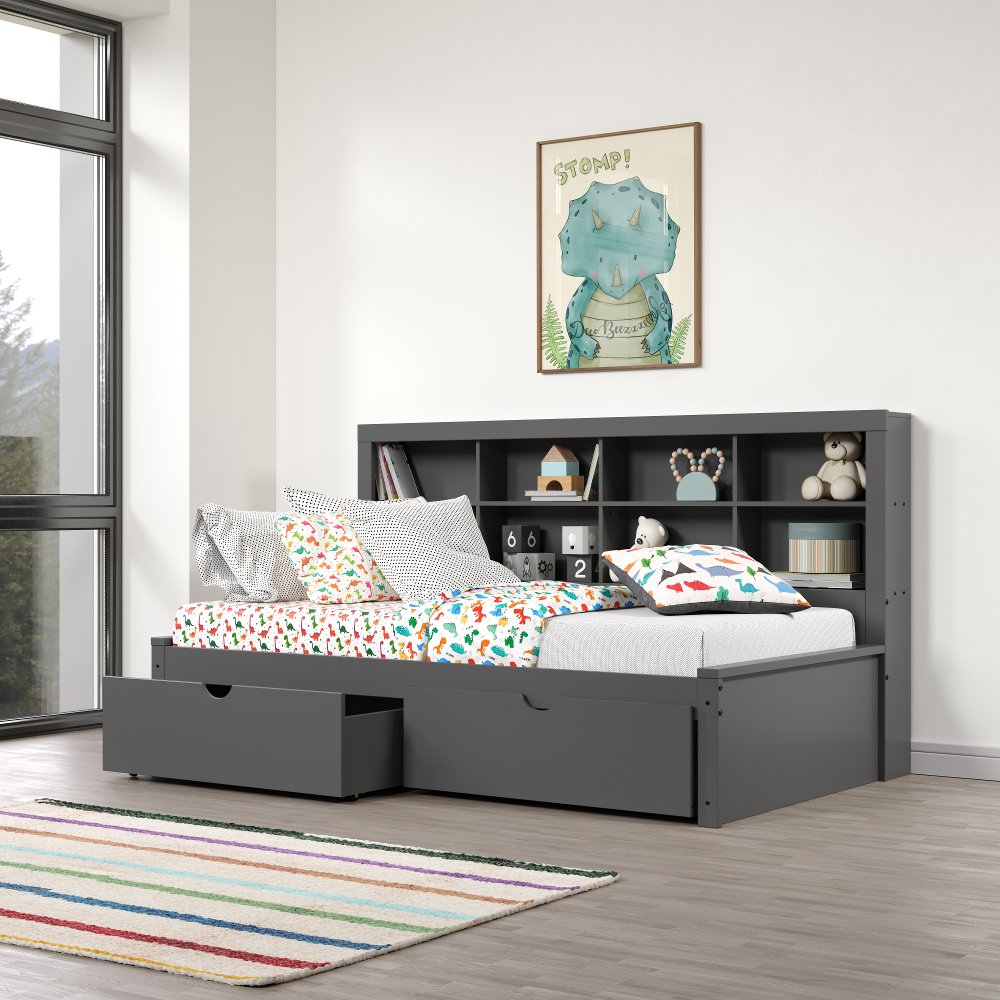
Transitional king beds blend the familiar warmth of traditional furniture with the cleaner lines of modern design. The result is a bed that feels inviting without looking overly ornate, making it a natural fit for bedrooms that mix classic details with simpler furnishings. A transitional bed might pair a gently arched headboard with straight side rails, soften a rectangular silhouette with upholstered panels, or use subtle molding to give a wood frame depth. These details create a finished look while leaving room for your personal style. Neutral upholstery, natural-looking wood finishes, and restrained decorative accents work comfortably with many kinds of bedding, from crisp white cotton to a patterned quilt or a textured duvet. A substantial headboard can anchor a spacious primary bedroom, while a lower footboard helps keep the view across the room open. For couples who want more sleeping space, a king bed offers room to settle in without making the bedroom feel strictly functional. It can also suit someone who sleeps alone and prefers extra room to stretch out, or a generously sized guest bedroom intended for longer visits. The transitional look is especially useful when existing furniture doesn’t come from a matching set. A bed with uncomplicated lines can connect an inherited dresser, contemporary lamps, and upholstered accent seating without making each piece compete for attention. Finish undertones help bring that mix together: warmer wood tones tend to complement cream and tan textiles, while cooler neutral finishes can sit comfortably beside gray, blue, or muted green. Matching every surface isn’t necessary; repeating a color or texture in a few places often creates a more relaxed, intentional room. Headboard height also affects the overall impression. A taller profile gives the bed more presence against a broad wall, while a modest profile leaves space for artwork above it. Browsing Transitional Headboards can help you compare shapes and textures, though any separately selected headboard needs compatible dimensions and attachment hardware.
A comfortable fit starts with the difference between mattress size and the bed’s overall footprint. A standard king mattress, sometimes called an Eastern king, typically measures 76 inches wide by 80 inches long. A California king mattress typically measures 72 inches wide by 84 inches long, offering additional length rather than additional width. These sizes aren’t interchangeable, so the frame, mattress, and foundation need to match. Wood posts, upholstered rails, curved headboards, and projecting footboards can add several inches beyond the mattress dimensions. The listed exterior measurements are what matter when placing a transitional king bed between two nightstands or across from a dresser. Allowing roughly 30 inches of walking space along accessible sides is a useful planning target, with extra room wherever drawers, doors, or storage compartments need to open. In a bedroom with a nearby closet, a slimmer footboard may keep the daily path clear; in a larger room, a more substantial frame can feel balanced rather than crowded. Storage beds need particular attention because side drawers must clear nightstands, rugs, and other furniture. A lift-up storage design also needs enough access to operate comfortably, along with clearance specified by the manufacturer. Headboard placement matters just as much: check window sills, wall outlets, and the combined height of the mattress and foundation so decorative details remain visible. Support requirements vary by bed construction. Some platform beds support a mattress without a separate box spring, while other designs require an appropriate foundation. Slat spacing, center supports, weight limits, and mattress manufacturer requirements should all align before the bed is assembled. An adjustable base may fit within certain frames, but compatibility depends on interior clearance and whether the frame’s support system can accommodate it as designed. Delivery access deserves a quick measurement, too. A king headboard or long side rail has to travel through doorways, around stair landings, and into the bedroom. Checking that route ahead of time helps make setup straightforward and protects both the furniture and the surrounding walls.
Materials influence how a transitional king bed looks, feels, and holds up to everyday use. Solid wood can bring distinctive grain and natural variation, while wood veneers offer the appearance of real wood over a supporting core. Engineered wood construction can provide consistent surfaces and dimensional stability, depending on the material and how the frame is built. None of those labels alone tells the whole durability story. Secure rail connections, sound joinery, sturdy center support, and correctly installed hardware are important parts of a dependable bed. Upholstered king beds introduce a softer visual texture and can make the headboard more comfortable to lean against while reading, although padding thickness and firmness vary. A smooth woven fabric creates a tailored look, while tufting or channel details add dimension without requiring elaborate carving. For a household with pets or frequent everyday use, fabric cleanability and the manufacturer’s care instructions deserve close attention. Performance claims vary, and a fabric labeled for easier cleaning still needs the recommended treatment. Light upholstery gives a room an airy appearance but may make marks more noticeable; textured or midtone fabrics can be more forgiving visually. Wood finishes need their own care routine. A soft cloth removes dust, and a slightly damp cloth may be appropriate for routine cleaning when the manufacturer permits it. Avoid harsh cleaners, excess moisture, or furniture polish that isn’t recommended for the finish. Upholstery usually benefits from gentle vacuuming with a suitable attachment, and spills are best blotted promptly rather than rubbed into the fibers. Keeping the frame away from prolonged direct sunlight helps limit uneven fading. Storage compartments are useful for spare linens and pillows, provided drawers and lift mechanisms stay within their stated limits. When moving the bed, disassembling it as directed is safer than dragging a large frame across the floor, which can strain joints and supports. Follow the assembly instructions and check fasteners periodically if the manufacturer recommends it. With the right proportions, compatible mattress support, and manageable care needs, a transitional king bed can provide a dependable foundation for both everyday rest and a bedroom style that remains easy to update.
Read More