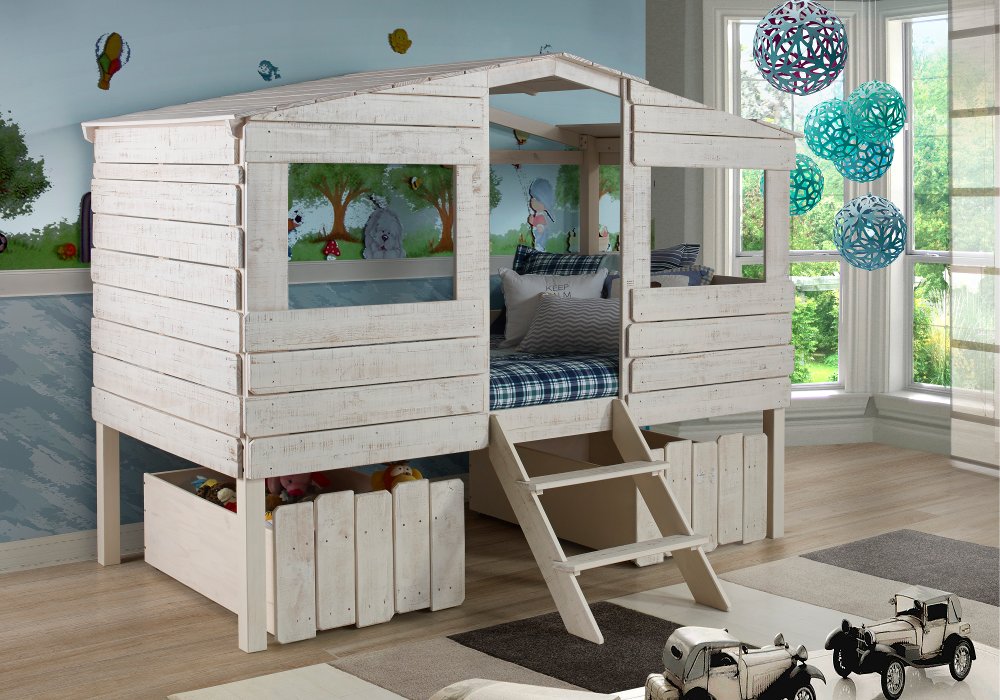
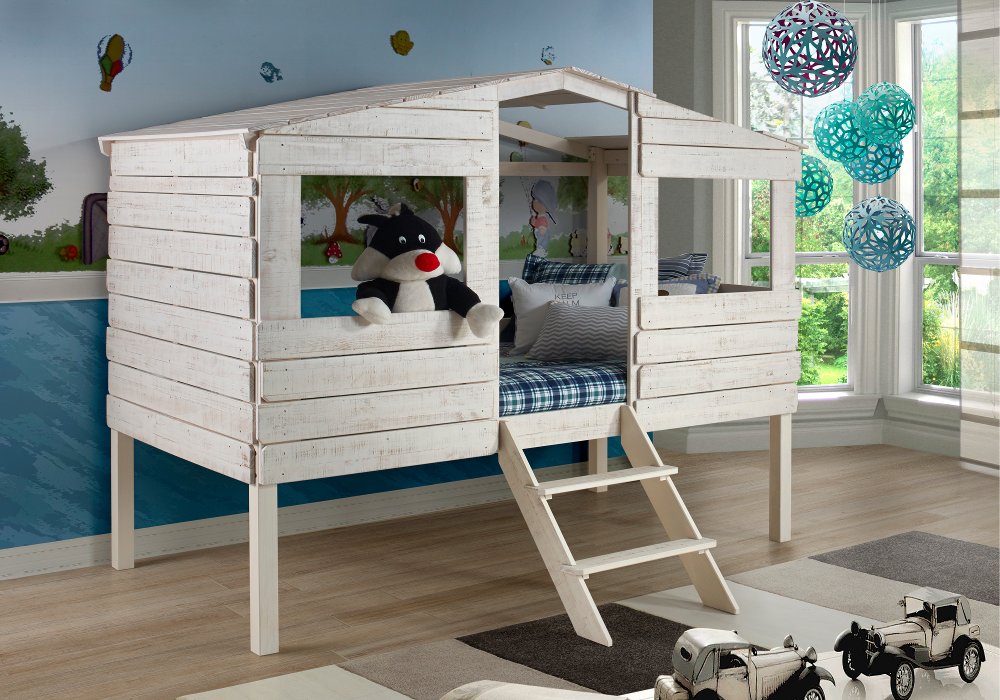
Twin rustic beds bring the warmth of wood grain, timeworn finishes, and simple, sturdy shapes to a compact sleeping space. Designed for a standard twin mattress, typically about 38 inches wide by 75 inches long, these beds suit children’s bedrooms, shared rooms, guest spaces, and smaller bedrooms where every inch matters. Their character comes from details such as visible knots, plank-style headboards, gently distressed edges, and finishes that let the wood’s natural variation show through. Within the category, styles range from rounded log frames with a cabin-inspired feel to straight-lined farmhouse beds and understated wood frames with dark metal accents. A log-style headboard makes a different impression than a flat panel of weathered-looking boards: one feels substantial and outdoorsy, while the other can blend easily with painted furniture and clean-lined dressers. Rustic doesn’t have to mean dark or heavy, either. Pale wood tones, muted brown finishes, and lightly washed surfaces can keep a small bedroom feeling open, especially when paired with simple bedding and an uncluttered nightstand. A lower footboard can also preserve sight lines across the room and make changing the sheets less awkward in a tight corner. For a child moving into a larger bed, a straightforward rustic twin frame offers a look that can adapt as favorite colors and interests change. In a guest room, the same style feels welcoming with a quilt, a supportive mattress, and a reading light close by. Two twin rustic beds can give siblings or overnight visitors separate sleeping spots while creating a coordinated room without requiring identical bedding. The most useful distinction is between rustic appearance and rustic construction: a distressed finish describes the look, not the wood species, strength, or age of the bed. That leaves room for a wide range of materials and designs, from solid wood frames with pronounced grain to smooth wood-look surfaces that offer a more consistent pattern.
Materials give rustic twin bed frames much of their personality, but they also affect weight, upkeep, and how the surface responds to everyday use. Solid pine often has prominent knots and a relaxed look, though its relatively soft surface can pick up dents from toys, belt buckles, or frequent bumps. Oak generally offers a harder surface and distinctive grain, while cedar and other woods appear in log-style designs that emphasize natural contours. Wood veneers place a thin layer of real wood over a supporting core, giving broad headboard panels a natural grain pattern without making every component solid lumber. Engineered wood with a decorative finish can create a similar visual effect, so material descriptions matter more than a photograph alone. Reclaimed wood, when identified as such, may include old nail holes, color changes, and marks from its earlier use; newly manufactured wood can also be deliberately distressed to suggest that history. Neither look, by itself, establishes how well a frame will hold up. Secure joinery, properly fitted hardware, supportive side rails, and the mattress support system all contribute to durability. A bed that gets daily use in a child’s room needs more than an appealing headboard, especially when sitting on the edge to tie shoes or leaning back to read becomes part of the routine. Platform designs generally support a mattress without a box spring when specified by the manufacturer, while other frames require a separate foundation. Slat spacing and support requirements should match the mattress manufacturer’s instructions. Wood-and-metal combinations offer another interpretation of rustic style, pairing warm-looking panels with crisp, darker outlines. For a more open frame that coordinates with rustic wood furniture, twin metal beds provide a useful style alternative. Across these constructions, a smooth, well-finished surface helps keep the bed comfortable to touch and less likely to snag bedding, even when its appearance is intentionally rough-hewn.
Fit depends on the whole bed, not just the mattress size. Thick posts, angled headboards, and projecting footboards can make a rustic twin bed noticeably wider or longer than its sleeping surface, so the outside dimensions deserve a place in the room plan. In a narrow bedroom, enough space to open a dresser drawer and walk beside the bed can matter more than an oversized headboard. Taller sleepers may need the extra length of a twin XL, typically about 38 by 80 inches; standard twin and twin XL frames aren’t interchangeable unless the design specifically accommodates both. Headboard height also changes once the mattress and any required foundation are in place. A thick mattress can hide much of a decorative panel, while a lower mattress may leave more wood visible and make a frame feel taller. Rustic twin storage beds add another practical option, with drawers that can hold spare sheets, folded clothing, or small blankets. Those drawers need room to extend, particularly when two beds share a wall or a nightstand sits beside the frame. A trundle design can provide a second sleeping surface for occasional guests, but its mattress thickness limit and pullout clearance are important parts of the fit. Open space beneath a bed offers simpler flexibility for storage bins and cleaning, provided the rail height leaves enough clearance. For routine care, a soft cloth and the finish manufacturer’s recommended cleaning method help preserve the surface without leaving unnecessary residue. Avoid soaking wood, wipe up spills promptly, and use a slightly damp cloth only when the care instructions allow it. Distressing can make small signs of use less conspicuous, but it doesn’t make a finish scratchproof. Periodic hardware checks can address loosening from regular use or a move, following the assembly instructions rather than overtightening fasteners. With the right dimensions, mattress support, and finish for the household, a rustic twin bed gives a smaller sleeping area a grounded, comfortable feel while leaving space for the rest of daily life.
Read More