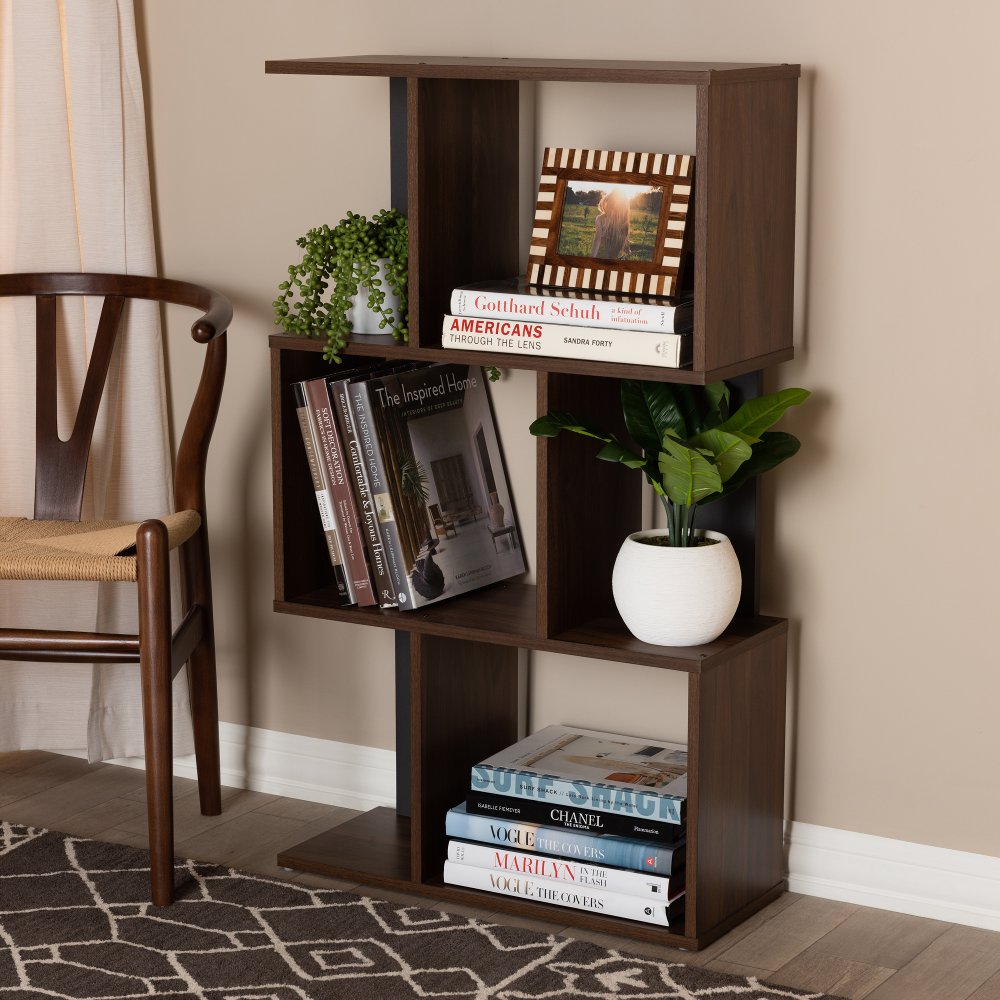
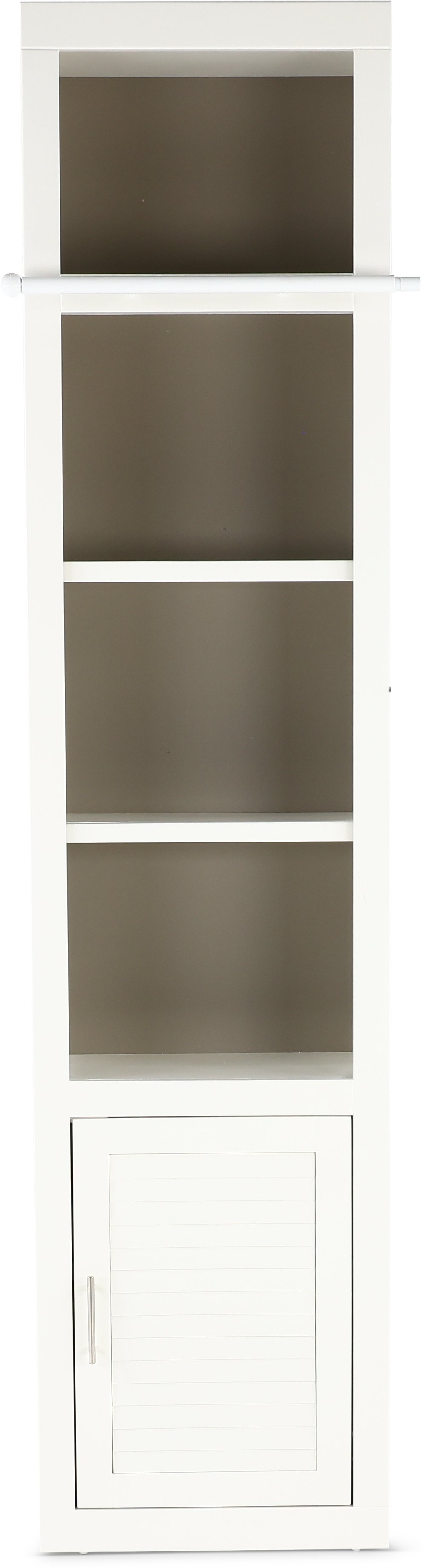
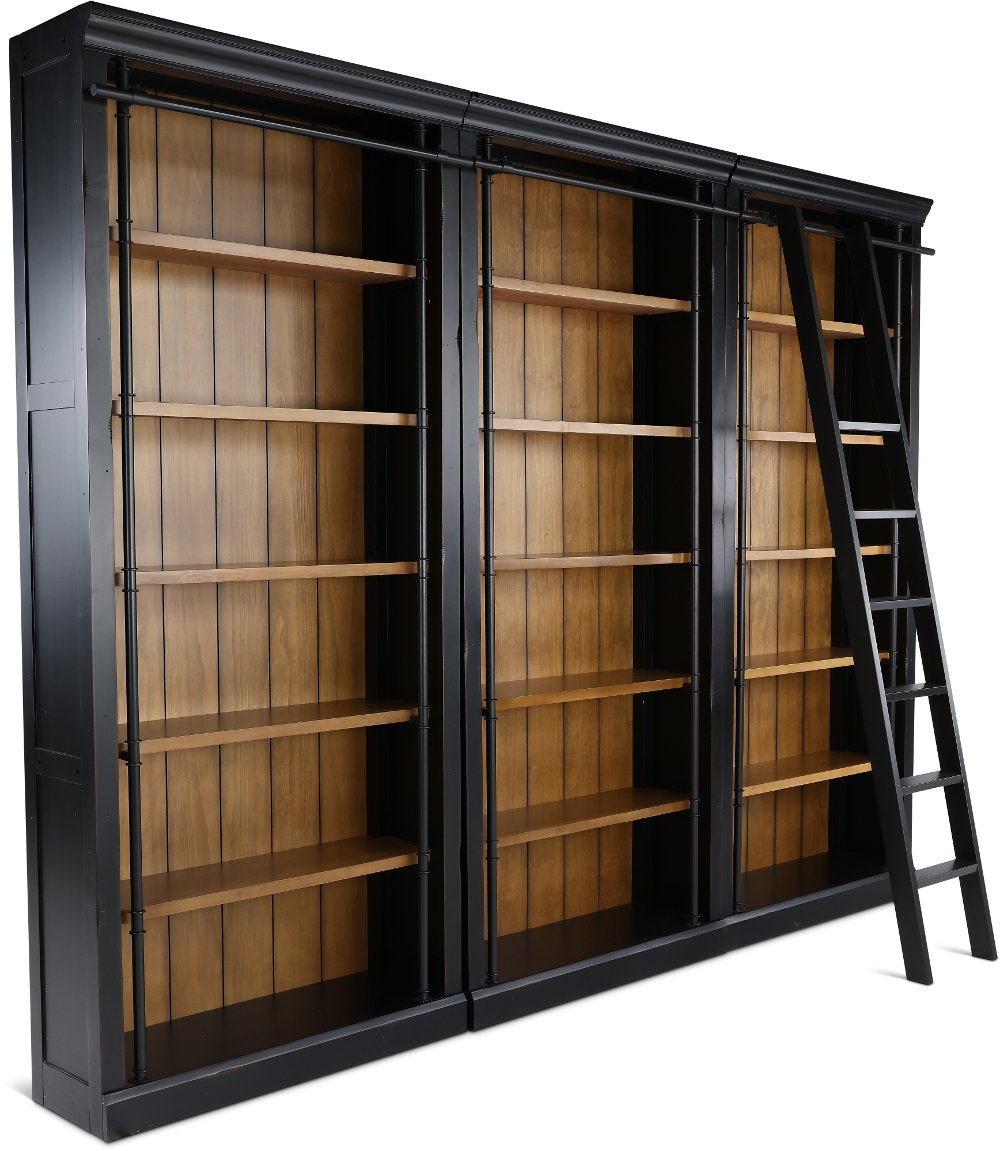
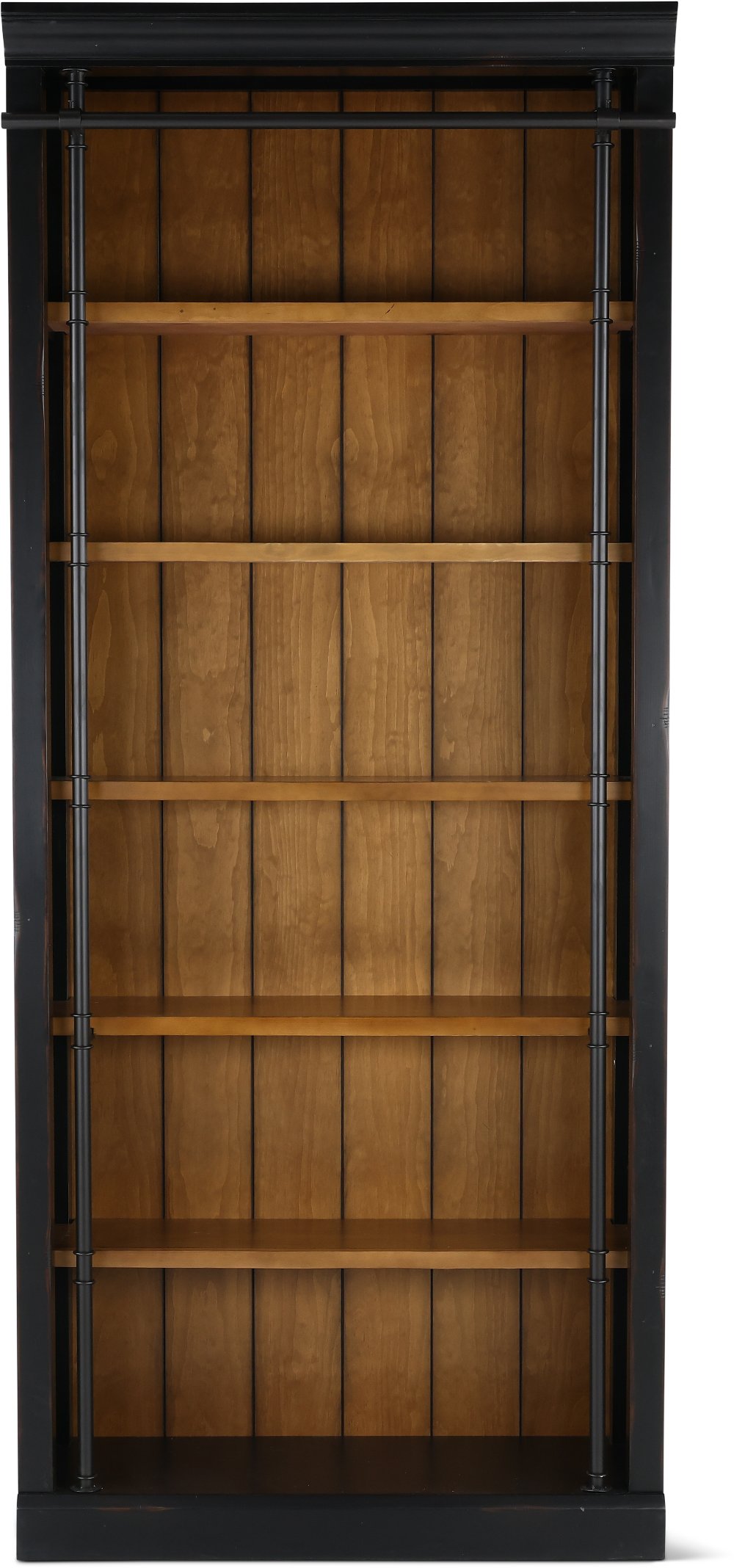
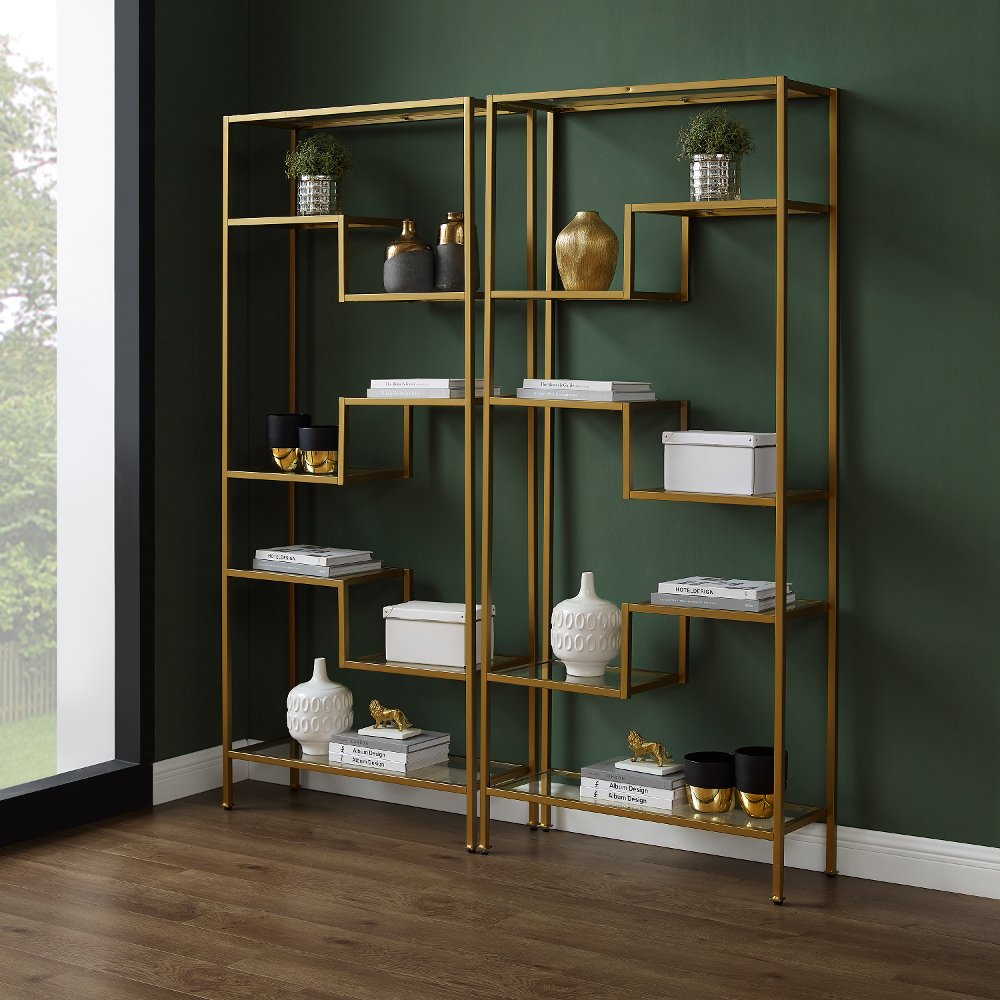
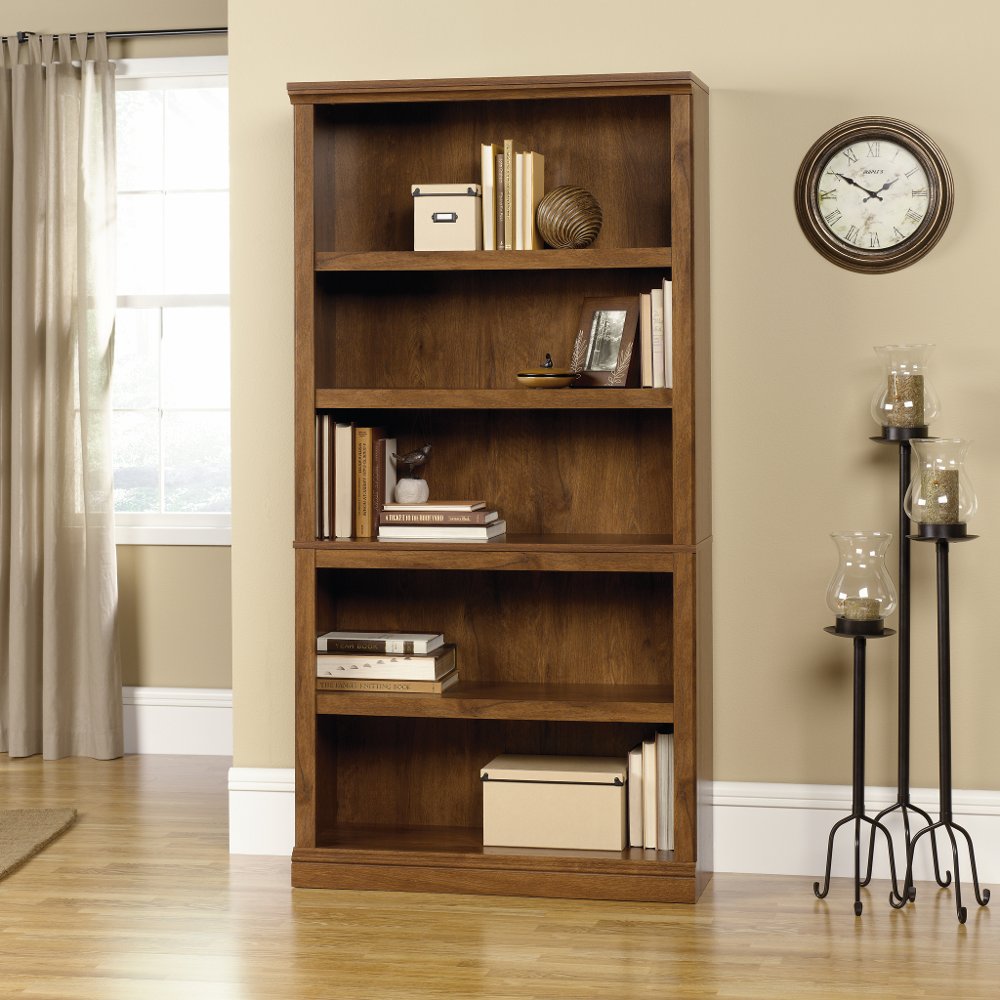
Unique modern bookcases combine useful storage with distinctive shapes, turning a place for books into a focal point for your room. Their character often comes from asymmetrical compartments, sculptural frames, curved tops, or modular arrangements rather than heavy ornamentation. A geometric bookcase can give a simple wall a strong architectural presence, while an open ladder-style design keeps a smaller room feeling less crowded. Staggered shelves create separate spaces for novels, framed photographs, and pottery, giving each object a little breathing room. For a softer silhouette, modern arched bookcases bring rounded lines to spaces filled with straight-edged desks, sofas, and cabinetry. The most useful design balances that visual appeal with the way you actually live. Someone with a growing hardcover collection needs generous, dependable shelf space; someone displaying a few favorite objects may prefer a more open frame with compartments of different sizes. Modern bookshelf styles also work comfortably alongside furniture from other design traditions. Warm wood tones can connect a contemporary shelving unit to a traditional dining table, while a slim metal frame can echo the hardware on nearby cabinets. A sculptural profile adds interest without requiring every piece in the room to make the same statement. Open-backed bookcases allow wall color to show through, creating a lighter appearance, while closed backs provide a defined backdrop that helps smaller objects stand out. Some designs combine display shelves with enclosed storage, keeping favorite books visible and less decorative essentials tucked away. In a living room, that might mean art books above and charging cords below. In a dining area, shelves can hold cookbooks and decorative serving pieces without turning the room into an extension of the kitchen. The appeal is personal: a bookcase becomes more distinctive as it holds the stories, collections, and everyday objects that make your home feel like your own.
Materials shape both the appearance and the everyday performance of a modern bookcase. Solid wood brings natural grain variation and a substantial feel, though it can respond to changes in indoor humidity. Wood veneer offers the look of real wood over a supporting core, with durability depending on the construction and finish. Engineered wood can provide a smooth, consistent surface suited to painted, laminated, or wood-look finishes. Metal frames often create crisp outlines and visually slender supports, especially when paired with wood shelves. Glass shelving lets light pass through and can make decorative objects appear less visually crowded, but fingerprints and dust tend to show more readily. No material alone guarantees strength. Shelf thickness, span, support placement, joinery, and the manufacturer's stated weight limits all matter, particularly for a collection of large books. A long, uninterrupted shelf may look beautifully minimal, but its capacity still needs to match the load you plan to place on it. Adjustable shelves make it easier to accommodate tall art books, storage baskets, or a favorite vase, while fixed compartments contribute a deliberate rhythm to geometric designs. Smooth edges, secure connections, and a stable base are useful details to consider in furniture that sees daily use. Care should suit the specific finish rather than follow a single rule for every surface. A soft cloth handles routine dusting on many bookcases; cleaning products and moisture levels should follow the manufacturer's directions. Drying any permitted damp cleaning promptly helps protect edges and joints. Felt pads beneath ceramics can reduce scratches, and containing plants in watertight vessels helps keep moisture away from shelves. Direct sunlight can change the color of some wood finishes and fade book jackets, making placement part of long-term care. A bookcase with a durable finish and accessible shelves is easier to keep looking polished, whether it holds a carefully arranged collection or the paperbacks that move in and out every week.
Fit involves more than finding a bookcase with the right height and width. Overall depth determines how far it projects into a room, while usable shelf depth determines whether your books and display pieces sit securely without hanging over the edge. A compact vertical bookcase can make good use of a narrow wall beside a desk, but its base still needs enough clearance for nearby drawers, doors, and walking paths. Ladder-style profiles may widen toward the floor, so the full footprint matters as much as the top measurement. Lower, wider designs can suit spaces beneath artwork, while tall shelving draws attention upward and makes use of limited floor area. Modular bookcases offer another approach, with compatible sections that can create a broader arrangement when the design allows. Any planned expansion depends on the system's connection requirements and the space available. In an open living area, a bookcase may help define a reading corner or separate a workspace, provided it is designed for that placement, finished on the exposed sides, and installed safely. Freestanding shelving should never be assumed to work as an unsupported room divider. Follow assembly and anchoring instructions, use hardware appropriate for the wall construction, and keep heavier objects on lower shelves within the stated limits. These details are especially important in homes with children or pets. For everyday organization, a mix of upright books, a few horizontal stacks, and contained storage can look relaxed without feeling cluttered. Leave accessible shelves for frequently used titles and reserve harder-to-reach spaces for lighter objects used less often. A home office might call for room for reference books and work materials; a bedroom may need a quieter arrangement of favorite reads and personal keepsakes. For a reader furnishing a first apartment or a graduate setting up a workspace, a thoughtfully chosen bookcase can also make a meaningful gift when dimensions and style preferences are known. The right modern bookcase supports those ordinary routines while giving your room a shape, texture, and personality that feel considered.
Read More