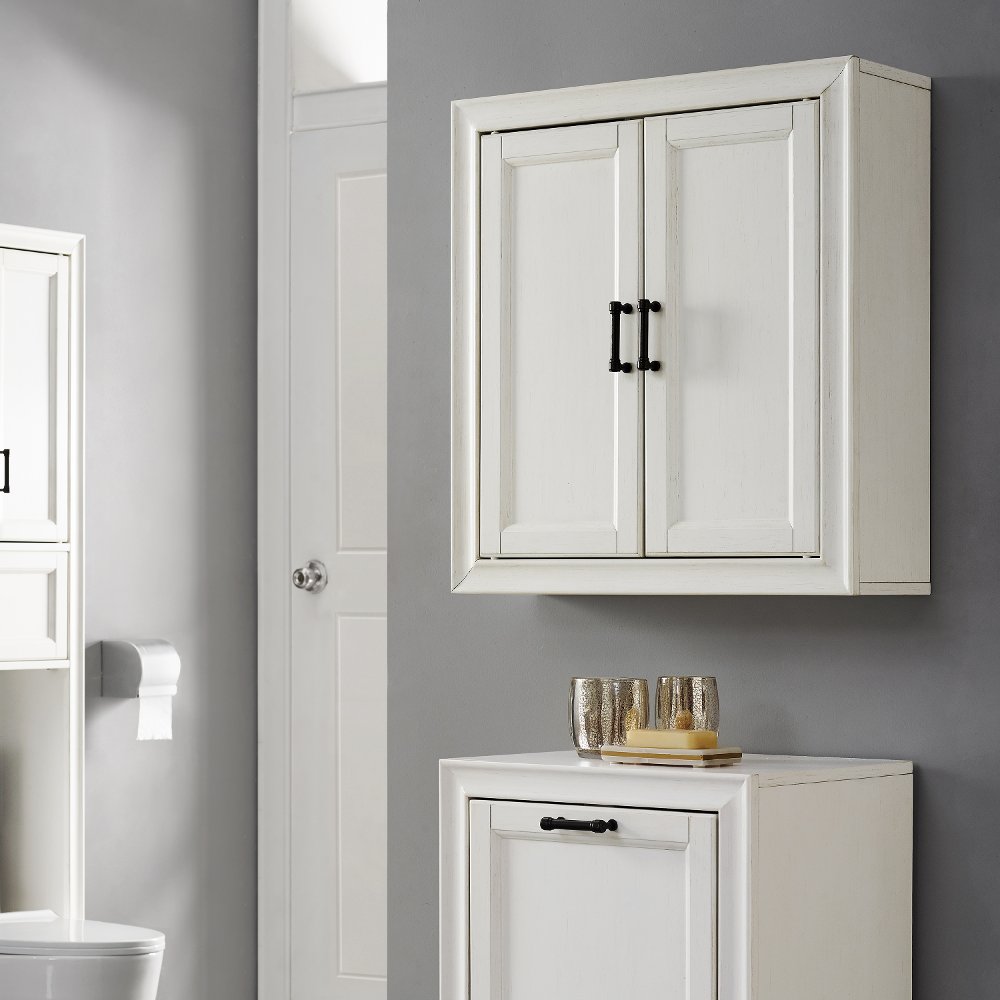
Wall-mounted storage makes use of vertical space to organize everyday belongings while keeping floors open for furniture, foot traffic, and easier cleaning. From floating shelves and enclosed wall cabinets to hook rails, racks, and modular panels, these storage options give everything from reading material to outdoor gear a place to land. The right style depends on what you want to store, how often you reach for it, and how much you prefer to keep in view. Open wall shelves put books, framed photos, and favorite keepsakes within sight, while cabinets with doors tuck away loose cords, paperwork, and household odds and ends. Pegboards and grid systems offer flexible arrangements for compatible hooks and small containers, making them useful in workspaces where supplies change from project to project. In an entryway, wall hooks can turn a narrow stretch beside the door into a convenient spot for jackets, bags, and dog leashes. Above a desk, shallow shelving keeps notebooks nearby without taking over the work surface. A living room shelf can hold a few meaningful objects without adding another piece of furniture to an already busy layout. These small changes are especially helpful in apartments, compact bedrooms, shared offices, and homes where a single room handles several activities. Wall storage also works well in larger spaces when it supports a clear routine, such as keeping craft supplies near a project table or towels close to the bathroom vanity. During the cooler months, a dedicated place for scarves and frequently worn layers helps keep them from collecting on dining chairs. For a coordinated look, complementary Storage Decor can bring texture and organization to open shelving, provided its dimensions and weight suit the shelf. A mix of visible display space and concealed storage lets a room feel personal without putting every everyday necessity on display.
Materials and construction influence both the appearance of wall-mounted storage and how well it suits a particular room. Solid wood brings natural grain and warmth, with variations that can feel right at home beside upholstered seating or a wood dining table. Wood shelves still need a suitable thickness, span, and support system for their intended load; a thick-looking profile alone doesn't establish strength. Engineered wood can provide a smooth, consistent surface beneath painted finishes, veneers, or laminates, though its performance depends on the construction and manufacturer’s specifications. Metal lends itself to slim brackets, utility racks, and open grids, with finishes that range from understated to distinctly industrial. In bathrooms, laundry rooms, and garages, materials and finishes rated for the expected moisture and temperature conditions matter more than appearance alone. A decorative shelf intended for a dry living space may not suit a steamy bathroom or an unconditioned garage. Glass shelves can look light and unobtrusive, but their load limits and edge protection deserve attention, especially in busy households. Day-to-day care is usually simplest when the surface matches the setting. Smooth, sealed surfaces are generally easier to wipe down, while textured finishes, open grids, and detailed trim may need more attention to remove dust. Follow the care instructions for the material, use compatible cleaners, and dry damp surfaces promptly rather than allowing water to sit along seams or edges. Durability also comes from details that are easy to overlook: secure shelf connections, sturdy brackets, well-supported cabinet doors, and hardware designed for repeated use. A cabinet opened several times a day should feel stable, with doors that move smoothly and leave enough clearance for nearby furniture. For open shelving, a finish that tolerates routine handling is helpful wherever bags, baskets, or frequently used supplies slide across the surface. Choosing for actual household habits, rather than appearance alone, helps wall storage remain useful long after the room is arranged.
Fit involves more than finding an empty patch of wall. Width, height, depth, and the space around a storage piece all affect how comfortably it functions. Shallow wall shelves can suit hallways and areas beside doors, where deeper storage could crowd a walkway. Enclosed cabinets need room for doors to open, and hooks need enough space below them for hanging belongings without covering switches or dragging across furniture. Shelf spacing should accommodate what belongs there, whether that's upright books, folded linens, or containers with lids that need lifting. In a home office, keeping daily supplies within a comfortable reach can make the desk feel less cramped; in a shared entryway, separate hooks can give each person a recognizable landing spot. Mounting requirements are just as important as dimensions. A wall storage system's safe capacity depends on the unit, its brackets and fasteners, the wall construction, and correct installation—not simply the strength of the shelf surface. Heavy shelves, loaded cabinets, and utility racks may require attachment to wall studs or another structural support, as specified by the manufacturer. Where anchors are permitted, they must suit both the wall material and the intended load; drywall, masonry, and plaster don't all use the same hardware. Checking placement with a level helps shelves sit evenly and cabinet doors align properly. Installation should also account for concealed wiring and plumbing, with qualified help when wall conditions or mounting requirements are uncertain. Once installed, keep the combined weight of stored belongings within the stated limits and arrange loads as directed. Frequently used belongings are most practical at an accessible height, while heavy or breakable objects need thoughtful placement away from sleeping areas and spots where children might pull or climb. Renters should also confirm which wall attachments their lease permits before choosing a system. For someone setting up a first apartment, a home office, or a hobby room, wall storage can be a thoughtful housewarming gift when wall space, style preferences, and installation needs are known. Whether the goal is a clearer kitchen counter, a more welcoming entry, or a living room with space to breathe, well-chosen wall-mounted storage supports the way you already use your home.
Read More