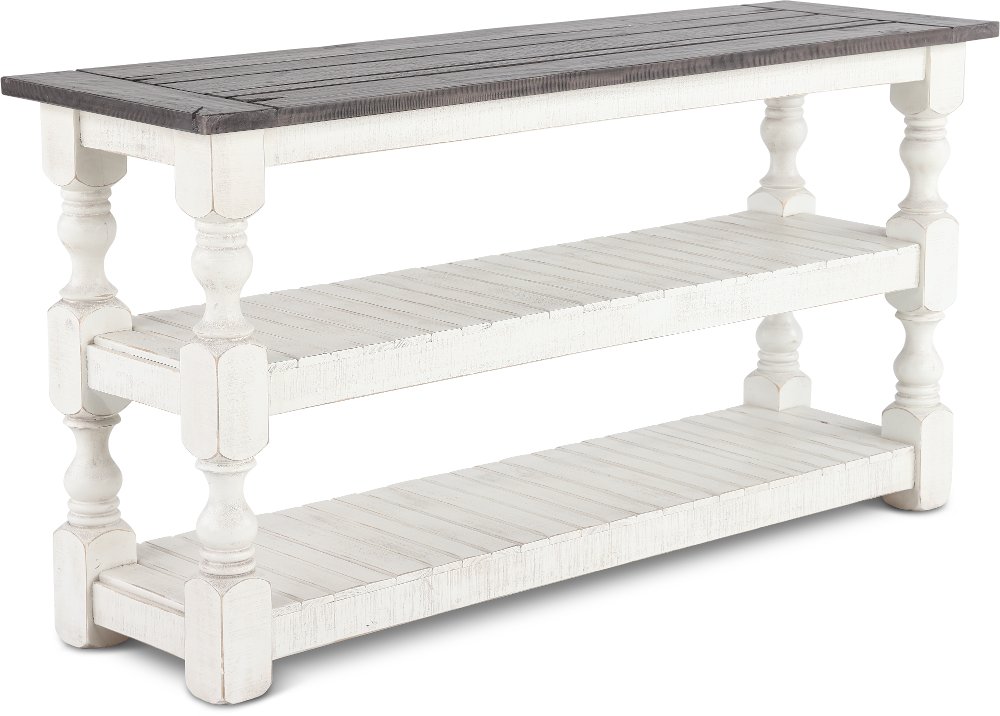
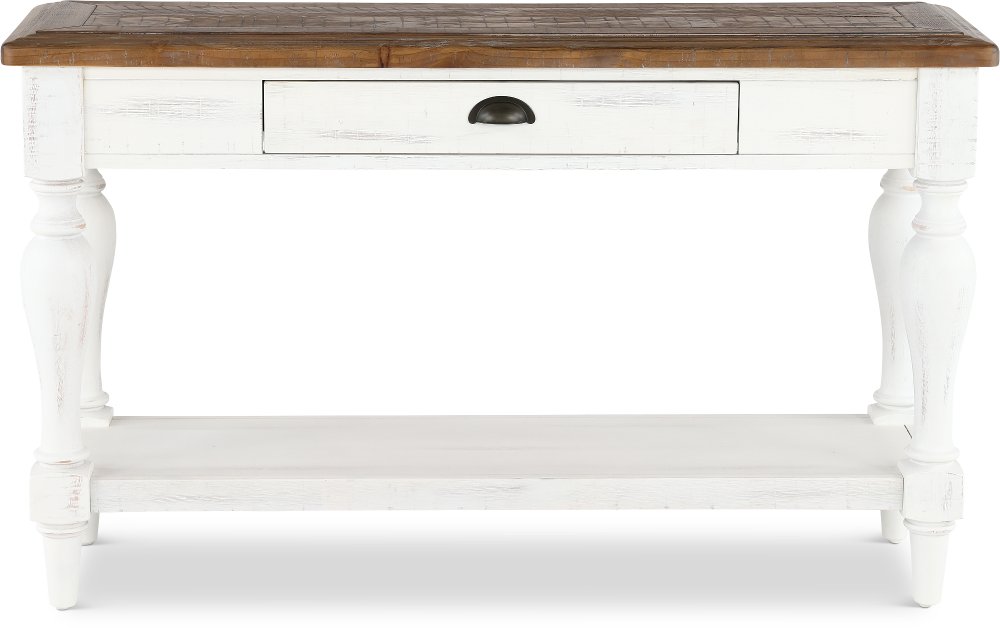
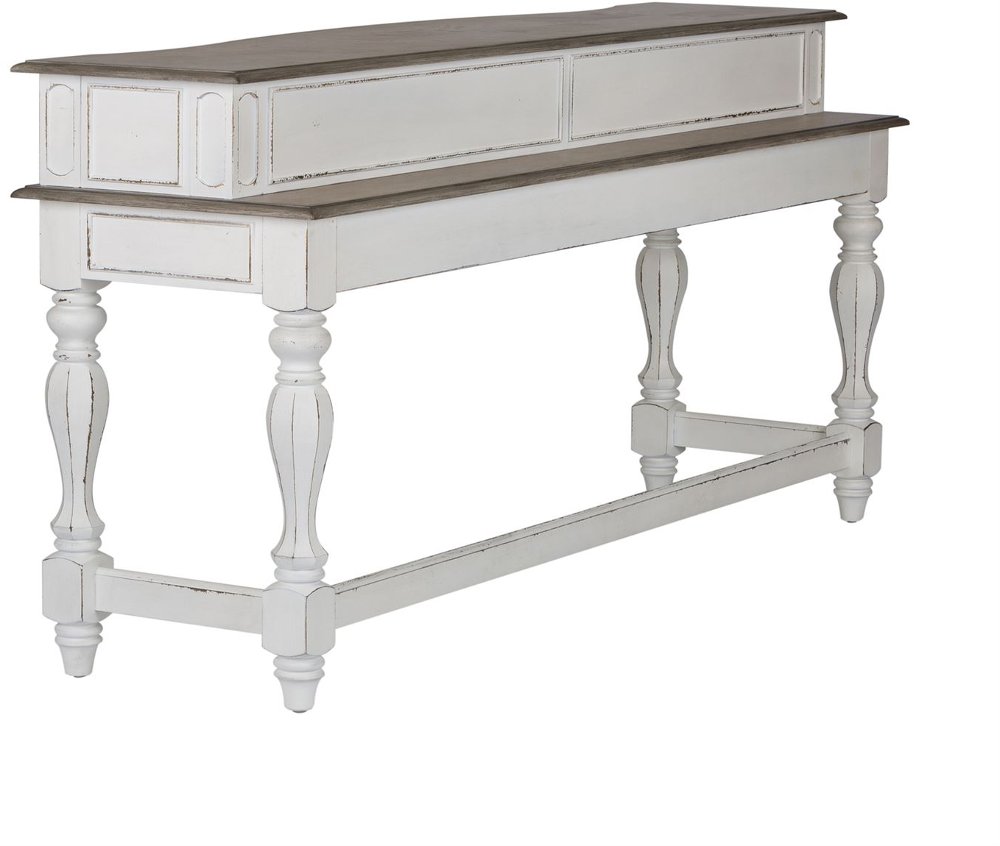
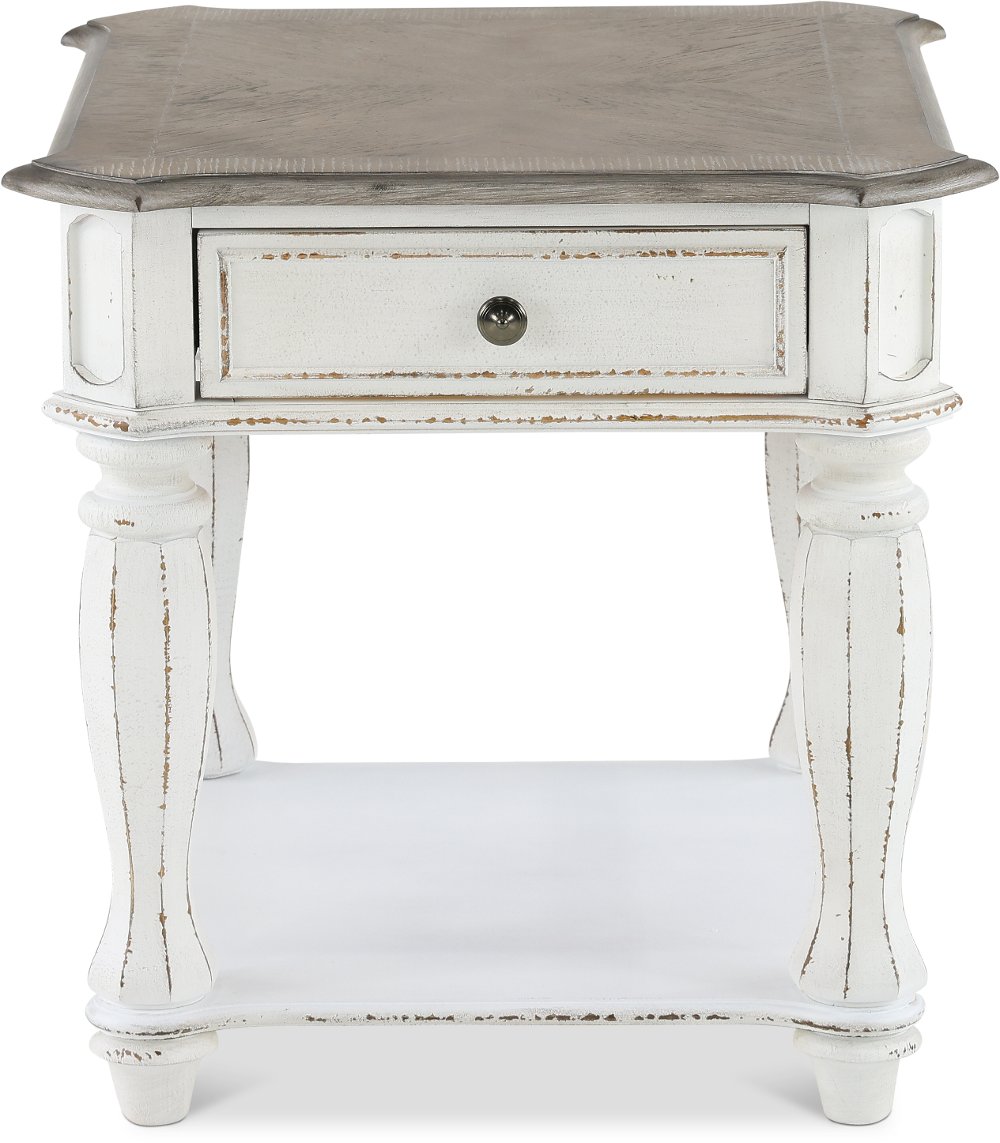
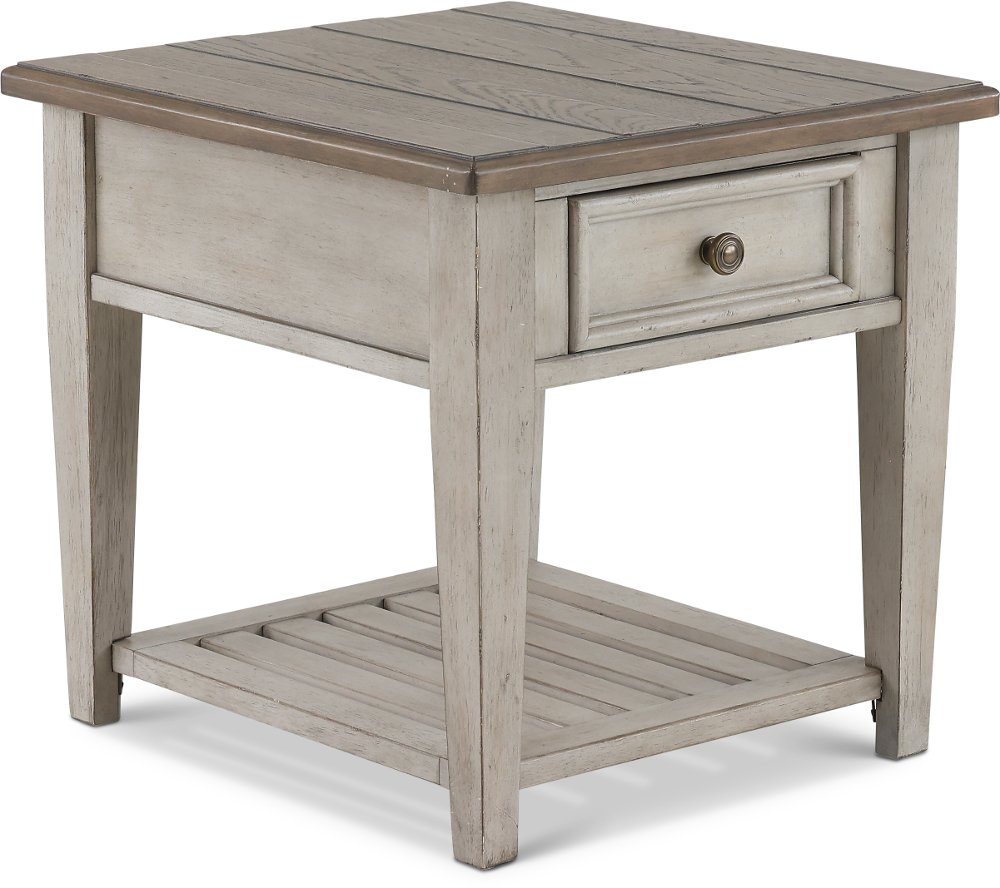
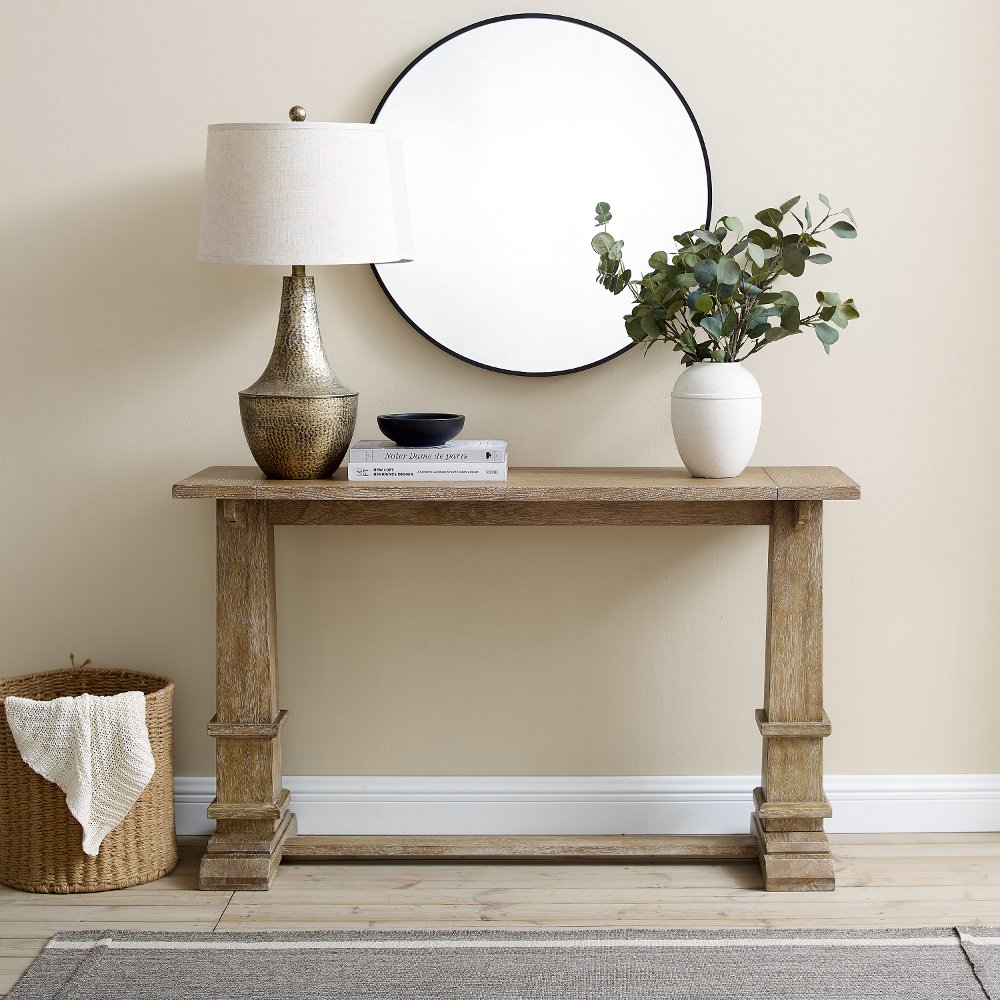
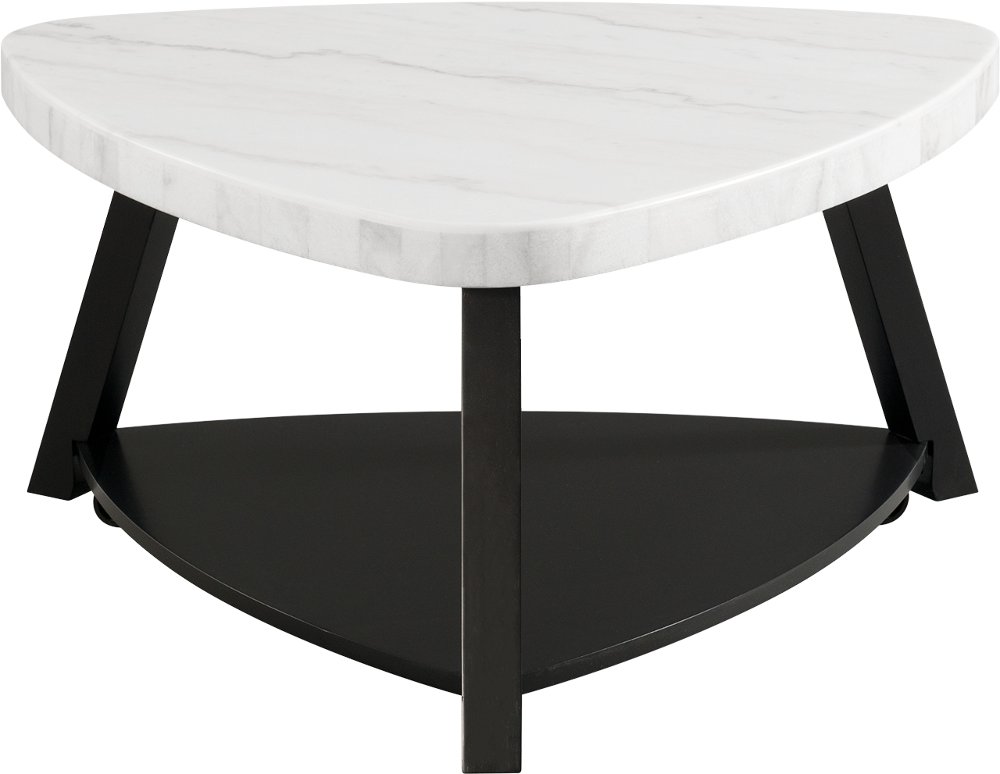
White sofa tables bring a light, finished look to the space behind a couch, along an open wall, or beside a living room walkway. Their long, relatively narrow shape makes them useful wherever you need a little surface space without the depth of a cabinet or desk. Behind a sofa that floats in the middle of a room, a white table gives the seating area a defined edge and turns an otherwise overlooked spot into a place for a lamp, a few favorite books, or a ceramic bowl. Against a wall, the same shape can serve as a slim console, keeping everyday essentials close while leaving more floor space open. The white finish works with many palettes: it offers a crisp contrast to charcoal upholstery, softens the look of darker wood furniture, and feels easygoing alongside linen, pale oak, or woven accents. Shade and finish make a difference, too. A bright white surface tends to look clean and graphic, while a warmer ivory or gently distressed finish can settle comfortably into a more relaxed room. Straight legs and simple edges suit contemporary spaces; turned details and paneled drawers bring a more traditional feel. A white sofa table doesn’t have to match every other piece to look at home. Repeating its color in a lampshade, picture frame, or nearby trim can create a connection without making the room feel overly coordinated. For apartment dwellers, it can add function to a compact living area; for busy households, it can provide a dedicated landing place that keeps the sofa cushions clear. During the cooler months, its pale finish also makes a welcoming backdrop for warm lamplight, textured baskets, and a small arrangement of branches. Whether your room feels polished or comfortably lived-in, the appeal is the same: a practical surface that adds definition without making the space feel visually heavy.
The way a white sofa table fits your room matters just as much as the way it looks. A table positioned behind a sofa generally feels most balanced when its top sits at or slightly below the sofa back, with some breathing room at either end. Measure the sofa’s overall width and back height rather than relying on seat dimensions, and consider how far loose cushions extend beyond the frame. Depth deserves particular attention in rooms where people regularly pass behind the seating. A slim profile can leave a comfortable route from the living room to the kitchen, while a deeper tabletop offers more room for lamps and larger decorative pieces. Painter’s tape on the floor can help you picture that footprint before committing to a size. If the table will sit near a recliner, allow room for the furniture’s full range of motion. Construction also shapes how the table performs over time. Solid wood can offer substantial character and may show grain or subtle texture beneath a white finish, while wood veneers bring a real-wood surface to an engineered core. Painted engineered wood can provide a smooth, uniform appearance, and metal frames can create an airy outline with slender supports. No material alone guarantees durability; secure joints, a stable base, a suitable finish, and the stated weight capacity all matter. Storage details should reflect what actually collects in your living room. Drawers can keep remotes, charging cables, and reading glasses out of sight, while an open lower shelf gives baskets and books a convenient home. Open-leg designs leave the floor visible and can feel less crowded in a small space. If your main goal is a spot for a drink or phone beside an armrest, modern sofa side tables offer a different placement option that can complement a longer table behind the couch. That distinction helps each surface serve a clear purpose, rather than filling the room with furniture that’s awkward to reach or difficult to walk around.
Everyday use is where the small details of white sofa tables become especially noticeable. A smooth painted top offers a clean backdrop for colorful books and pottery, but it can also make coffee rings, dark scuffs, and dust around decorative objects easier to spot. Routine care is usually straightforward when it follows the manufacturer’s directions: a soft cloth for dusting, prompt attention to spills, and only cleaners approved for the finish. Avoid abrasive pads and harsh products that could dull or damage the surface, and dry any damp areas rather than allowing moisture to sit along seams. Coasters under drinks, protective pads beneath planters, and felt under rough-bottomed accessories help preserve the finish without changing the look of the room. A waterproof saucer is especially useful beneath a living plant, since moisture can escape even when the tabletop looks dry at first glance. In a household with children or pets, a stable design, softened corners, and sensible placement can make daily movement more comfortable. Follow any included anchoring instructions, respect load limits, and remember that a sofa table isn’t designed to function as a seat or climbing surface. Lamps deserve some planning as well. A base should sit fully on the tabletop, and its cord should reach an outlet without stretching across a walkway. For a relaxed arrangement, a lamp at one end, a low stack of books near the middle, and a shallow tray at the other can leave useful space between objects. Keep taller accessories away from places where someone might brush against them while sitting down. A lower shelf can hold folded throws or baskets for small essentials, provided the contents stay within its capacity. A thoughtfully sized white sofa table can also make a practical housewarming gift when the recipient’s measurements and style preferences are known. Its lasting value comes from fitting naturally into daily routines: a lit lamp before guests arrive, a clear place to set a book, and a living room that feels a little more settled.
Read More