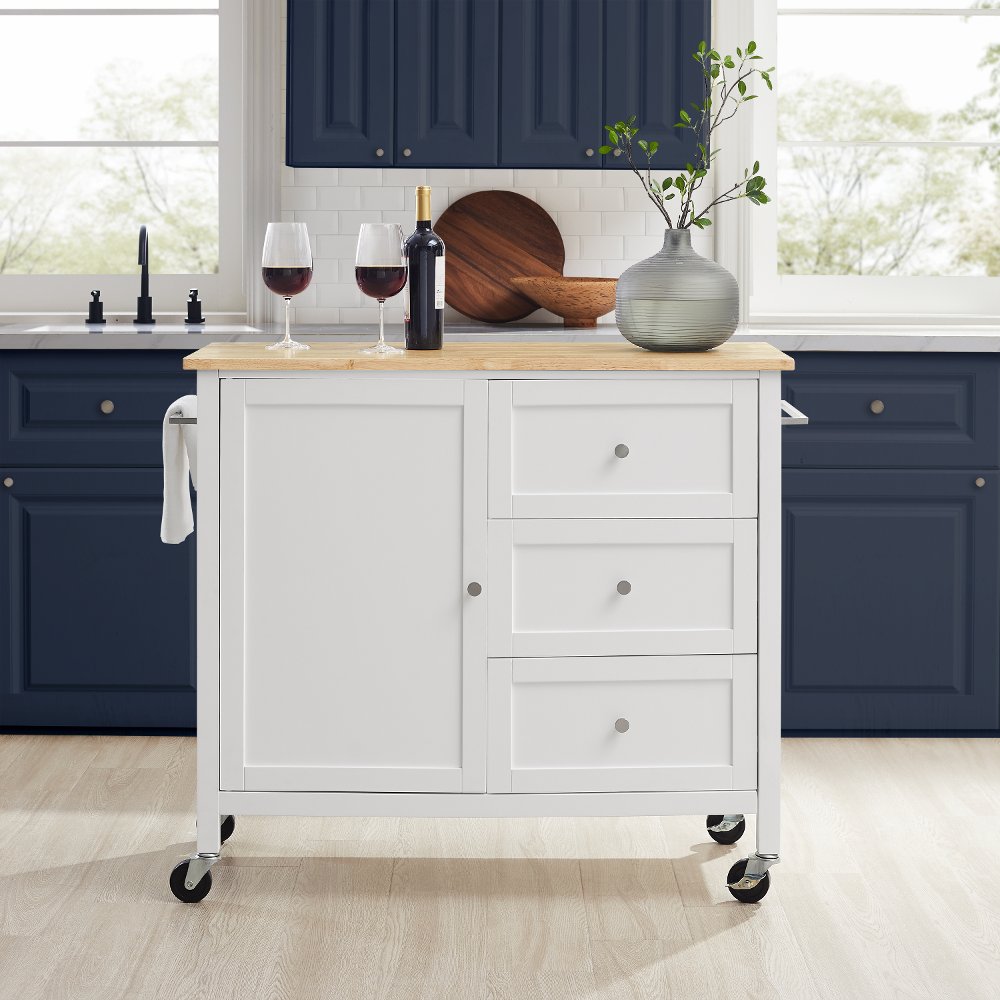
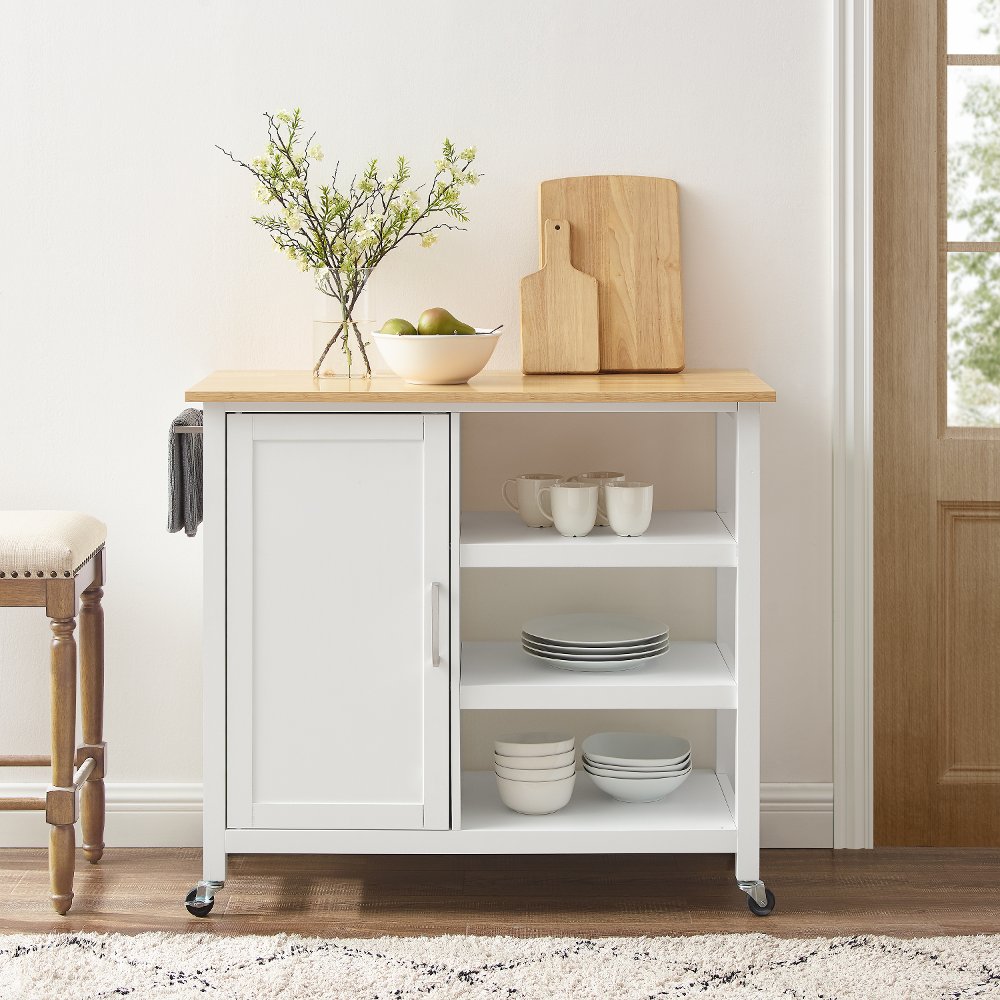
White storage carts bring useful organization to the little spaces that tend to collect everyday clutter: the gap beside a desk, a quiet kitchen corner, or the spot where laundry supplies gather. Their light finish pairs easily with natural wood, dark hardware, colorful accessories, and neutral furniture, so added storage can feel like part of the room rather than an afterthought. Against white walls, a cart can blend into the background; beside navy cabinetry or a walnut desk, it offers a crisp contrast. The right layout depends on what needs a home. Open shelves keep frequently used supplies visible, shallow trays corral small essentials, and drawers give loose odds and ends a place to disappear. In a kitchen, that might mean folded towels on a lower shelf, napkins in a basket, and a clear top for setting down serving pieces. In a home office, a compact cart can hold notebooks, printer paper, and charging accessories without taking over valuable desk space. Craft rooms benefit from separate levels for yarn, paint supplies, and works in progress, while a laundry area gains a convenient landing spot for clothespins, garment bags, and folded linens. A white finish provides a simple backdrop for these hardworking arrangements, especially when a few matching containers keep smaller contents together. Some white finishes lean warm and creamy, while others have a cooler, brighter appearance, so the undertone matters when coordinating with nearby cabinets or trim. Surface texture also changes the look: a smooth painted frame feels different from a glossy drawer front or a matte metal basket. For renters, students, and anyone furnishing a smaller home, a cart offers extra storage without the commitment of built-in cabinetry. It can also make a thoughtful housewarming gift when the recipient’s space and storage needs are known. More than a decorative accent, it gives frequently used belongings a dependable place to land and makes crowded surfaces easier to clear.
Materials and construction influence how a white storage cart looks, feels, and holds up to daily use. Metal frames often have a slim profile that suits utility spaces, offices, and craft areas, while painted wood and engineered wood designs can coordinate more closely with surrounding furniture. Plastic components may be lightweight and easy to wipe clean, making them practical for some household supplies, though weight limits and care requirements vary by design. A white finish alone doesn’t indicate whether a surface resists moisture, scratches, or stains; the underlying material and protective coating matter just as much. Powder-coated metal still needs care around chips that expose the surface beneath, and painted or laminated wood-based panels benefit from prompt cleanup when water spills. For a bathroom or laundry room, construction intended for that environment is especially important. Ventilated baskets let air circulate around contents, but damp towels still need a proper place to dry. Solid shelves provide an even base for small containers, while wire shelves may work better with bins that keep narrow objects from tipping or slipping through. Shelf edges help contain loose supplies, and deeper baskets can accommodate taller bottles, provided their dimensions and weight suit the cart. Drawers offer a tidier appearance, but their interior measurements determine whether a stack of paper or a collection of tools will actually fit. Durability also comes down to details such as secure joints, sturdy shelf supports, and handles that feel comfortable during regular use. For routine care, a soft cloth and a cleaner approved for the material are generally a better match than abrasive scrubbers. White surfaces can make dust, spills, and scuffs easier to notice, which helps with quick cleanup before marks become harder to remove. Craft paints, ink, and strongly colored liquids deserve particular care, and a suitable tray can help contain messy supplies. Following the manufacturer’s assembly, cleaning, and load instructions helps preserve both the finish and the structure, whether the cart holds lightweight stationery or a heavier collection of household essentials.
Fit is about more than finding a cart narrow enough for an empty corner. Overall width, depth, and height determine where it can sit, but handles, drawer clearance, and the space needed to reach each shelf shape how comfortably it works there. A slim white storage cart beside a vanity may hold grooming supplies neatly, yet it still needs enough room for nearby cabinet doors to open. Under a desk, the same footprint could interfere with legroom unless it sits beyond the main seating area. In a kitchen, a cart should leave a comfortable path between appliances and work surfaces rather than turn a useful shortcut into an obstacle. Vertical spacing matters, too: a tall detergent bottle, upright binder, or stack of folded towels needs adequate clearance between shelves. Keeping heavier belongings low and distributing weight within the stated limits helps support stability. If moving supplies from one spot to another is part of the plan, rolling storage carts offer a broader look at storage designed for mobility. Wheel size and material affect how a cart travels over flooring, and a design that moves smoothly across a hard surface may take more effort on a rug or at a threshold. Locking casters, when included, help keep the cart in place during use, while a dedicated handle gives hands a clear place to grip. Neither wheels nor a sturdy-looking top make a cart suitable as a seat, step stool, or support for an appliance unless the manufacturer specifically allows that use. In homes with children or pets, cleaning products, medications, and sharp tools belong in appropriately secured storage rather than on accessible shelves. A well-chosen cart works with those everyday realities. With enough capacity for the essentials, a finish that complements the room, and a layout that keeps things within comfortable reach, white storage carts can turn an overlooked bit of floor space into a useful part of the home.
Read More