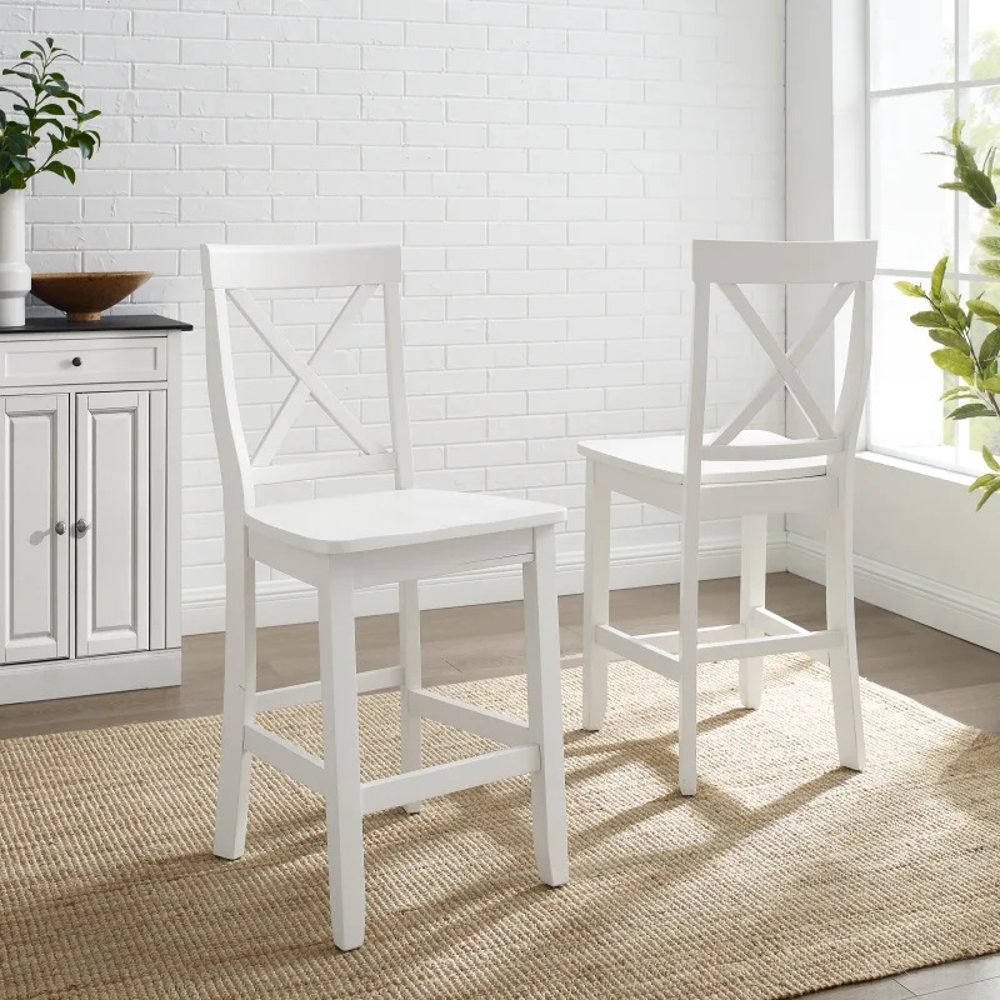
X-back dining chairs bring a familiar, welcoming shape to the table: two crossing supports framed by an open back, with enough detail to feel finished without making the room look crowded. Often called cross-back dining chairs, they fit naturally into farmhouse, cottage, coastal, and casual traditional spaces, yet a streamlined frame or dark finish can make the same silhouette feel more contemporary. That versatility makes them an easy starting point for a dining area that needs to handle everyday breakfast, homework, and a relaxed dinner with friends. The open back lets more of the table and surrounding room show through, which can be especially helpful in a breakfast nook or an open-concept living space where bulky seating would interrupt the view. Finish and proportion shape the overall effect. A visible wood grain adds warmth and texture, while a painted finish emphasizes the crisp lines of the crossed back. A lighter finish can blend quietly with pale cabinetry, and a darker chair can add definition around a light wood table. Matching every wood tone isn’t necessary; repeating an undertone or echoing a finish elsewhere in the room often creates a more comfortable, collected look. For example, chairs with warm brown seats can connect a painted table to nearby wood shelving without making every piece identical. The scale of the cross matters, too. Broad supports tend to look substantial and rustic, while narrower supports can feel more delicate or tailored. Armless designs generally tuck neatly alongside one another, making them useful around smaller tables and in multipurpose dining spaces. Chairs with arms may suit the ends of a larger table, provided there’s clearance beneath the apron. Whether your dining room hosts lingering conversations or quick meals between activities, the appeal comes from a recognizable design that feels at home in daily life rather than reserved for special occasions.
Materials and construction help determine how x-back dining chairs feel, wear, and fit into your routine. Wood frames offer natural grain variation and a range of stained or painted finishes, but the species, joinery, and protective coating matter more than appearance alone. Solid wood can develop small marks and subtle changes with use, and its response to moisture makes consistent indoor conditions and prompt spill cleanup important. Some designs combine solid wood structural parts with veneered or engineered wood components, so the material description is worth considering as a whole. Metal frames can give the crossed-back shape a leaner, more industrial character; their long-term appearance depends partly on the finish and how well it’s protected from scratches. Across materials, secure joints, a level stance, and any specified weight limit deserve attention. A chair that will move from the table to a puzzle corner every day needs to be comfortable to lift as well as pleasant to sit in. Seat construction makes another noticeable difference. A shaped wood seat offers a firm surface with straightforward cleanup, while upholstery adds cushioning for longer meals or an evening of board games. Woven seats contribute texture and a different sitting feel, though their care requirements depend on the fiber and construction. In households with young children, frequent visitors, or a busy eat-in kitchen, consider how easily crumbs and spills can be removed from the seat and its edges. Upholstery labeled for stain resistance may simplify maintenance, but it still needs the cleaning method specified by the manufacturer. A removable chair pad can soften a firm seat if its size and attachment method suit the chair; it also changes the sitting height slightly. Comfort extends beyond padding. Seat depth, front-edge shape, back angle, and where the crossed supports meet your back all influence the experience. A chair that feels good during a quick breakfast should also offer comfortable support when dinner turns into another hour of conversation.
Fit is where an attractive dining chair becomes a useful part of your home. Start with the relationship between the seat and the tabletop, not just the chair’s overall height. Standard dining tables are often about 28 to 30 inches tall, and dining chair seats commonly fall around 17 to 19 inches from the floor. Roughly 10 to 12 inches between the seat and the underside of the tabletop is a useful starting point, though a deep apron can reduce usable thigh room. Check that clearance separately, especially with thick seat cushions or armchairs. Width matters just as much: allowing about 24 inches of table edge per person is a common planning baseline, with more space helpful for wider chairs or guests who prefer extra elbow room. Table legs and pedestal bases can affect placement, so a table’s overall length doesn’t tell the whole story. Picture someone pulling out a chair while another person walks behind it, or a child sliding into a seat beside a table leg. About 36 inches from the table edge to a wall or nearby furniture can provide basic chair clearance, while an active walkway often benefits from more room. If your dining area sits beside an island, coordinating x-back counter stools can repeat the crossed-back detail at the appropriate height without treating dining chairs and stools as interchangeable. Once the proportions work, simple care helps preserve the finish and keep the seating dependable. Wipe up spills promptly, dust the back supports and joints with a soft cloth, and follow the recommended cleaner for wood, metal, upholstery, or woven surfaces. Avoid soaking a seat or frame, and test an approved upholstery cleaner in an inconspicuous spot when the care instructions call for it. Floor protectors suited to your flooring can reduce scuffs and scraping sounds; check them periodically for trapped grit. Tighten assembly hardware as directed, and lift rather than drag chairs when moving them across a room. With thoughtful sizing and manageable upkeep, cross-back dining chairs can support the ordinary moments that make a dining space personal, from morning toast to an extra place set for a friend.
Read More