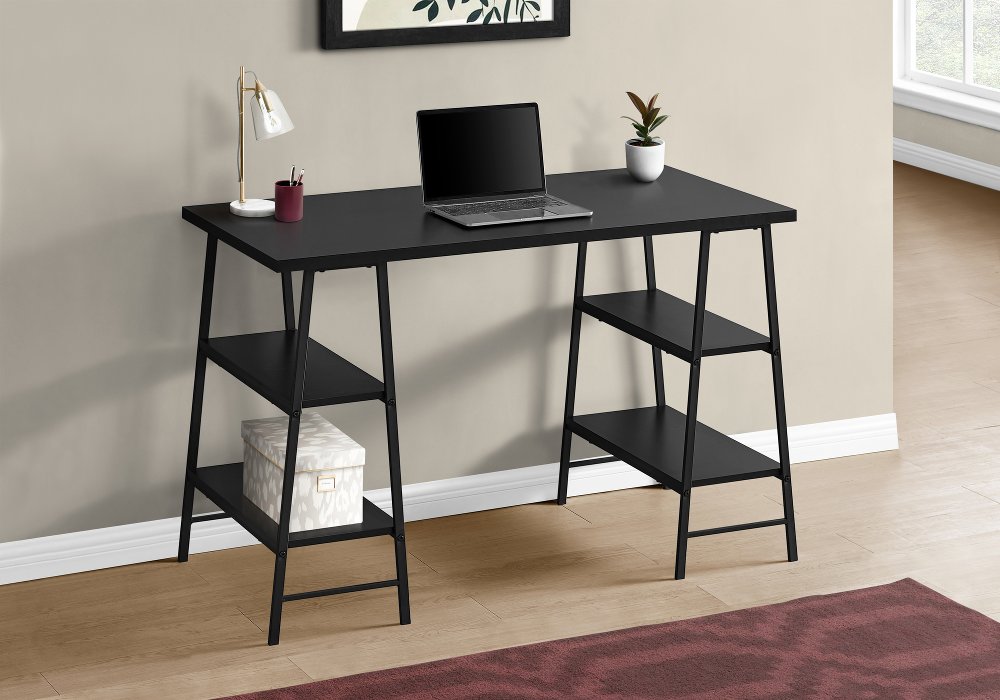
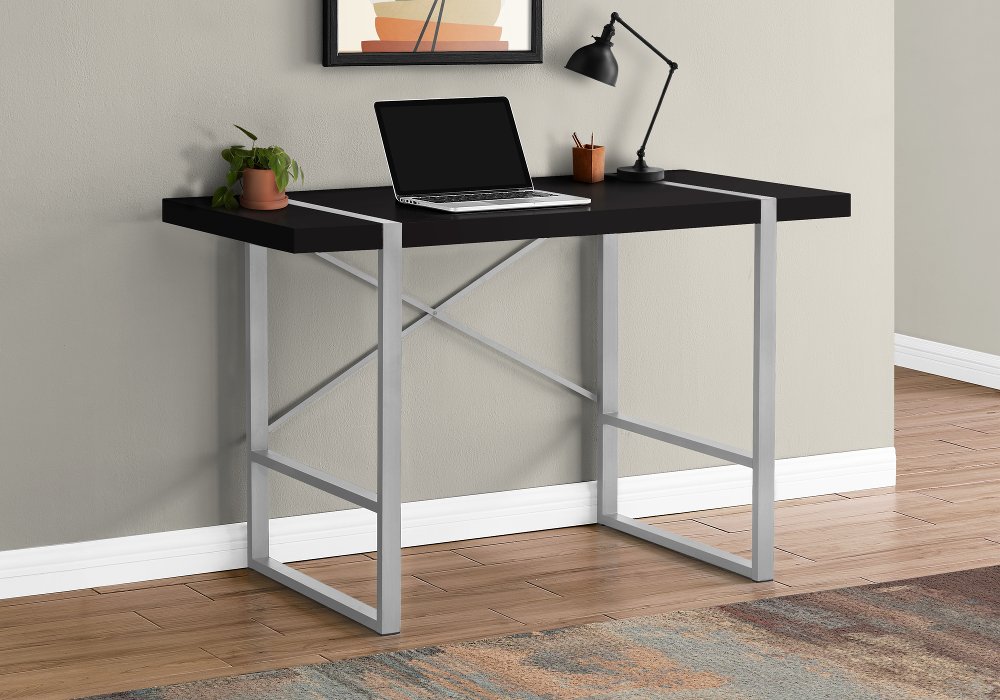
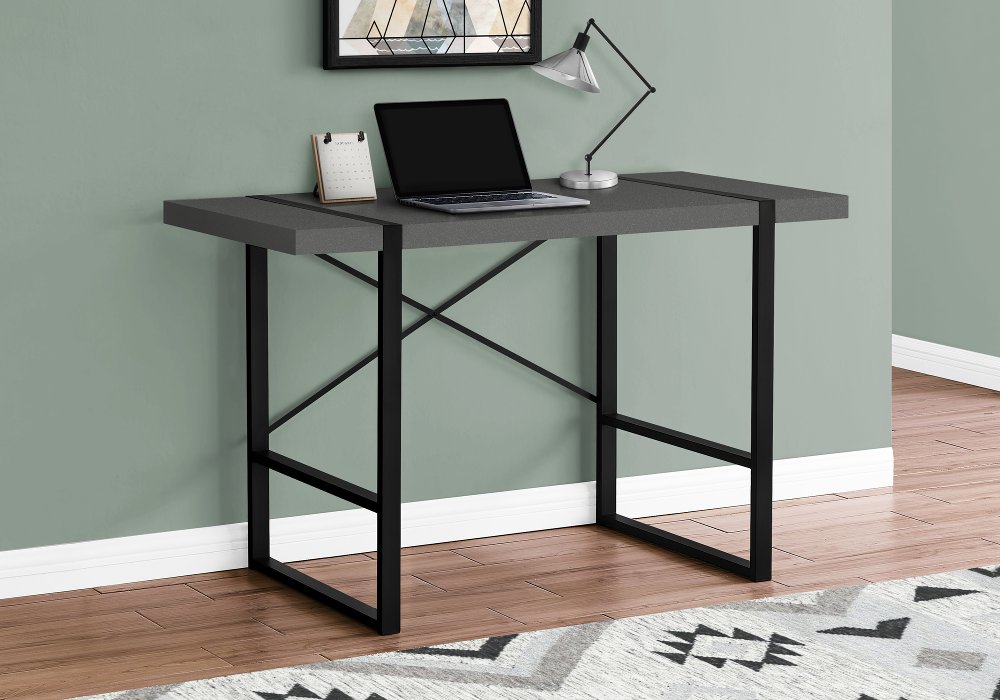
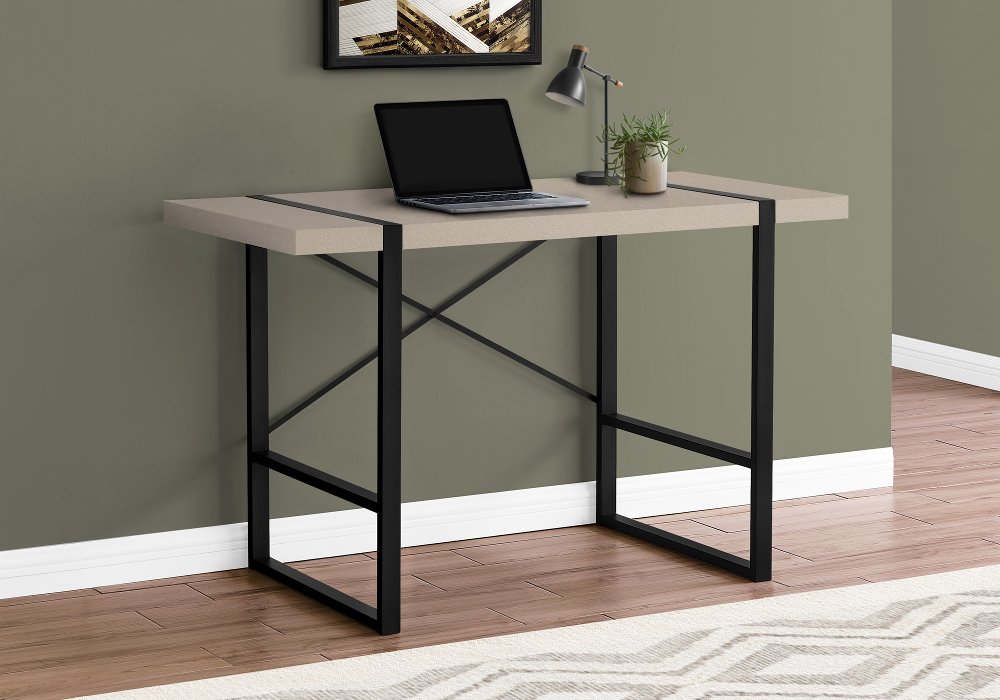
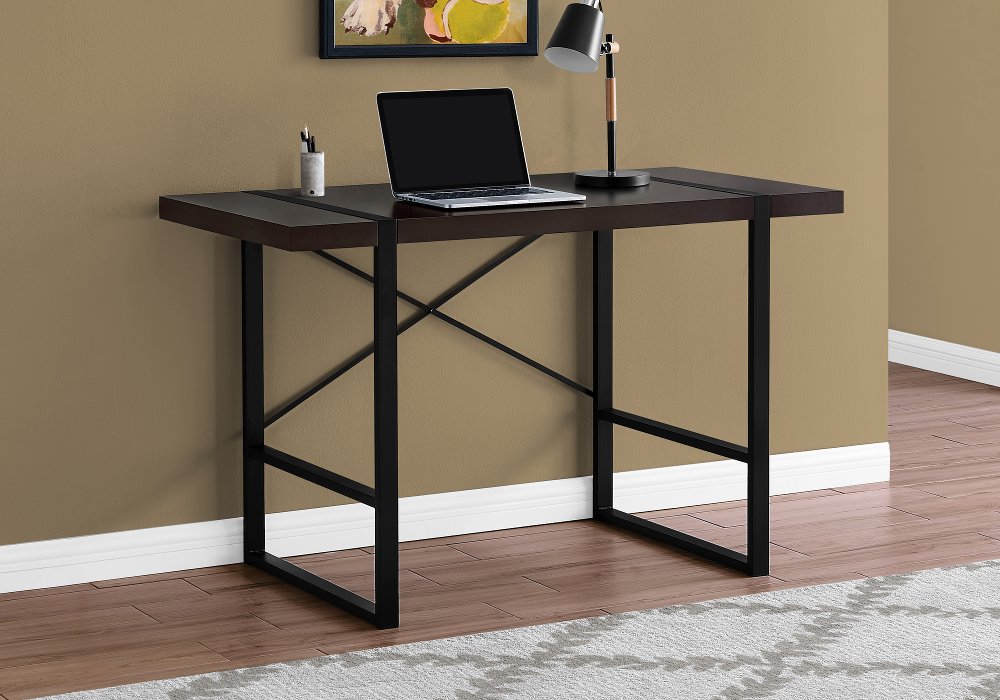
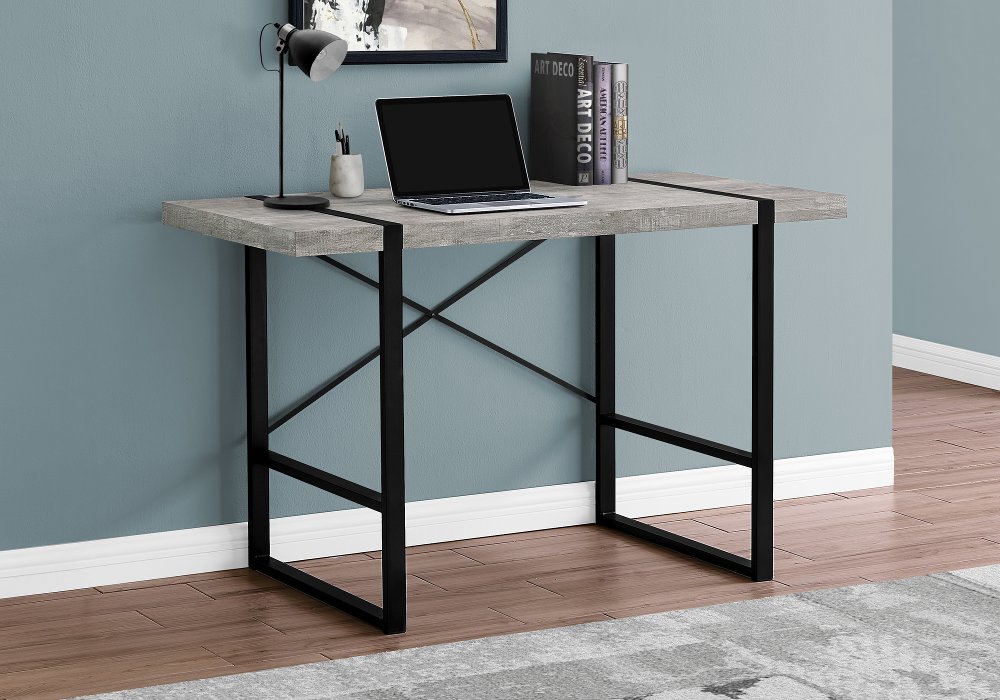
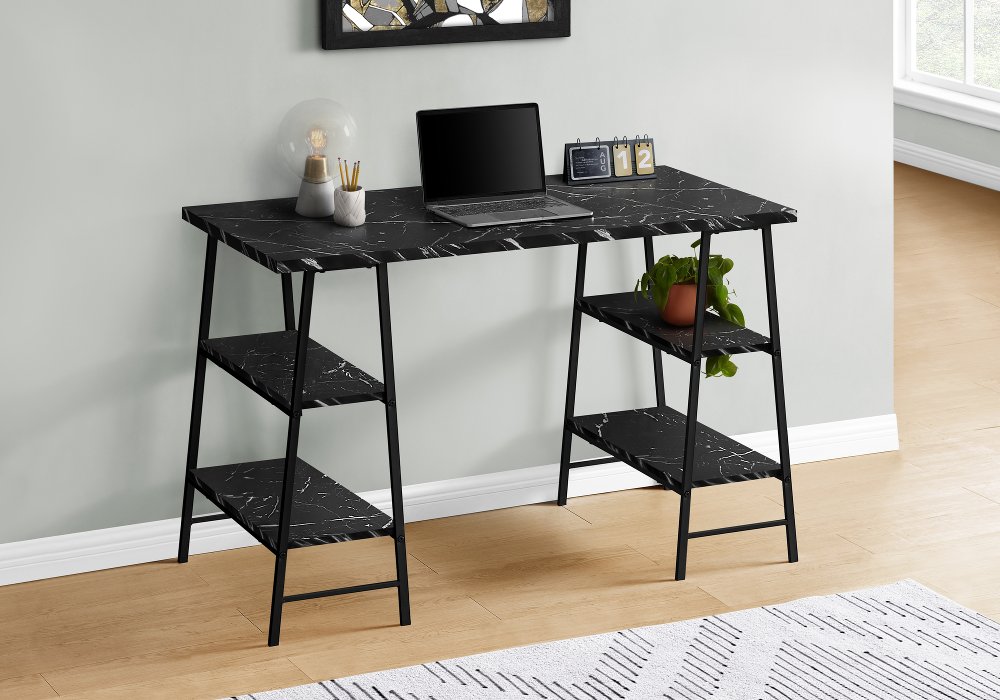
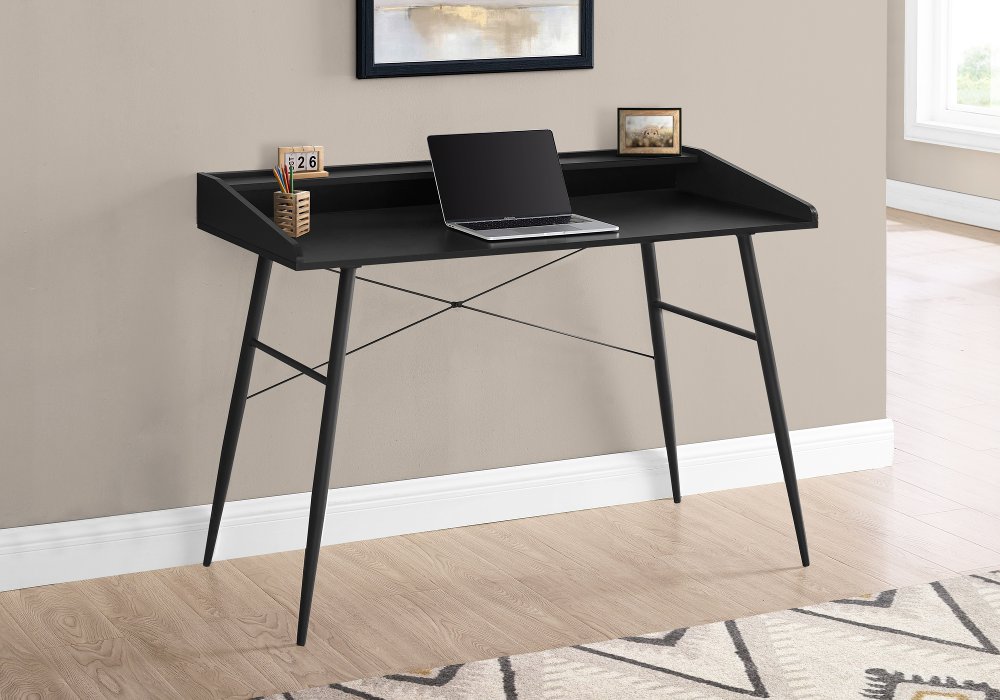
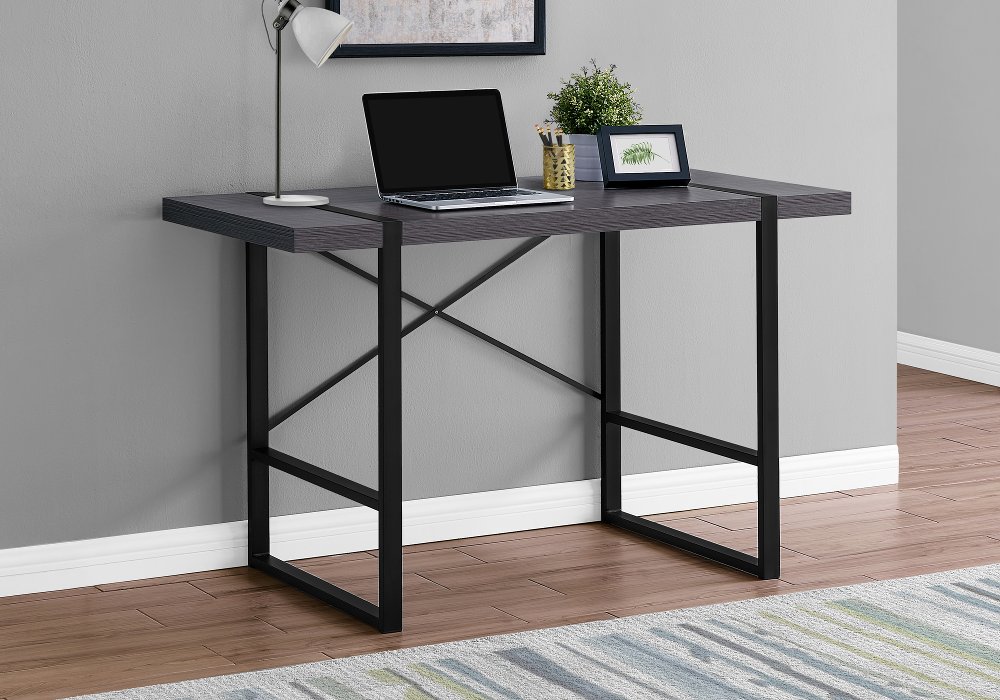
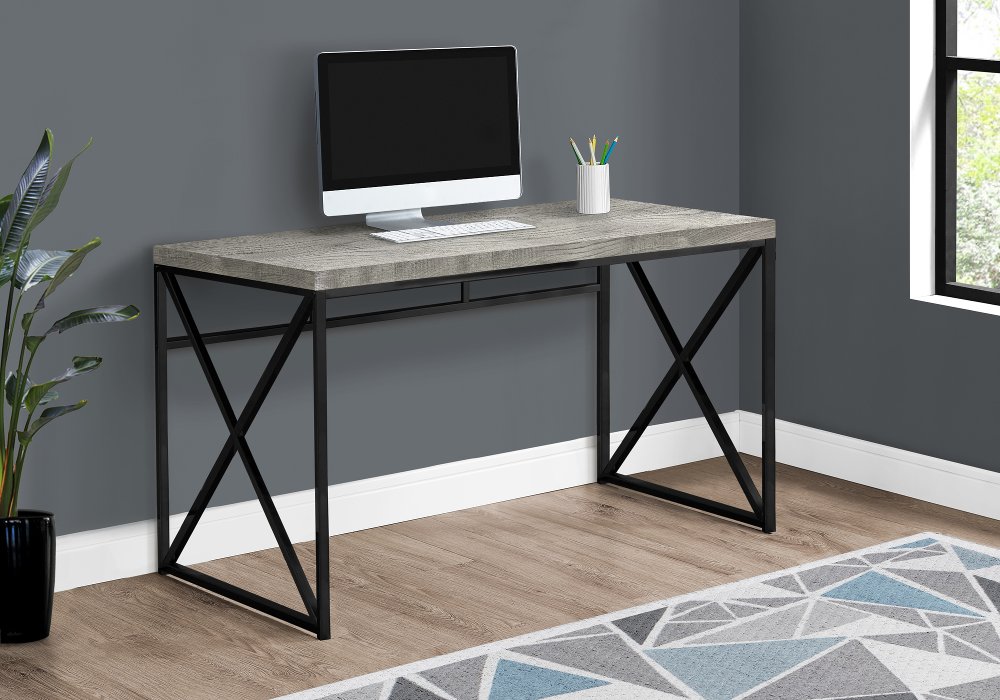
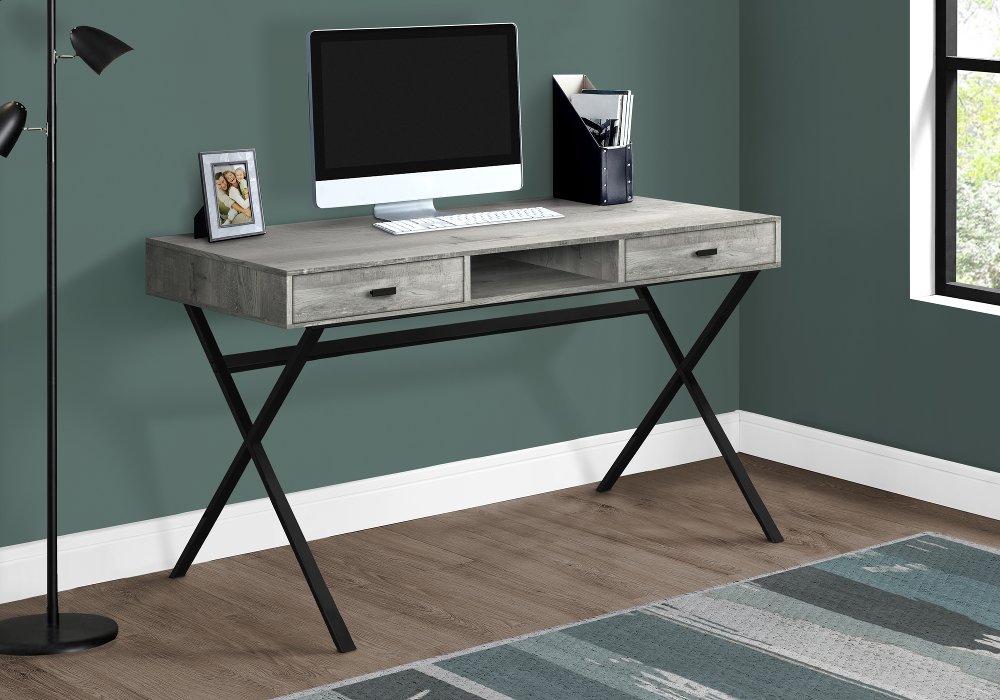
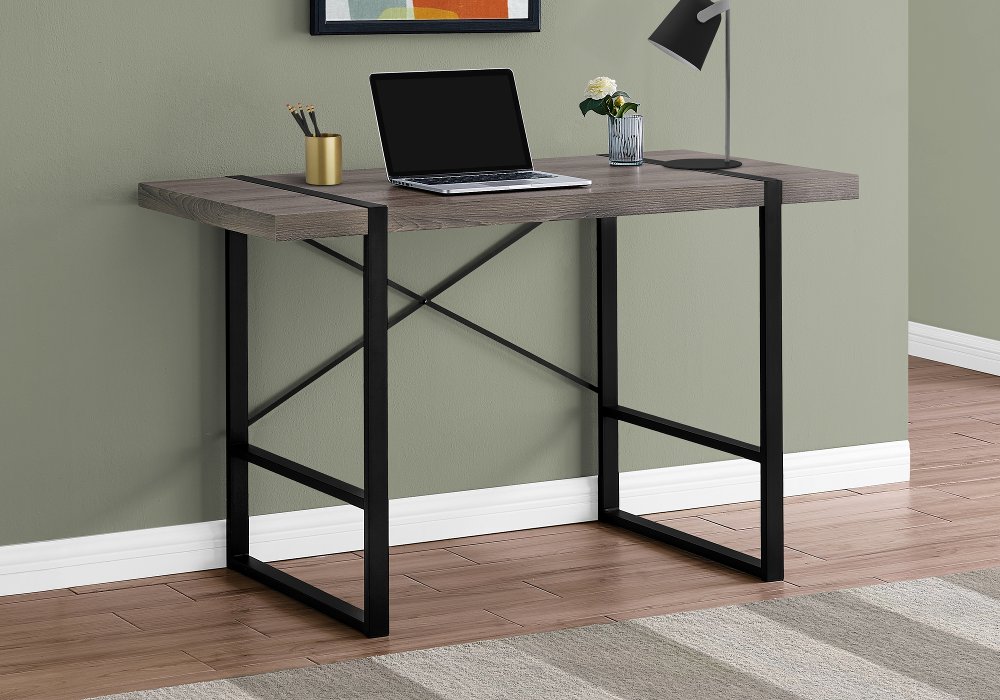
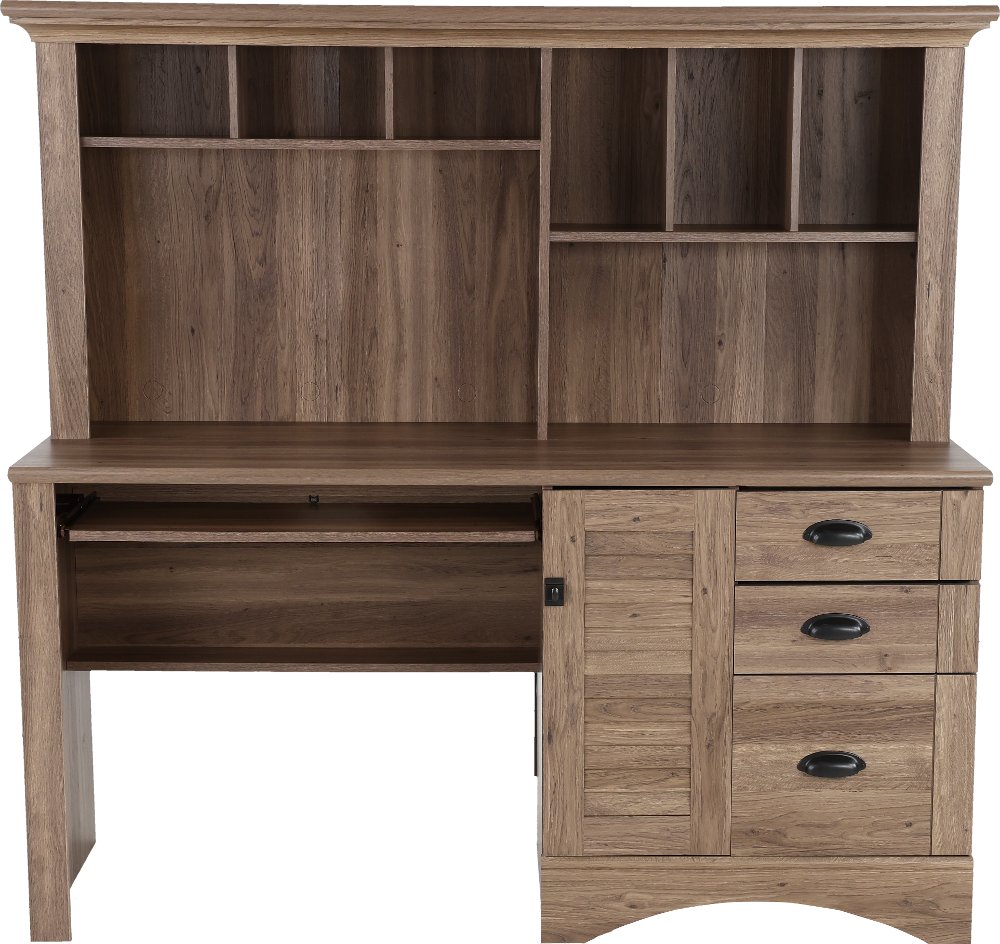
Black rectangular office desks give your workspace a defined surface for computer work, paperwork, studying, and the everyday tasks that need a little room to spread out. Their straight edges fit naturally along a wall, beneath a window, or in the center of a dedicated office, while a black finish brings a grounded look to the room. Against light walls, a dark desk creates contrast; alongside warm wood, woven baskets, or an upholstered chair, it can feel relaxed rather than strictly businesslike. The rectangular shape also makes the usable work area easy to understand: width determines how much equipment can sit side by side, and depth affects the space between your keyboard, screen, and other essentials. A compact desk around 40 to 48 inches wide may suit a laptop and a small lamp, while a wider surface around 55 to 65 inches can provide more room for two monitors, a notebook, and a charging spot. These are useful planning ranges, not dimensions shared by every desk. Depth matters just as much. A shallow surface can work well for occasional writing or laptop use, but a setup with a separate monitor and keyboard often benefits from roughly 24 to 30 inches of depth. The best fit leaves enough room to pull out your chair, walk behind it, and open nearby doors without squeezing through the workspace. Baseboards, wall outlets, and drawer clearance deserve space in that plan, too. In a guest bedroom, a simple rectangular footprint can keep the work area contained without overwhelming the room. In a larger office, a substantial desk can anchor the layout and provide a clear division between working space and storage. A black surface also gives colorful desk accessories and lighter finishes a crisp backdrop, making it easy to personalize the area without losing a cohesive look. If the finish is settled but the shape is flexible, explore Black Office Desks for a broader look at desk styles.
Materials and construction influence how a black rectangular desk looks, feels, and holds up to daily use. Solid wood can bring natural texture and character beneath a dark stain, while wood veneer places a thin layer of real wood over a supporting core. A painted black finish may create a more uniform appearance, and the amount of visible grain depends on the material and finishing process. Engineered wood with a laminate surface is another common approach, offering a consistent look and a surface that can be straightforward to maintain when cared for according to its instructions. Metal frames can create an open, streamlined profile, especially when the legs leave the area beneath the desk clear. A thicker desktop and enclosed pedestal bases tend to give a desk more visual weight, while slim legs and a thinner top can feel less imposing in a smaller room. Durability depends on more than the material name. Secure joints, a well-supported desktop, protected edges, and smoothly operating drawers all contribute to a desk that feels steady during normal use. For a heavy monitor setup, the desk’s stated weight capacity and the distribution of equipment matter; a wide surface alone doesn’t establish how much it can safely hold. Monitor arms need particular attention because their clamps must fit the desktop thickness and attach to a surface approved for that use. Black finishes can show pale dust, fingerprints, and scratches differently depending on their sheen and texture. A soft cloth used regularly helps keep the surface looking clean, and spills are best wiped up promptly rather than left around seams or edges. Follow the care directions for the finish, avoid abrasive cleaners, and use a desk mat beneath items that move frequently. A coaster under a drink and felt pads beneath accessories can help protect the work surface. Those small habits are especially useful when the same desk handles morning emails, afternoon homework, and an evening project.
The most useful desk features are the ones that support the way your day actually unfolds. Open writing desks keep the surface and leg area simple, with room for a separate filing cabinet if storage needs change. Desks with built-in drawers can keep pens, chargers, and reference materials close without leaving everything on the desktop. File drawers are helpful for paperwork, but their interior dimensions and supported folder sizes matter more than their outward appearance. A locking drawer can add privacy for personal documents, though it shouldn’t replace secure storage for valuables or highly sensitive records. For computer-heavy work, cable openings, routing channels, and accessible power connections can reduce the tangle behind the desk. When a desk includes outlets or USB ports, check the connection types and electrical instructions rather than assuming every port supports the same charging speed. A keyboard tray can free up desktop space, provided it leaves comfortable knee clearance and puts the keyboard at a suitable height. Many fixed-height office desks sit around 28 to 30 inches high, but comfort depends on your height, chair adjustment, and equipment placement. Your shoulders should feel relaxed, your forearms should reach the keyboard comfortably, and your feet should rest on the floor or a footrest. Height-adjustable rectangular desks can support changes between sitting and standing; their adjustment range, lifting capacity, stability, and cable slack all deserve consideration. A remote worker may prioritize monitor space and cable management, while a student may need room for a laptop beside an open textbook. Someone who handles household paperwork might value drawers more than a large desktop. A desk can also be a thoughtful gift for a graduate or someone setting up a home office when the room measurements and personal preferences are known. Before bringing one home, account for doorway clearance, assembly requirements, and the space needed to position it safely. With a suitable footprint, practical features, and a finish that works with the room, a black rectangular office desk can make everyday work feel more organized and comfortable.
Read More