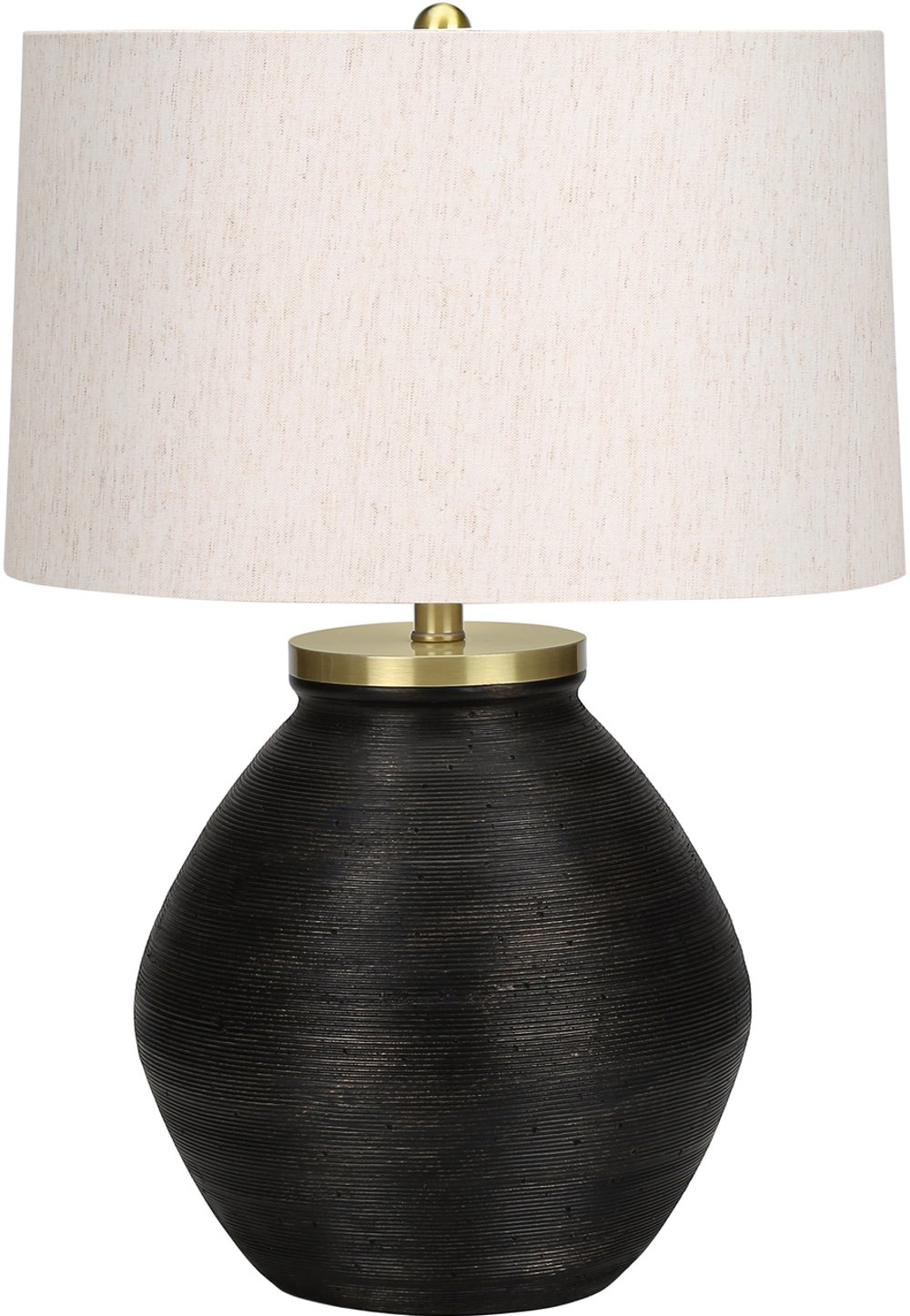
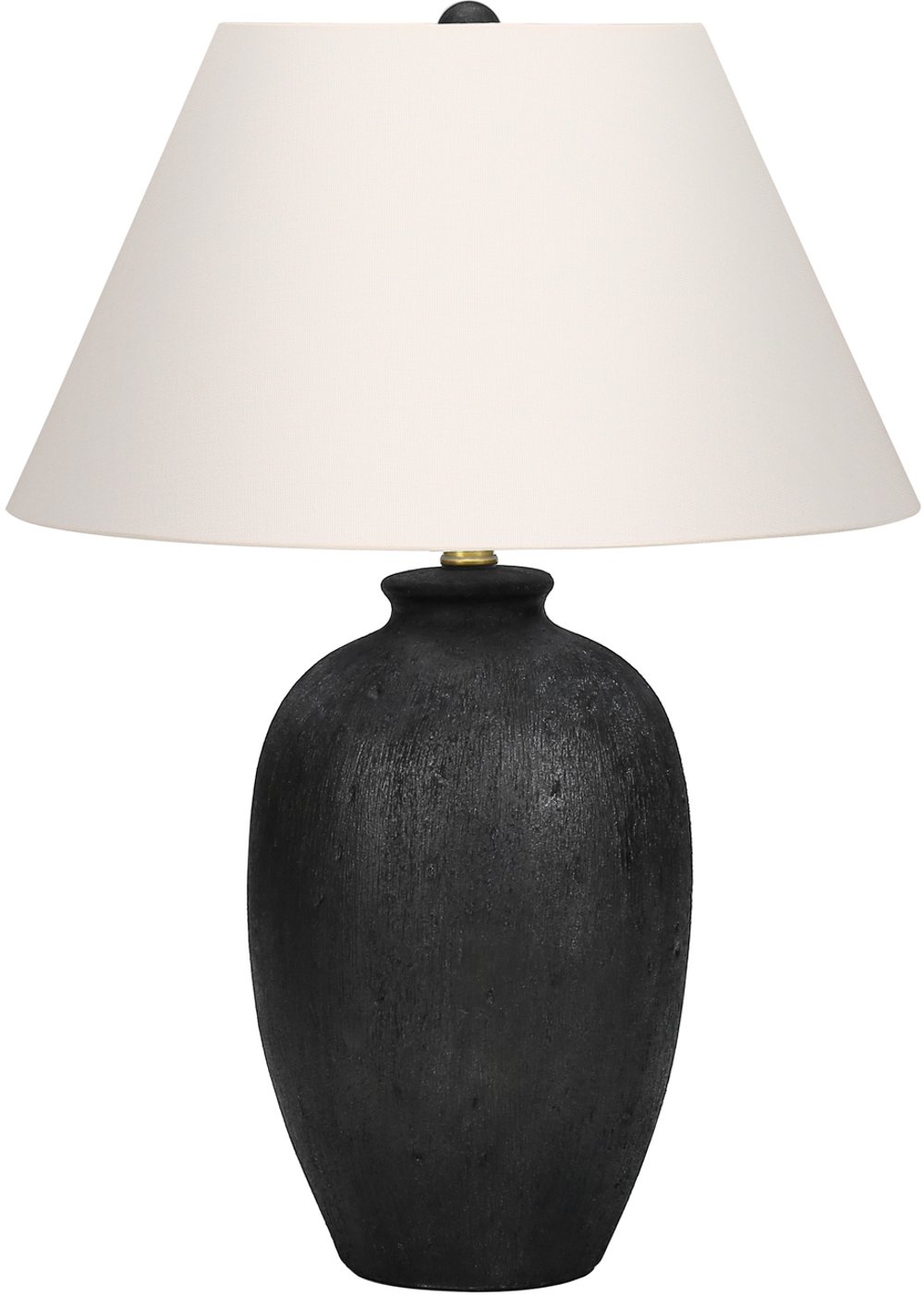
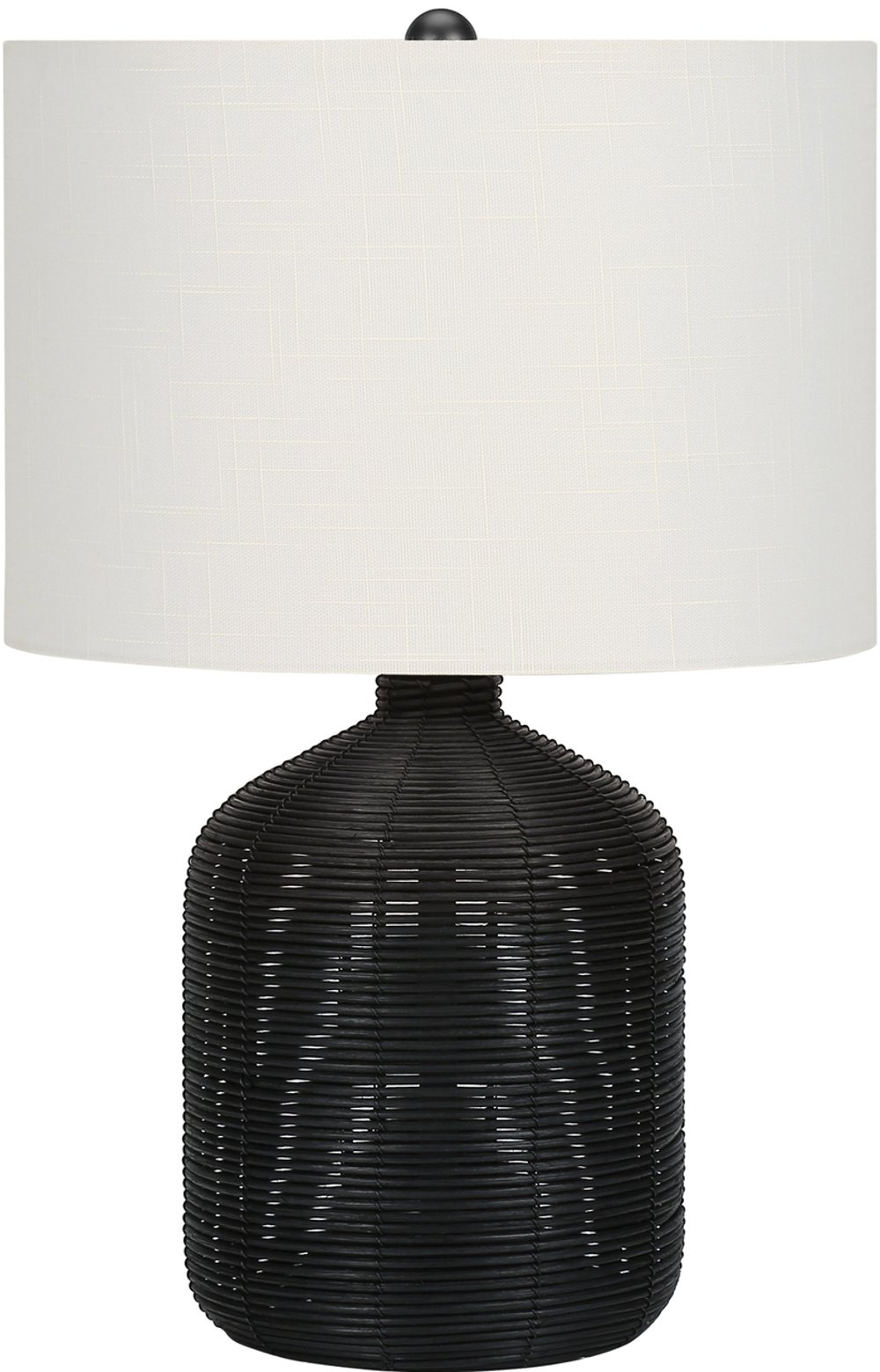
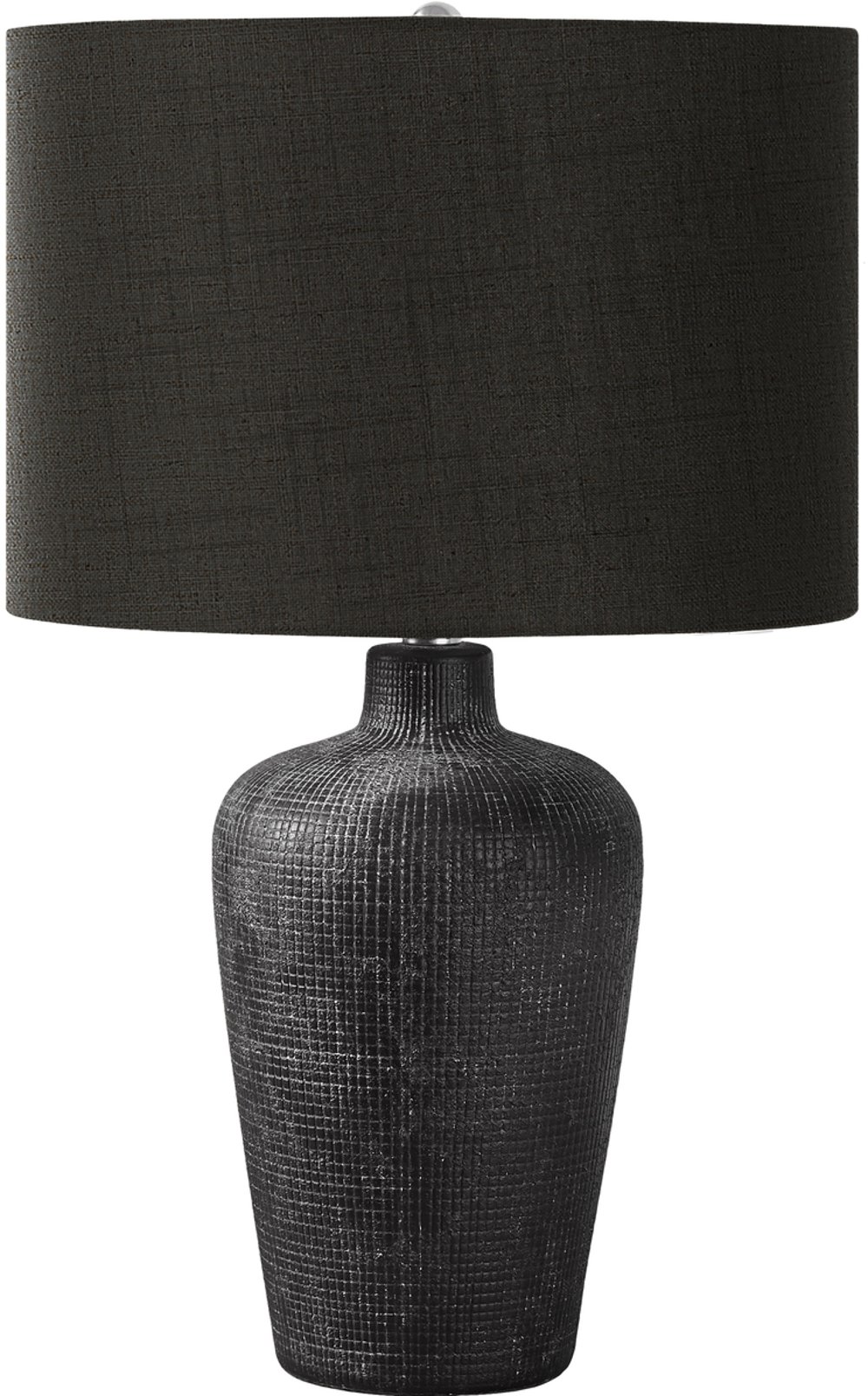
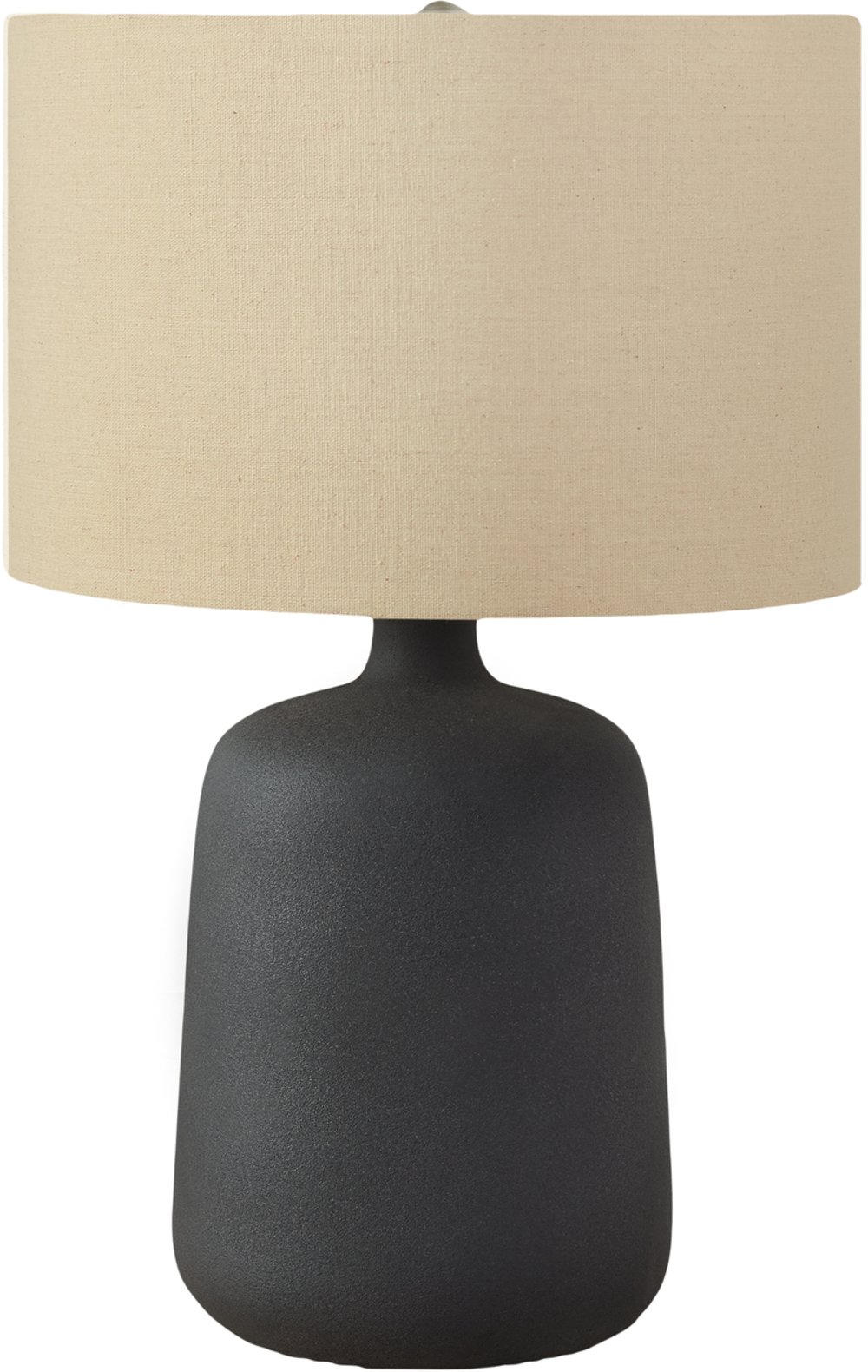
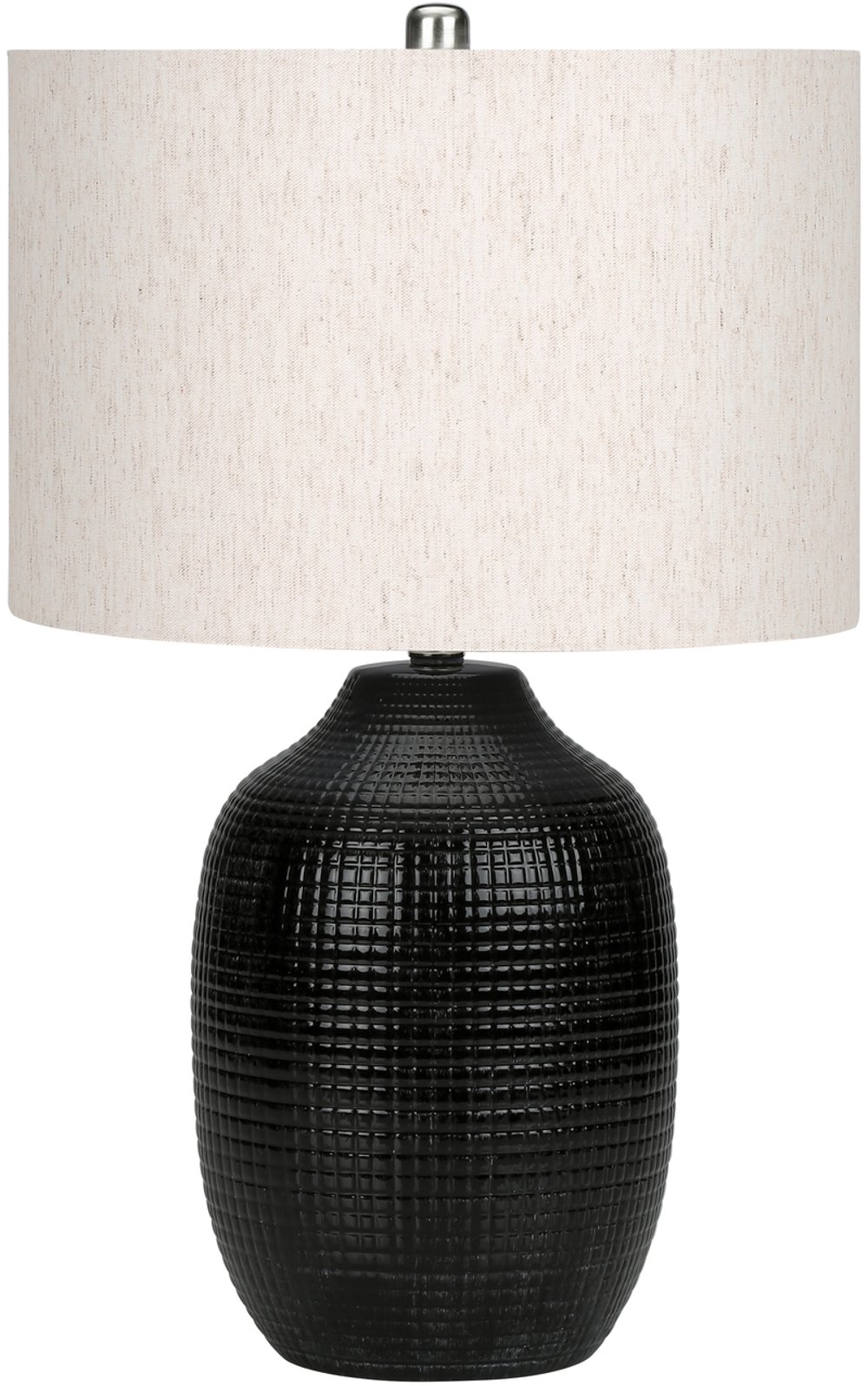
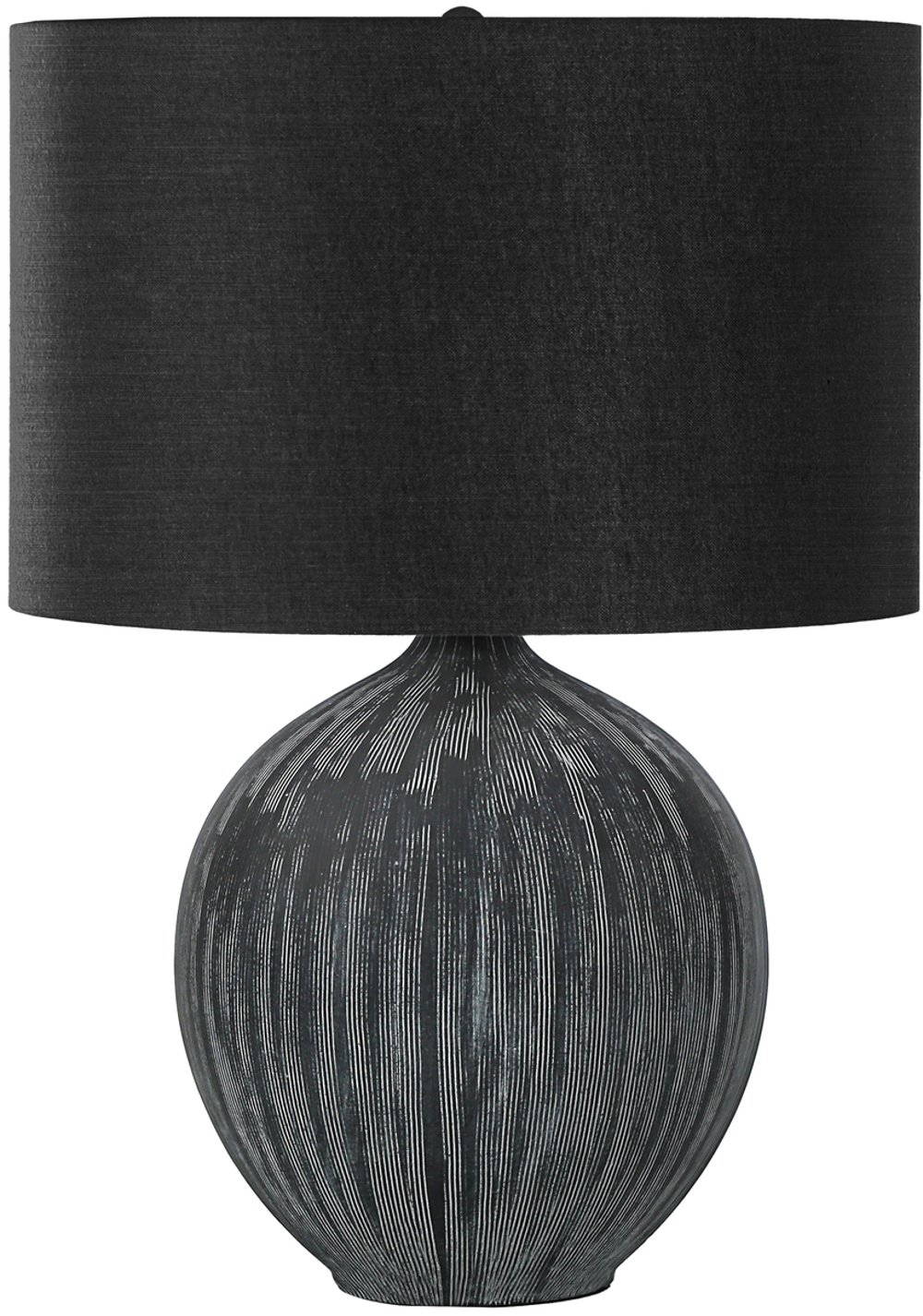
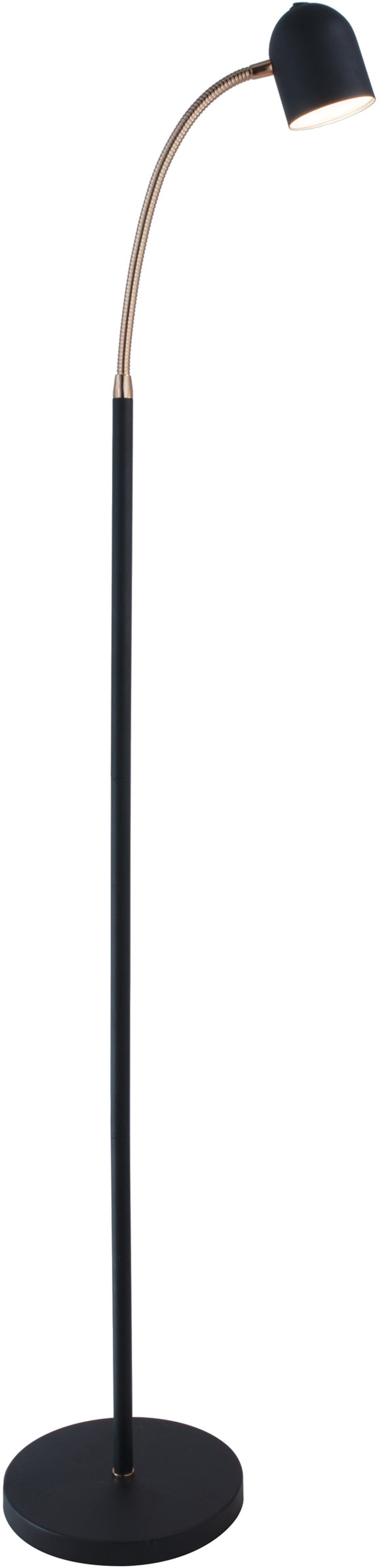
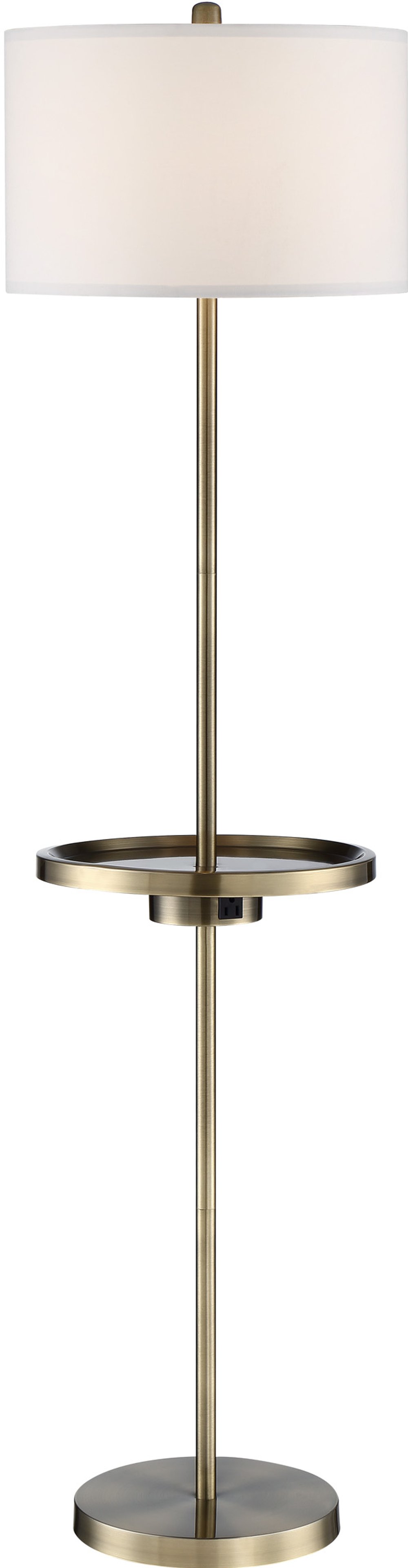
Black transitional table lamps combine traditional shapes with cleaner, more modern details, creating an easy fit for rooms that bring together furniture from different eras. Their black bases add definition, while neutral fabric shades soften the contrast and help the light feel comfortable. The result is a lamp that can look at home beside a rolled-arm sofa, on a streamlined nightstand, or atop a wood console with familiar family photos. Transitional style sits between ornate traditional design and minimal contemporary design: think gently curved silhouettes, restrained detailing, and balanced proportions rather than elaborate decoration or sharply sculptural forms. A rounded base beneath a simple drum shade captures that balance, as does a slender column with subtle molding and a softly tapered shade. Black gives these shapes a clear outline without introducing another color to coordinate. It can echo dark cabinet hardware, picture frames, or furniture legs, making separate elements in a room feel connected. Against pale walls and light upholstery, a black lamp provides a distinct focal point; beside walnut furniture or richly colored textiles, it becomes part of a deeper, more layered palette. Materials add another dimension to that effect. Glazed ceramic can bring smooth curves and a gentle sheen, while textured ceramic adds surface interest that’s noticeable even when the lamp is off. Metal works well for slimmer profiles and crisp details, with matte, satin, or polished finishes changing how strongly the base reflects light. Wood or resin construction can introduce carved shapes and subtle contours, depending on the design. White, ivory, oatmeal, and light gray shades keep the overall look versatile, although their weave and lining also influence how the illuminated lamp appears. Within the broader family of Transitional Lamps, black table lamps offer an especially useful way to repeat a dark accent while keeping the surrounding room relaxed and welcoming.
The right proportions help a black transitional table lamp feel like it belongs on the furniture beneath it. Overall height matters, but shade width, base footprint, and the amount of usable tabletop space matter just as much. On a living room end table, a lamp should leave comfortable room for a drink, a book, and the remote without pushing everything toward the edge. A broad ceramic base can give a substantial table visual balance, while a narrow metal base can preserve space on a smaller surface. The shade often extends farther than the base, so its dimensions help determine whether the lamp will crowd a wall, overlap nearby seating, or interfere with a cabinet door. Beside a reading chair, a shade that conceals the bulb from a normal seated position helps limit direct glare. The light still needs to reach the page, which makes the relationship between the chair’s seat height, the table, and the lamp more important than any single measurement. Bedside table lamps serve a similar purpose, adding light for reading and winding down without relying entirely on an overhead fixture. A reachable switch is particularly helpful when a nightstand sits slightly behind the mattress or holds other essentials. Matching lamps create a calm, symmetrical arrangement on either side of a bed, but identical nightstands aren’t essential; comparable overall lamp heights and related shade shapes can provide continuity across different furniture pieces. On a console or sideboard, a taller silhouette can hold its own beside artwork or a mirror, provided the shade fits comfortably within the surface and doesn’t block the view. A single lamp can illuminate a small entry table, while a pair can frame a longer piece of furniture. These lamps also suit guest rooms, apartments, and shared living spaces, where flexible styling makes it easier to accommodate different tastes. Their mix of familiar forms and simple finishes works especially well when a room evolves gradually rather than being furnished all at once.
Everyday performance depends on the shade, bulb compatibility, controls, and construction as well as appearance. A light-colored fabric shade generally diffuses light through its sides, while its top and bottom openings contribute to the surrounding illumination. Tighter weaves and opaque linings can reduce that sideways glow, so two shades that look similar when unlit may create different effects after dark. For a comfortable seating area or bedroom, a compatible warm-white bulb often complements wood tones and neutral upholstery; reading and other close tasks may call for greater light output. Bulb brightness is measured in lumens, while the lamp’s stated wattage limit identifies the maximum wattage it can safely accommodate. Both deserve attention, along with the required bulb base and any restrictions on bulb shape or type. Dimming, three-way operation, touch controls, and integrated charging features vary by design and shouldn’t be assumed from the lamp’s appearance. When a lamp includes one of these features, compatible bulbs and proper setup help it perform as intended. A stable base, secure shade attachment, and sound cord routing also make a difference in daily use, particularly on busy tables or in homes with children and pets. Heavier doesn’t automatically mean sturdier: base width, balance, and placement all affect stability. Ceramic can chip if struck, and painted or plated metal finishes can scratch, so a little clearance from frequently moved objects helps preserve the surface. Black finishes may reveal dust, fingerprints, or residue, especially on smooth surfaces. Routine care usually starts with switching off and unplugging the lamp, letting the bulb cool, and using a soft, dry cloth on the base, with any additional cleaning guided by the manufacturer’s instructions. Fabric shades benefit from gentle dusting suited to their material; harsh cleaners and excessive moisture can damage finishes or leave marks. For a housewarming or wedding gift, a black transitional table lamp can be a thoughtful choice when the recipient’s room dimensions and lighting needs are known. Its lasting appeal comes from that practical balance: useful light, an adaptable silhouette, and enough contrast to give a favorite corner a finished look.
Read More