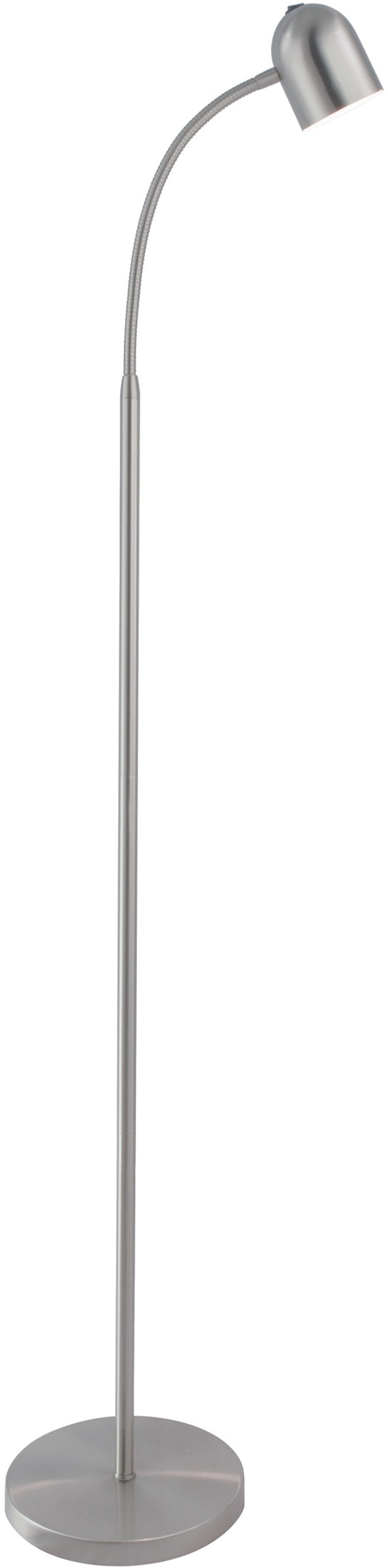
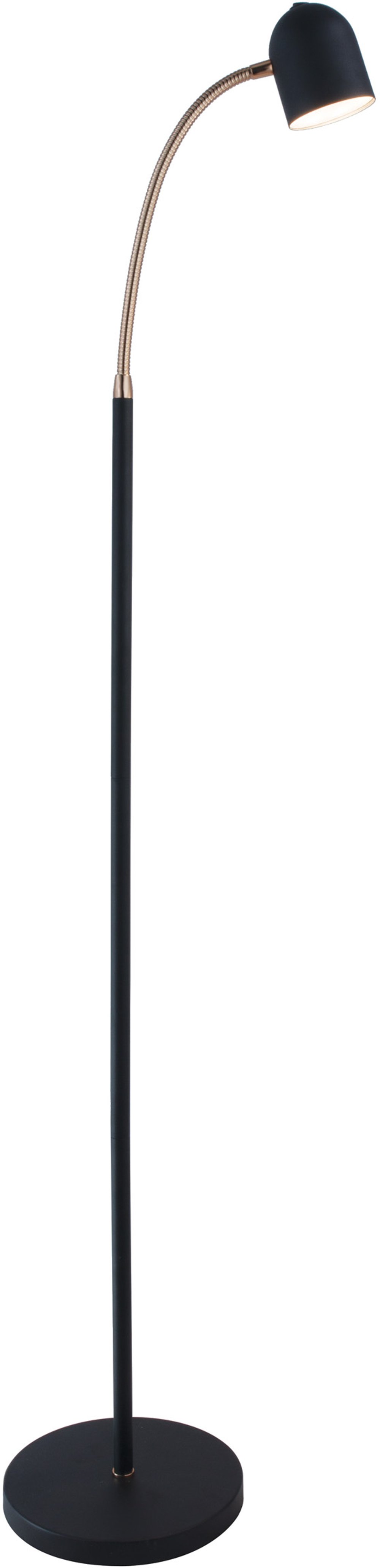
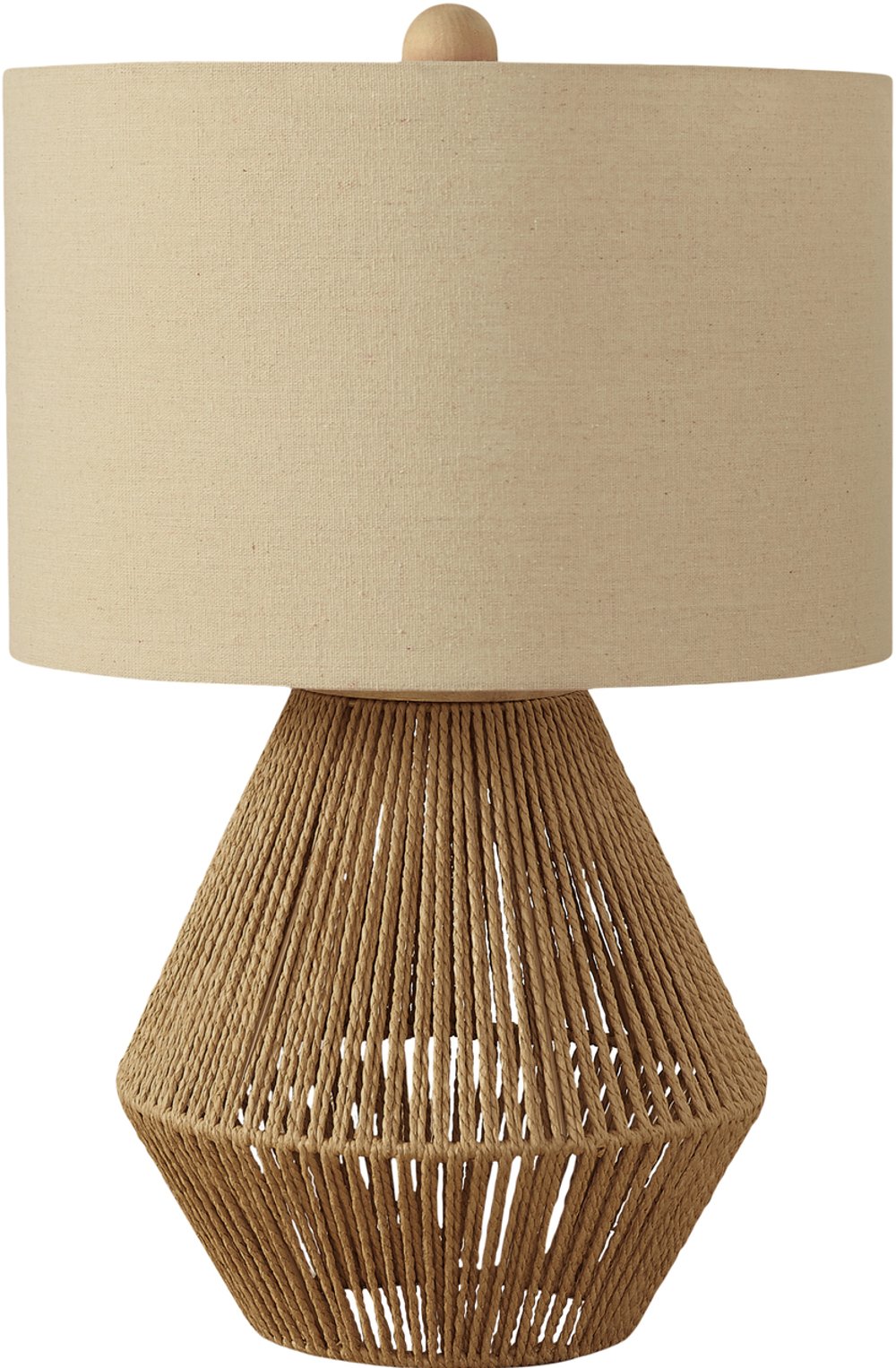
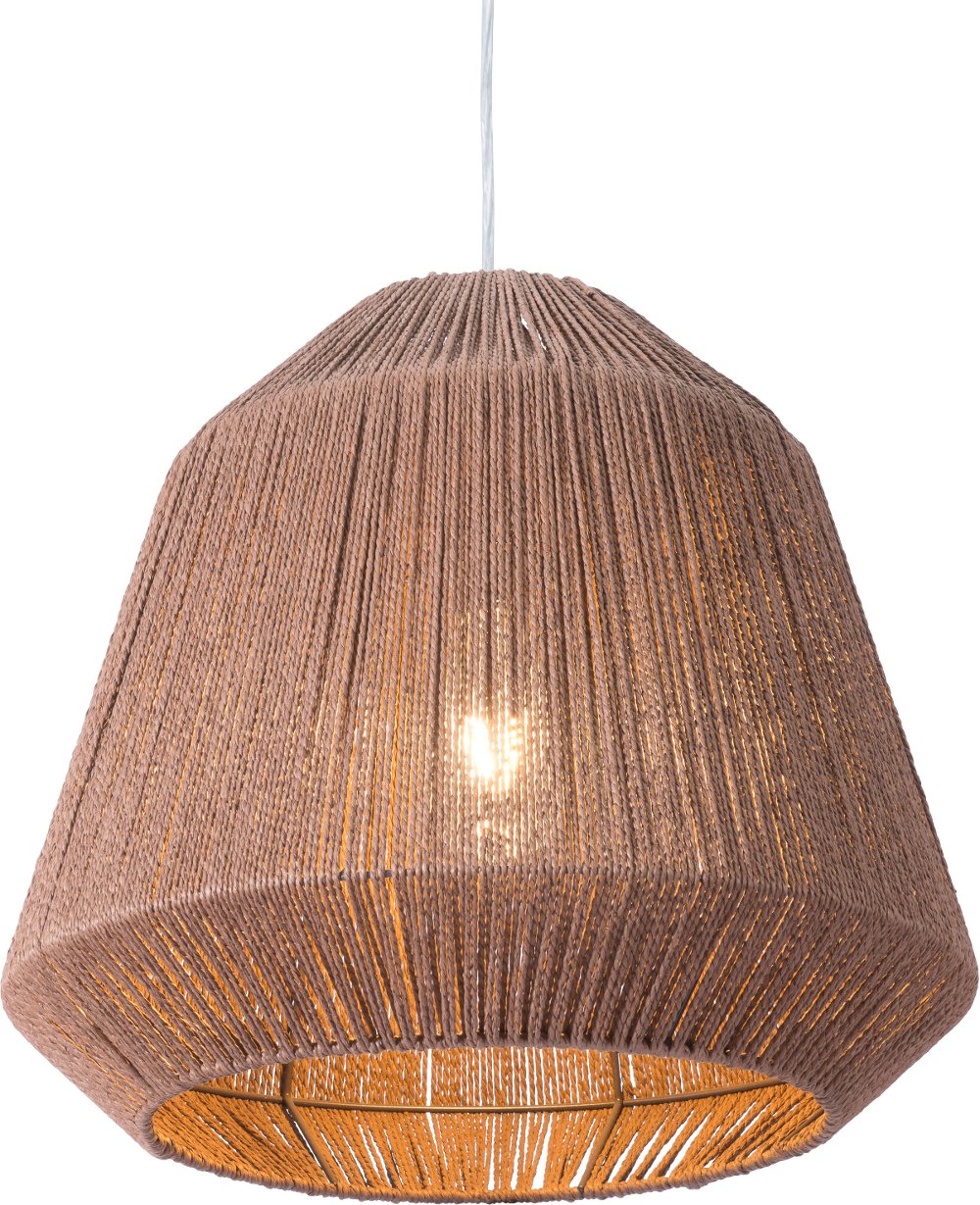
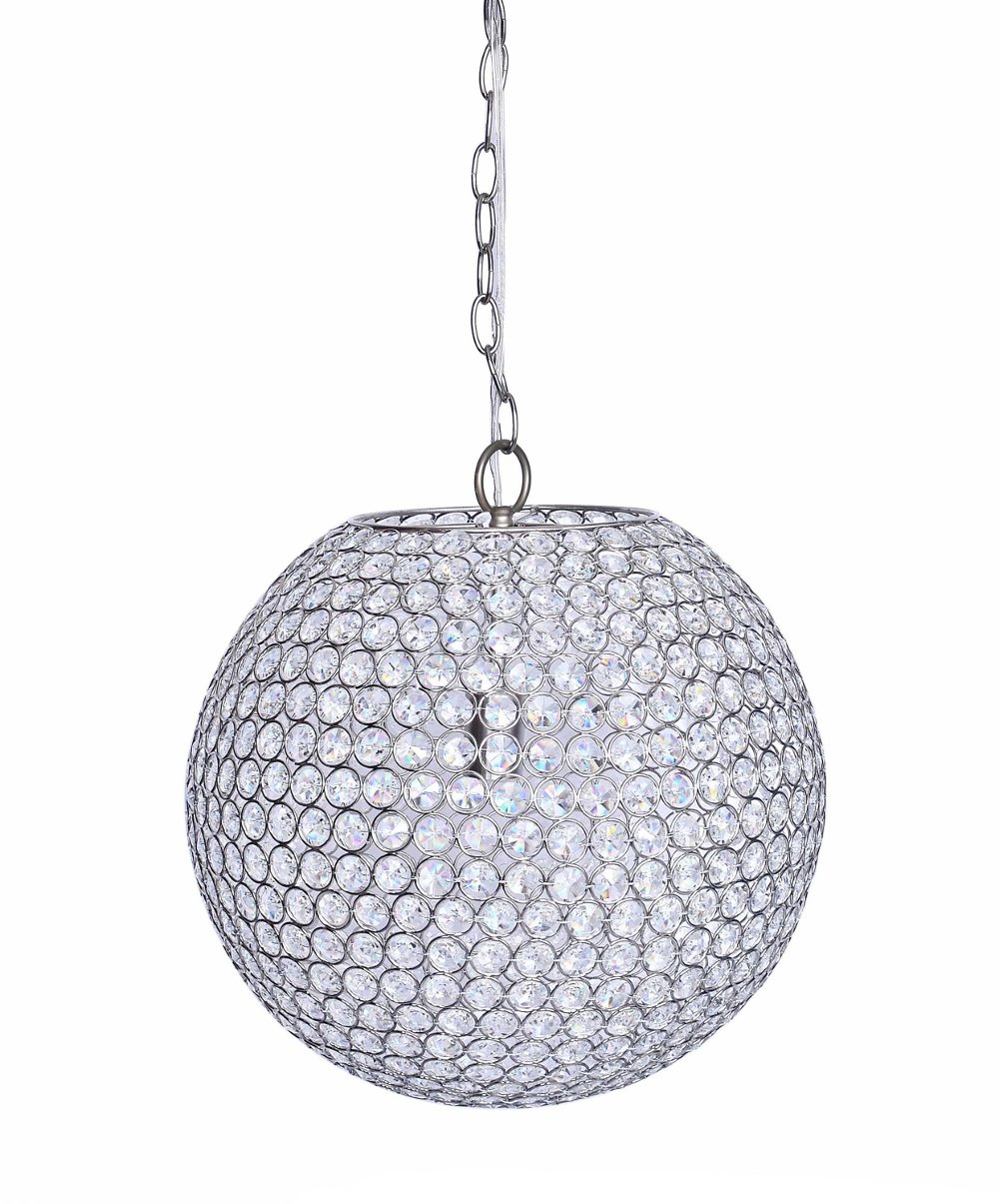
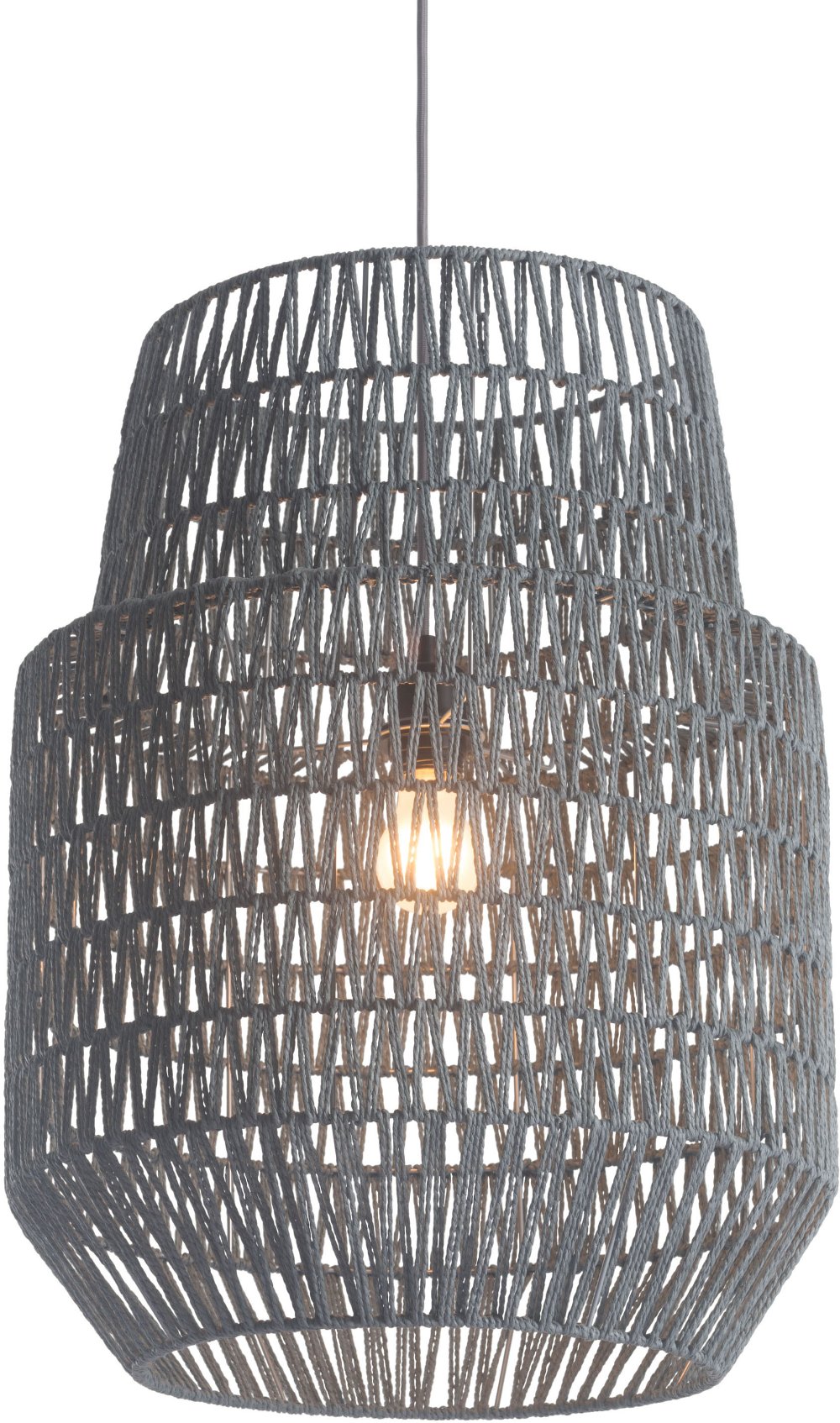
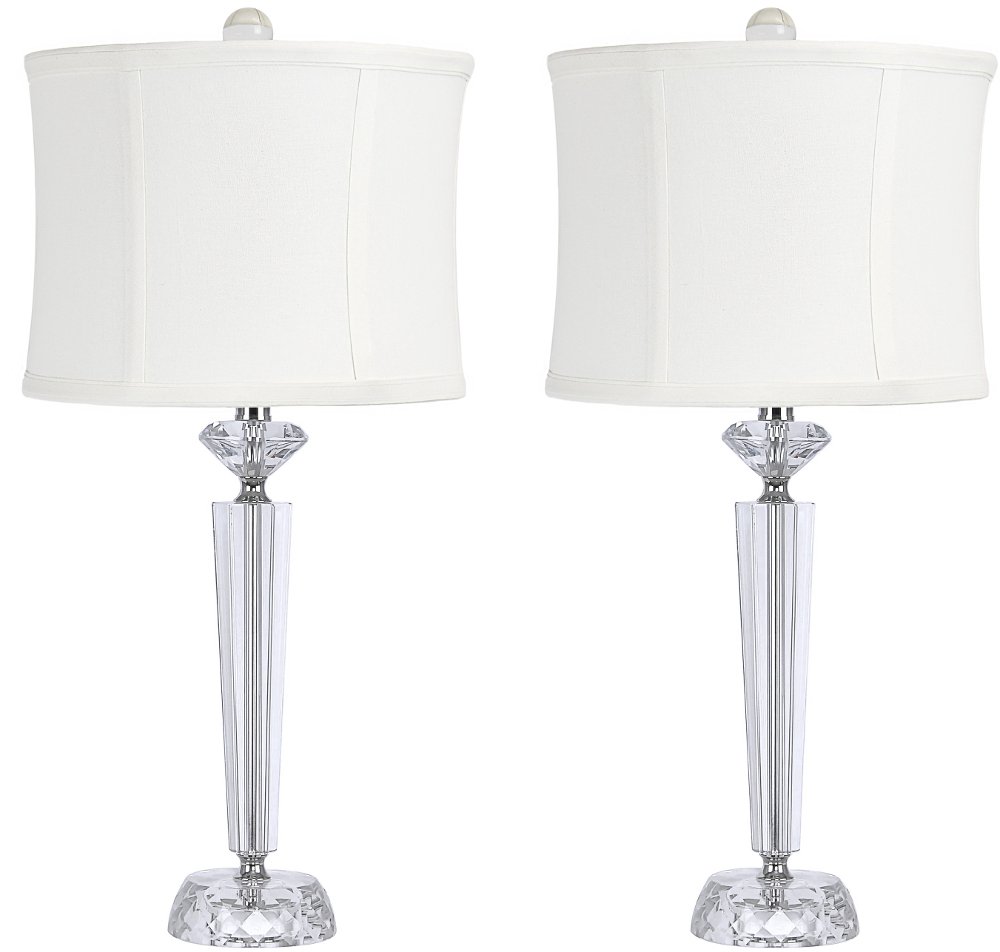
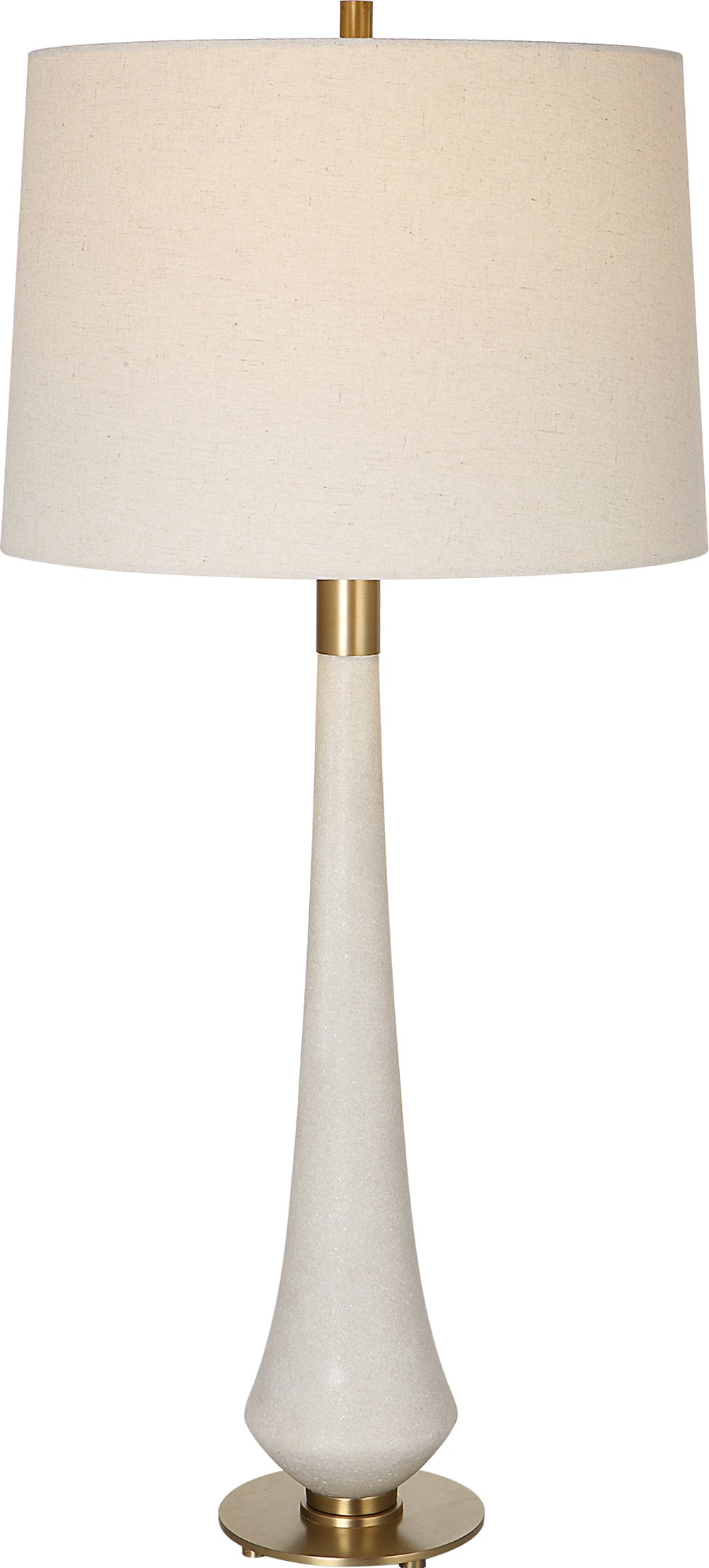
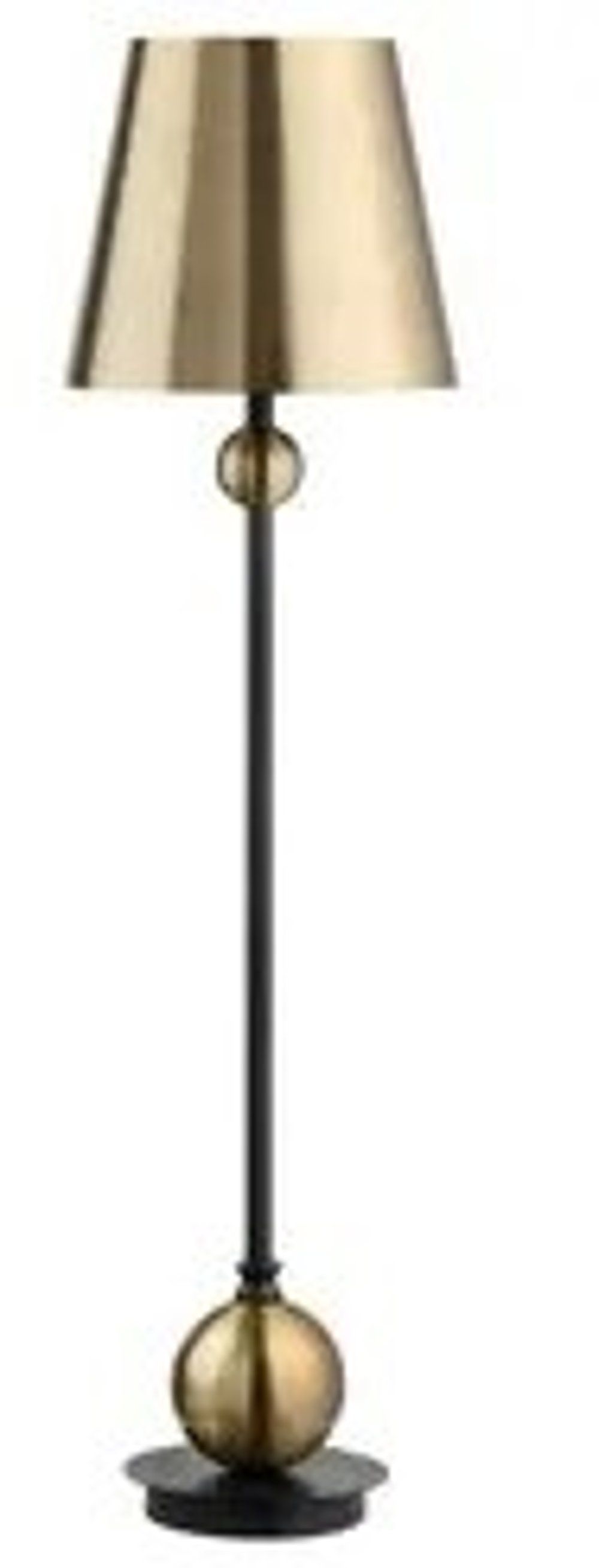
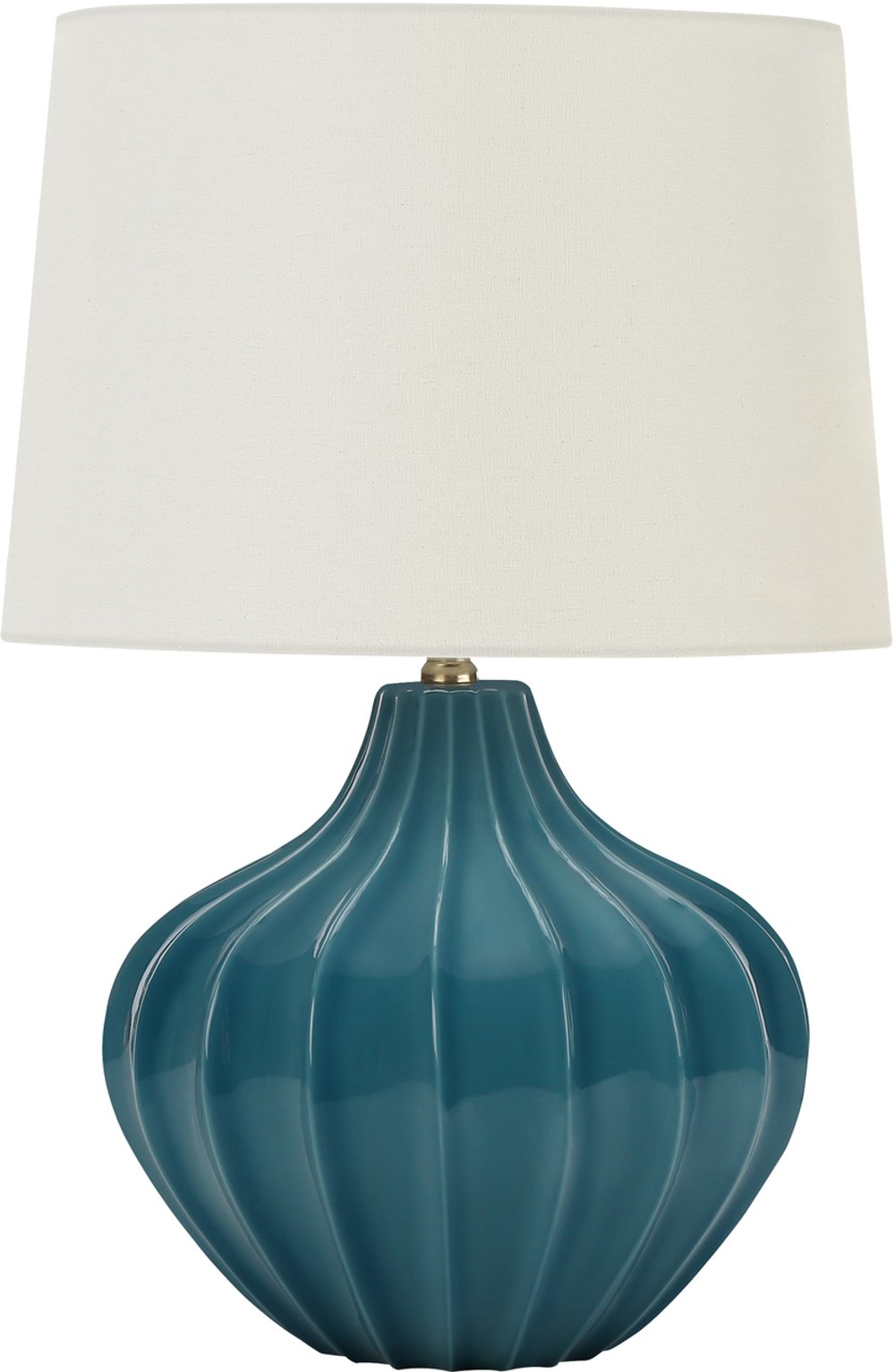
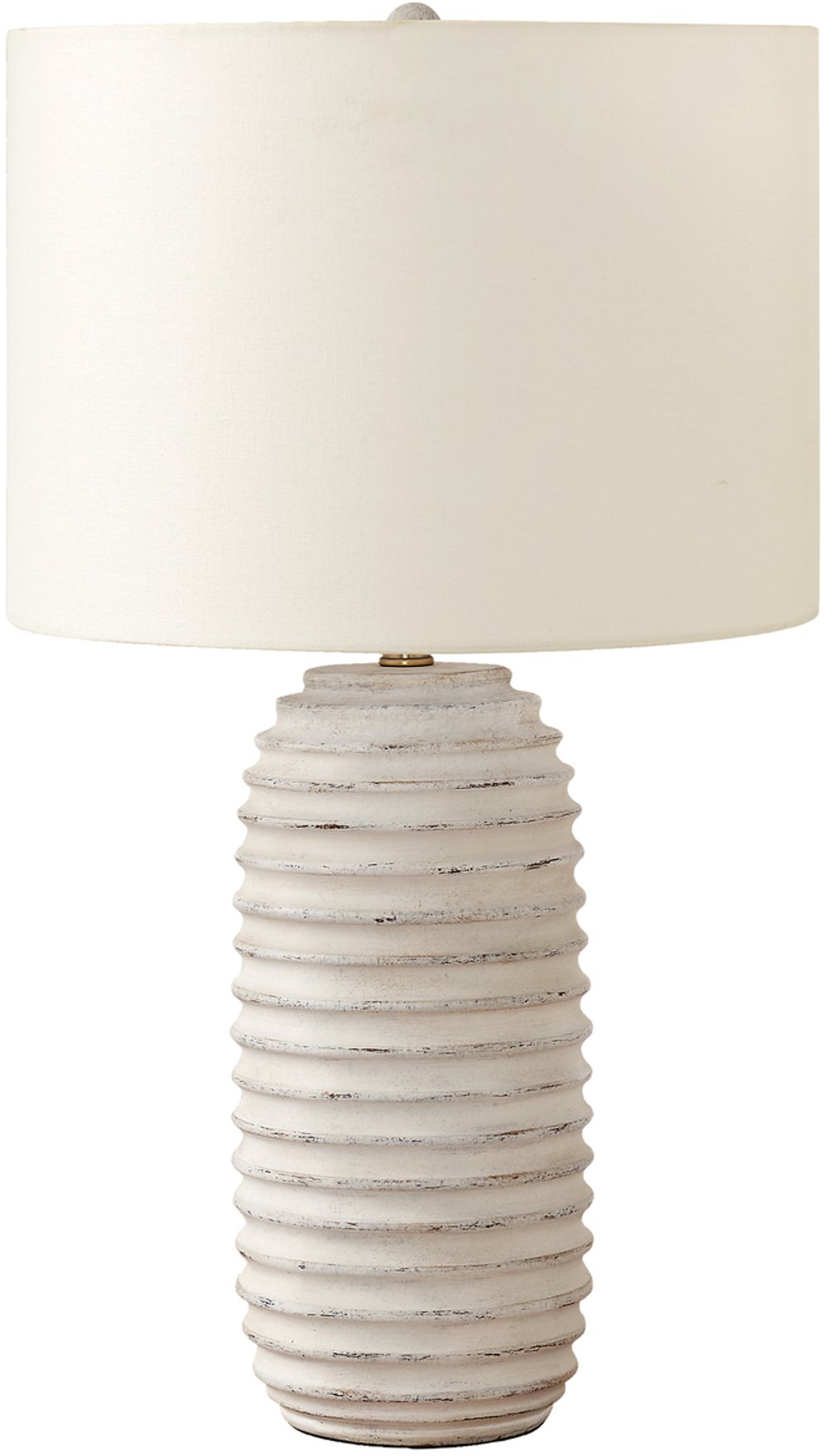
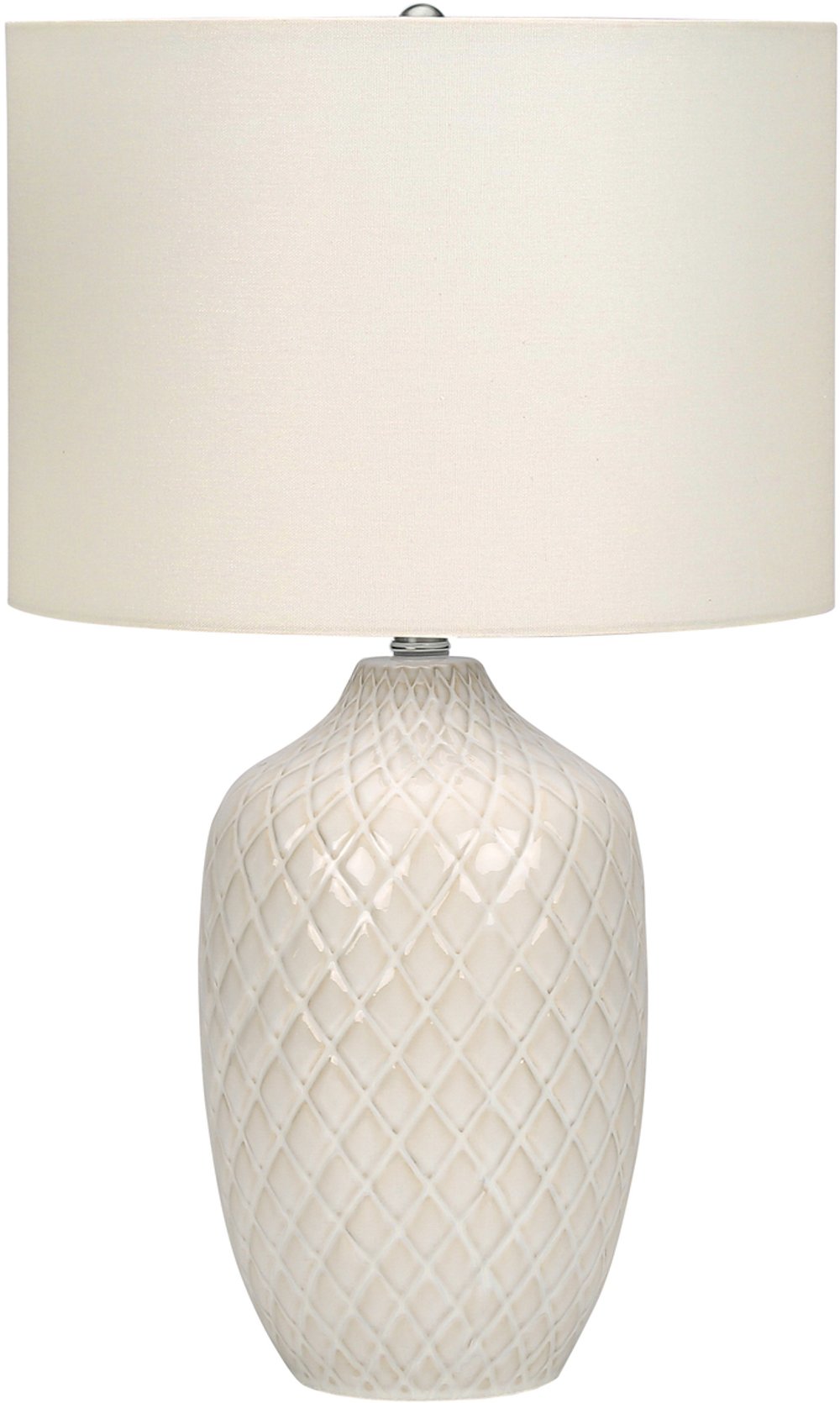
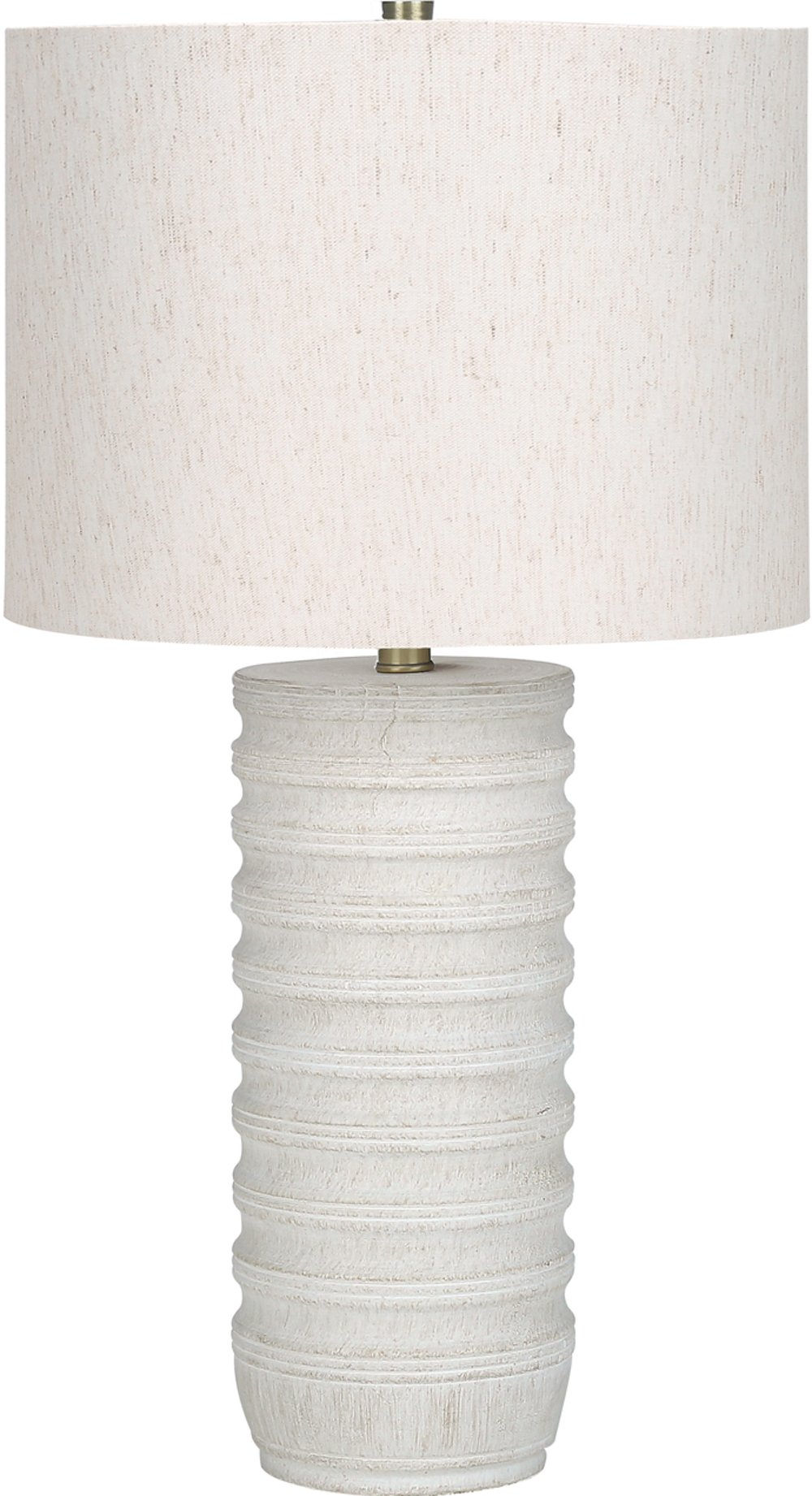
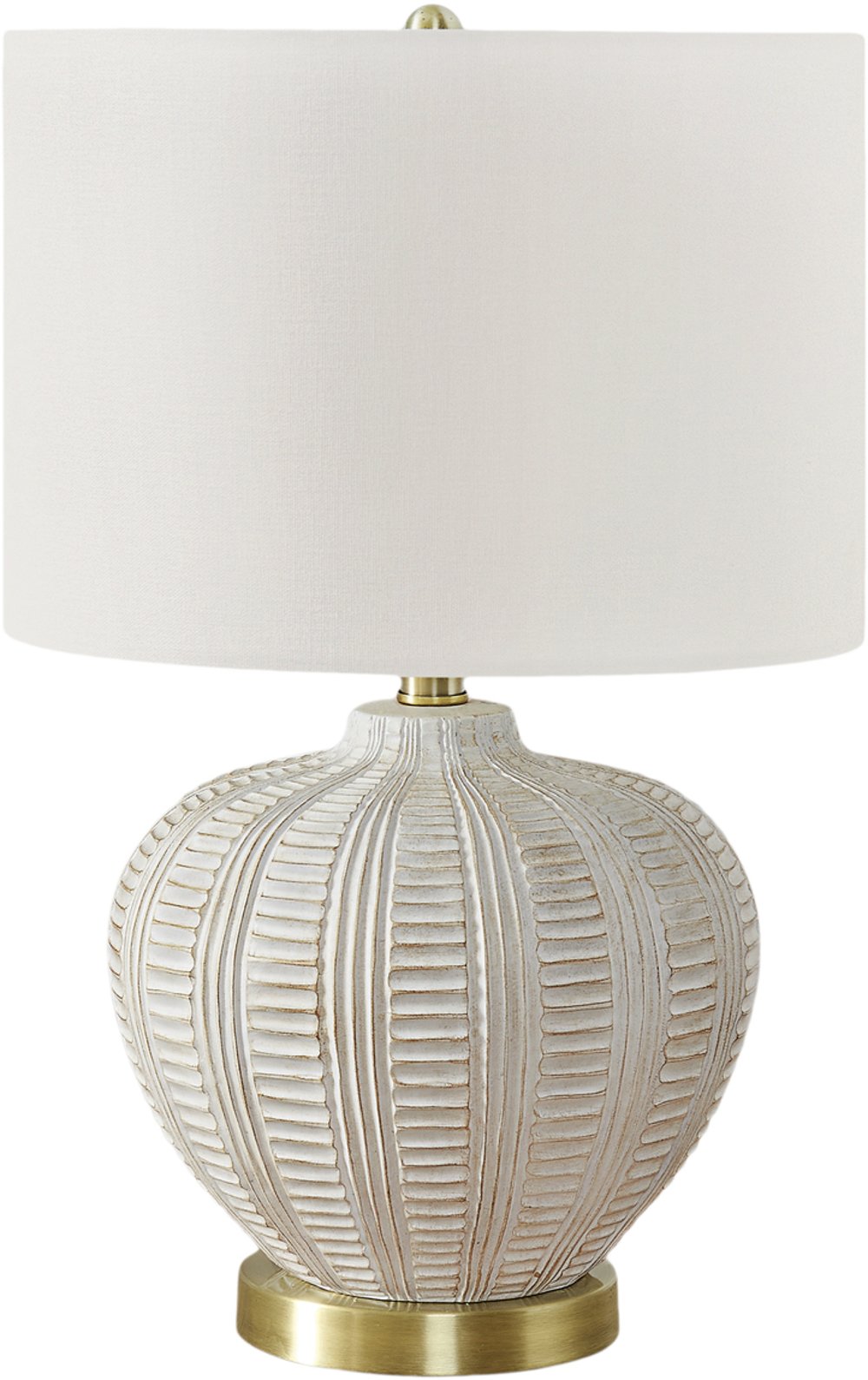
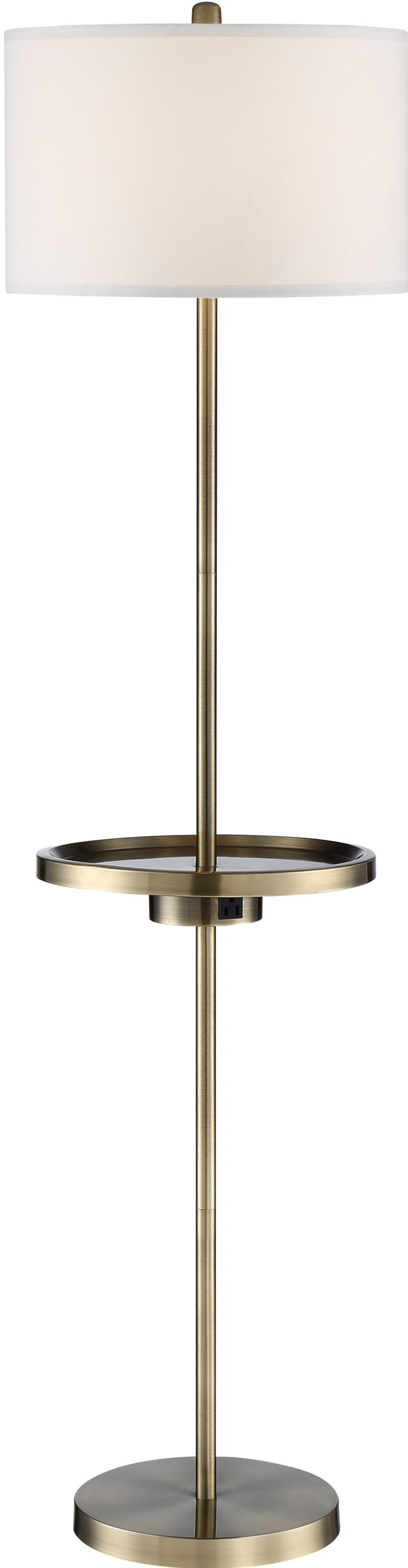
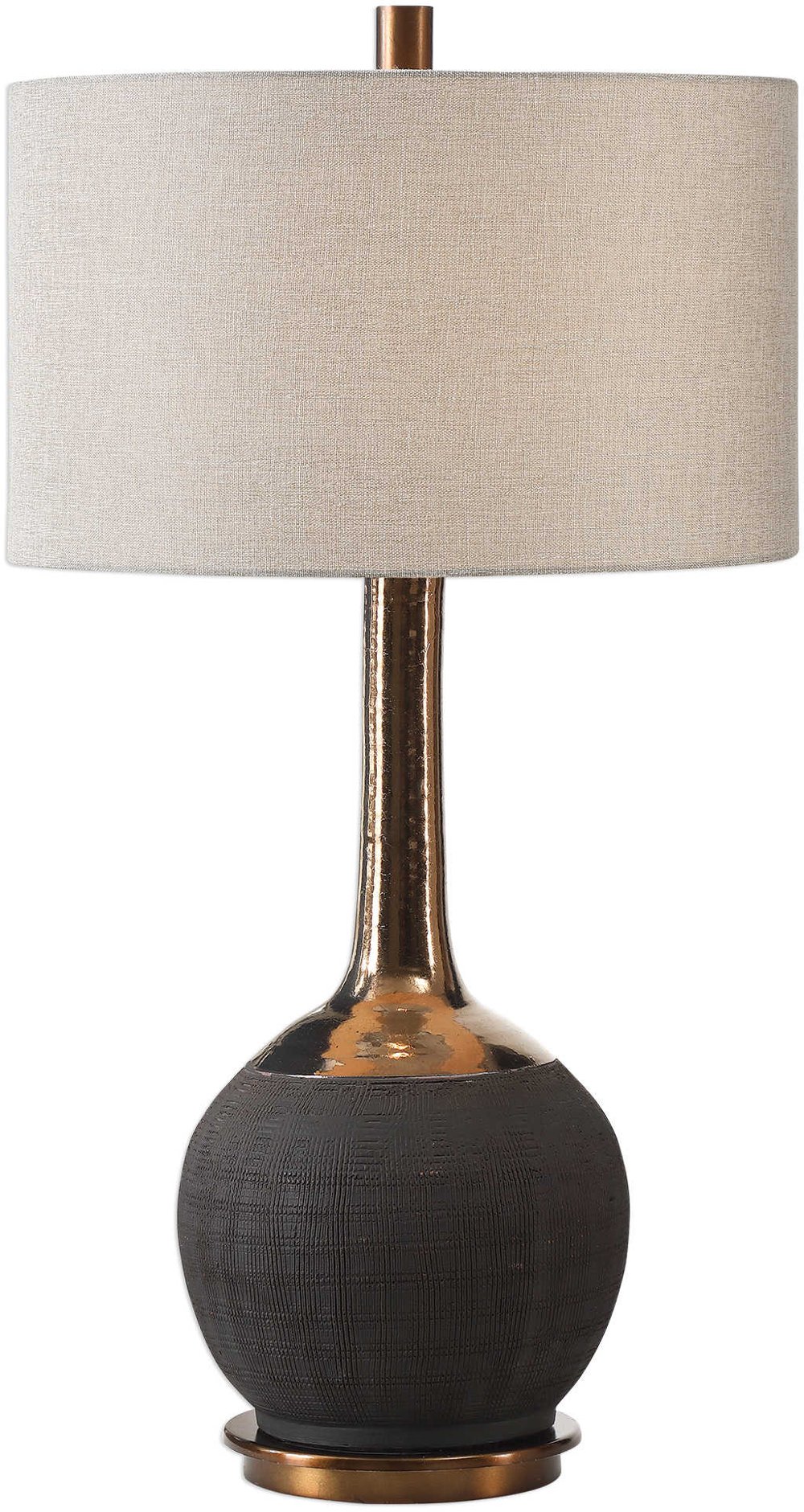
Transitional lamps blend the warmth of traditional design with the clean lines of modern lighting. Their appeal comes from balanced proportions, familiar shapes, and details that feel thoughtful rather than ornate. A rounded ceramic base paired with a simple drum shade captures the look, as does a slender metal floor lamp with a softly tapered fabric shade. These lamps work especially well in rooms that bring together furniture from different styles or stages of life: a favorite rolled-arm sofa, a streamlined coffee table, and an inherited wood cabinet can all feel more connected with the right lighting. Neutral shades in white, ivory, beige, or gray keep the overall effect easygoing, while finishes such as brushed metal, glazed ceramic, clear glass, and natural wood introduce depth. Transitional table lamps add light and visual weight to nightstands, end tables, consoles, and desks. Transitional floor lamps bring a similar sense of balance beside a sofa or reading chair without taking up tabletop space. Smaller accent lamps lend a welcoming glow to an entryway or an otherwise dim corner, though they generally serve a different purpose than lighting intended for reading or detailed work. Across these forms, the style leaves room for personality. A gently curved base can soften a room filled with straight edges, while a geometric silhouette can give traditional furniture a little more structure. Texture matters, too: a woven fabric shade, a subtly ribbed ceramic body, or visible wood grain adds interest without relying on a bold color or elaborate pattern. For a lighter palette, white transitional table lamps can complement painted bedroom furniture, contrast with dark wood, or sit comfortably alongside oatmeal upholstery and warm metal accents. The result is lighting that supports the room rather than competing with everything in it. That flexibility makes transitional lighting a natural fit for shared living spaces, where several tastes and practical needs often come together.
The best fit depends as much on where a lamp will live as on how it looks. On an end table beside a deep sofa, a lamp needs enough height to cast useful light without leaving the bulb exposed at eye level. As a starting point, the bottom edge of the shade should sit near seated eye level, although the shade shape and chair height affect the final placement. A nightstand lamp needs a similar relationship to the bed, with a switch that's comfortable to reach and enough clear space for a book, glasses, and a glass of water. Overall dimensions include the shade, not just the base, so a narrow lamp body doesn't necessarily mean a small footprint. A broad drum shade can crowd a shallow console or extend into a walkway even when the base fits neatly on the surface. Tall, slender lamps often suit entry consoles and dining room sideboards, where they frame artwork or a mirror without filling the entire surface. Beside a reading chair, a transitional floor lamp can provide useful illumination while leaving a small side table free. Shade material helps determine the character of that light. Pale fabric usually allows more light through the sides for a softer ambient glow, while opaque shades direct more illumination through their openings. Bulb selection completes the effect: lumens indicate brightness, and color temperature describes whether the light appears warmer or cooler. Warm white light often feels comfortable in living rooms and bedrooms, while reading and work areas benefit from enough brightness to see clearly without glare. Follow the fixture's bulb type and wattage limits, and check compatibility before using dimmable bulbs, dimmer controls, or smart bulbs. A lamp with a dimming feature can serve different needs, from conversation to reading, when paired with the appropriate bulb. Matching lamps create a composed look on bedroom nightstands or opposite ends of a console. Different lamps can feel just as cohesive when they share a finish, shade color, or similar proportions, allowing each side of a room to suit the person using it.
Materials and construction influence both the character of transitional lamps and how they hold up to everyday use. Ceramic offers a substantial, sculptural presence, with finishes that range from smooth and glossy to matte and textured. Glass can keep a lamp from feeling visually heavy on a small table, although clear surfaces may show fingerprints and dust more readily. Metal introduces crisp definition, whether the finish is softly brushed, dark and understated, or gently reflective. Wood adds warmth and visible grain that can tie lighting to nearby furniture without requiring an exact match. Many transitional designs combine materials, such as a ceramic body with metal fittings or a glass base beneath a linen-look shade. Those combinations make it easier to connect several finishes already present in a room. For durability, look beyond the surface treatment to a stable base, secure shade attachment, and a cord placement that works with the intended location. Weight alone doesn't guarantee stability; the lamp's height, base width, and placement all matter, especially in homes with children or pets. Keep cords clear of walking paths and position lamps away from table edges where they could be bumped. Routine care is usually straightforward, but the finish determines the safest method. Unplug the lamp and let the bulb cool before cleaning. A soft, dry cloth suits many bases, while fabric shades often benefit from gentle dusting or careful vacuuming with a soft brush attachment when the manufacturer's instructions allow it. Abrasive cleaners can damage finishes, and excess moisture can harm shade materials or electrical components. With suitable placement and regular care, transitional lighting can continue to fit as surrounding furnishings change. It's a practical choice for someone furnishing a first apartment, refreshing a guest bedroom, or making a longtime living room feel more cohesive. A lamp can also make a thoughtful housewarming gift when the recipient's style, available space, and lighting needs are known. Whether the goal is a comfortable spot to read or a softer layer of light beside the bed, transitional lamps bring useful illumination and an easy balance of classic and contemporary design.
Read More