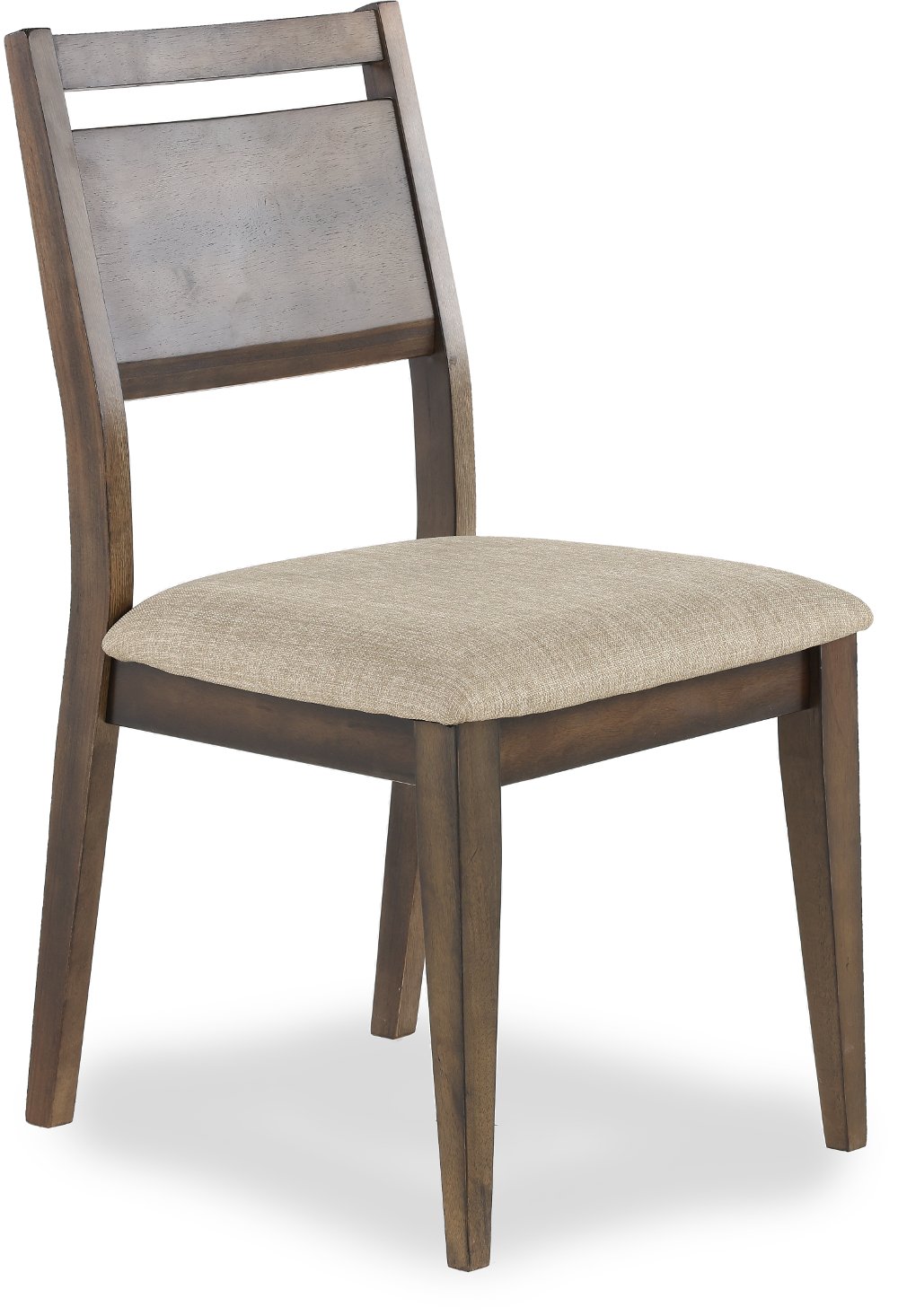
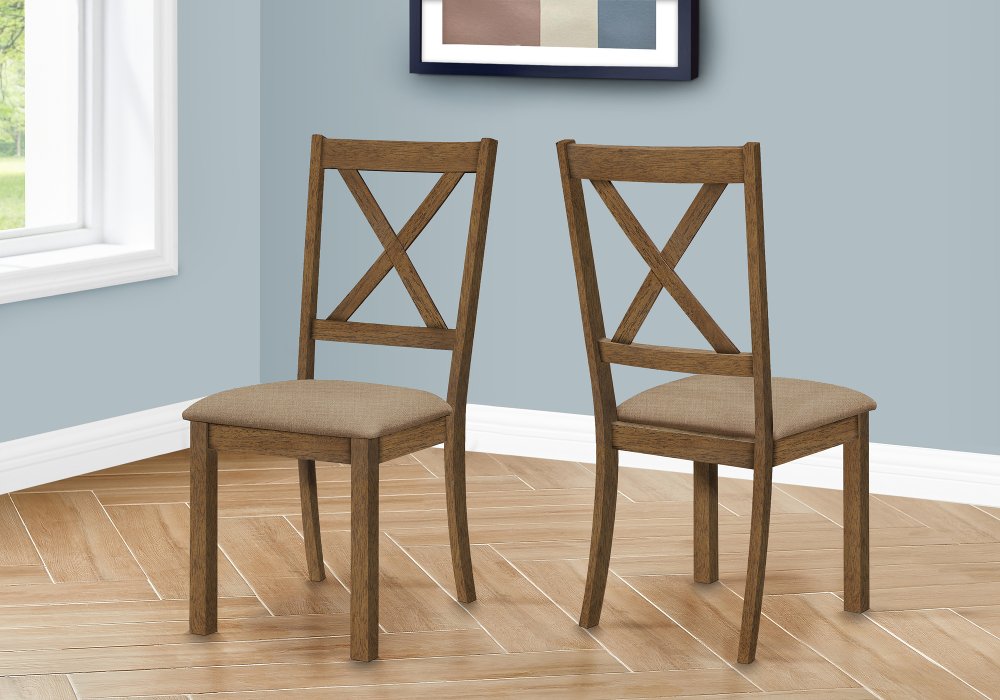
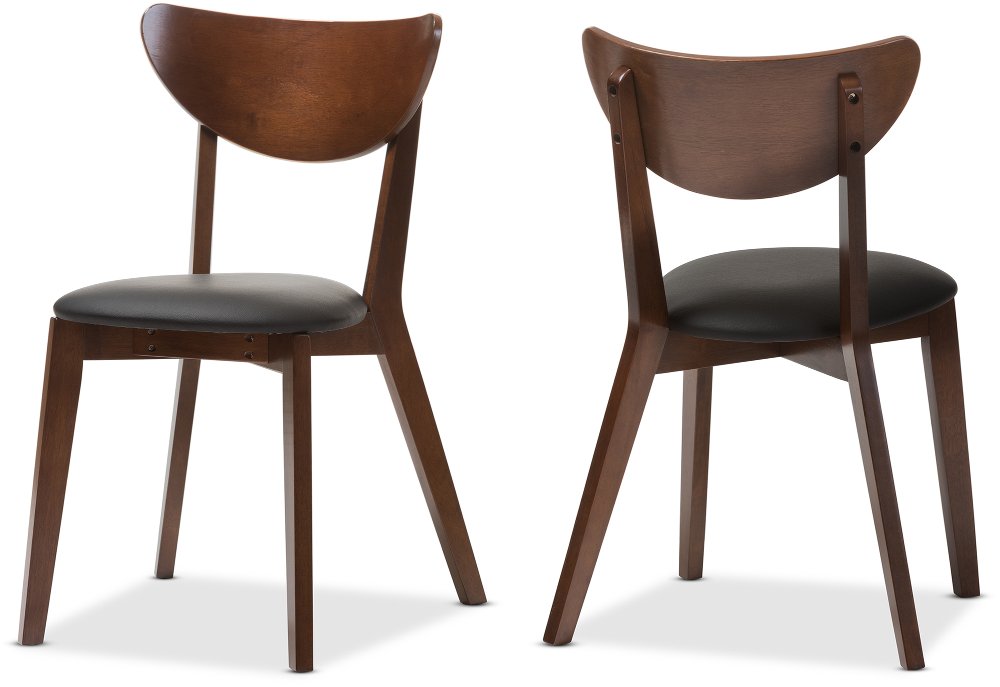
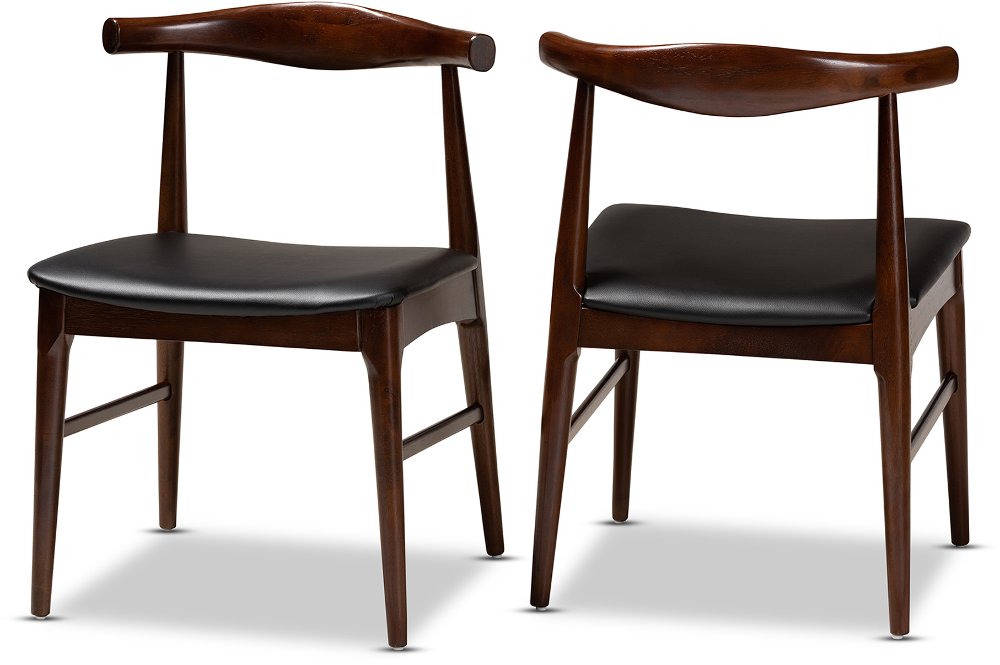
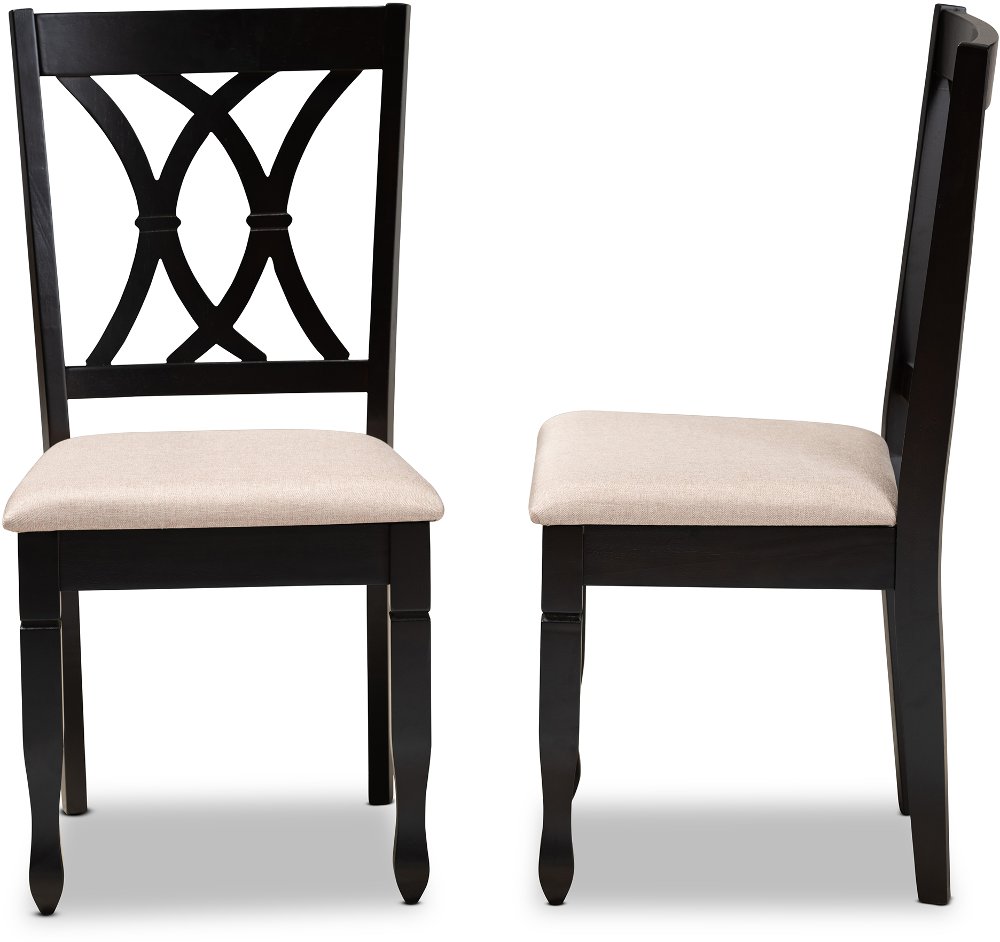
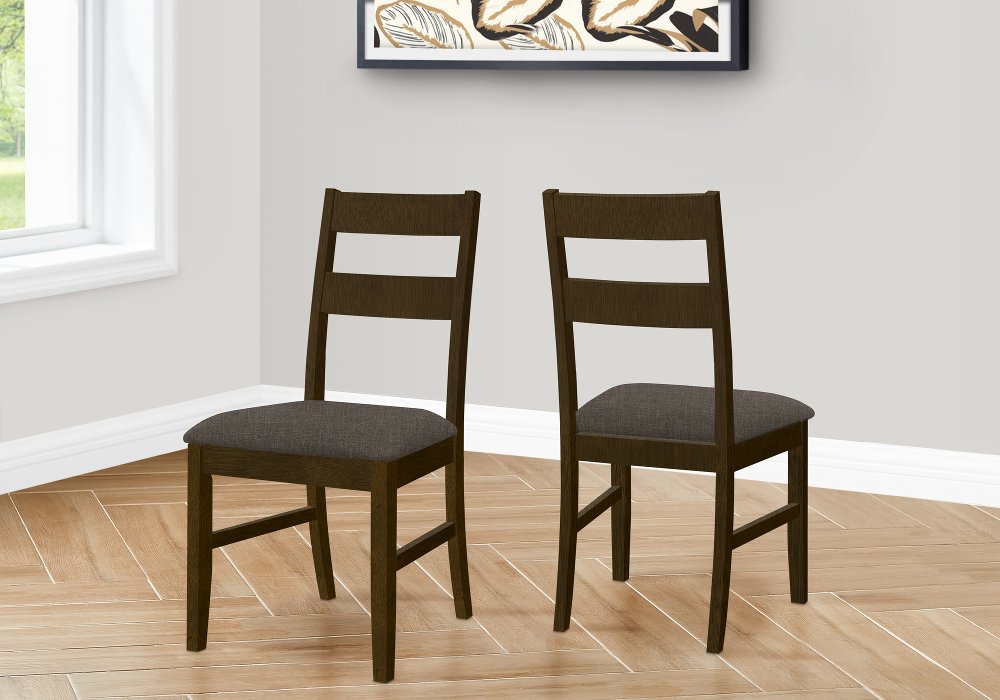
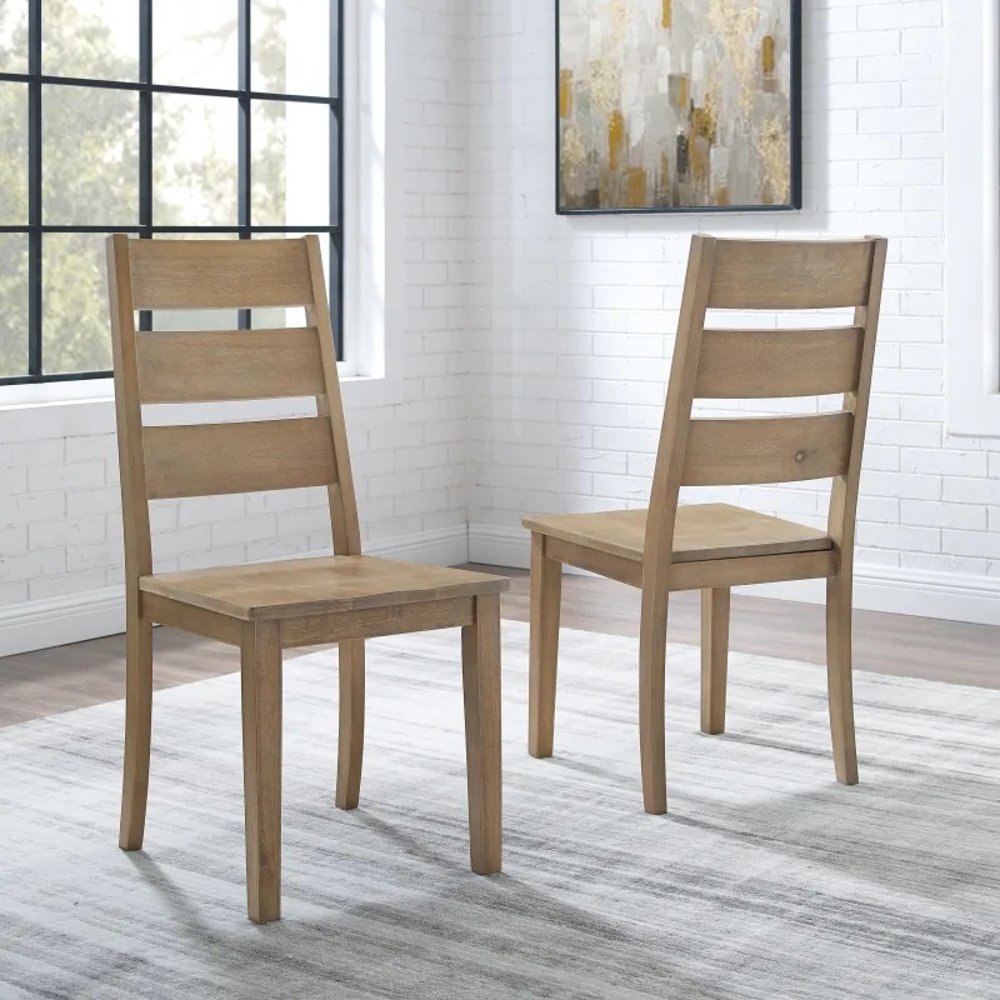
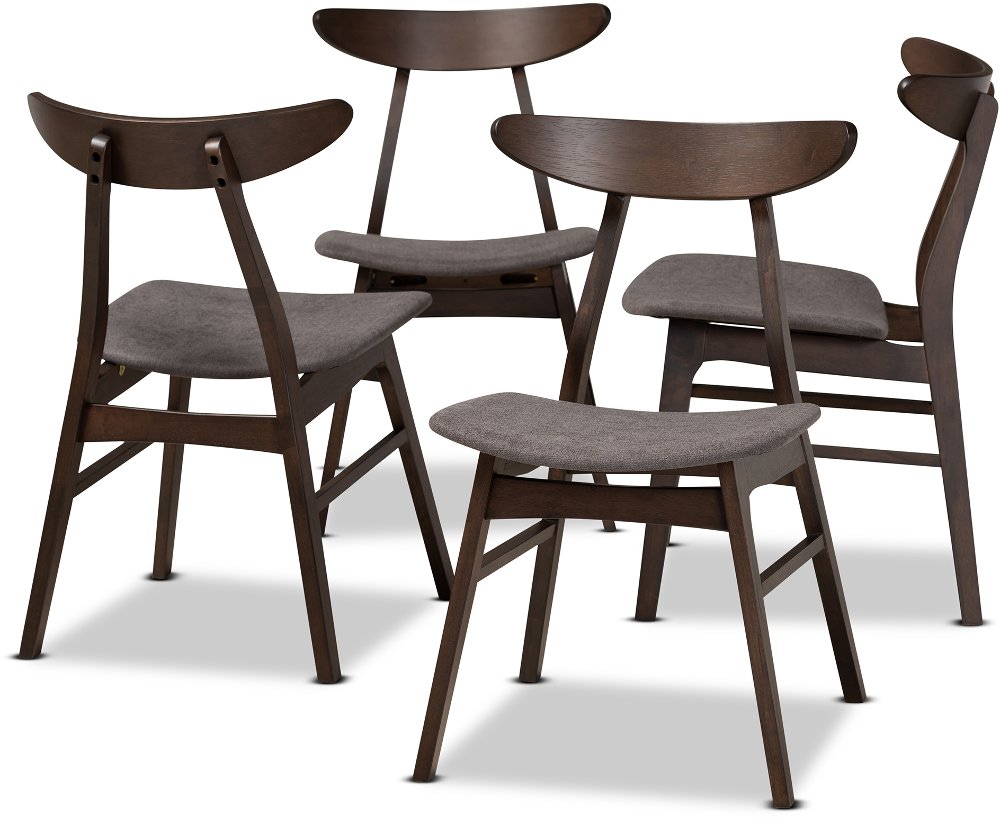
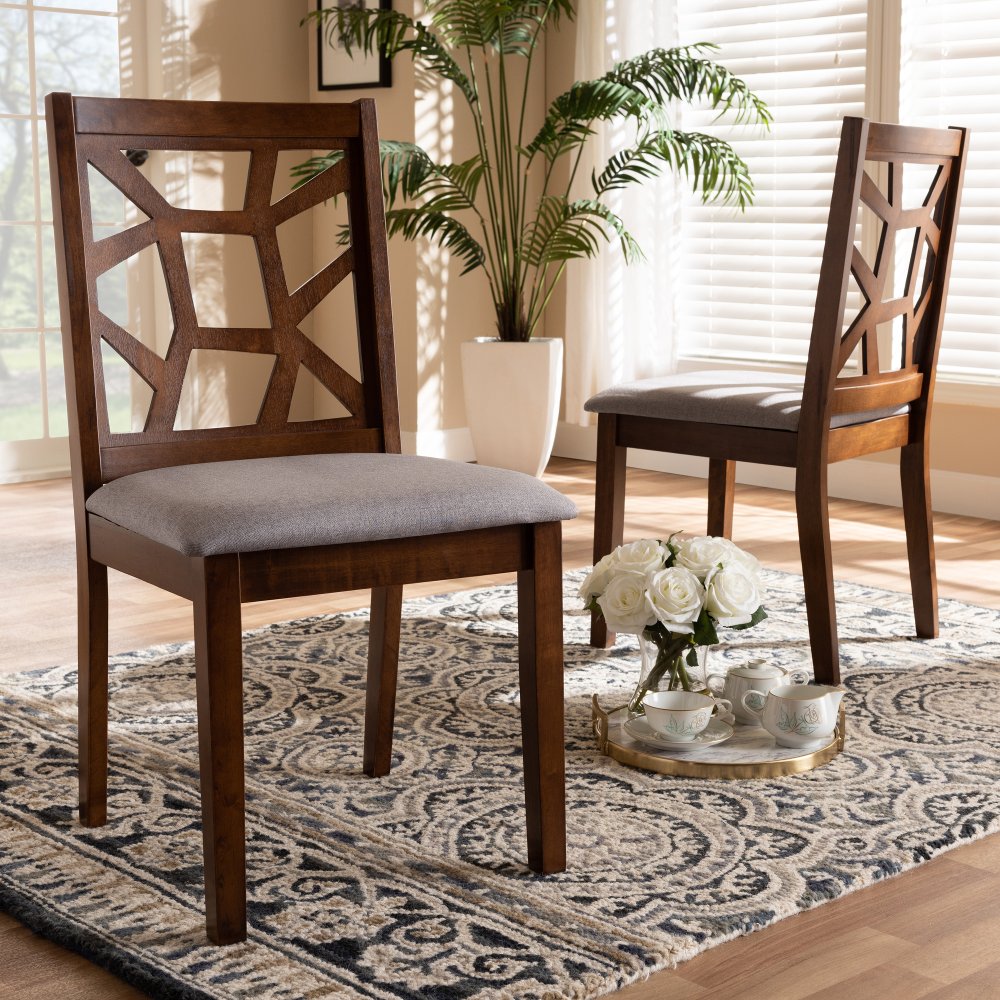
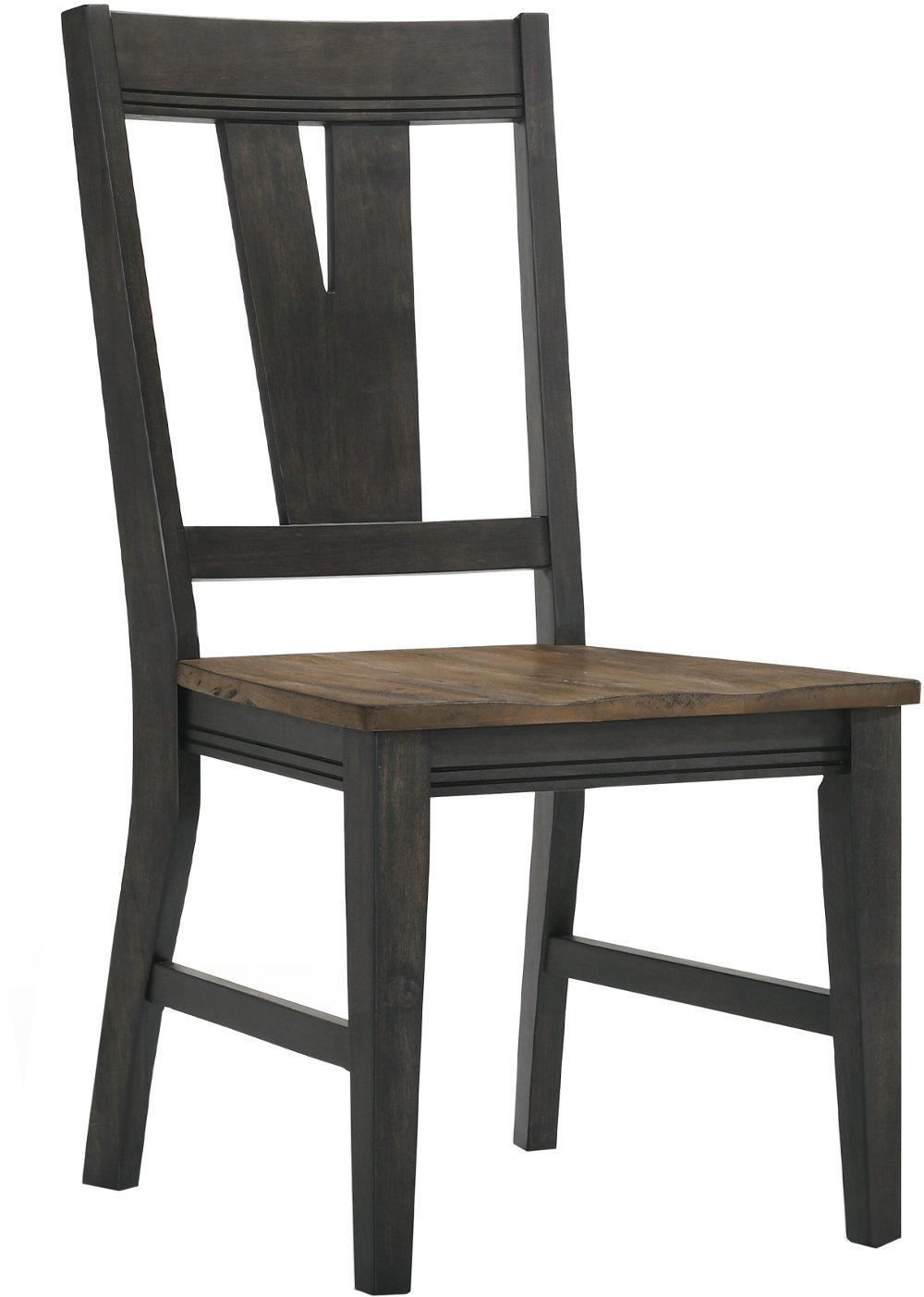
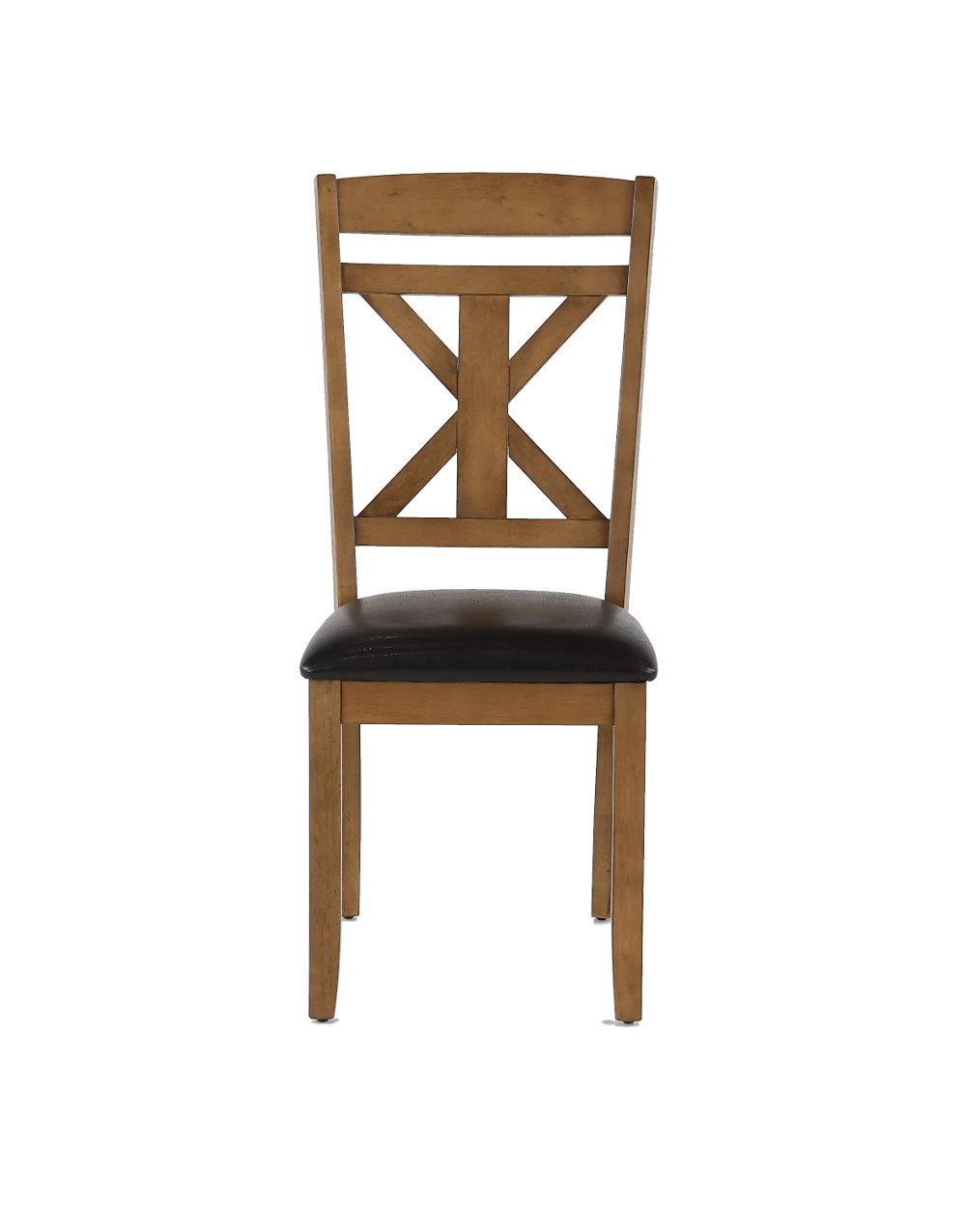
Brown dining chairs bring warm, earthy color to the table in styles that range from simple wood seats to cushioned fabric and leather designs. Shades such as honey, walnut, chestnut, and espresso work with many dining room palettes, making brown a practical choice whether you’re furnishing a breakfast nook or giving a formal dining space a more relaxed feel. The shade and undertone make a noticeable difference: golden brown can brighten a room with cream walls, reddish brown complements warm woodwork, and deep chocolate creates contrast against a pale table or light flooring. An exact match between the chairs and table isn’t necessary. A shared warm undertone or a repeated detail, such as tapered legs, can make different finishes feel connected without creating an overly matched look. Wood dining chairs highlight grain and craftsmanship, with spindle backs, curved rails, and framed backs each giving the table a different character. Solid wood can offer lasting strength when paired with sound construction and proper care, while wood veneers over suitable substrates provide the appearance of natural grain. Upholstered brown dining chairs add softness, especially in rooms with hard flooring and little other fabric. Woven upholstery lends subtle texture, velvet adds depth as light moves across its surface, and smooth leather creates a tailored look that suits both traditional and modern spaces. Faux leather offers a similar visual effect, though its composition, care requirements, and aging characteristics differ from genuine leather. For a softer, textured finish, Brown Fabric Dining Chairs pair easily with linen-look curtains, patterned rugs, and natural wood tables. Metal frames introduce another option, balancing brown seats with slim silhouettes or more industrial lines. The best combination depends on how the room feels and functions: a curved wood chair can keep a small nook visually open, while a padded, high-back chair gives a larger dining area a more substantial presence.
Fit matters just as much as color, particularly when the dining table doubles as a place for homework, coffee, and conversation. Standard dining tables are often around 28 to 30 inches tall, and dining chair seats commonly sit about 17 to 19 inches from the floor. These are starting points rather than guarantees of a comfortable pairing. Allowing roughly 10 to 12 inches between the seat and tabletop generally provides useful legroom, but a deep table apron can reduce the space beneath it. Check the clearance under the apron as well as the overall table height. If you prefer dining armchairs, compare the arm height with the underside of the table so the chairs can slide in as intended. Seat width, seat depth, and back shape also affect everyday comfort. A generous seat gives someone room to settle in, but a seat that’s too deep may make it difficult for a shorter person to rest against the back with feet on the floor. A gently curved back can feel supportive without heavy padding, while an upholstered seat can make lingering over dinner more comfortable. For seating arrangements, about 24 inches of table edge per person is a useful starting point; wider chairs and armchairs often need more room. Table legs and pedestal bases can change where chairs actually fit, so measure the usable spaces rather than relying only on the tabletop’s length. Aim for at least 36 inches between the table edge and a wall or nearby furniture for pulling chairs out, with more room where people regularly walk behind seated diners. In a compact dining area, armless chairs usually tuck away more easily, and open backs keep the room from feeling crowded. Around a larger table, upholstered armchairs at the ends can provide a comfortable contrast to slimmer side chairs. Keeping a common brown tone, frame detail, or seat height helps mixed seating look intentional.
Daily routines help narrow the choice of materials and construction. In a busy household, brown kitchen chairs may handle several meals a day, a child climbing into place, and the occasional splash of tomato sauce. Color alone doesn’t determine how forgiving a chair will be: dark brown can disguise some marks while making crumbs, lint, or light-colored pet hair more noticeable. A subtly varied weave may hide small signs of use better than a flat, uniform surface, but cleanability depends on the fabric and its approved care methods. If stain resistance matters, look for a stated performance treatment or fabric specification rather than assuming all upholstery has the same protection. Wood and suitable wipeable upholstery can simplify small spills, though moisture should still be removed promptly and cleaners should match the manufacturer’s directions. Dust wood frames with a soft cloth, avoid soaking joints, and protect finishes from harsh chemicals and prolonged direct sunlight. Vacuum fabric seats and the crevices around cushions regularly, then blot spills rather than rubbing them deeper into the fibers. Follow the upholstery cleaning code before applying water or solvent-based products. Genuine leather may need an approved conditioner, while faux leather typically requires different care; treating the two as interchangeable can damage the surface. For durability, pay attention to secure joints, stable legs, stated weight limits, and upholstery that feels firmly attached. If a chair requires assembly, follow the hardware instructions and check connections periodically. Felt pads suited to the flooring can help reduce scratches and scraping sounds, especially when chairs move several times a day. Chairs meant for indoor dining should stay indoors unless their materials and construction are specifically rated for outdoor use. For homes that host often, consider how easily extra chairs can move from another room to the table and where they’ll sit between gatherings. A brown dining chair can also serve as occasional seating beside a bedroom dresser or at a small writing desk, provided the dimensions work. Whether the table holds a quick weekday breakfast or a long meal during the cooler months, well-fitted chairs with comfortable support help everyone settle in.
Read More