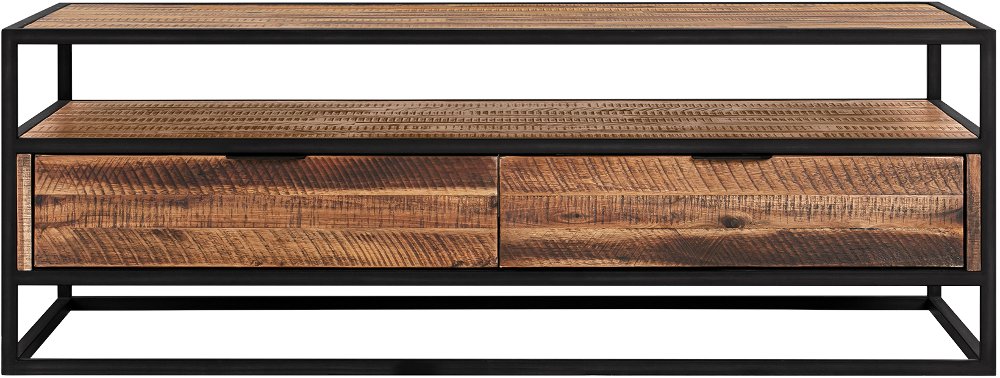
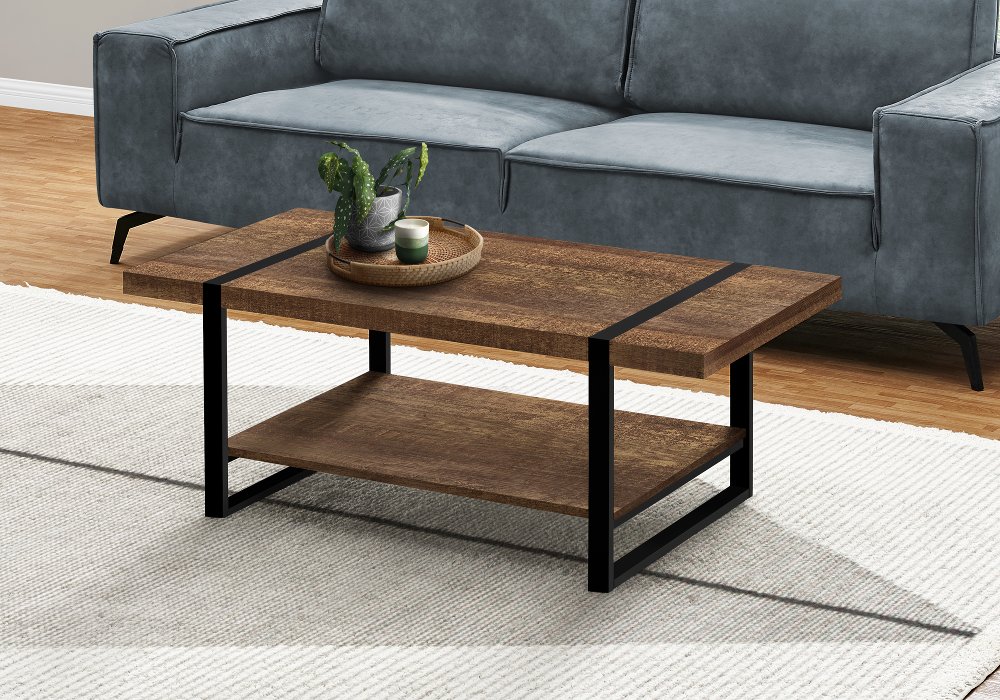
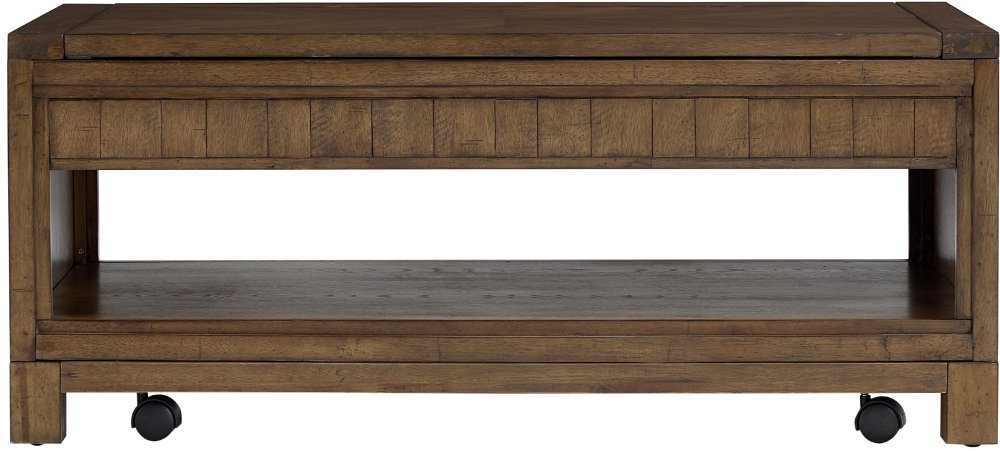
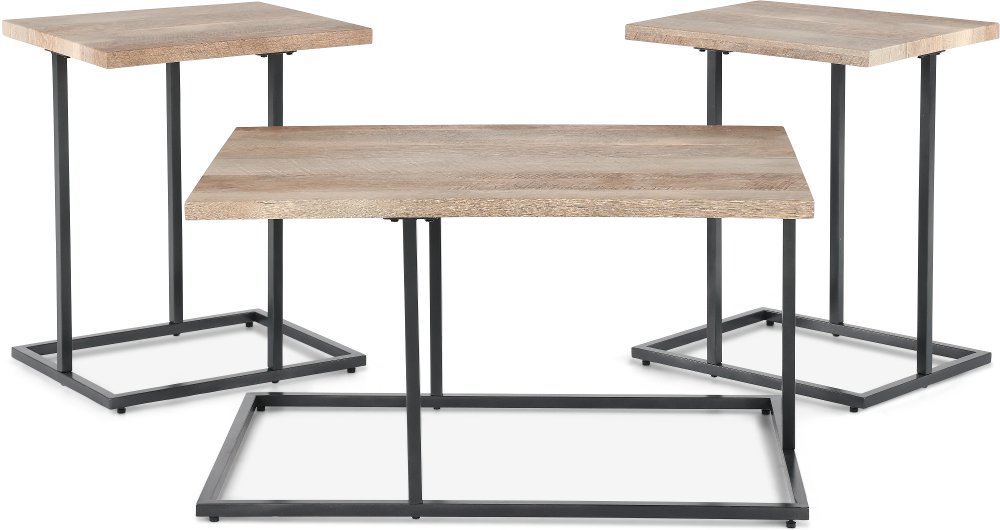
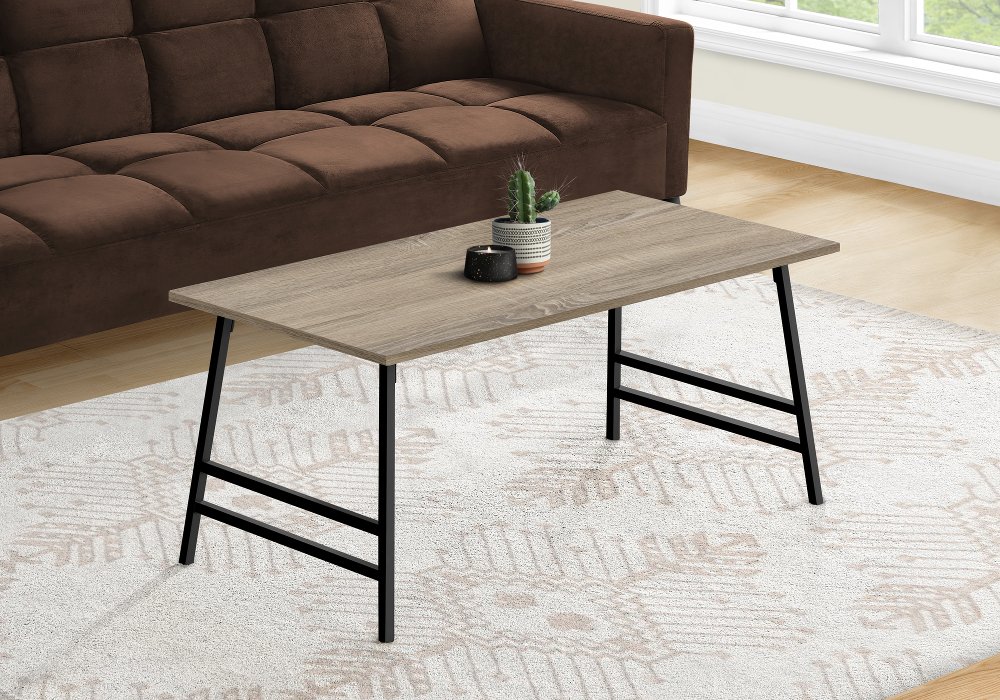
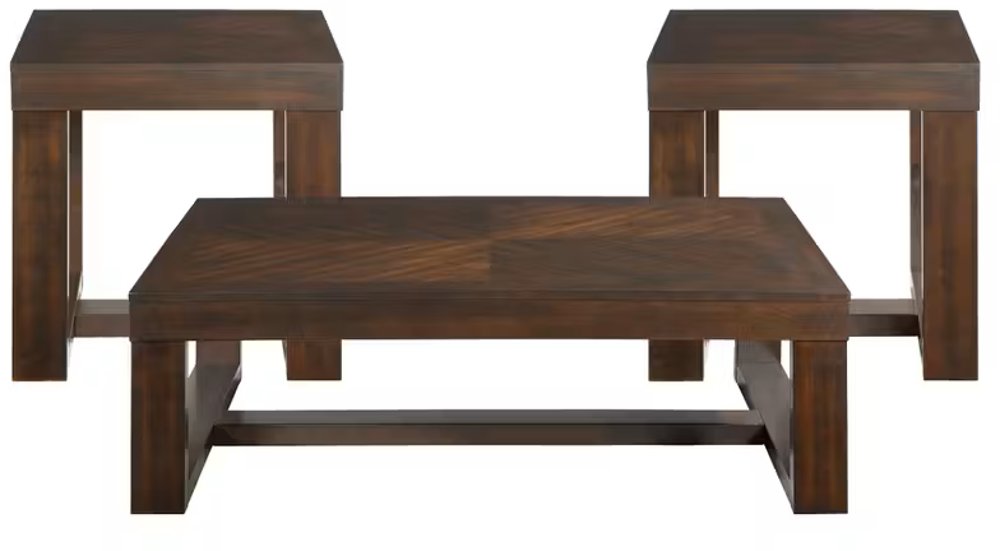
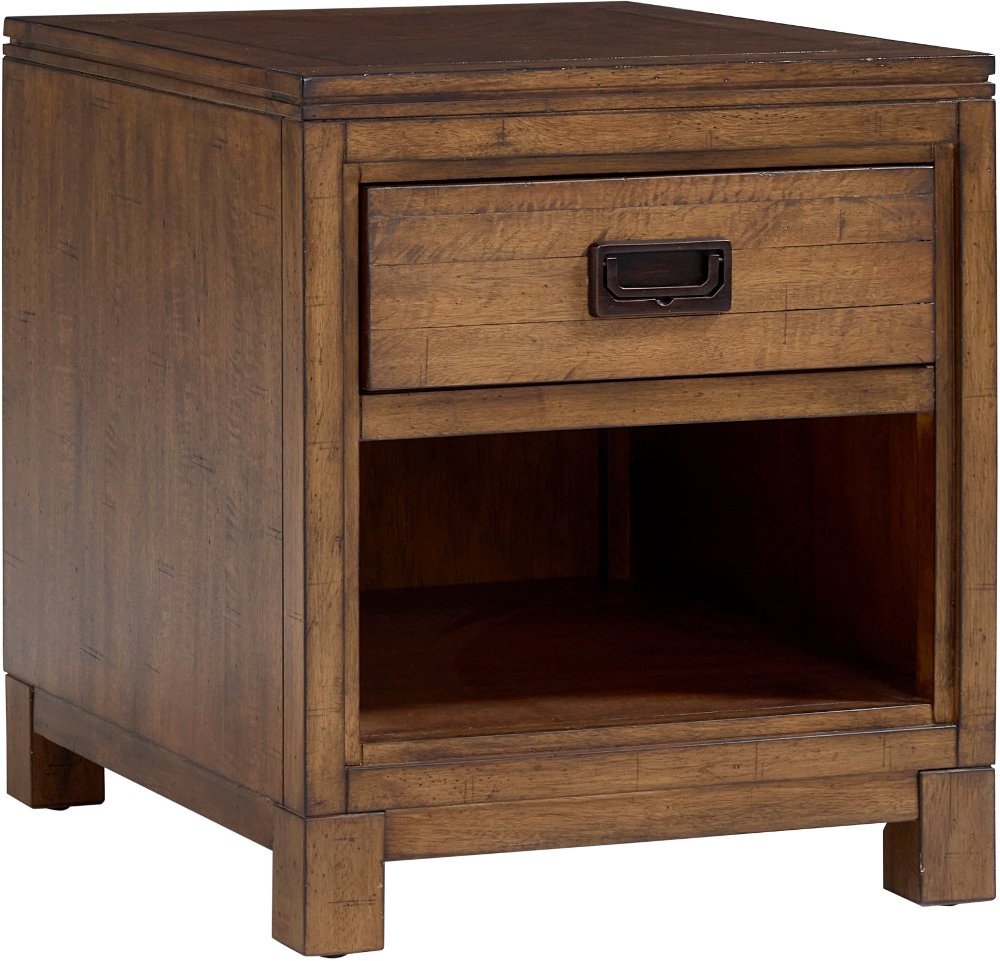
Brown rectangular coffee tables bring a familiar, grounded look to a living room while giving everyday essentials a convenient home. Their elongated shape works naturally alongside a sofa, creating room for a serving tray, a few favorite books, and the remote without requiring a wide footprint from front to back. Brown finishes range from pale, sandy tones to warm chestnut and deep espresso, so the color can feel light and relaxed or rich and substantial. The undertone makes a difference: Golden and reddish browns add warmth, while muted, gray-brown finishes sit comfortably beside cooler upholstery and stone accents. Wood grain adds another layer of character, whether it’s a fine, even pattern or a more pronounced mix of knots and streaks. A brown rectangular coffee table doesn’t need to match every other wood surface in the room. A shared undertone or a repeated detail, such as black hardware or gently tapered legs, can connect different finishes without making the space feel overly coordinated. Straight legs and a slim top give the familiar rectangle a clean, understated profile. Turned legs, framed drawer fronts, and deeper molding lean more traditional, while thick tops and broad bases create a substantial focal point. Metal frames introduce contrast and often leave more open space beneath the tabletop, which can help a smaller seating area feel less crowded. Against a cream sofa, a dark brown table creates definition; beside charcoal upholstery, a medium brown finish can keep the arrangement from feeling too uniform. For a similar warm palette with a brighter contrast, Brown and White Coffee Tables combine wood-inspired tones with lighter elements. The right visual balance comes from the whole seating area, including the rug, sofa arms, surrounding furniture, and how much open floor remains visible.
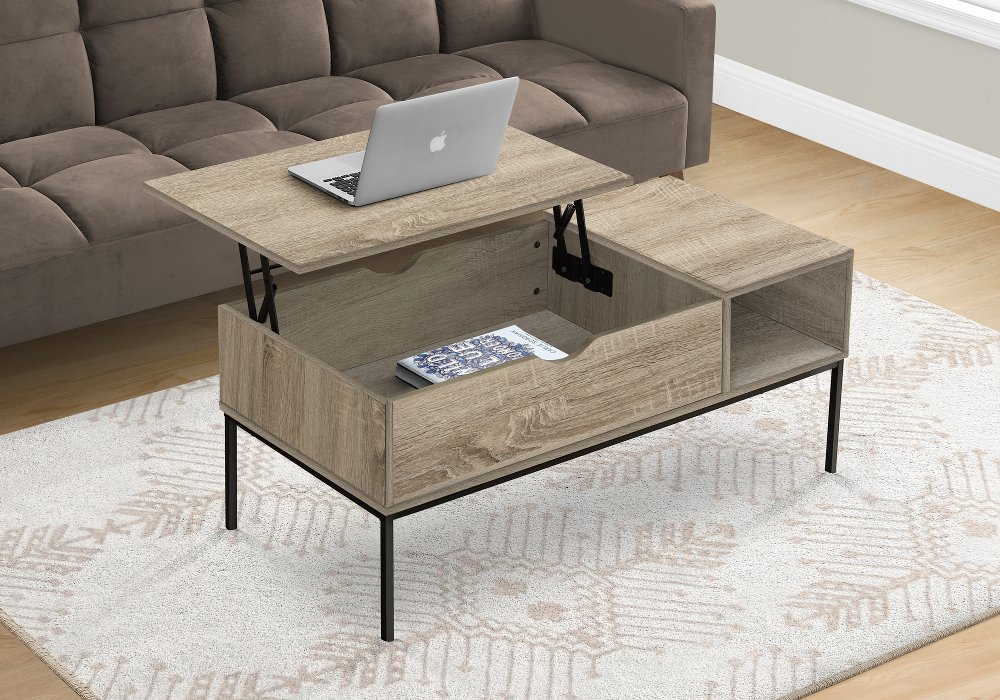
The most comfortable brown rectangular coffee tables fit both the seating arrangement and the way the room gets used. A useful starting point is a table about two-thirds the length of the sofa: A 90-inch sofa, for example, often pairs well with a coffee table around 60 inches long, provided the room has enough clearance. A tabletop close to the height of the sofa’s seat cushions, or roughly 1 to 2 inches lower, generally makes drinks and other essentials easy to reach. Leaving about 16 to 18 inches between the table and the seating usually provides room for legs while keeping the surface within reach. That gap is different from a main walkway, which needs more space; around 30 to 36 inches is a helpful planning range where people regularly pass through. In a room with a chaise sectional, the table’s width matters as much as its length because it needs to fit inside the seating area without crowding the chaise. Reclining seats also need clearance for fully extended footrests. Painter’s tape on the floor can make a proposed footprint easier to picture before a table becomes part of the room. Beyond size, the base and storage layout affect daily convenience. An open lower shelf keeps books and baskets accessible, while drawers can tuck away remotes, charging cables, and coasters. Check that drawers have space to open toward nearby seating. A lift-top design can bring a surface closer for occasional laptop use or a casual meal, although raised height, mechanism clearance, and the manufacturer’s weight limits matter. For a household that gathers over board games, an uninterrupted top offers useful spreading room. In a compact apartment, a narrower rectangle may preserve circulation while still providing a practical landing spot. Families with young children may prefer softened corners and edges within a rectangular silhouette, along with a stable base and accessible storage for frequently used playroom or living room essentials.
Materials and construction help determine how a brown rectangular coffee table looks, feels, and holds up to daily use. Solid wood has natural variation and can develop character over time; its ability to be refinished depends on the construction and finish. It also responds to changes in indoor humidity, so a stable indoor environment helps limit movement. Wood veneer uses a thin layer of real wood over a supporting core, offering genuine grain with performance that depends on the quality of the core, joinery, and protective coating. Veneer isn’t the same as a printed wood-look surface, and its thinness limits how much it can be sanded. Engineered wood with a laminate or other decorative surface can provide a consistent brown finish, though resistance to scratches, moisture, and heat varies by material. A metal base can add support and visual contrast, but secure connections and a balanced design matter more than appearance alone. In any construction, firmly attached legs, smooth drawer movement, and neatly finished edges are worthwhile details to consider. A heavily used family-room table faces different demands than a table in a quieter sitting area, where its main role may be holding a lamp, books, or a decorative bowl. Surface texture also affects upkeep: Deep grooves and rough, distressed areas can collect crumbs, while a smoother top is generally simpler to wipe clean. Everyday care starts with the manufacturer’s instructions. A soft cloth, prompt attention to spills, and coasters beneath drinks help protect many finishes. Use only recommended cleaners, avoid soaking seams or edges, and place a heat-resistant barrier beneath hot dishes. Felt pads under decorative objects can reduce scratches when a tray or vase gets moved. Direct sunlight may alter some wood colors over time, so placement deserves consideration in a bright room. For a first apartment, a shared family space, or a thoughtfully planned housewarming gift, a well-proportioned brown rectangular coffee table offers lasting usefulness when its finish, storage, and care needs suit the person living with it.
Read More